

Quick Answer Box: Building permits Ontario are a legal requirement for most construction projects, ensuring compliance with the Ontario Building Code and local regulations. Design-build firms manage the permit and regulatory approvals process by coordinating zoning checks, preparing accurate drawings, submitting applications, and tracking inspections, streamlining building approval for clients.
What is the Design-Build Permitting Process in Ontario?
The design build permitting process in Ontario involves a single firm managing all regulatory requirements, from zoning analysis through to inspection and final approval. Design-build firms handle building permits, coordinate with municipal officials, and ensure each design element meets the Ontario Building Code (OBC). Their integrated approach to building approval streamlines the entire process, minimizing risks for property owners.
As your main point of contact, a design-build firm oversees pre-construction planning, prepares key documents like site plans and architectural drawings, submits necessary applications, maintains ongoing communication with city departments, and coordinates inspections and final approvals. This comprehensive management leads to quicker permit approval and reduces unexpected issues during construction. The workflow is designed to keep your project on schedule, compliant with zoning and municipal building permits, and aligned with the latest updates to Ontario construction regulations, including new OBC changes in 2026.
Before you break ground, our step-by-step guide to garden suite permits in Ontario walks through zoning, drawings and approval timelines.
Understanding Building Permits in Ontario
A building permit in Ontario is an official authorization from your local municipality, confirming your project meets requirements set out by the Ontario Building Code, zoning bylaws, and other local or provincial construction regulations. You need building permits Ontario for new homes, additions, major renovations, finished basements, decks above certain sizes, and substantial plumbing, electrical, or HVAC work.
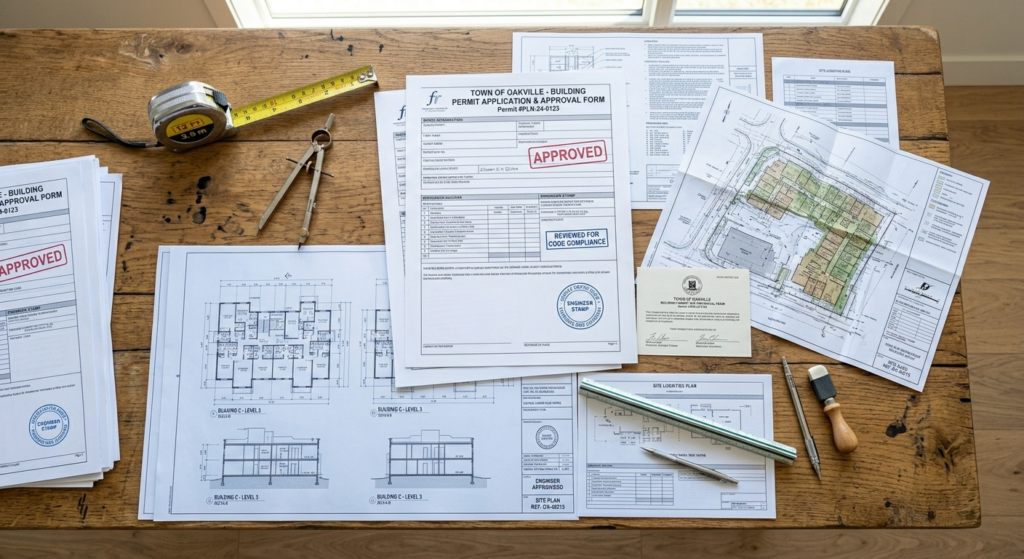
There are several types of building permits, reflecting the complexity of Ontario’s building approval process:
- Structural/building permits for additions or major changes
- Plumbing/HVAC permits for mechanical or piping alterations
- Demolition permits for removing structures
- “Change of use” permits when altering how a space is used
- Electrical permits, managed through separate inspections
- Specialized permits for heritage, fire, or environmental matters
Applying for a permit requires detailed plans, site surveys, engineering documents, and completed forms. These submissions are carefully reviewed for compliance with Ontario construction regulations, safety standards, zoning, and municipal requirements. Since 2026, reinforced fire safety and energy efficiency standards are in effect. For official instructions and permit forms, visit the official Ontario government site.
If you need guidance on the required paperwork or process, Planning & Financial Guidance can help you avoid common submission errors.
Second-storey projects need extra approvals — here is how 2nd-floor addition permits work in Toronto.
How Do Municipal Building Permits Differ from Provincial Regulations?
Municipal building permits function as the primary control method for city or town officials to regulate local construction and development. Every Ontario municipality has its own building department to process permit applications, all operating under the broad umbrella of the Ontario Building Code.
Zoning bylaws are enforced at the municipal level and impact permissible uses, building heights, setbacks, and allowable densities. The Ontario Building Code, established provincially, dictates minimum safety, accessibility, and energy efficiency standards. While the OBC provides a consistent baseline, municipalities can have additional documentation requirements or interpret code details with varying strictness.
You might satisfy every building code provision, but your application can still be denied if it fails municipal zoning, such as exceeding height restrictions or building too close to property lines. Design-build firms bridge these gaps, expertly handling coordination between provincial and municipal authorities to secure faster building approval.
For those interested in custom home, renovation, or commercial construction services, Custom Homes and Renovations provide specialized design-build expertise for navigating Ontario’s regulations.
Before breaking ground, run through our 12-step Ontario pre-construction checklist.
What Regulatory Factors Affect Building Approval and Permit Delays?
Building permit approval timelines in Ontario depend on strict adherence to zoning, the Ontario Building Code, thorough documentation, and responsiveness to correction requests from municipal officials. Approval typically ranges from 2 to 12 weeks, influenced by project type, submission quality, and municipal workload.
Zoning, Site Plan, and Ontario Construction Regulations
Zoning controls building height, setbacks, and land use for each property. Site plan approval is necessary for larger or more complex developments, ensuring layouts satisfy municipal standards for access, drainage, landscaping, and fire department requirements. Drawing quality is critical architectural drawings, engineering reports, and site plans must collectively demonstrate compliance with all relevant Ontario construction regulations.
Starting in 2026, energy efficiency, life safety, and carbon monoxide provisions in the OBC are more stringent than ever before. Professional oversight and document “completeness” are mandatory to avoid costly delays.
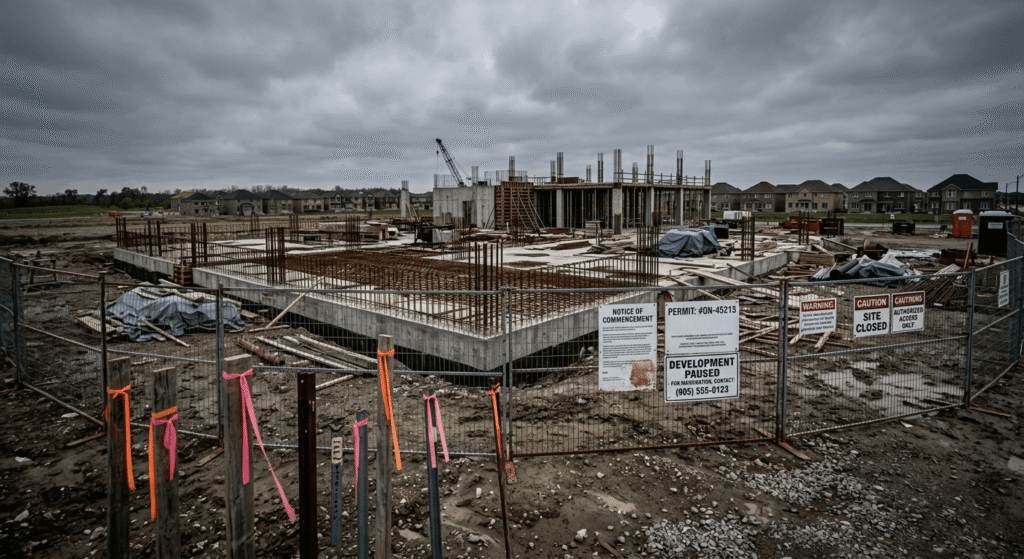
Factors slowing permit approval include:
- Incomplete or outdated application packages
- Drawings that don’t align with current OBC or municipal requirements
- Delayed responses to clarification requests
- Zoning or site plan noncompliance
- Excessive municipal workload
To minimize risk, design-build firms use digital portals like Cloudpermit for real-time tracking, set proactive milestones, and coordinate directly with all regulatory agencies. Clients benefit from expert project tracking, as seen in Projects, and from comprehensive oversight of inspections and code adherence.
For specific details on digital permit portals, see Cloudpermit Ontario.
How Design-Build Firms Manage Permitting for Faster Building Approval
Design-build firms deliver a turnkey approach to managing municipal building permits and the multilayered requirements of Ontario construction regulations. The process features comprehensive planning, preparation of accurate drawings, ongoing client updates, and full management of inspections.
During initial planning, the firm conducts zoning and regulatory due diligence by analyzing applicable bylaws, reviewing conservation or heritage overlays, and developing a site plan that meets all requirements. Coordination with the Home Construction Regulatory Authority (HCRA) and use of resources like Our Approach ensure a smooth start.
Comprehensive drawings, including architectural plans and detailed engineering reports, are produced for all required disciplines HVAC, plumbing, and energy compliance. These are reviewed against the 2026 Ontario Building Code for full compliance.
The permit application is then assembled and submitted, with the design-build firm acting as main liaison to city officials. They rapidly address any requests for clarification or corrections, updating documents where needed. This hands-on management significantly reduces permit approval delays.
Once permits are issued, the firm schedules and coordinates inspections at every project phase, including foundation, framing, HVAC/plumbing, and final occupancy. Inspectors check that real-world construction matches the approved and code-compliant drawings. Any deficiencies are resolved promptly to secure final approval for occupancy.
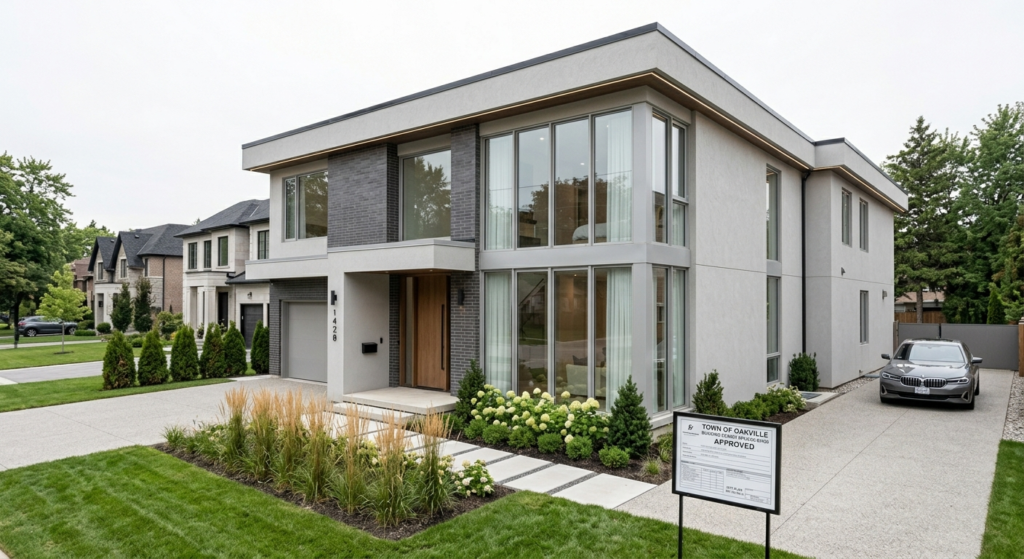
For more about the step-by-step design-build process, Services outlines how these workflows drive efficiency in new builds, renovations, and commercial projects.
Frequently Asked Questions
1. Do I Need a Building Permit for My Project in Ontario?
Nearly all new construction, additions, basement renovations, decks higher than 60 cm or larger than 10 m², major plumbing, electrical, or HVAC changes require building permits in Ontario. Minor repairs, painting, or simple interior finishes typically do not. Refer to your municipality’s building department or consult a design-build firm for your specific case.
2. Who Should Apply for the Building Permit Homeowner or Design-Build Firm?
Typically, your design-build firm will apply for the building permits Ontario on your behalf, preparing all technical drawings, forms, and application documentation. Homeowners may submit their own application, but most prefer expert support to ensure compliance with the building code and municipal bylaws. Using a design-build team reduces your risk of permit approval delays.
3. What Documents Are Required for a Complete Permit Application?
A standard Ontario building permit application requires:
- Site plan showing boundaries and structures
- Accurate architectural drawings for floors, elevations, and sections
- Structural, HVAC, or energy compliance engineering reports
- Completed application and fee forms
- Additional documents for heritage, conservation, or environmental projects
4. Can My Project Be Denied a Permit Due to Environmental or Heritage Concerns?
Yes, your project can be denied if it is located within a designated heritage district or on protected land subject to conservation authority rules or environmental overlays. Additional permits or approvals, such as heritage permits or conservation authority clearance, may be required before your application for municipal building permits is approved. Design-build firms can help identify these requirements early and guide the process to prevent unnecessary delays.
5. How Do Building Inspections Work Once My Permit Is Approved?
After your permit approval, building inspections occur at various project stages such as foundation, framing, mechanical systems, and final occupancy. Inspectors check that your construction matches the approved drawings and meets all Ontario construction regulations and the latest building code. If any issues arise during inspection, your design-build firm will coordinate prompt corrections to maintain progress and ensure final approval is achieved.
Consult FAQ or Planning & Financial Guidance if you are unsure about your specific submission requirements.
Conclusion
Building permits Ontario are essential for legal, safe, and successful construction whether for custom homes, renovations, or commercial developments. Design-build firms expertly handle the entire regulatory process: from zoning checks and site plans, to preparing code-compliant drawings, submitting applications, managing inspections, and resolving any issues. Their knowledge of municipal building permits, the Ontario Building Code, and evolving Ontario construction regulations ensures that your project secures timely building approval with minimal stress. For professional support with permit approval and regulatory compliance, contact the team or explore Our Approach for more information.
For the foundations, read our guide to design-build vs a general contractor in Toronto. Planning a project? Get in touch with the Leedway team.