

Quick Answer Box: Home addition cost in Toronto sits between $350 and $550 per square foot in 2026. A single room addition starts around $60,000, a rear extension runs $150,000 to $300,000, and a full second-storey addition can reach $500,000 or more. Permits, structural complexity, and your neighbourhood all shift the number.
What Is Home Addition Cost Toronto?
Home addition cost Toronto refers to the total price of expanding an existing home’s footprint or floor count within the city. It covers design fees, permits, foundation work, framing, roofing, mechanical systems, and interior finishes. In 2026, most house additions in Toronto fall between $350 and $550 per square foot before HST, making them a significant but frequently worthwhile investment compared to moving.
Second-storey projects need extra approvals — here is how 2nd-floor addition permits work in Toronto.
What Does a Home Addition Actually Cost in Toronto in 2026?
A single room addition (200 to 400 sq ft) costs $60,000 to $150,000. Think a main-floor bedroom or compact family room with standard finishes. A rear ground-floor extension (400 to 600 sq ft) runs $150,000 to $300,000, making it the most popular category among Toronto homeowners. You’re pushing the back of the house further into the yard and gaining a new kitchen, family room, or primary suite. A full second-storey addition ranges from $250,000 to $500,000 and up. Going up doubles your usable floor space but costs more per square foot because of load-bearing reinforcement, staircase integration, and the need to heavily modify or remove the existing roof. Large-scale expansions combining rear and upper-floor work start at $350,000.
Per square foot, the 2026 consensus from Toronto contractors sits at $375 to $450 for a mid-range build. Budget projects start around $350/sq ft. Luxury work with custom millwork and premium finishes pushes past $550. All figures are pre-HST. Add 13% when you’re building the real budget.
For budgeting a second floor, our guide breaks down 2nd storey addition costs in 2026.
How Do Home Addition Costs Differ by Toronto Neighbourhood?
In Forest Hill, Rosedale, Lawrence Park, and Leaside, costs trend toward the upper range for two reasons. Many homes were built under older zoning bylaws, so a modern house extension frequently needs Committee of Adjustment approval before a permit can be issued. Finish expectations are also higher. Under-speccing an addition in a premium neighbourhood actually hurts resale value more than it saves in construction cost.
In east-end neighbourhoods like Riverdale, the Annex, and Roncesvalles, rear extensions are common and lots tend to be deep enough to accommodate them. Structural surprises are more frequent here. Toronto’s clay soil can require deeper footings, adding $150 to $300 per linear foot to foundation costs. West-end areas like Bloor West Village and Runnymede sit in the middle range. Permitting is generally more straightforward on lots without heritage overlays or TRCA-regulated land boundaries.
Permit fees vary by city — our guide breaks down Ontario building permit costs by municipality.
What Do Permits, House Addition Plans, and the Toronto Zoning Bylaw Actually Cost?
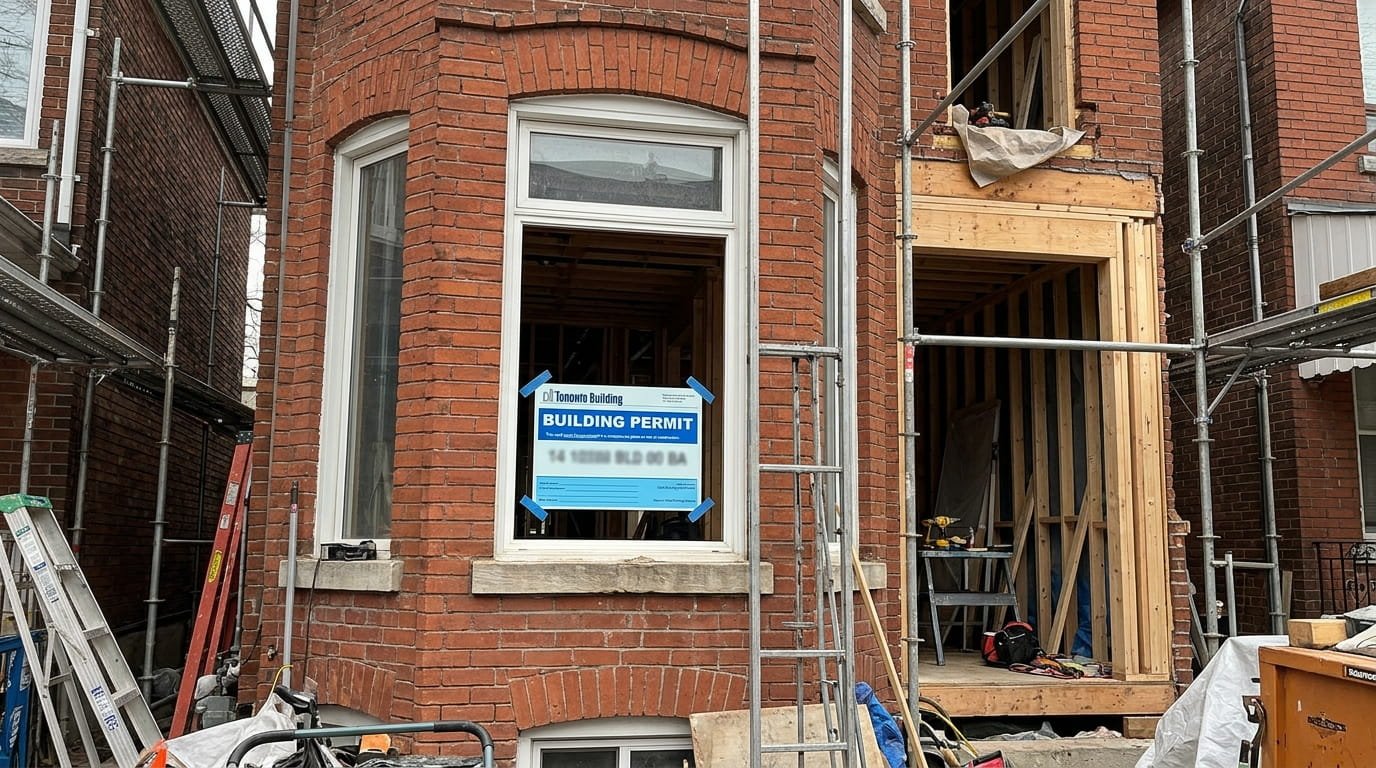
The 2026 City of Toronto fee schedule sets the main building permit at $18.56 per square metre of new floor area, plus a base fee of $214.79. A 400 sq ft (37 sq m) addition permit works out to roughly $900 to $1,200 in building permit fees alone. Add the HVAC permit ($260 to $270), a plumbing permit where applicable, and any arborist reports for protected trees, and total permit costs for a residential addition typically land between $1,800 and $3,500 according to City of Toronto building permit fee data.
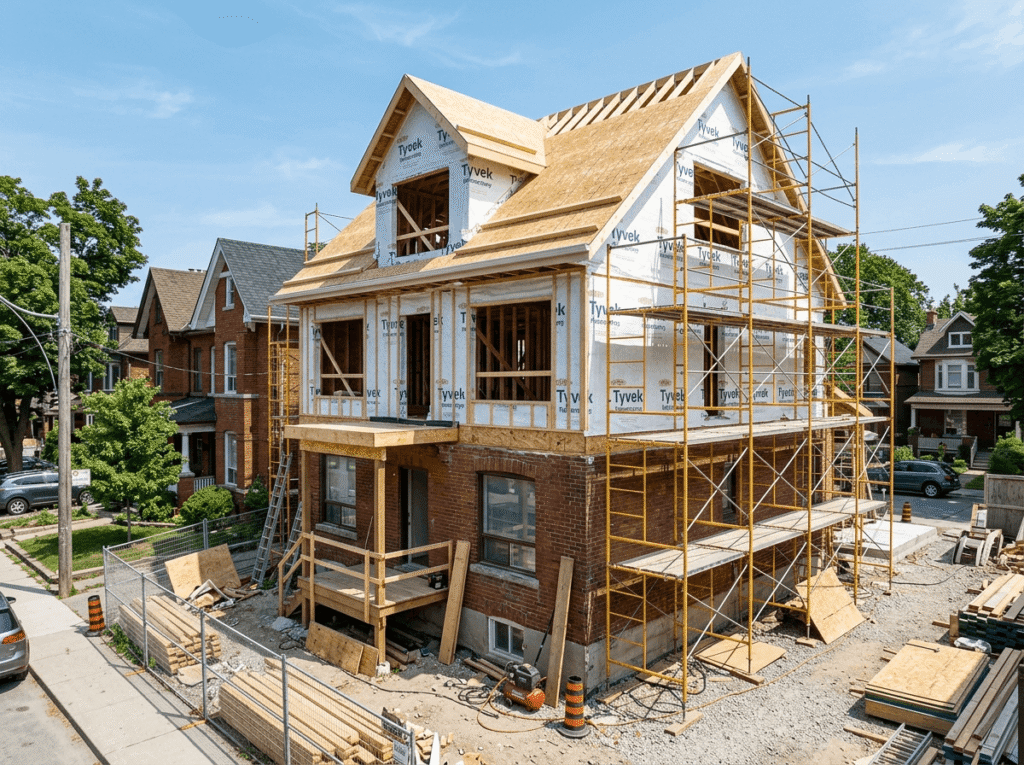
The Toronto zoning bylaw determines how far an addition must sit from lot lines, how much of the lot it can cover, and how tall it can stand. If your project fits within those limits, the timeline runs 6 to 12 weeks from a complete application to permit issuance. If you need a minor variance through the Committee of Adjustment, budget an extra 3 to 4 months and a $2,228.98 application fee.
One number worth knowing: about 60% of residential permit applications in Toronto are rejected on first submission. That’s not a reason to panic. It’s a reason to hire an architect or experienced design-build firm before submitting. Architect fees for permit-ready house addition plans run $5,000 to $15,000. They prevent expensive resubmission cycles and flag zoning conflicts before construction begins. It’s money that almost always pays for itself.
Is a 2nd Floor Addition Worth It in Toronto?
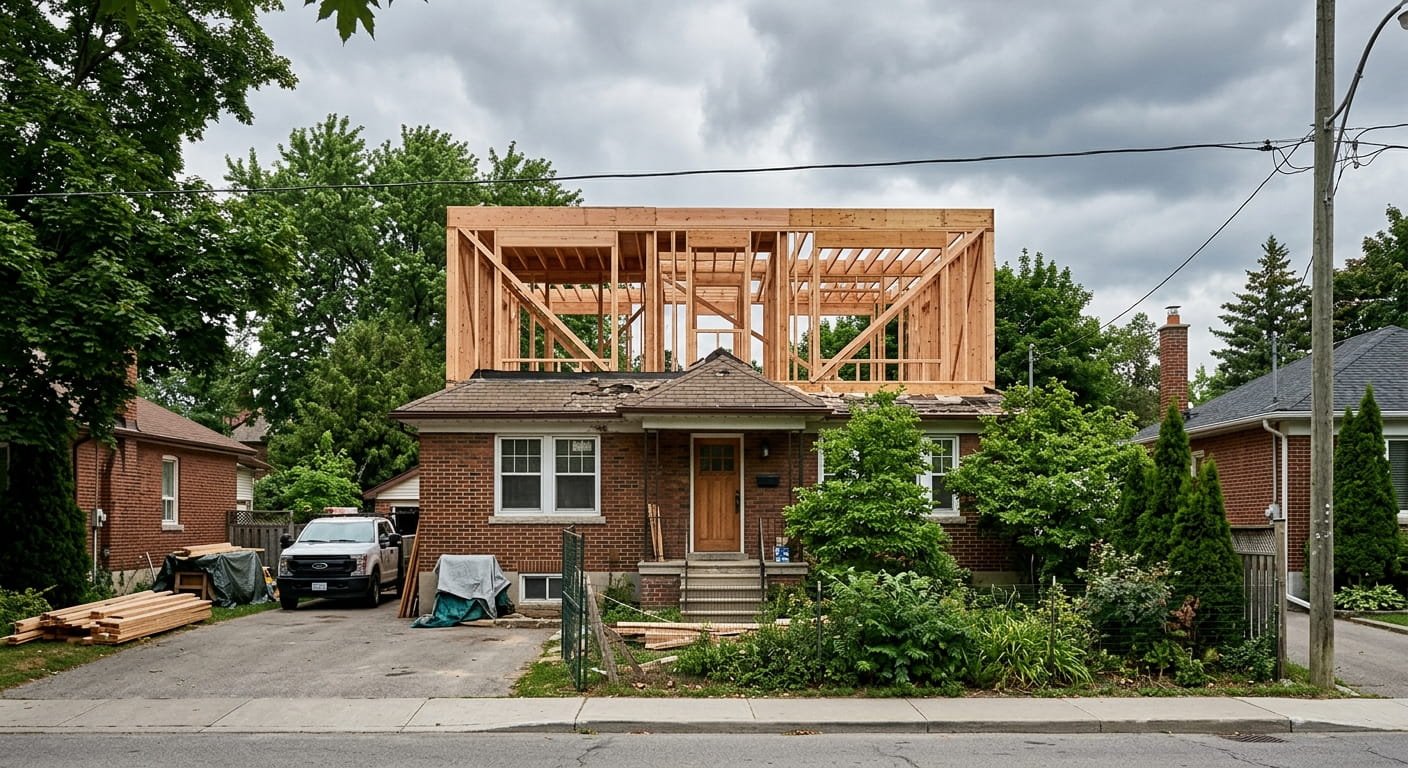
A second-floor addition is the right move when you don’t have enough backyard space to extend horizontally. Going up gives you two or three bedrooms and at least one bathroom without reducing your yard. It also tends to add more resale value per dollar than a rear extension in neighbourhoods where larger homes command premium prices.
The trade-off is higher soft costs. A structural engineer is mandatory. The existing roof is removed or heavily modified. HVAC systems need to be extended throughout the new floor. These factors make 2nd floor additions more expensive per square foot than rear extensions: expect $400 to $500/sq ft as a realistic mid-range baseline. Toronto home additions return 65% to 90% of construction cost in immediate property value. Legal secondary suites and in-law suite additions sit at the higher end of that range.
For homeowners weighing options before committing, our renovation vs. rebuild guide covers when building new makes more financial sense than expanding an existing structure.
Frequently Asked Questions
1. Do I always need an architect for a home addition in Toronto?
You don’t legally need an architect, but most additions over 200 square feet benefit from architect-stamped drawings. Complex rear extensions and all second-floor additions practically require them given Toronto’s zoning review process. The 60% first-submission rejection rate drops significantly when professional drawings are submitted.
2. How long does a home addition take from start to finish?
Most Toronto home additions run 9 to 18 months from initial design to final inspection. Permitting alone takes 6 to 12 weeks for a clean submission. Construction adds 4 to 8 months depending on scope. Projects needing a Committee of Adjustment variance add 3 to 4 months before permits can even be applied for, so plan accordingly.
3. What hidden costs do homeowners miss in Toronto addition budgets?
The most frequently overlooked items are:
- HST (13%) on top of all contractor quotes
- Temporary accommodation costs if the addition affects livable areas
- Unexpected foundation upgrades from clay soil or non-compliant footings
- Landscaping restoration after excavation
- Permit fee increases: Toronto raised building permit fees by 4% effective January 1, 2026, and further cost-of-living adjustments apply annually
4. Can I add a home addition without reducing my backyard space in Toronto?
Yes, a 2nd floor addition is the most common solution. It doubles your living space without touching the yard. A bump out addition on the side of the house is another option on wider lots. Both require a building permit and must comply with the Toronto zoning bylaw on lot coverage, setbacks, and height limits before work can begin.
5. What is the cheapest type of home addition in Toronto?
A single room bump out addition is typically the least expensive option, starting around $60,000 for a basic 200 sq ft room. Costs stay lower when the project avoids new plumbing, complex roofline changes, or foundation excavation. Adding a bathroom or kitchen to the same footprint pushes the cost up significantly due to mechanical work and waterproofing requirements.
Conclusion
Home addition cost Toronto in 2026 runs from $60,000 for a single room up to $500,000 or more for a full second storey. Rear extensions are the most popular choice. A 2nd floor addition is the better option when lot size limits horizontal expansion. Either way, permits and the Toronto zoning bylaw will shape your timeline as much as your budget.
If you’re planning a home renovation in Toronto and want to understand scope, cost structure, and approvals before committing, explore our planning and financial guidance resources and review our approach to managing additions from design through construction. Ready to talk real numbers? Contact us to start the conversation
For the bigger picture, see our complete Ontario home addition cost guide. Thinking about building? Contact Leedway for a consultation.