

Quick Answer: For most Ontario homeowners in 2026, renovation costs $100–$300 per square foot and works well when the structure is sound. A rebuild runs $275–$450 per square foot but delivers a fully code-compliant, energy-efficient home. Choose renovation for cosmetic or targeted updates; choose rebuild when structural problems push renovation costs close to new-build prices.
Ontario homeowners weighing renovation vs rebuild in 2026 are working with tighter numbers than ever before. A full gut renovation on a 1,600 square foot home now costs $320,000 to $560,000 in Ontario, and a custom rebuild on the same lot runs $275–$450 per square foot before permits, demolition, and development charges. The gap between the two paths is narrowing. Choosing the right one depends on your home’s structural condition, your planning horizon, and what you genuinely want from a renovation contractor or builder.
If you are still deciding how to hire, our breakdown of design-build vs a general contractor in Toronto weighs cost, speed and accountability.
Planning Your Renovation or Rebuild in Ontario: Key Criteria to Compare
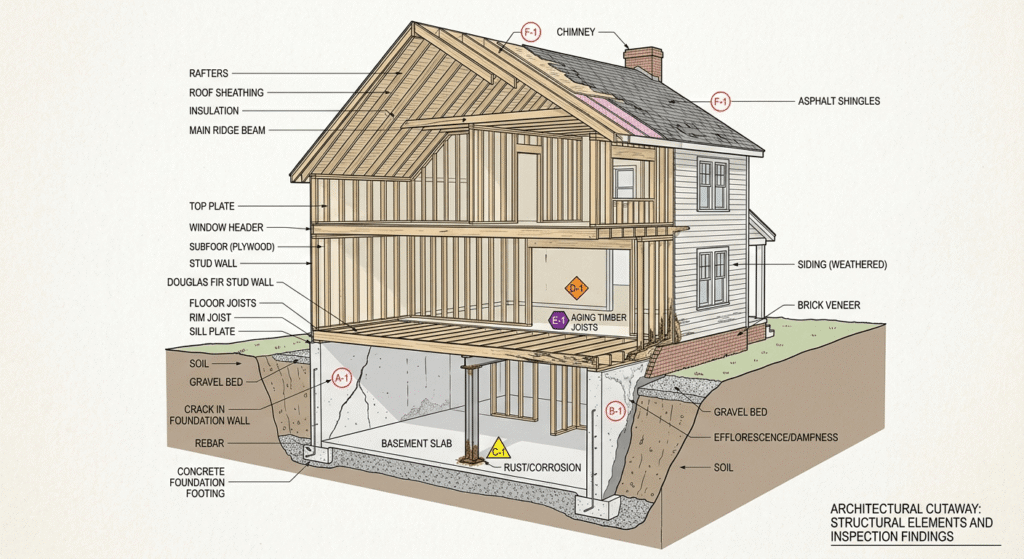
Start with a structural assessment before touching a budget line. Sound foundations and solid framing favour renovation; compromised structures push the decision toward a rebuild. Four factors drive most decisions:
- Foundation and structure: Cracks, load-bearing damage, or chronic moisture are costly to address through renovation and often return if not resolved at the source.
- Age and hazardous materials: Homes built before 1980 commonly contain asbestos and lead pipes. Abatement adds $15,000–$50,000 to any renovation budget before restoration work can begin.
- Layout limitations: If the floor plan needs significant changes, a full remodel of the existing structure can cost nearly as much as starting fresh on the same lot.
- Length of stay: Planning to sell within five years? Renovation typically delivers faster return. Staying 10-plus years? A rebuild’s energy savings and warranty coverage often outperform the renovation path.
A widely used industry guideline limits renovation spending to roughly 30% of your home’s current assessed value to avoid over-improving relative to the neighbourhood. Go beyond that threshold and rebuild economics start to make more sense.
Before committing to either path, review Leedway Group’s renovation and addition services alongside their custom home building options to understand what each path looks like in a GTA context.
How Much Does It Cost to Renovate vs Rebuild an Ontario Home in 2026?
The cost gap between renovation and rebuild is smaller than most homeowners expect. A cosmetic refresh covering new flooring, paint, fixtures, and a kitchen remodel runs $30,000–$80,000 for a typical Ontario home. A full gut renovation stripping back to the studs, with new insulation, electrical, plumbing, and finishes, averages $100–$300 per square foot across the province. For older Toronto homes, that figure climbs to $450–$550 per square foot in 2026. Hidden issues discovered once walls open add an average 20 to 30% on top of initial estimates.
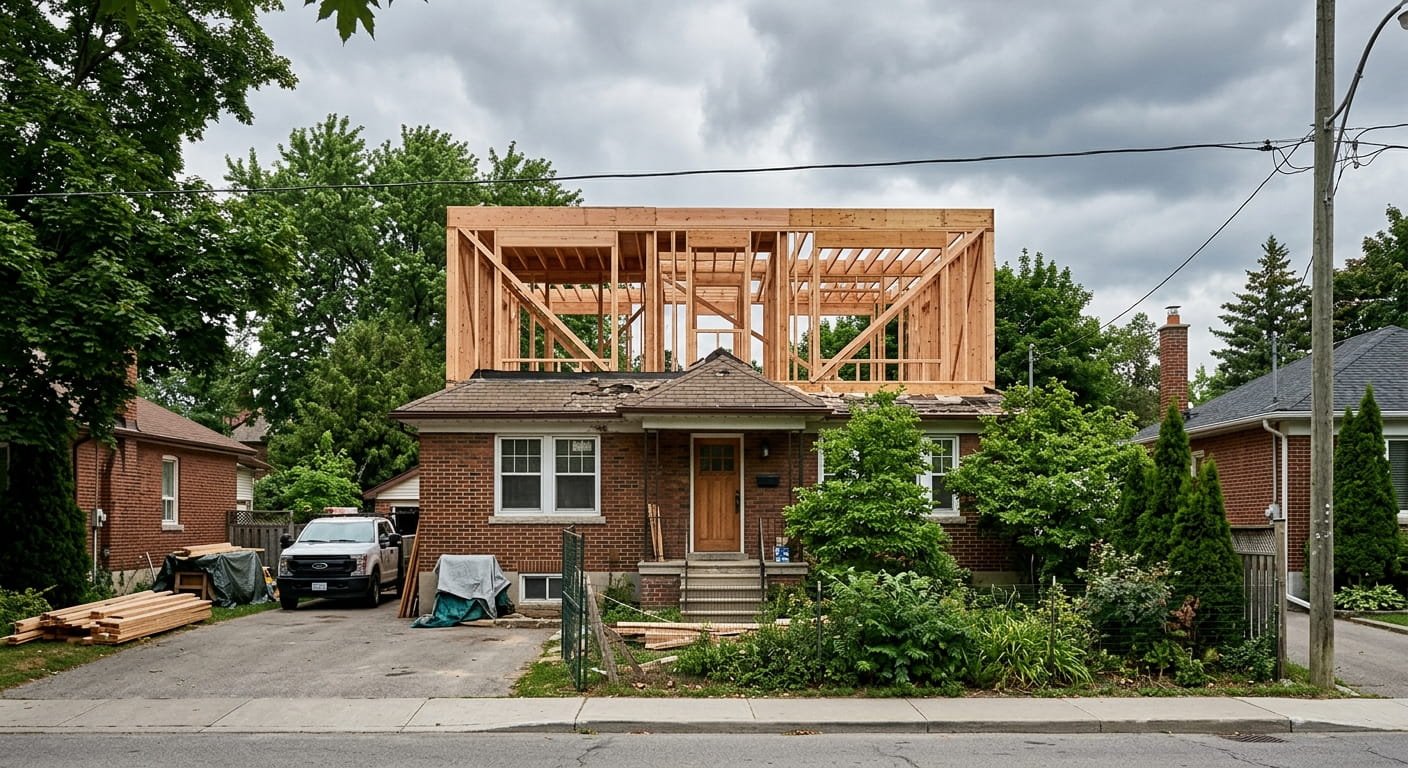
A teardown costs $10,000–$30,000 for demolition before construction even begins. The rebuild itself runDiagram showing structural assessment points for renovation versus rebuild decisions in Ontario homess $275–$450 per square foot, with luxury GTA custom projects reaching $600-plus.
| Factor | Renovation | Rebuild |
|---|---|---|
| Cost per sq ft (Ontario 2026) | $100–$300 | $275–$450 |
| Demo cost | None | $10,000–$30,000 |
| Timeline | 6–12 months | 12–18 months |
| Permits required | Building permit for structural work | Demo permit and building permit |
| Energy performance | EnerGuide 45–65 typical | EnerGuide 80–85 new build |
| New home warranty | Not applicable | Tarion warranty included |
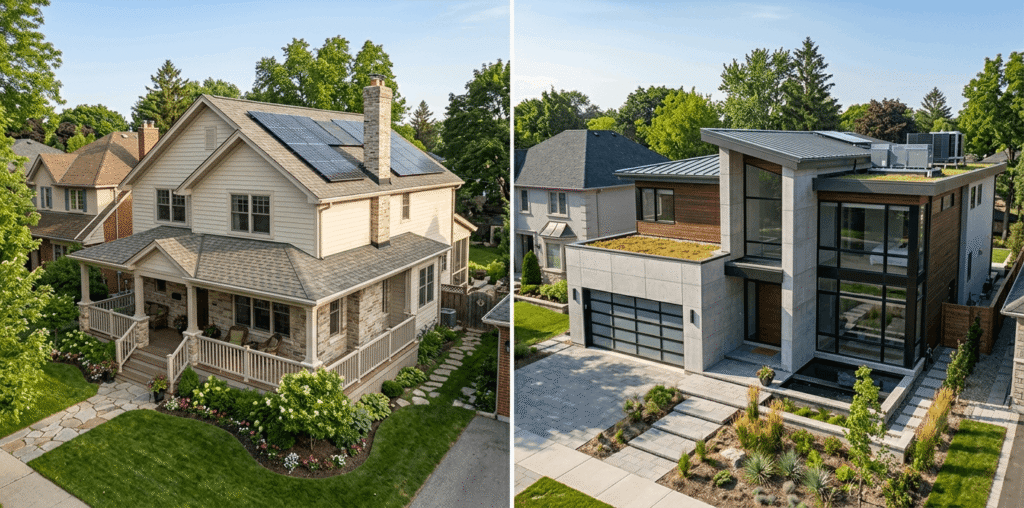
Permit costs follow their own procedure. Toronto’s building permit fee starts at $206.53 for basic work; major structural renovations and additions can reach $2,000–$5,000 in fees alone. A rebuild requires both a demolition permit and a building permit, and the new structure must meet current setback requirements under the Ontario Building Code, which may be more restrictive than what the existing home’s legal non-conforming status previously allowed.
For homeowners choosing the renovation path, Ontario’s Home Renovation Savings Program provides up to $12,000 in provincial rebates for qualifying energy-efficient upgrades including insulation, heat pumps, ENERGY STAR-certified windows, and solar panels. The program runs through November 30, 2026, delivered by Enbridge Gas and Save on Energy with Ontario government support.
Wondering how long it takes? Our guide maps the full custom home building timeline phase by phase.
Which Path Adds More Long-Term Value to Your Ontario Home?
A targeted kitchen or bathroom restoration returns 60 to 80 cents per dollar spent at resale in the GTA. A full home improvement project recaptures more, but costs significantly more to execute. New builds start at a higher price point and deliver superior energy performance. That increasingly matters to buyers who factor monthly utility costs into their purchase decisions.
In high-demand GTA neighbourhoods, the lot often represents 50 to 60% of total property value. When the land carries that much of the worth, replacing an aging structure with a modern, code-compliant home adds disproportionate resale value. New builds also come with the Tarion new home warranty, a seven-year coverage structure that no renovation project can replicate.
Homes built before 1990 typically operate at an EnerGuide rating of 45 to 60. A deep renovation with new insulation, air sealing, and windows might bring that to EnerGuide 65. A new custom build in Ontario routinely achieves EnerGuide 80 to 85. Over 20 years, the difference in heating and cooling costs is substantial, particularly as Ontario energy rates continue to climb.
For homeowners selling within two to three years, a targeted renovation through a qualified renovation contractor is usually the smarter value decision. For anyone committed long-term to a property with structural compromise, the rebuild path delivers a stronger overall return. Leedway Group’s planning and financial guidance resource breaks down how to run those numbers for your specific situation.
Frequently Asked Questions
1. Is it cheaper to renovate or rebuild a house in Ontario in 2026?
For cosmetic updates or targeted improvements, renovation is typically cheaper. A full gut renovation on a 1,600 square foot Ontario home runs $320,000–$560,000, which can approach the cost of a new custom build on the same lot. Homes with sound structures benefit most from renovation. Homes with structural problems, hazardous materials, or outdated layouts often cost less to rebuild once the true renovation scope is confirmed.
2. What permits are required to renovate or rebuild a home in Ontario?
Renovation projects involving structural changes, new plumbing, electrical work, or HVAC modifications require a building permit from your local municipality under the Ontario Building Code. A full rebuild requires both a demolition permit and a building permit. The new structure must also meet current setback requirements, which may differ from what the existing home’s legal non-conforming status previously allowed.
3. Can Ontario homeowners access rebates for home renovation projects in 2026?
Yes. Ontario’s Home Renovation Savings Program, delivered by Enbridge Gas and Save on Energy with provincial support, runs until November 30, 2026. It offers up to $12,000 for qualifying energy-efficient upgrades including insulation, heat pumps, ENERGY STAR-certified windows, and solar panels. Rebates apply to specific eligible upgrades, not total renovation spend, so not every line item in a renovation budget qualifies.
4. How long does a major renovation or rebuild take in Ontario?
A major home renovation takes 6 to 12 months depending on scope, trades availability, and permit approval timelines. A full teardown and rebuild runs 12 to 18 months from the demolition permit to occupancy. Both timelines can extend if permit reviews are delayed or unforeseen structural issues surface mid-project. Budget planning should account for temporary accommodation costs throughout either process.
5. When does a full rebuild make more financial sense than renovation in Ontario?
A rebuild makes sense when renovation costs reach 70 to 80% of new-build costs for the same square footage, when the foundation is compromised, or when asbestos abatement is required. Homes built before 1980 with original knob-and-tube wiring or galvanized plumbing often see renovation costs escalate quickly past initial estimates. On high-value GTA lots where land represents 50 to 60% of total property value, a custom rebuild positions the property for stronger long-term appreciation.
Conclusion
The renovation vs rebuild Ontario decision comes down to your home’s structure, your budget, and how long you plan to stay. Renovation works best when the foundation is solid and you’re targeting specific updates. Rebuild delivers stronger long-term value when structural compromise or outdated systems push renovation costs close to new-build prices. Leedway Group works with GTA homeowners through both paths, from targeted home improvement projects to full custom builds on existing lots. Contact us today to find out which option makes the most sense for your property.
For the bigger picture, see our complete Ontario home addition cost guide. Ready to start? Talk to the Leedway team about your build.