

Quick Answer Box: The MHRTC tax credit is a refundable federal credit worth 14.5% of eligible renovation costs, up to $7,250. It applies when Canadian homeowners build a self-contained secondary unit so a senior or a disabled adult can live with family. Claim it on line 45355 using Schedule 12.
What is the MHRTC Tax Credit?
The MHRTC tax credit is a refundable federal credit that pays back 14.5% of eligible renovation costs, up to $7,250, when you build a self-contained secondary unit so a senior or a disabled family member can live with you. It’s claimed on line 45355 of your income tax and benefit return.

How Much Can You Actually Get Back From the MHRTC?
The math is straightforward once you know the two numbers that matter: your eligible spending, capped at $50,000, and the 14.5% rate. Spend $50,000 or more on a qualifying renovation and your credit tops out at $7,250. Spend less, and you get 14.5% of whatever you actually paid.
Say your renovation costs $30,000. You’d claim $4,350. A $70,000 project still only nets you $7,250, since the CRA caps eligible expenses at $50,000 regardless of the final bill. There’s a real gap between what people assume (“15% up to $7,500,” a figure that circulates widely online) and the CRA’s current published rate. Always check the Canada.ca page directly before you file, since the rate has shifted since the credit launched.
Because it’s refundable, you don’t need any tax owing to benefit. If your calculated tax bill is $2,000 and you claim the full $7,250, you’ll get a refund of $5,250. This is one of the few Canadian tax credits that puts cash in your pocket even if you owe nothing.
You can claim more than one qualifying renovation in the same tax year, as long as each one involves a different qualifying individual. Build a basement suite for your brother and a garage-loft unit for your parents in the same year, and you calculate and claim both separately, each capped at $7,250.
Who Qualifies for the Multigenerational Home Renovation Tax Credit?
Eligibility hinges on two people and one space: a qualifying individual, an eligible individual who claims the credit, and a secondary unit that meets CRA’s definition. Miss any piece and the claim gets denied.
A qualifying individual is either 65 or older by the end of the renovation year, or an adult aged 18 to 64 who qualifies for the disability tax credit. Only one MHRTC claim can ever be made for that person in their lifetime, no matter how many times their living situation changes later.
The eligible individual is whoever actually pays the renovation costs and either lives in the home or owns it. That’s usually the qualifying individual themselves, their spouse or common-law partner, or a qualifying relation such as a parent, child, sibling, grandchild, aunt, uncle, niece, or nephew. Costs can be split between family members too. If two siblings pay $20,000 and $30,000 toward the same $50,000 renovation, they can each claim their own share on their own return, so long as the combined total doesn’t exceed the cap.
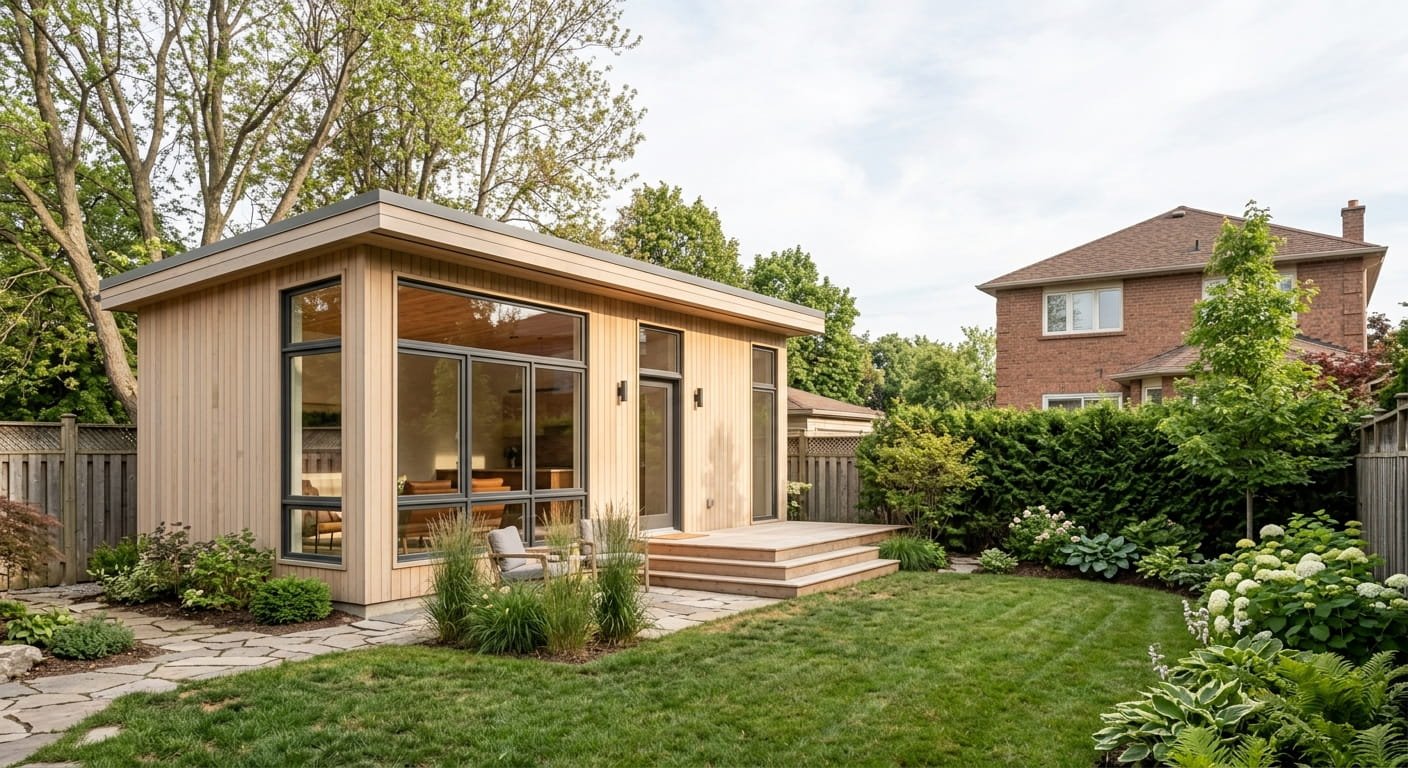
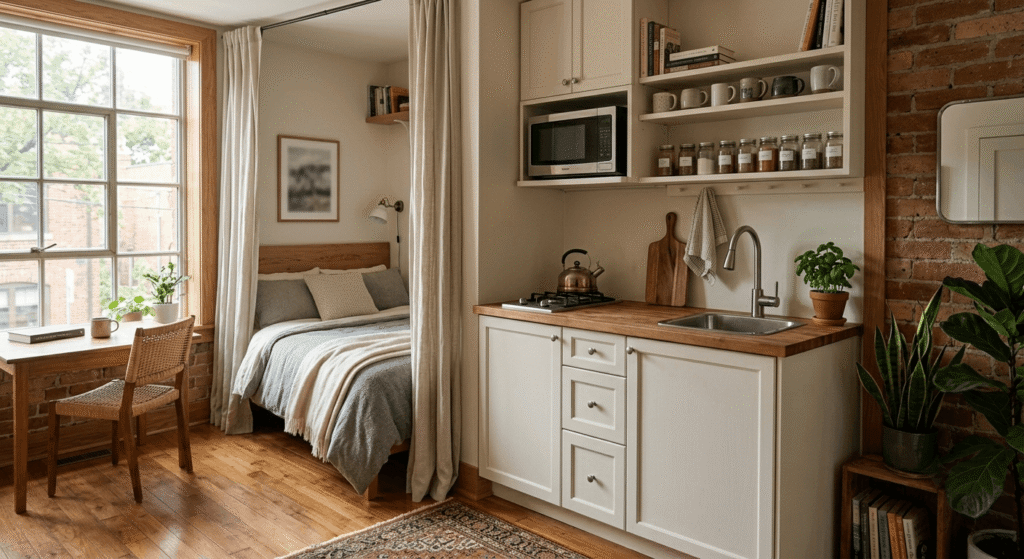
The secondary unit itself needs a private entrance, kitchen, bathroom, and bedroom. It has to meet local zoning, permits, and building codes, and it can’t be a space that already qualified as a legal secondary unit before the renovation started. A converted sunroom with a bedroom but no kitchen won’t cut it. CRA has confirmed the unit doesn’t need to be attached to the main house. Laneway houses, garden suites, and above-garage apartments all qualify, provided they sit on the same property.

What Renovation Expenses Qualify for the Credit?
Qualifying expenses cover materials, professional labour, permits, and equipment rentals directly tied to building the secondary unit. If you do the work yourself, materials and permits still count, but your own labour and tools don’t.
Hiring a relative gets tricky. Expenses paid to a family member only qualify if that person is registered for GST/HST, which rules out most informal arrangements where an uncle who does drywall on the side helps out for cash. Routine repairs, household appliances, entertainment systems, and gardening or security services are excluded entirely, since these don’t create the secondary unit itself.
Keep every receipt. CRA wants proof showing the vendor’s name, business address, and GST/HST number if applicable, plus a description of the work, the property address, the invoice amount, and confirmation of payment. Renovation projects that also involve improving accessibility, such as adding curbless showers or widened doorways for aging in place, often overlap with the Home Accessibility Tax Credit. You can’t claim the same dollar under both credits, so decide upfront which expenses go where.
Timing matters more than people expect. You claim the credit in the tax year the renovation is completed, defined as passing final inspection, not the year you started. A project that began in 2025 but wasn’t inspected and signed off until 2026 gets claimed on your 2026 return.
Common Mistakes That Get MHRTC Claims Rejected
A surprising number of otherwise-eligible families lose the credit over avoidable errors. Forgetting the kitchen is the most frequent one. A bedroom and bathroom addition without a kitchen doesn’t meet the definition of a self-contained unit, even if a relative genuinely moves in.
Another trap is assuming any caregiver qualifies the renovation. If the person moving into the new unit isn’t a blood relative, spouse, or qualifying relation as CRA defines it, the renovation doesn’t count, even if that person provides essential daily care. Families also sometimes miss the lifetime-claim rule and try to claim a second renovation for someone who already had a unit built for them years earlier by a different family member. CRA tracks this by qualifying individual, not by household, so it will catch a duplicate claim.
Skipping local permits is the last big one. If the finished unit doesn’t meet zoning bylaws or building codes, it doesn’t matter how nicely it’s finished. It’s disqualified from the multigenerational home renovation tax credit entirely.
Frequently Asked Questions
1. How much is the MHRTC tax credit worth in 2026?
It’s 14.5% of eligible renovation expenses, capped at $50,000 in spending, for a maximum refundable credit of $7,250 per qualifying renovation.
2. Can I claim the MHRTC and the Home Accessibility Tax Credit on the same expenses?
No. The CRA prohibits claiming the same dollar amount under both programs. You need to allocate specific expenses to one credit or the other.
3. Does the multigenerational home renovation tax credit cover a detached garden suite?
Yes. The secondary unit doesn’t need to be physically attached to the main house. It just has to sit on the same property and meet local zoning and building code requirements.
4. Who counts as a qualifying individual for the CRA tax credit?
Someone who’s either 65 or older by the end of the renovation year, or an adult aged 18 to 64 who’s eligible for the disability tax credit.
5. Can more than one family member claim the credit for the same in-law suite renovation?
Yes, if they share the costs and each meets the eligible-individual criteria. Common approaches include:
- Splitting the claim in proportion to what each person paid
- One person claiming their full share while the other claims the remainder
- Either way, the combined total across all claimants can’t exceed $50,000 in expenses
Conclusion
The multigenerational home renovation tax credit turns a costly renovation into meaningful income tax refund relief, provided the paperwork, permits, and family relationships line up with CRA’s rules from the start. If you’re weighing a secondary suite for aging in place or planning ahead for a parent who’ll eventually need support, our guide to designing a functional in-law suite walks through layout considerations before you break ground. For homeowners further along, our renovation planning resources cover budgeting and contractor selection so your project stays inside the $50,000 threshold where it makes the most tax sense.