
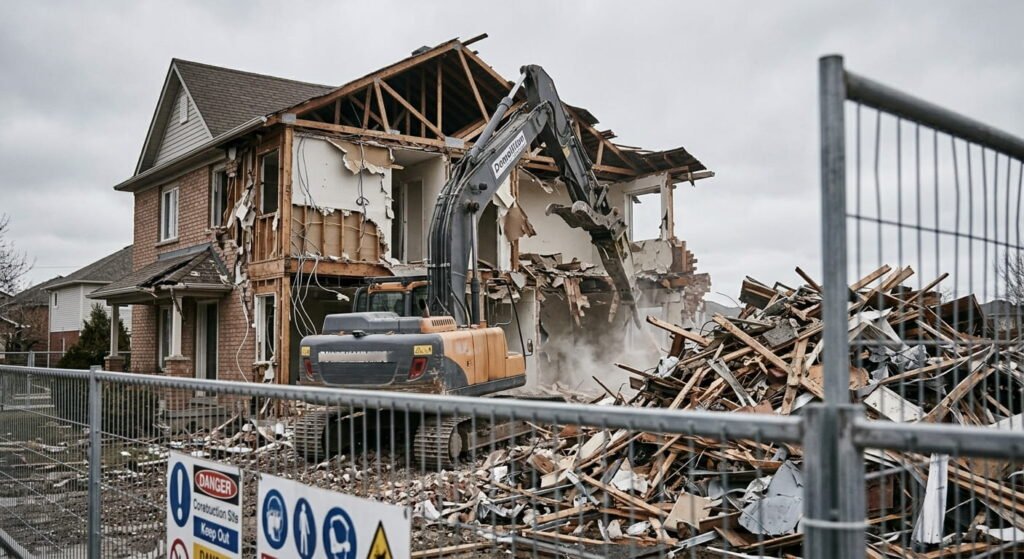
Quick Answer Box: A full house demolition should never be a DIY job. The work exposes you to structural collapse, airborne asbestos, lead dust and live gas lines, and it calls for a permit and trained operators. In Canada, hiring qualified demolishing contractors is the safe, code-compliant way to take a house down.
What Is a Full House Demolition?
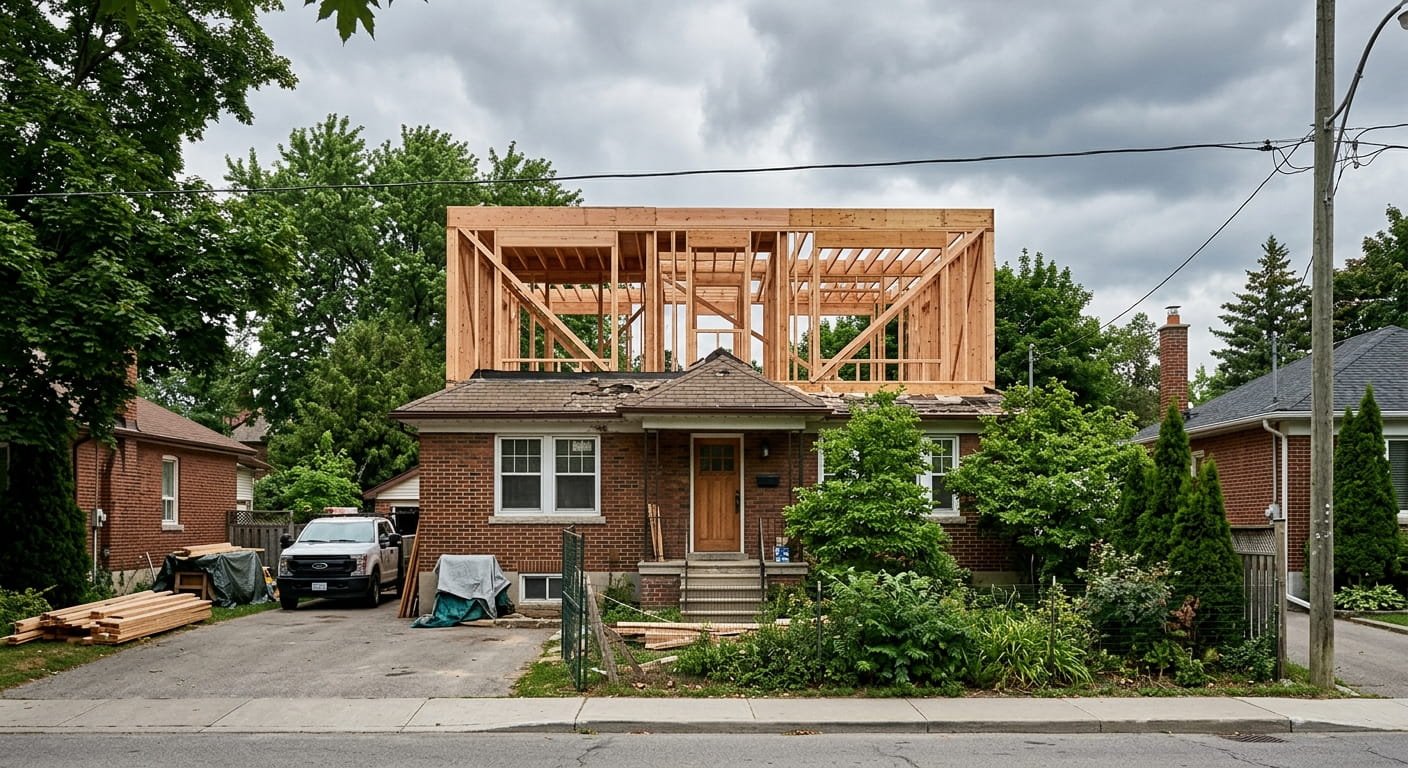
A full house demolition is the complete teardown of a home to clear the lot, usually for a new build. The Canadian Centre for Occupational Health and Safety (CCOHS) calls this total demolition, and it differs from interior demolition, which removes only non-structural finishes such as drywall and ceilings. It typically requires a municipal permit and disconnected utilities. ccohs
Most teardowns happen because the owner plans to rebuild. If you haven’t settled that question yet, our renovation versus rebuild comparison lays out the trade-offs for Ontario homeowners.
Why Is DIY House Demolition So Dangerous?
DIY house demolition is dangerous because the worst hazards stay hidden until something fails. The CCOHS demolition fact sheet lists structural collapse, falling debris, crush injuries, hazardous dust and gas explosions among the risks of tearing down a building. A sledgehammer and a rented bin control none of them. CCOHS describes manual demolition as a method for smaller jobs that need precision, not for entire structures. ccohs
Structural Instability Starts With the First Cut
A house stands because its loads travel through walls, beams and columns down to the foundation. Remove one piece in the wrong order and the rest can drop without warning. That’s structural instability. CCOHS says a qualified professional, such as an engineer, must assess the foundation, walls, columns, beams and roof before a teardown to reduce the risk of an uncontrolled collapse. Its fact sheet, first published in March 2026, also calls for a written demolition plan and a risk assessment for every part of the work. ccohs
Can you tell which wall is carrying the second floor?
Hazardous Materials Hide Behind Finished Walls
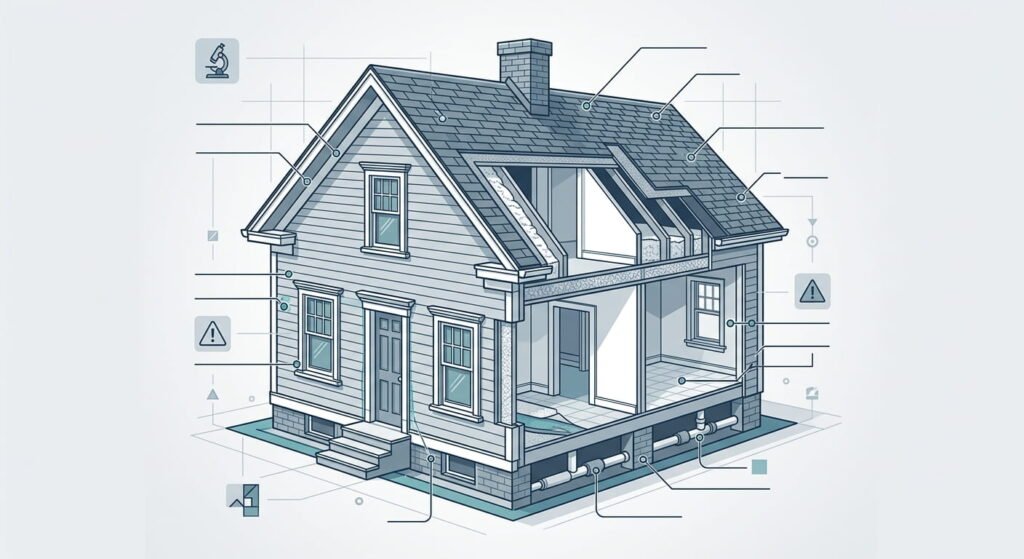
Older Canadian houses contain hazardous materials you can’t identify by looking. Health Canada warns that breathing in asbestos fibres can cause cancer and other diseases. Its advice is blunt: hire a professional to test before you renovate, then a qualified removal specialist if asbestos is found. canada
Canada prohibited asbestos products in 2018. That rule didn’t strip the material out of existing insulation, siding or tiles. Sealed and tightly bound, those products carry no major health risk. Demolition is the opposite of sealed. Asbestos and your health +2
Lead Paint Becomes Toxic Dust
Lead paint is the other common find. According to Health Canada, a home built before 1960 probably contains lead-based paint, and one built between 1960 and 1990 may have it on the exterior. The department tells homeowners not to sand, scrape or burn it off because that releases harmful dust. Knocking a wall apart does the same thing on a larger scale. canada
Lead damages the brain, nervous system, blood system and kidneys, with young children at the greatest risk. Dust doesn’t stop at your property line.
Gas Lines and Live Utilities
Gas lines can turn a teardown into a neighbourhood emergency. CCOHS lists fire or explosion from gas line contact as a demolition hazard and says utilities should be identified and de-energized before work begins. The Canada Energy Regulator’s damage prevention guidance points anyone disturbing the ground to Click Before You Dig, which sends a technician to mark buried pipes and cables. The regulator’s guidance calls for a locate request at least three working days before digging. Demolition +2
What Do Demolishing Contractors Handle That Homeowners Can’t?
Demolishing contractors handle the parts of a teardown that never appear in a weekend video: structural assessment, abatement, utility locates, machine operation, permits and disposal. CCOHS notes this work can require WHMIS training, asbestos abatement certification and machine operator credentials. Few homeowners hold even one of those. ccohs
Heavy Equipment Needs a Trained Operator
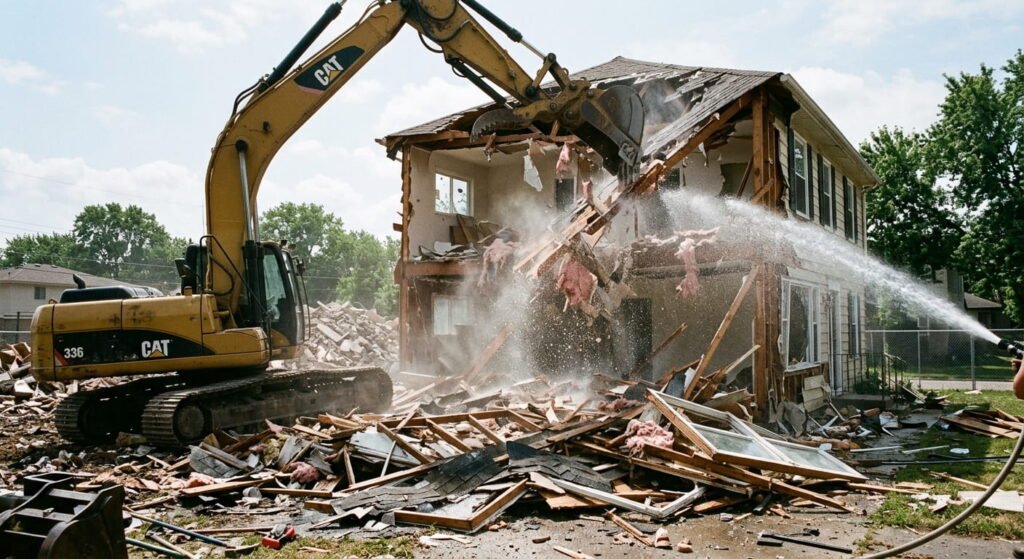
Mechanical demolition relies on heavy equipment such as excavators and bulldozers. CCOHS treats operating that machinery as a hazard in its own right, alongside being struck by debris. A one-day rental doesn’t teach you how to bring a roof down away from the neighbour’s fence. For a look at a managed teardown, see our Hagar Banquet Hall demolition project. ccohs
PPE Is Chosen by Hazard, Not by Habit
PPE on a demolition site comes out of a hazard identification and risk assessment. The CCOHS list runs from head protection and respirators to puncture-resistant gloves and hearing protection. The respirator has to match the dust, and you only know what’s in the dust after testing. That’s why the structure should be cleared of hazardous materials before it comes down. Demolition +2
Building Code, Permits and Debris
A house demolition is regulated work. The National Building Code of Canada 2020 applies to the demolition of existing buildings, and Part 8 covers safety measures at construction and demolition sites. It’s a model code that provinces and territories can adopt, so you need to confirm which building code applies where the house sits. A 2025 edition has since been published, which is one more reason to check with your province. National Building Code of Canada: 2020 – NRC Publications Archive – Canada.ca +3
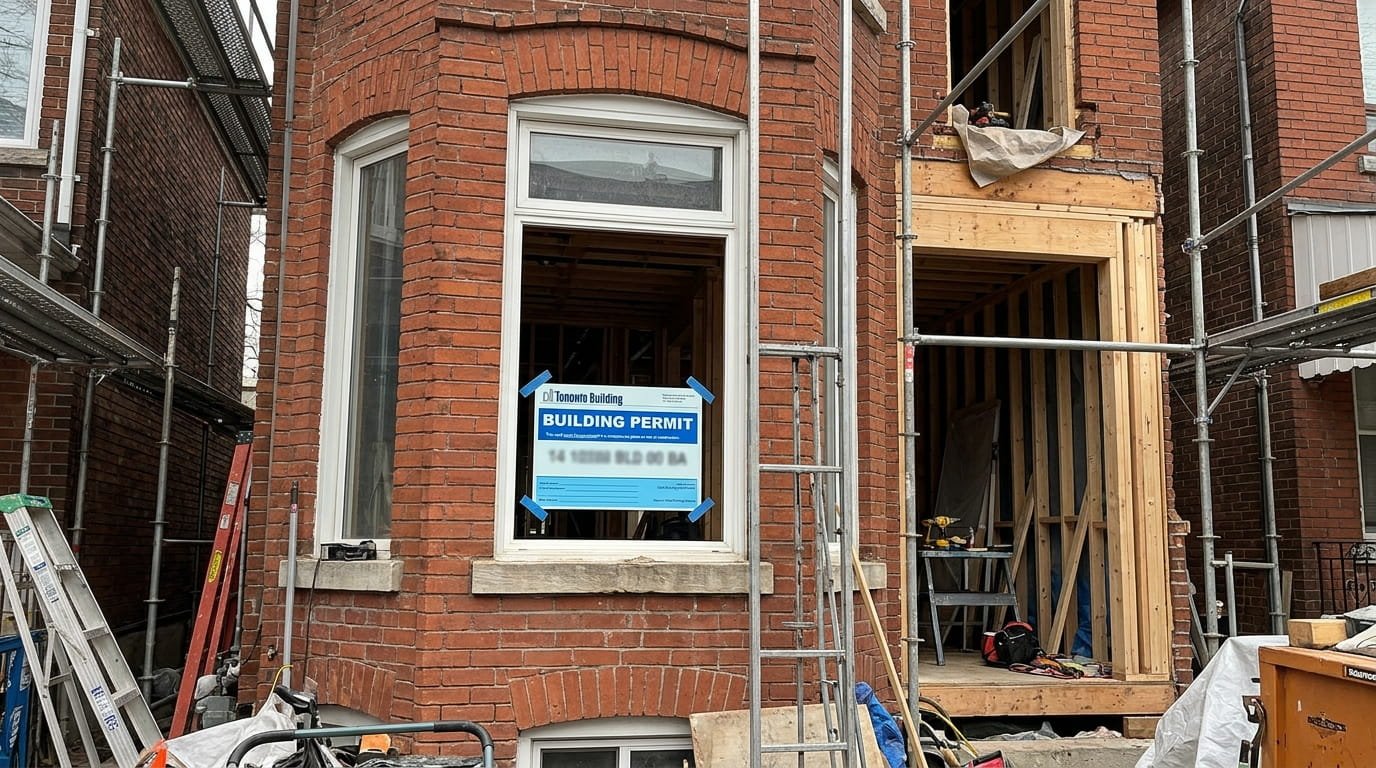
Municipal permits add another layer. The Town of Milton, for example, charges a flat $264.20 for a demolition permit, as noted in our guide to custom home builders in Milton. Then comes the debris. Concrete, metal and wood can often be recycled, while hazardous waste has to follow regulated disposal rules. leedwaygroupccohs
Frequently Asked Questions
1. Is it legal to demolish your own house in Canada?
Demolition in Canada is governed by provincial building codes and municipal permits, so the rules change by location. The National Building Code of Canada 2020 applies to demolition, and provinces and territories adopt it into their own regulations. Ask your municipal building department what the permit requires before you touch the structure. canada
2. What hazardous materials are found in older Canadian homes?
Health Canada identifies asbestos and lead as substances in old building materials that may pose a health risk once disturbed. Common sources include:
- Insulation, including vermiculite that may contain asbestos
- Exterior siding
- Floor and ceiling tiles
- Lead-based paint in homes built before 1960 canada
3. Do gas lines need to be shut off before a house demolition?
Yes. CCOHS says gas, electrical, water and telecommunications services should be identified and de-energized before demolition begins, with both public and private lines located and written into the demolition plan. Arrange disconnection with your utility providers, then request a locate through Click Before You Dig so buried lines get marked. ccohs
4. What PPE is required for demolition work?
CCOHS lists eight items to expect on a demolition site: head protection, respiratory protection, high-visibility apparel, coveralls, eye and face protection, puncture-resistant gloves, hearing protection and safety footwear. The exact gear depends on a risk assessment for the specific job, which is why testing for asbestos and lead comes first. ccohs
5. How do I choose demolishing contractors for a full teardown?
Start with proof of training. CCOHS notes that demolition crews may need WHMIS training, asbestos abatement certification, fall protection and machine operator credentials, depending on the scope. Ask who completes the structural assessment and where the debris will go. A contractor who can’t answer both in writing isn’t ready for your project. ccohs
Conclusion
A full house demolition packs collapse risk, toxic dust, live utilities and permit obligations into one project. Federal guidance points in a single direction: plan it, test it, permit it and hand the teardown to trained crews. The savings from a DIY attempt vanish with one mistake. If you’re clearing a lot to rebuild in the Greater Golden Horseshoe, book a consultation with Leedway Group before anything comes down.