

Quick Answer Box:Demolition safety starts before any wall comes down. In Canada, a safe site needs a demolition permit, a hazardous materials survey, disconnected gas and electrical services, fenced access, CSA-certified protective gear, dust suppression and a debris plan. Ontario crews must also follow O. Reg. 213/91, which requires top-down, systematic dismantling.
What is demolition safety?
Demolition safety is the set of plans, controls and protective equipment that keeps workers, neighbours and the public from harm while a building is taken apart. In Canada it covers permits, hazardous material surveys, utility disconnection, site access, protective gear, dust suppression and debris handling.
Demolition safety rules are set province by province. Leedway Group is based in Mississauga and builds across the Greater Golden Horseshoe, so the legal references below are Ontario’s. If you’re still deciding whether to renovate or rebuild, settle that first, because a full teardown triggers more of the steps in this checklist.
What should a demolition safety checklist cover before work starts?
Before any equipment arrives, the checklist should confirm four things: the permit is issued, hazardous materials are identified and removed, every service is disconnected, and the site is fenced. Ontario law puts the first two on the property owner as well as the contractor, so confirm in writing who handles each item under your design-build contract.
A pre-start demolition safety checklist looks like this:
- Building permit to demolish issued by the municipality
- Notice of project filed where the size threshold applies
- Designated substances list given to every bidder
- Asbestos-containing material removed by a qualified contractor
- Gas, electrical and water services disconnected, with written confirmation
- Glass removed from windows and doors before exterior walls come down
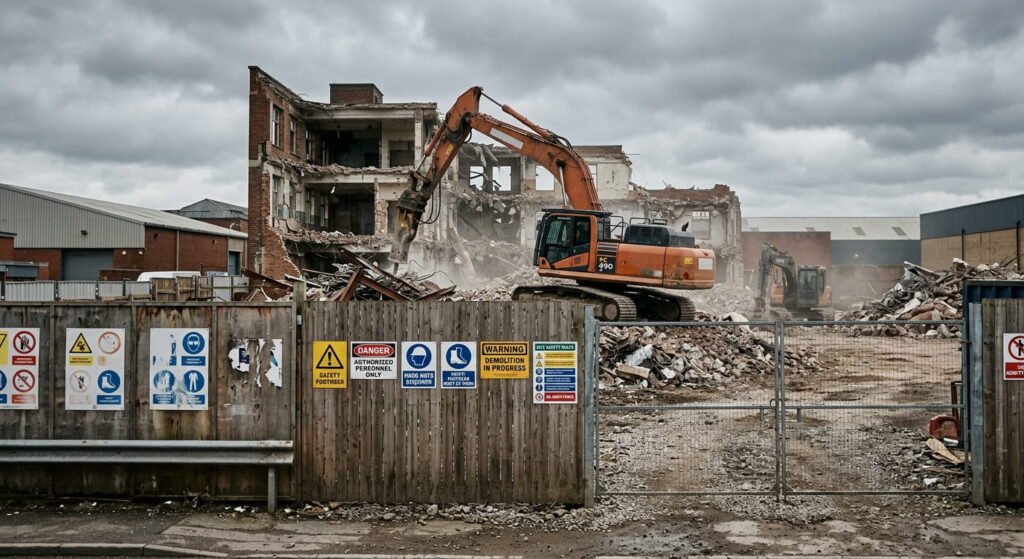
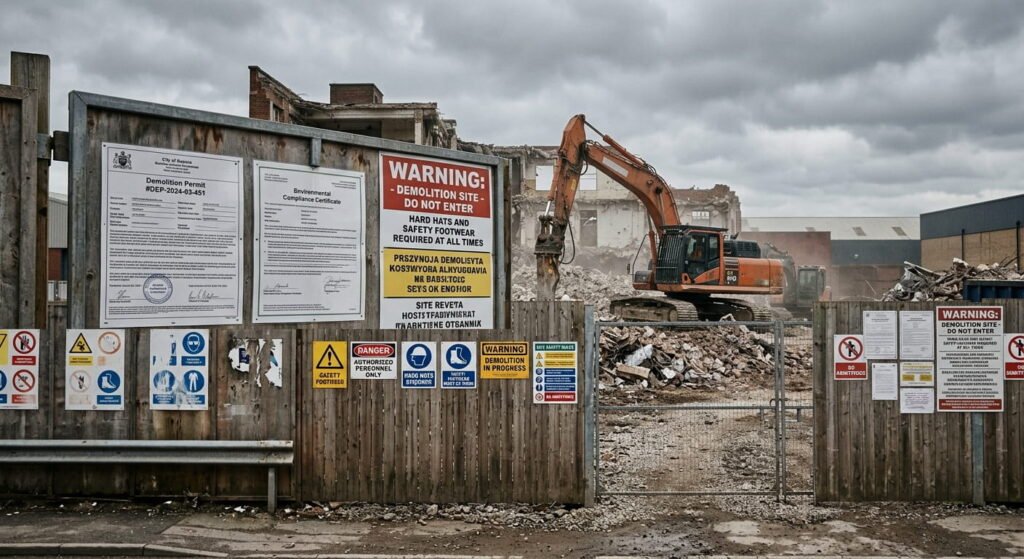
- Fencing, signage and one controlled entry point in place
Permit and notice of project
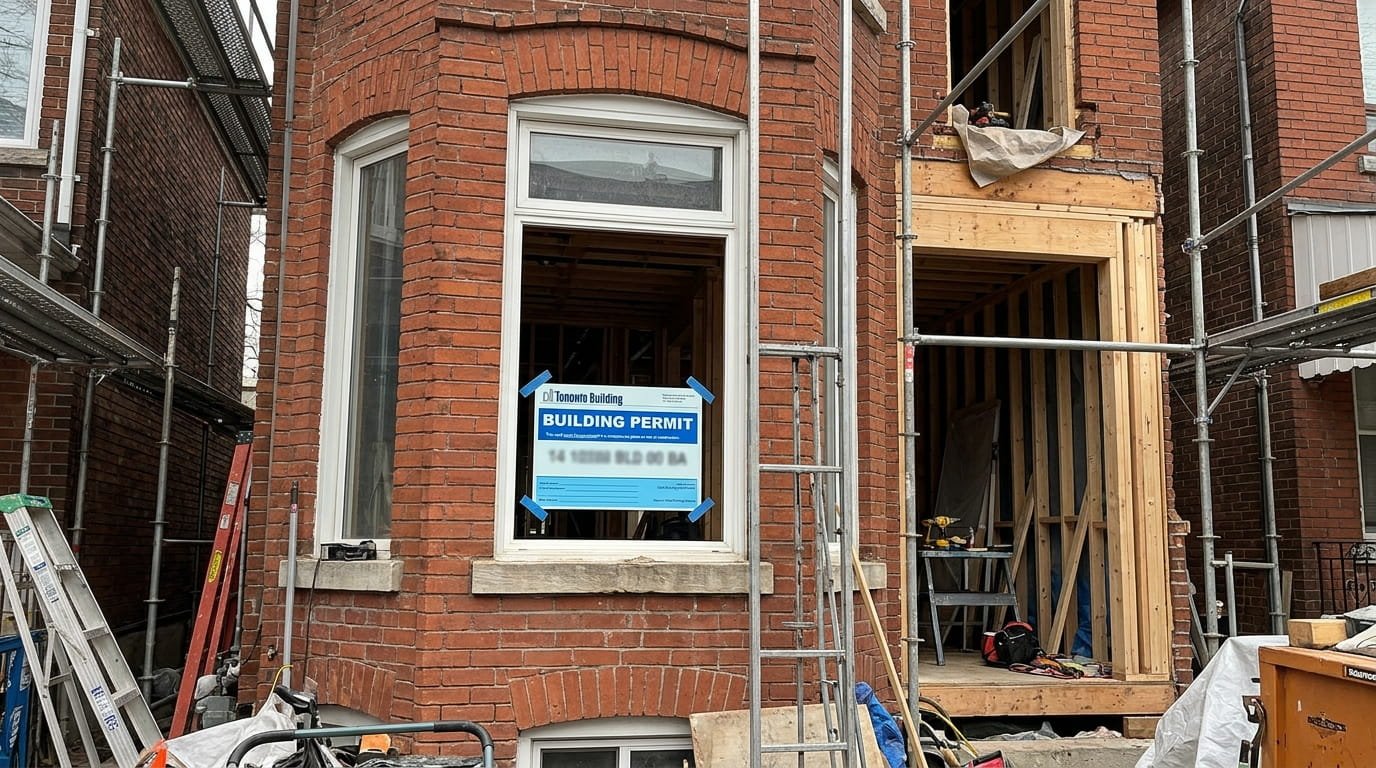
Ontario requires a building permit to demolish a building, and your municipal building department issues it. An individual found guilty of an offence under the Building Code Act, such as working without a permit, can be fined up to $50,000 for a first offence. Properties on a municipal heritage register add a wait: the owner must give council 60 days’ notice. Building permits +2
Whoever runs the project (the constructor, in Ontario’s wording) has a separate filing. A notice of project applies when the building is at least four metres high with a floor area of at least 30 square metres. Ontario also reissued its permit application form effective February 16, 2026, so download the current version. ontario
Hazardous building materials assessment
A hazardous building materials assessment tells the crew what’s inside the walls before they open them. Section 30 of Ontario’s Occupational Health and Safety Act requires the project owner to list every designated substance on site, asbestos and lead among them, and hand that list to prospective contractors before a contract is signed. Homeowners are included. ontario
Asbestos has its own regulation. Under O. Reg. 278/05, demolition can go ahead only after asbestos-containing material that may be disturbed has been removed as far as practicable. Health Canada gives homeowners the same advice: hire a professional to test for asbestos before work begins, then a qualified removal specialist if any turns up. canada
Gas lines, electrical and other services
Gas lines and hydro both need to be dead before the first cut. O. Reg. 213/91 requires every gas, electrical or other service that could endanger people to be shut off and disconnected before demolition, and to stay that way until the work ends. A closed valve doesn’t meet that test. Ask each utility to confirm the disconnect in writing. Some municipalities, Calgary among them, want a service disconnect form with the permit application. ontariocalgary
How do crews stay safe once demolition begins?
Once work begins, demolition safety depends on sequence and separation. Ontario requires demolition to proceed systematically from the highest point to the lowest, and only workers directly engaged in the work may be in, on or near the structure. Everyone else stays outside the fence. That includes the owner.
Safety boots and head-to-toe protection
Demolition ground is nails and broken concrete, so safety boots come first. CCOHS explains that CSA green triangle footwear has a puncture-resistant sole and a Grade 1 protective toe, and is meant for heavy work such as construction where sharp objects are underfoot. Check the label against CSA Z195-14 (R2023).
The rest of the PPE list is short: a hard hat, eye protection, gloves, high-visibility clothing and hearing protection near breakers.
Dust control at the source
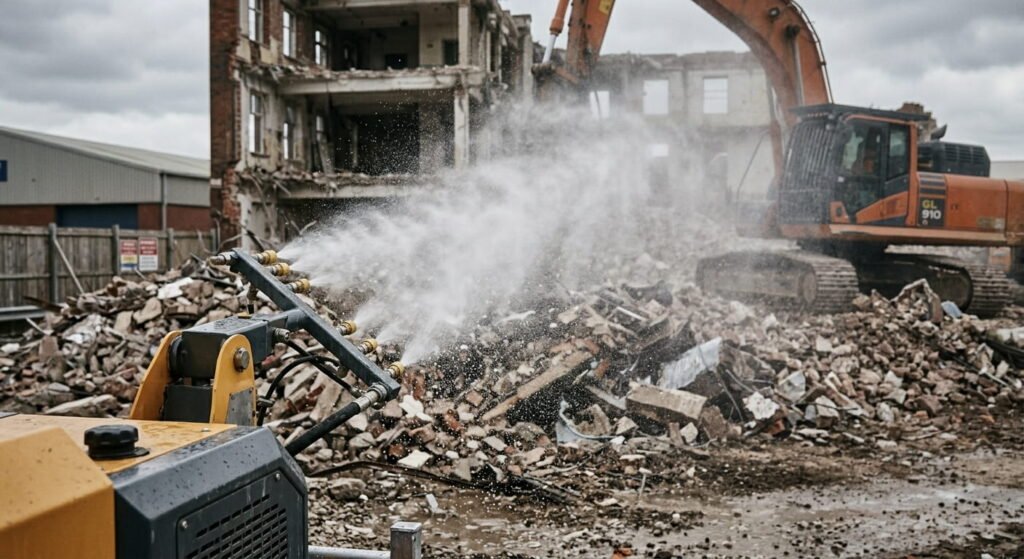
Dust control comes before masks. Crushed concrete and masonry release silica dust, and Ontario’s guidance on controlling the silica hazard says wet methods should be used whenever practical. Keep material damp with a hose or misting unit while machines work, cover waste containers, and clean up with a HEPA-filtered vacuum or wet sweeping. Controlling the silica hazard +2
Respiratory protection is the backup when dust can’t be kept down. A tight-fitting respirator has to be fit tested before use, and CCOHS describes how respirator fit testing works under CSA Z94.4-18 (R2023). One caution: the BC Centre for Disease Control warns that a well-fitted N95 is not enough protection against asbestos.
Debris removal and site access
Debris removal needs a plan before the bins arrive. Ontario’s regulation lets demolition debris be dropped only into an enclosed, designated area that people can’t enter. Clear rubble as each stage finishes so exits and equipment paths stay open, and keep hazardous waste separate for proper disposal. If work stops partway, barriers must go up around whatever is still standing. For a finished example, Leedway Group’s project portfolio includes the demolition of a former banquet hall. Occupational Health and Safety Act – O. Reg. 213/91 +2
Frequently asked questions
1. Is a permit required to demolish a house in Ontario?
Yes. Ontario’s Building Code Act requires a building permit to demolish a building, issued by the municipal building department. In a demolition control area, a residential property also needs a demolition permit from municipal council. An individual found guilty of an offence under the Act can be fined up to $50,000 the first time and up to $100,000 after that. ontario
2. What PPE is required on a demolition site in Canada?
CCOHS notes that every Canadian jurisdiction requires workers to wear adequate protection against workplace hazards. On a demolition site that usually means: ccohs
- A CSA-certified hard hat
- Green triangle boots with a Grade 1 toe
- Safety glasses or a face shield
- Hearing protection near breakers and saws
- A fit-tested respirator where dust can’t be controlled
3. Can homeowners do their own demolition before a renovation?
Health Canada advises against disturbing materials that may contain asbestos yourself. Have a professional test before any tear-out, and hire a qualified removal specialist if asbestos is found. Ontario also treats a homeowner who hires trades as the project owner, with a legal duty to give them a designated substances list first. Asbestos and your health +2
4. How do you control dust during demolition?
Water is the main tool. Ontario’s silica guidance says wet methods should be used whenever practical, so crews mist or hose material while machines work. Waste containers stay covered, and clean-up is done with a HEPA-filtered vacuum or wet sweeping. Respirators are added when those controls can’t bring dust levels down far enough. Controlling the silica hazard +2
5. Why must gas and electrical services be disconnected before demolition?
O. Reg. 213/91 requires it in Ontario. All gas, electrical and other services that could endanger people must be shut off and disconnected before demolition starts, and stay disconnected until it ends. A live gas line or energized cable hidden in a wall can cause a fire or electrocution the moment equipment hits it. ontario
Conclusion
Demolition safety is settled mostly on paper, before the excavator shows up: the permit, the hazardous materials list, the utility disconnects and the fencing plan. Get those four right and the site work follows a known sequence. Planning a teardown or major renovation in the Greater Golden Horseshoe? Contact Leedway Group to talk through your site.