

Quick Answer: Basement flooding in Toronto usually starts with sewers that overload in heavy rain or groundwater that collects around the foundation. The City’s Basement Flooding Protection Subsidy Program pays up to 80 per cent of invoiced costs, to a maximum of $6,650 per property, for backwater valves, a sump pump, battery backup, drain capping and a plumbing assessment.
What Is Basement Flooding Protection in Toronto?
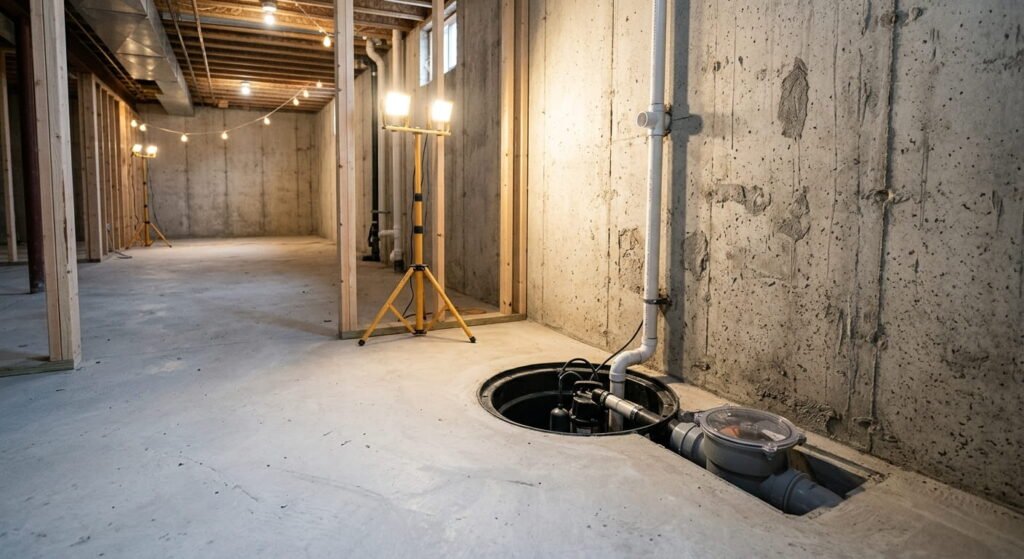
Basement flooding protection in Toronto is the set of plumbing and drainage upgrades that keep sewage and groundwater out of your lowest floor. The core devices are a backwater valve, a sump pump and capped foundation drains, and the City refunds most of the cost if you follow its rules.
The timing matters. On May 1, 2026, the City launched an expanded program that almost doubles the money available to homeowners. The City also says every home is at risk, even one that has never flooded. toronto
Leedway Group works with homeowners across Toronto and the wider GTA, and the pattern is familiar: people budget for finishes first and water second. If you’re planning to finish the space, read our Toronto basement renovation cost and permit guide alongside this one.
How Much Does the City of Toronto Basement Flooding Subsidy Cover in 2026?
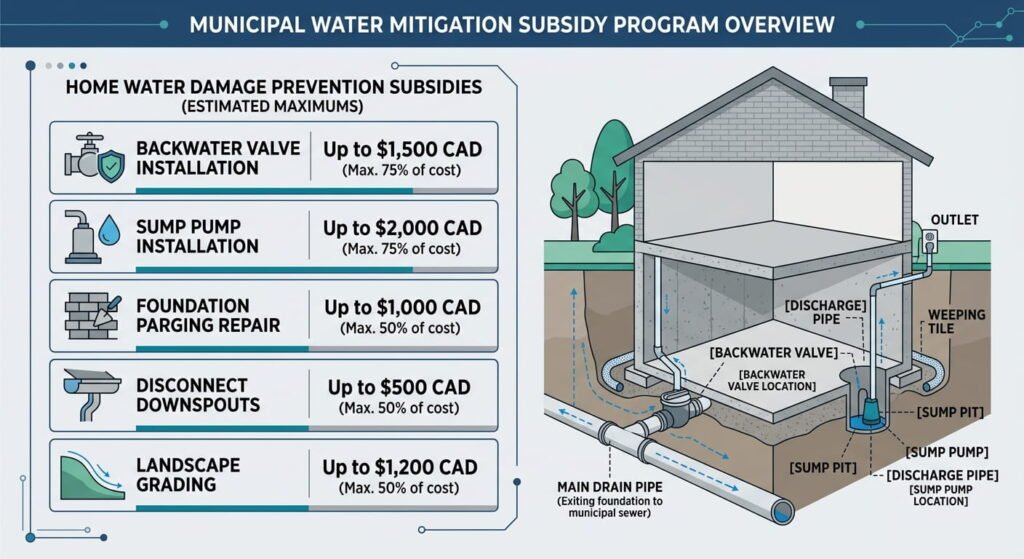
The subsidy covers 80 per cent of each invoice up to a fixed cap per device. The caps are $1,600 per backwater valve for up to two valves, $2,250 for a sump pump, $300 for battery backup, $400 for foundation drain capping and $500 for a home plumbing assessment. Current amounts are listed on the Basement Flooding Protection Subsidy Program page.
| Eligible work | Maximum subsidy | Invoice needed to reach the cap |
|---|---|---|
| Home plumbing assessment | $500 | $625 |
| Backwater valve (each, up to two) | $1,600 | $2,000 |
| Sump pump and alarm | $2,250 | $2,813 |
| Sump pump battery backup | $300 | $375 |
| Foundation drain severance and capping | $400 | $500 |
Here’s a detail most guides skip. The $6,650 headline only adds up if your home qualifies for two backwater valves, which the City intends for homes with multiple sewer connections. A house with one valve tops out at $5,050. toronto
Backwater Valve Toronto Costs and Rebate
Published 2026 quotes from Toronto plumbers vary widely, but most homeowners pay between $1,800 and $4,500 for a mainline valve in an existing home. On a $2,800 job, 80 per cent would be $2,240, so the rebate stops at the $1,600 cap and you pay about $1,200.
You’ll need a City of Toronto building permit first. Don’t let anyone cover the valve before the inspection is done. toronto
One tradeoff surprises people. When the valve closes during a storm, water from your toilets, sinks and washing machine can’t drain and will back up into the house. toronto
Sump Pump, Battery Backup and Flood Alarm
A new sump pump in Toronto runs roughly $800 to $2,500 depending on pump type, whether a pit must be dug and whether you add battery backup. Storms knock out power, which is why federal sump pump guidance recommends an alternate power source and a backup pump. canada
A flood alarm is not a separate grant. The City counts an alarm on a backwater valve or sump pump as part of that device’s subsidy, and it suggests a valve alarm so you know when the valve has closed. If you add battery backup, your contractor must itemize it separately on the invoice. Basement Flooding Protection Subsidy Program +2
Foundation Drains and the Sewer Lateral
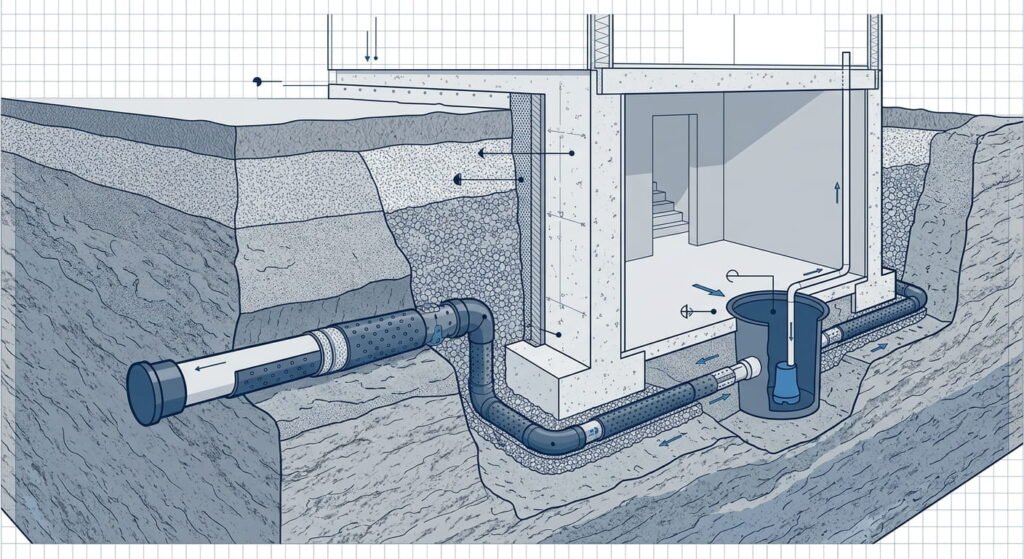
Foundation drains, also called weeping tiles, are perforated pipes around the footing that collect groundwater and send it to a solid pipe or a sump pit. In many older homes they still empty into the sewer lateral, the buried pipe that joins your house to the City main.
If yours are connected to the sewer, the City recommends disconnecting them and installing a sump pump, a backwater valve or both. Severing and capping that connection is the work the $400 subsidy pays for. toronto
What Does Basement Waterproofing and Basement Drainage Cost Beyond the Subsidy?
The subsidy pays for plumbing devices only. Basement waterproofing, grading and crack repair come out of your own pocket. One Toronto contractor’s published price list shows interior systems at $80 to $240 per linear foot and exterior work at $150 to $350 per linear foot.
Most Toronto homeowners spend $5,000 to $15,000 on moisture protection before basement finishing begins. These are GTA figures, and deep foundations or tight side yards push them higher. leedwaygroup
Start with the free fixes. The City’s basement flooding prevention checklist tells you to clear eavestroughs, seal cracks and drain disconnected downspouts about two metres from the foundation.
Who you hire decides whether you get paid. Contractors must hold a valid City of Toronto business licence at the time of the work, and a Building Renovator (T85) licence covers sump pumps and pipe capping but not backwater valves or assessments. Check any name on the City’s Business Licence Lookup before you sign. toronto
Drainage work tied to a larger renovation also has to satisfy provincial code. Our Ontario Building Code Guide 2026 explains the permit side, and the Ontario legal basement building code guide covers rental suites. For bigger projects such as underpinning, see Leedway Group’s renovation and design-build services.
Frequently Asked Questions
1. How much is the Toronto basement flooding subsidy in 2026?
The City of Toronto offers up to $6,650 per property as of May 1, 2026. It pays 80 per cent of each invoice up to a cap per device, and the higher amounts apply to eligible work completed on or after November 12, 2025. toronto
2. Who qualifies for the City of Toronto basement flooding subsidy?
Registered owners of a single-family, duplex, triplex or fourplex home in Toronto qualify. You must also meet these conditions:
- Downspouts disconnected from the sewer, or a City exemption
- Front yard paving that complies with the zoning by-law
- No outstanding taxes or debts owed to the City
- A contractor with a valid City business licence
3. Do I need a permit to install a backwater valve in Toronto?
Yes. The City requires a building permit for a backwater valve, followed by an inspection once the work is finished. The valve has to stay uncovered until the inspector has seen it, and you must allow the City to photograph the installation. Skip the permit and you risk losing the $1,600 subsidy. toronto
4. How long does it take to receive the subsidy after applying?
The City says it can take up to 10 weeks to receive payment after a complete online application. You have two years from the installation date to apply, or one year for work finished before November 12, 2025. Incomplete applications are not processed, and funding is first-come, first-served. Basement Flooding Protection Subsidy Program +2
5. Does the subsidy cover basement waterproofing or downspout disconnection?
No. The program is limited to a plumbing assessment, backwater valves, a sump pump with battery backup, and severing and capping a storm sewer or weeping tile connection. Downspout disconnection is specifically excluded, and membranes, crack injection and grading aren’t on the eligible list either. toronto
Conclusion
A backwater valve, a sump pump with battery backup and capped foundation drains will stop most of what causes a wet basement, and the City will now refund a large share of the bill. Book the plumbing assessment first, confirm your contractor’s licence, and keep every invoice itemized and marked paid in full. Do that before the next big storm, and basement flooding in Toronto becomes a risk you’ve already paid to control.