

Quick Answer: Basement renovations in Toronto cost $35,000 to $140,000+ depending on scope. Basic finishing runs $35–$55 per square foot; mid-range projects with a bathroom land at $55–$75 per square foot; and a legal secondary suite runs $90–$140+ per square foot. Most 800–1,200 sq ft projects in the GTA fall between $45,000 and $90,000 all-in.
Planning a basement project? Leedway Group builds finished basements, legal basement suites and underpinning in Mississauga and the GTA. See our basement renovation service.
How Much Do Basement Renovations Cost in Toronto?
Basement renovations in Toronto range from $25,000 for a basic finishing project to $140,000+ for a fully permitted legal secondary suite. Where you land depends on square footage, whether you’re adding a bathroom, the moisture condition of the space, and how close the ceiling height is to code minimums.
Basement Finishing Costs by Scope
$35,000–$45,000 covers a basic open-concept rec room: framing, insulation, drywall, paint, and simple recessed lighting on an 800–1,000 sq ft slab. No bathroom, no wet bar, no major electrical upgrades. A straightforward redesigning of raw space into a functional home office or playroom fits this budget comfortably.
$45,000–$75,000 is mid-range and the most common tier for GTA homeowners. This level of remodeling adds a three-piece bathroom ($15,000–$25,000 for plumbing and tile alone), upgraded flooring, and defined rooms such as a bedroom, office, or media area.
$80,000–$140,000+ covers basement conversion to a legal secondary suite: its own kitchen, separate entrance, fire separation walls, egress window, and independent HVAC zone. A compliant legal suite in a central neighbourhood like Leaside or Davisville rents for $2,300–$2,600 per month in 2026, giving most owners a full return on construction cost within five to seven years.
Many pre-1970 homes across the Annex, Cabbagetown, and Forest Hill have basement ceilings below seven feet. Underpinning adds $30,000–$60,000 before any wall goes up. Identify this at the planning stage, not mid-build.
What Drives the Price Up in the GTA?
The single largest cost variable isn’t finish quality; it’s site condition. Toronto’s clay-heavy soil means moisture issues are common. Replacing weeping tile or adding a full interior drainage system can add $5,000–$20,000 before any upgrading of finishes begins. Labour costs in the GTA run approximately 15% above the Canadian national average, and material tariffs on imported goods have pushed prices up further since 2024.
A $75,000 renovation typically adds $52,000–$56,000 to a home’s appraised value at resale, a 70–75% ROI. Our renovation vs. rebuild guide breaks down when renovation outperforms a full rebuild financially. Budget a 10–15% contingency on top of any quote for hidden conditions found once walls open.
What Do You Need Before Starting Basement Renovations in Toronto?
Permits and moisture control are the steps homeowners most commonly skip. Both follow the property through every future sale and insurance claim, so getting them right before breaking ground matters.
Permits and Basement Waterproofing Requirements
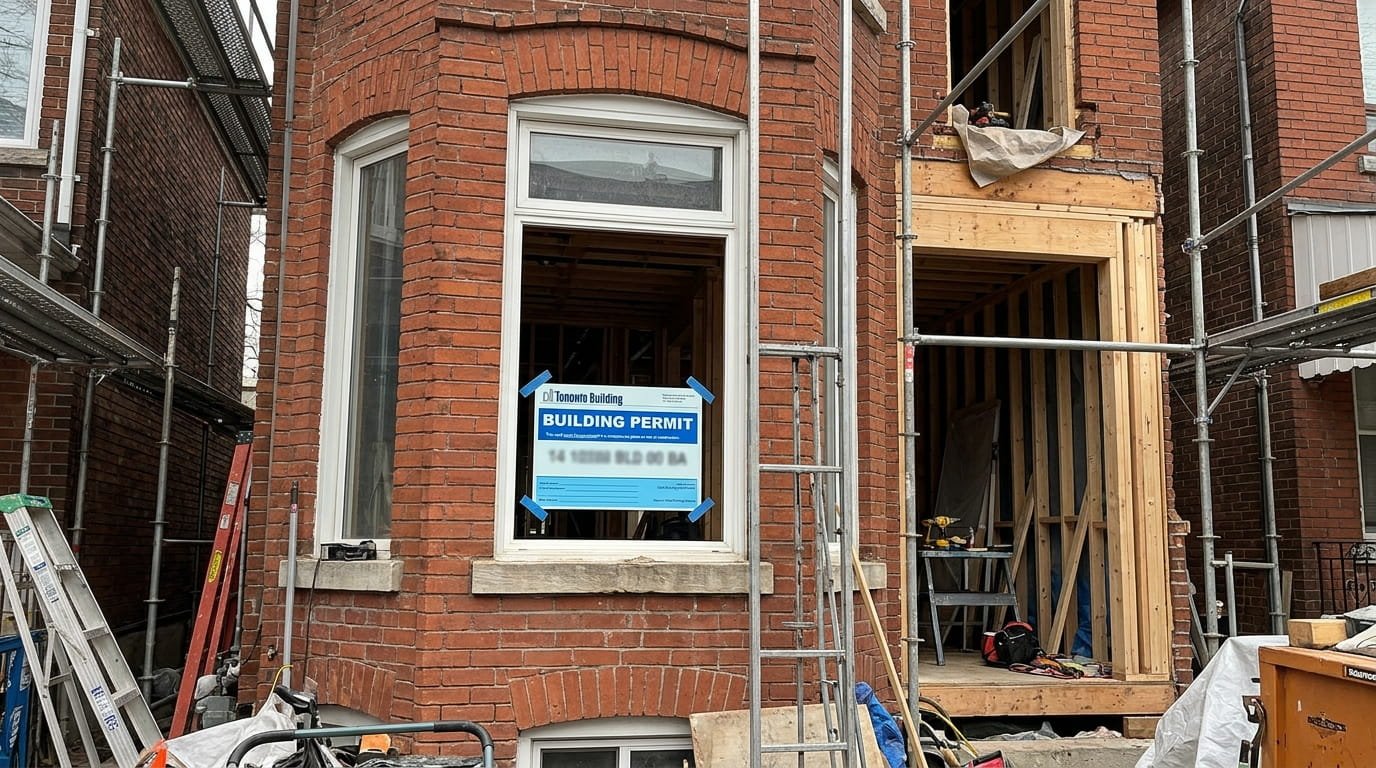
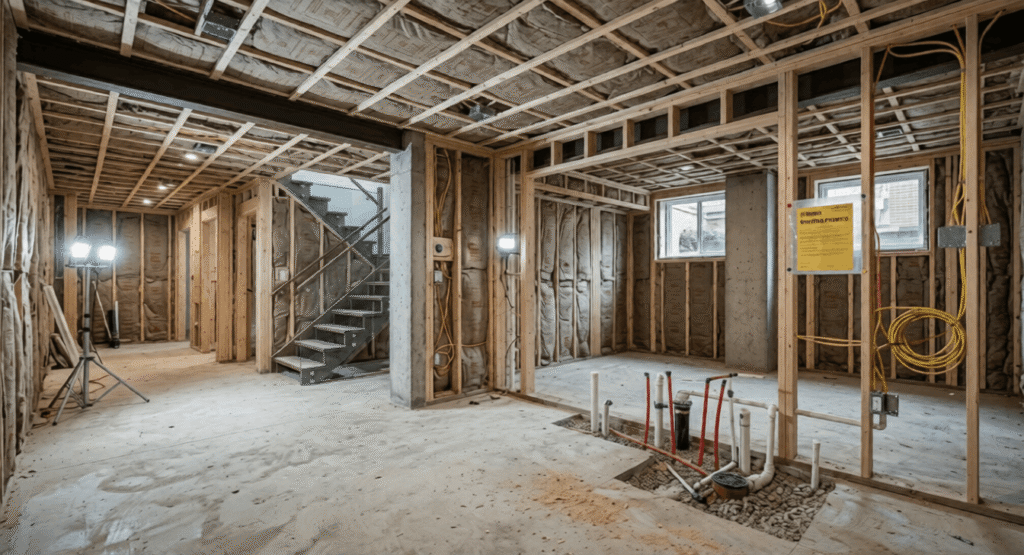
A building permit is required for any basement renovation that touches framing, electrical, plumbing, or HVAC systems. Purely cosmetic work, such as painting or swapping flooring in an already finished space, does not trigger the requirement. As of February 16, 2026, all permit applications must be submitted digitally through the City’s ePlans portal. Full requirements are on the City of Toronto Building Permits page, and our Ontario Building Code guide covers the 2026 code changes that affect basement projects directly.
Permit fees run $11.09 per square metre with a minimum of $206.53. BCIN-designer drawings add $1,500–$4,000, bringing all-in permit costs to $2,000–$4,500 for a standard project. Skipping the permit can result in fines up to $50,000, forced demolition of completed work, and insurance claim denials.
On basement waterproofing: interior drain systems, sump pumps, and backwater valves are the standard moisture management tools across the GTA. As of May 1, 2026, the City of Toronto’s Basement Flooding Protection Subsidy Program covers up to $6,650 per eligible property for qualifying installations. That offsets a meaningful portion of the $5,000–$15,000 most Toronto homeowners spend on moisture protection before basement finishing begins.
Leedway Group manages the full scope of renovations, additions, and garden suites across the GTA, including permit applications so homeowners aren’t dealing with City Hall alone.
Basement Flooring and Lighting Ideas That Work Below Grade
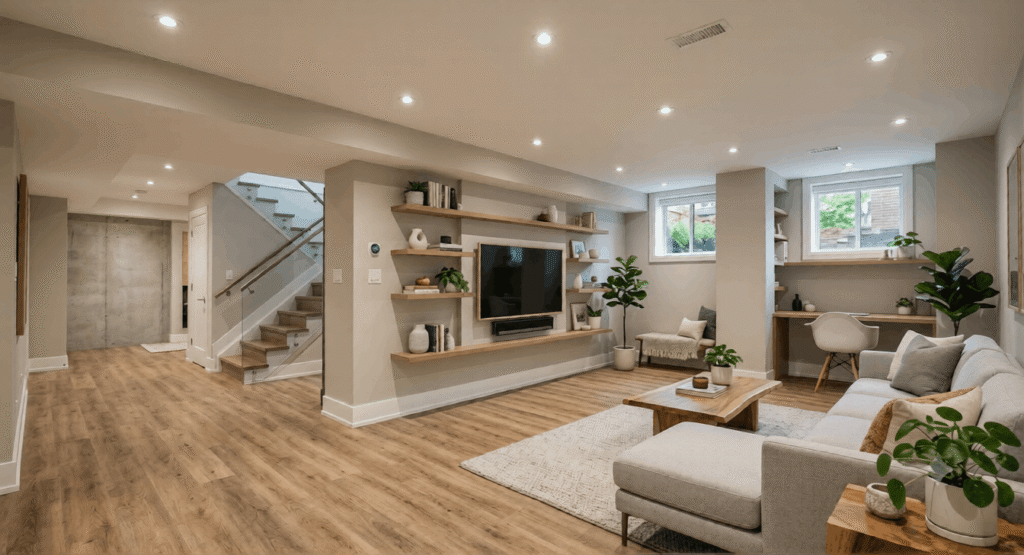
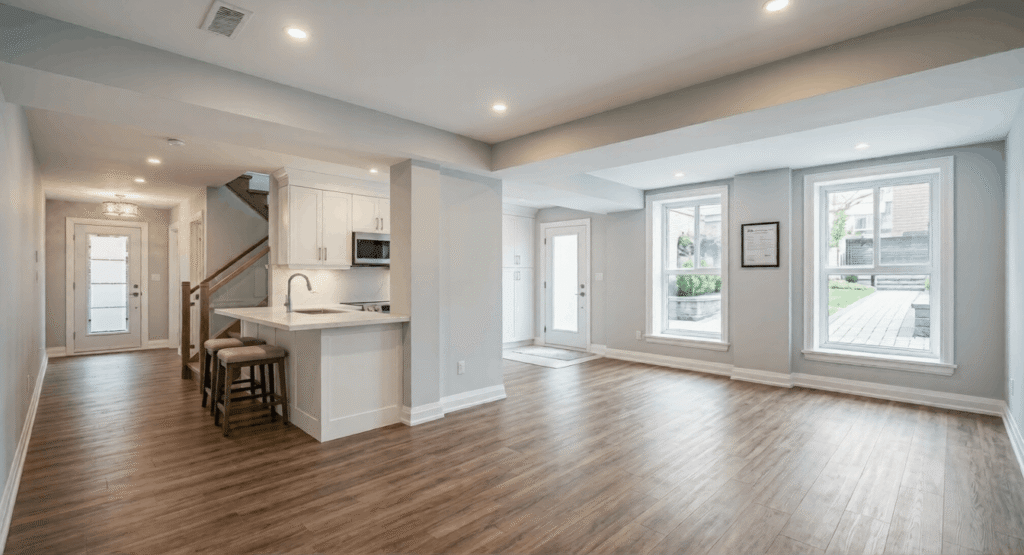
Concrete slabs transmit cold and moisture upward, which rules out solid hardwood and standard carpet in most Toronto basements. Luxury Vinyl Plank (LVP) with an SPC core is the recommended basement flooring option for 2026: 100% waterproof, concrete-compatible, and priced at $4–$12 per sq ft installed. Porcelain tile is a strong second choice for basement bathrooms and laundry rooms.
Basement lighting ideas matter more below grade because natural light is limited or absent. Recessed LED pot lights are the standard solution: cost effective, code-compliant, and easy to add on a dimmer circuit for multi-use rooms. Discuss your lighting plan with your electrician before drywall goes up; adding circuits afterward means cutting finished walls.
Our planning and financial guidance resource offers budgeting tools for GTA homeowners mapping out a renovation scope.
Frequently Asked Questions
1. How long does a basement renovation in Toronto typically take?
A basic basement finishing project runs 4–6 weeks once the permit is issued. Adding a bathroom extends the timeline to 6–10 weeks. A full legal secondary suite, including permit approval and all required City inspections, takes 10–16 weeks on average. Permit approval alone adds 2–4 weeks before construction can legally start.
2. Do I need a permit if I only add flooring and paint to my finished basement in Toronto?
No. Purely cosmetic work, including new flooring, paint, and light fixture swaps without wiring changes, does not require a building permit in Toronto. The moment you add or move walls, run new electrical circuits, install plumbing, or alter HVAC, you enter permit-required territory. When uncertain, confirm with Toronto Building before starting.
3. What is the return on investment for a basement renovation in the GTA?
Most GTA basement renovations return 70–75% of the renovation cost in added resale value. A $75,000 project adds roughly $52,000–$56,000 to the appraised value. Converting to a legal secondary suite adds $2,300–$2,600 per month in rental income on top of that, often recovering the full construction cost within five to seven years.
4. Is basement waterproofing required before finishing work in Toronto?
Waterproofing isn’t mandated by code in all cases, but skipping it before basement finishing is a costly mistake. Ontario Building Code requires adequate moisture control, and pre-1970 homes across much of Toronto commonly show seepage or high humidity. Address any water infiltration before drywall and flooring go in; fixing it afterward means tearing out completed work.
5. What basement lighting ideas work best for low-ceiling GTA basements?
Recessed LED pot lights work best for low-ceiling spaces because they consume no hanging height. Consider these options:
- Space pot lights 6–8 feet apart on a dimmer circuit for flexible brightness
- Add LED strips along soffits or bulkheads to create visual warmth without drop height
- Separate lighting circuits by zone so a media room and office operate independently
- Use 3,000K colour-temperature LEDs for a warmer look in living and bedroom spaces
Conclusion
Basement renovations in Toronto offer some of the strongest returns of any home improvement in the GTA, but cost, permit, and moisture decisions made early determine whether the project adds lasting value or creates problems at resale. From basic basement finishing at $35–$55 per square foot through to a fully permitted legal secondary suite at $90–$140+, the right scope depends on your goals and your home’s starting condition. Leedway Group specialises in design-build basement renovations across Toronto and the Greater Toronto Area, managing permits, structural work, and finishes from consultation through final inspection. Contact us to plan your basement renovations in Toronto today.