

Quick Answer Box: Home office tax rules in Canada let eligible employees deduct part of their rent, utilities and internet, but only with a signed T2200 from their employer. The temporary flat rate method ended after 2022. Everyone now uses the detailed method, and what you claim depends on whether your desk sits in a spare room or the kitchen.
What are the home office tax rules in Canada?
Home office tax rules in Canada are the Canada Revenue Agency conditions that decide whether you can deduct a share of your housing costs against your income. Employees claim work-space-in-the-home expenses on line 22900. Self-employed people claim business-use-of-home expenses on line 9945 instead, under a separate and more generous set of rules.
One change still catches people out. The $2-a-day flat rate method, capped at $400 for 2020 and $500 for 2021 and 2022, was retired after the 2022 tax year. There is no shortcut version anymore.
Who qualifies for the home office deduction in Canada?
To claim the home office deduction, you must meet every CRA condition, not most of them. Your employer has to require you to work from home, you must pay the costs yourself, and you need to have worked more than 50% of the time from that space for at least four consecutive weeks in the year.
The requirement does not need to appear in your contract. CRA accepts a written or verbal agreement, and a voluntary formal telework arrangement counts as being required to work from home. There is a second route in: a space used only to earn employment income where you regularly and continually meet clients in person.
Part-timers get squeezed here. CRA’s own example describes an employee working three days a week who is required to work from home one of those days, and she does not qualify, because one day out of three is not more than half her working time.
The T2200 form CRA requires from your employer
The T2200 form CRA publishes is called the Declaration of Conditions of Employment. Your employer completes and signs it to certify that you were required to pay for employment expenses. You keep the form rather than filing it, and produce it only if CRA asks.
No T2200, no claim. Employers are not legally forced to issue one, so ask early, especially if you changed roles mid-year. If you worked in Quebec, you also need Revenu Québec’s TP-64.3-V.
Shared workspace vs a designated room
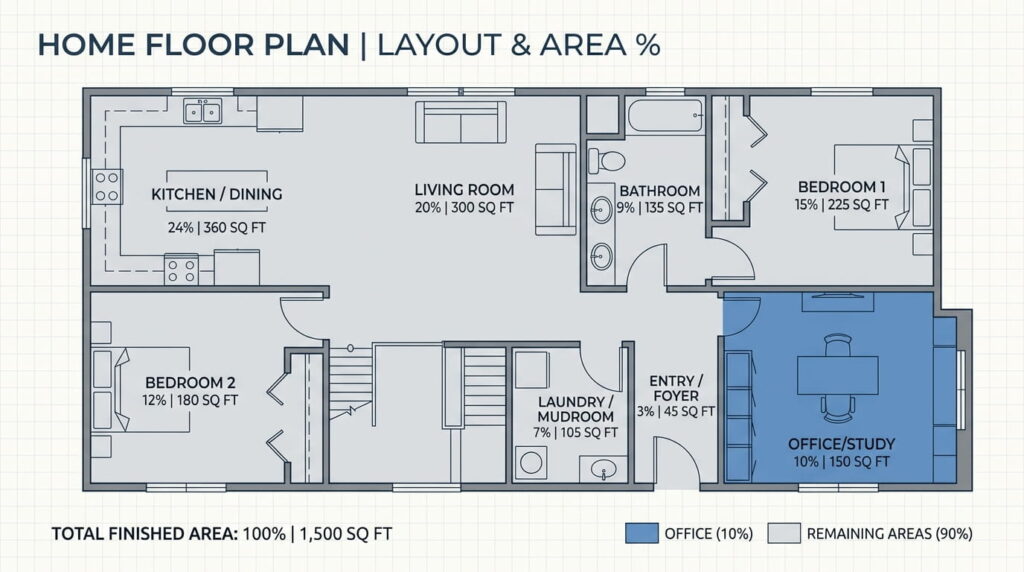
This is where most deductions quietly shrink. CRA splits work areas into a designated room used only for work and a common or shared workspace such as a dining table. A designated room is claimed on floor area alone. A shared workspace gets prorated twice, by area and then by hours.
Run CRA’s own numbers. Sam works 40 hours a week at a dining table that occupies 12% of her home. Her hours factor is 40 divided by 168, or 23.8%, so her claimable share is 2.8%. On $1,200 of rent, heat, water and electricity, she deducts $33.60. Charlie uses a 20 square metre spare room in a 200 square metre home, claims 10%, and deducts $120 from the same $1,200.
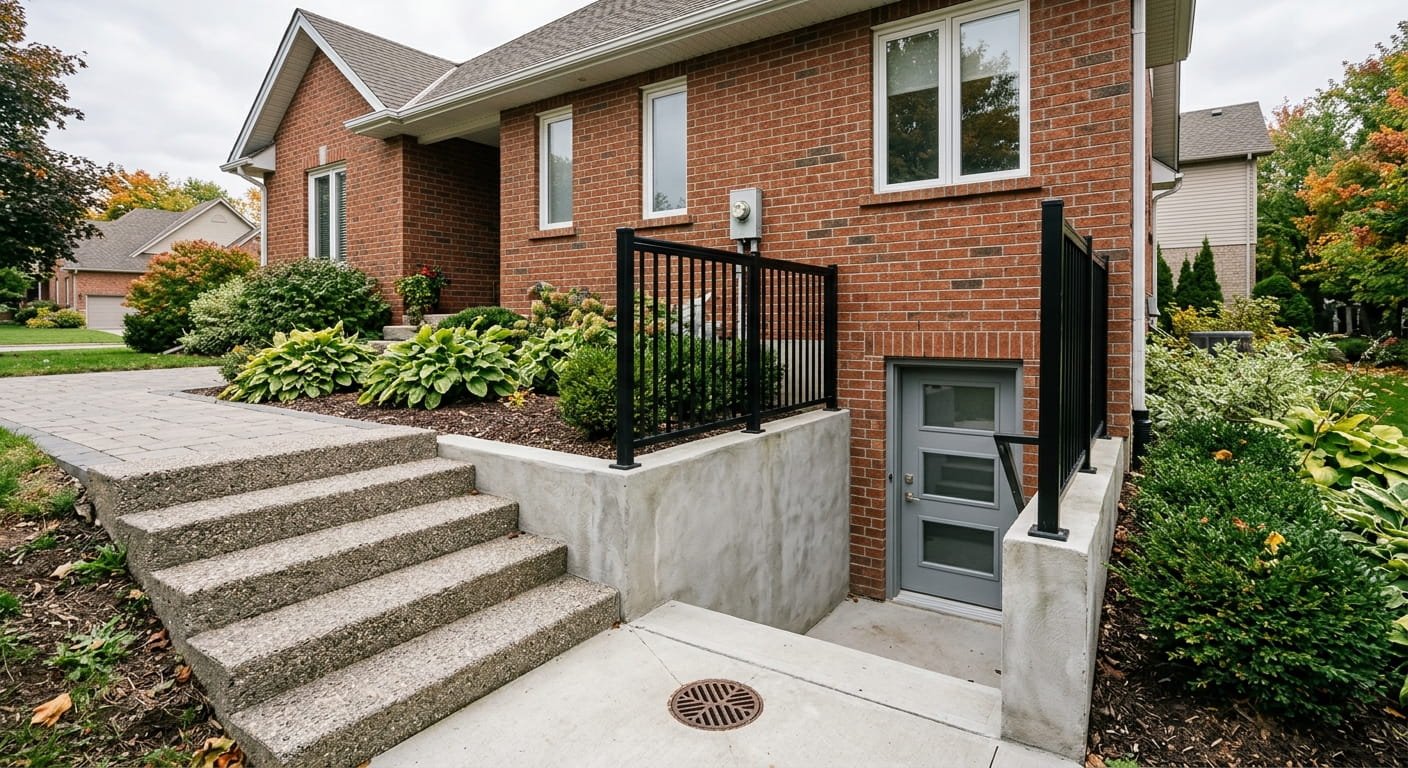
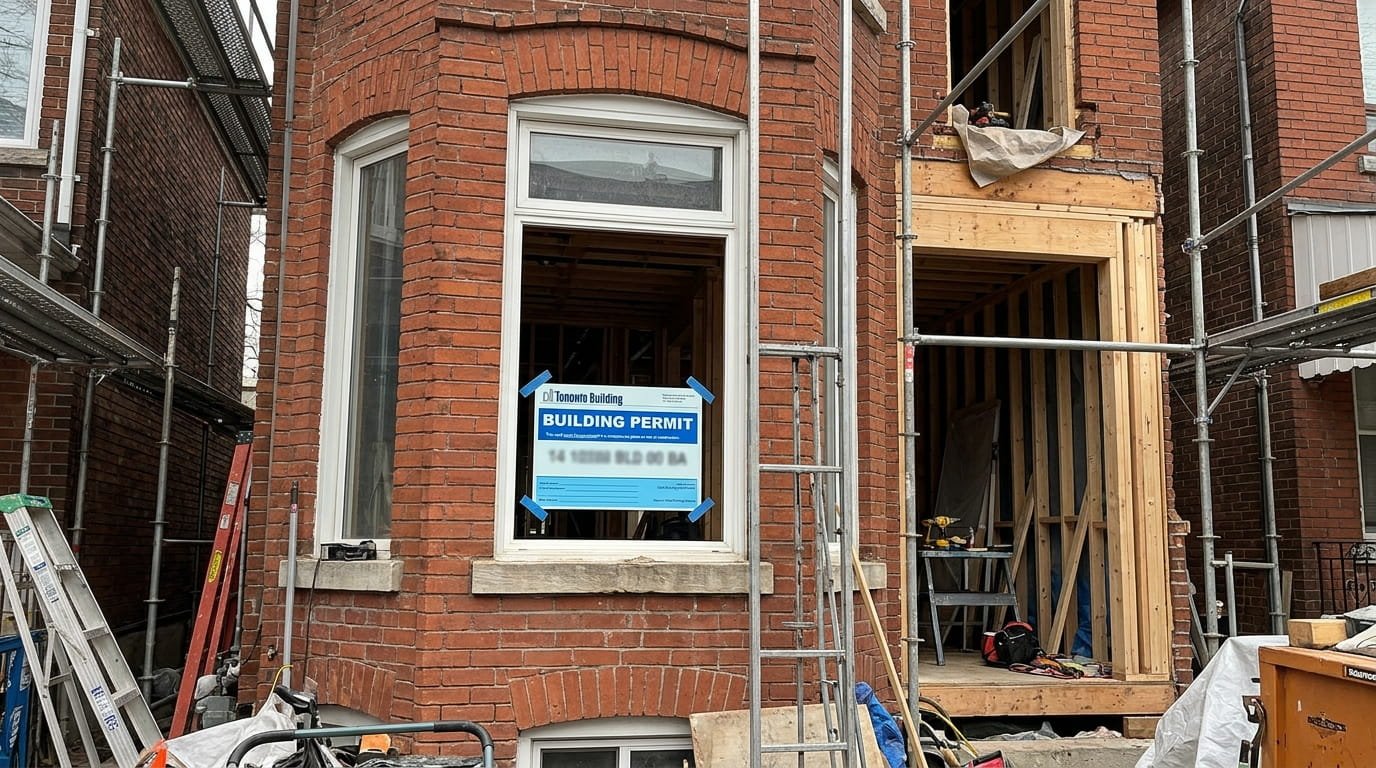
Same money spent. Nearly four times the deduction. Worth remembering that finished hallways, bathrooms and the kitchen all count toward your home’s total area, which enlarges the denominator and shrinks your percentage. If a dedicated room is not available upstairs, basement renovation costs in Toronto are worth pricing against years of a diluted claim.
What home office expenses does CRA allow?
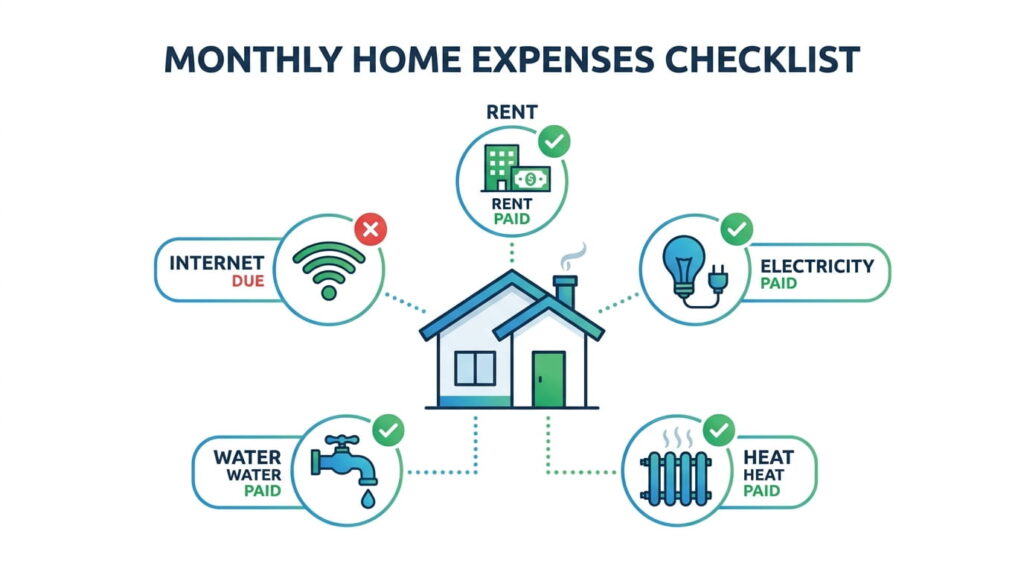
Home office expenses CRA permits are narrower than most people assume. Salaried employees can claim a share of rent, electricity, heat, water, the utilities portion of condo fees, home internet access fees and minor maintenance. Commission employees who report an amount in box 42 of their T4 get a longer list.
| Expense | Salaried employee | Commission employee |
|---|---|---|
| Rent, if you rent your home | Yes | Yes |
| Electricity, heat and water | Yes | Yes |
| Monthly home internet plan | Yes | Yes |
| Home insurance and property taxes | No | Yes |
| Mortgage interest or principal | No | No |
| Desk, chair, monitor, furniture | No | No |
Own your home? You cannot claim the rental value of the office, and mortgage interest stays off limits for both employee types. Consumable supplies such as pens, printer paper, ink and stamps are claimable. The desk they sit on is not.
Renovating to build the office is a capital expense, so it never qualifies as a deduction for an employee. Neither does new flooring, a replacement window or a furnace. That does not make the project a bad idea, though it does mean the renovation versus rebuild decision should stand on its own merits rather than on a tax benefit.
Line 22900 and your other employment expenses
Work-space costs go on Form T777 and flow to line 22900 with your other employment expenses. Two limits apply. You can only claim expenses paid during the eligible periods, so if you returned to the office on August 1, the rest of the year is out.
The second limit is harder. Work-space expenses cannot create or increase a loss from employment income. Anything you cannot use this year carries forward and can be claimed next year, provided you are still reporting income from the same employer.
Self-employed rules are different
Sole proprietors use business-use-of-home expenses on Form T2125, and no T2200 is involved. Qualify by making the space your principal place of business, or by using it only for business and meeting clients there on a regular, ongoing basis.
The list opens up: property taxes, home insurance, mortgage interest and even capital cost allowance become deductible in proportion. Claiming CCA is usually a trap, because it brings recapture and capital gains into play when you sell. Mixed-use space is prorated by hours out of 24, not out of 168.
Frequently Asked Questions
1. Can I still claim the $2 per day flat rate for working from home?
No. The temporary flat rate method applied only to the 2020, 2021 and 2022 tax years, at $2 per day up to $400 for 2020 and $500 for the two years after. Every claim since 2023 uses the detailed method, which means receipts and a signed T2200.
2. How do I calculate my home office deduction in Canada?
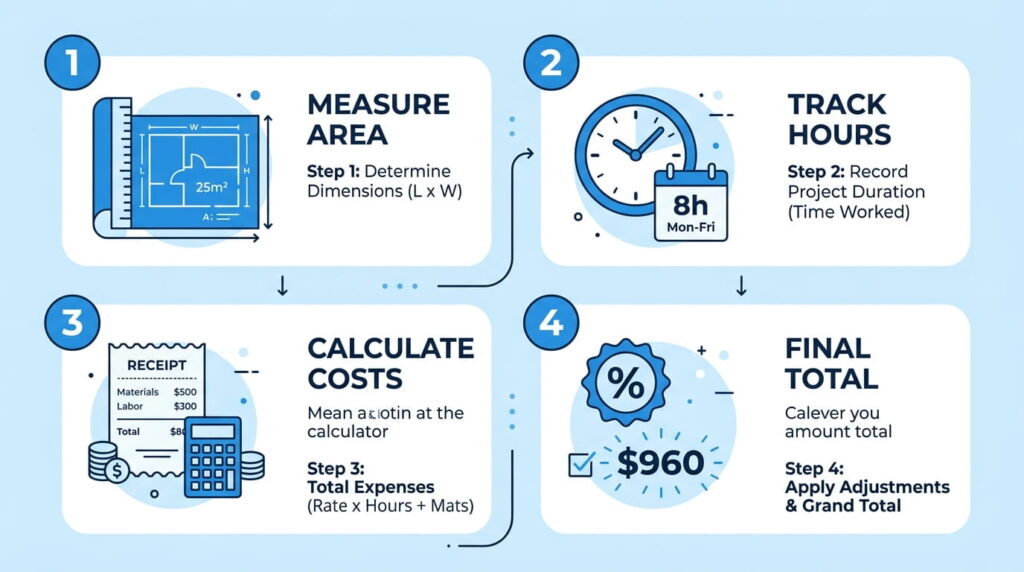
Three steps, then one multiplication:
- Divide your workspace area by your home’s total finished area
- For a shared space only, multiply by weekly work hours divided by 168
- Add up eligible costs paid during your qualifying period
- Multiply those costs by your final percentage
3. Can I claim internet and my cell phone as home office expenses?
Your monthly home internet access fee is claimable at the work-use portion if the plan cost is reasonable. Connection fees and modem rental are not. A basic cell plan qualifies only when you can apportion it and show the actual minutes or data used for work.
4. What if my spouse and I both work from home?
Both of you can claim if you each meet the conditions, but each expense can only be claimed once between you. Decide who claims what. If you share one workspace, CRA expects each person to calculate their own employment use based on their own hours and share of the space.
5. Does my employer have to give me a T2200 form?
Employers are not legally required to issue one, though CRA expects them to when an employee genuinely meets the conditions. Request it well before the filing deadline. Without a completed and signed T2200, your home office deduction cannot be claimed at all.
Conclusion
Home office tax rules in Canada reward preparation more than square footage. Get the T2200 signed, log the dates you actually worked from home, keep the utility bills, and measure the room honestly. A dedicated room beats a dining table by a wide margin, and if that means finally finishing the basement, weigh the project budget on its own terms. This is general information rather than tax advice, so confirm your situation with a CPA before you file.