

Quick Answer: Custom home builders in Ontario work through a timeline of 12 to 20 months from design start to occupancy. The process begins with lot verification and zoning review, advances through design, permitting, and active construction phases covering framing, utilities rough-in, drywall, and finishing, and closes with mandatory inspections and occupancy permit approval.
What Are Custom Home Builders in Ontario?
Custom home builders in Ontario are HCRA-licensed professionals who construct homes built entirely to an owner’s specifications, not from a pre-set model. They manage the full process: lot analysis, design coordination, permit submission, active construction, and Tarion warranty enrolment through to final occupancy. Unlike production builders, a custom home builder in Ontario works one project at a time, giving homeowners full control over layout, materials, and build quality.
Costs shift by region — here is what a custom home in Simcoe County actually runs in 2026.
What Does the Custom Home Building Timeline Look Like in Ontario?
A custom home build in Ontario follows six sequential phases, each with hard dependencies. Delays in one phase push everything that follows. Plan for 12 to 20 months from design start to moving in.
Phase 1: Planning and Lot Analysis (Months 1-2)
Confirm zoning bylaws, setbacks, height limits, and utility connections before spending a dollar on design. If the lot sits near regulated land a floodplain, wetland, or conservation authority boundary a Conservation Authority permit must precede the municipal building permit. Many homeowners miss this, and discovering it mid-process adds four to eight weeks. Set your budget with a 10% contingency and get pre-approved for a construction loan; traditional mortgages don’t fund the draw-based payment schedule a custom build requires.
Phase 2: Design and Engineering (Months 2-5)
Your architect or BCIN-registered designer produces architectural drawings, structural engineering, and site plans. Lock every design decision before permit submission. Each revision cycle after submission adds four to eight weeks. Custom cabinetry runs 8 to 14 weeks from order to delivery. Experienced custom home builders in Ontario order long-lead materials during the design phase, not after breaking ground.
How you structure the build matters — see why many owners choose the design-build model over a general contractor.
Phase 3: Permitting (Months 4-6)
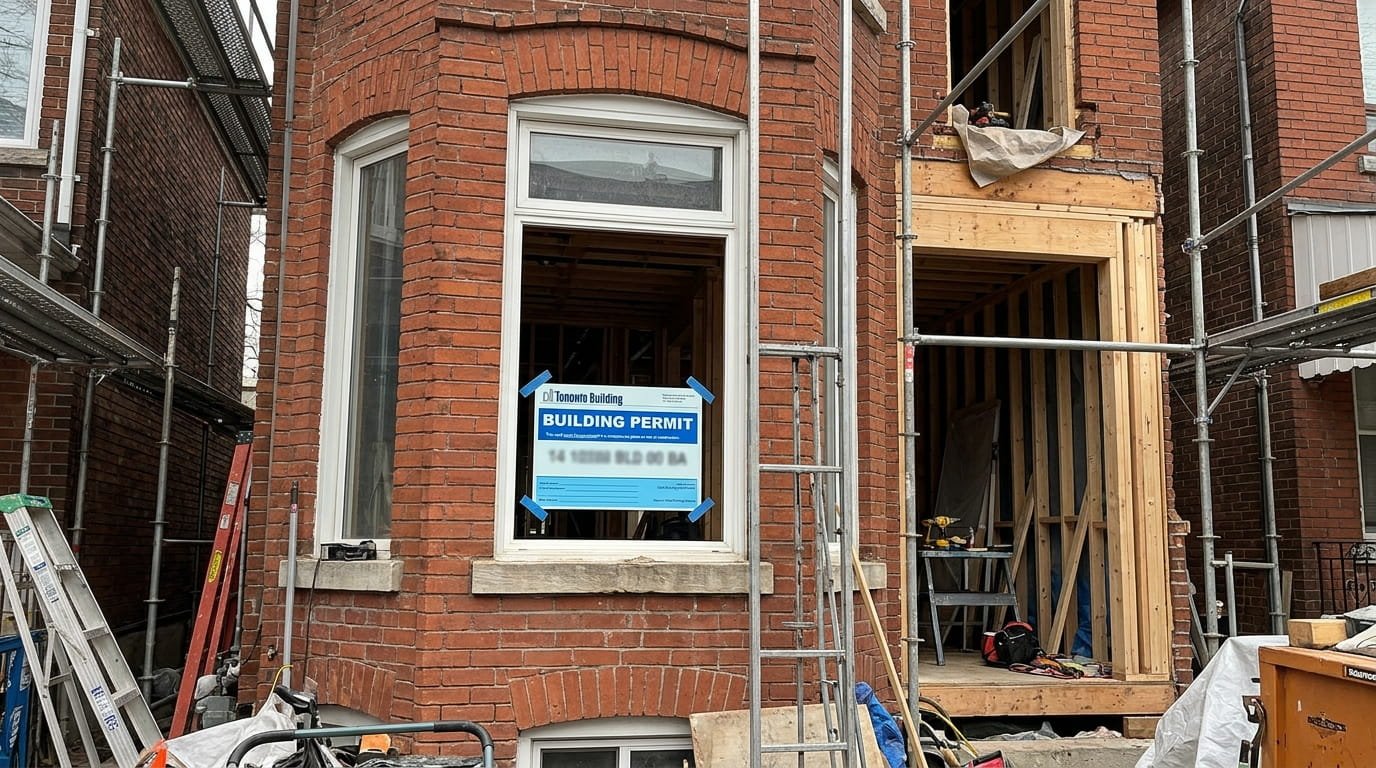
A building permit is the legal gate for all construction in Ontario. Under the Building Code Act, 1992, your builder submits a complete package to the local municipality: architectural drawings, structural engineering, a site plan, and energy compliance documentation. Toronto targets a first review within 10 business days for residential applications, though revision cycles add time. Incomplete applications account for 43% of first-submission delays province-wide. Tarion enrolment confirmation must be secured before the municipality can issue the permit, as it triggers the 1-2-7 year warranty structure. The Ontario Building Code Guide 2026 covers the current technical requirements your drawings must satisfy. For the province’s full overview of permitting obligations, visit ontario.ca’s building permits guide.
Phase 4: Foundation and Framing (Months 6-9)
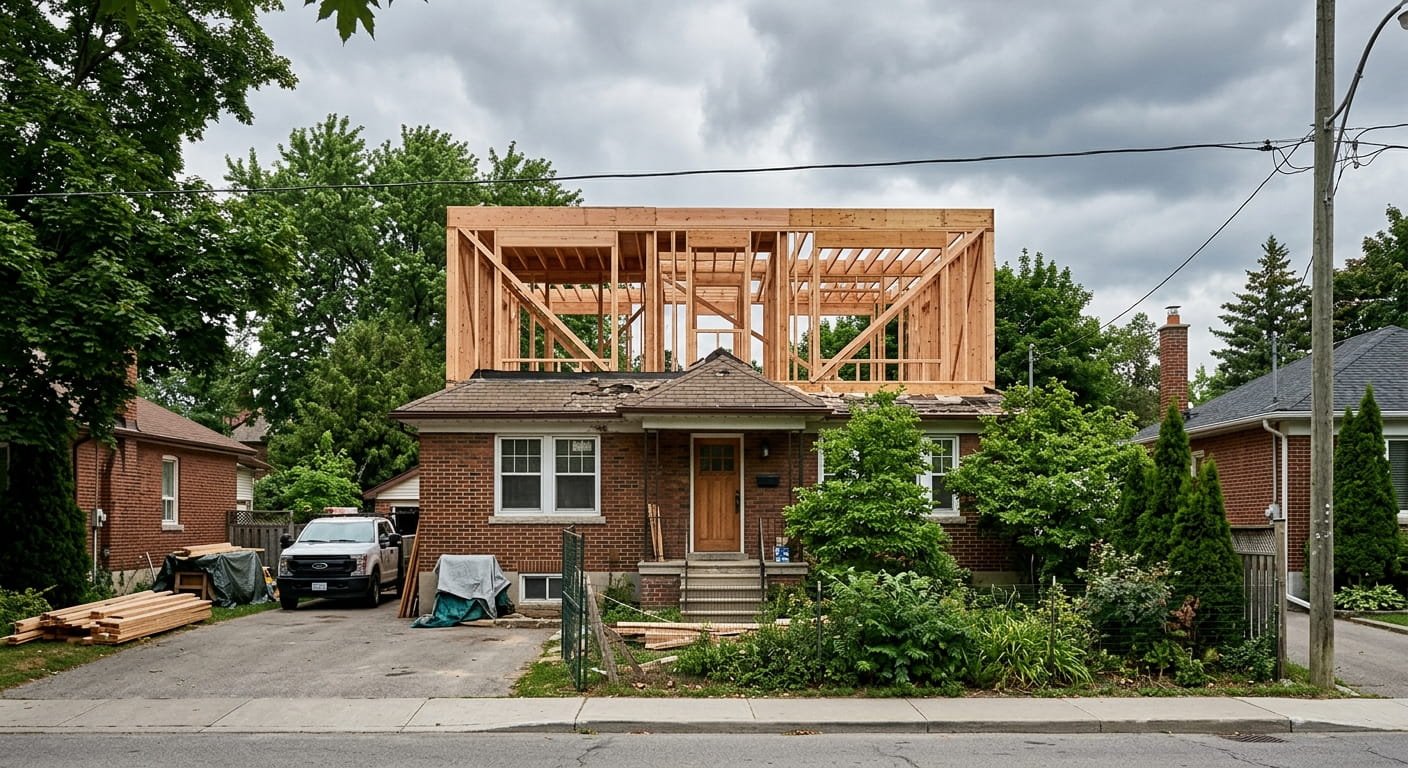
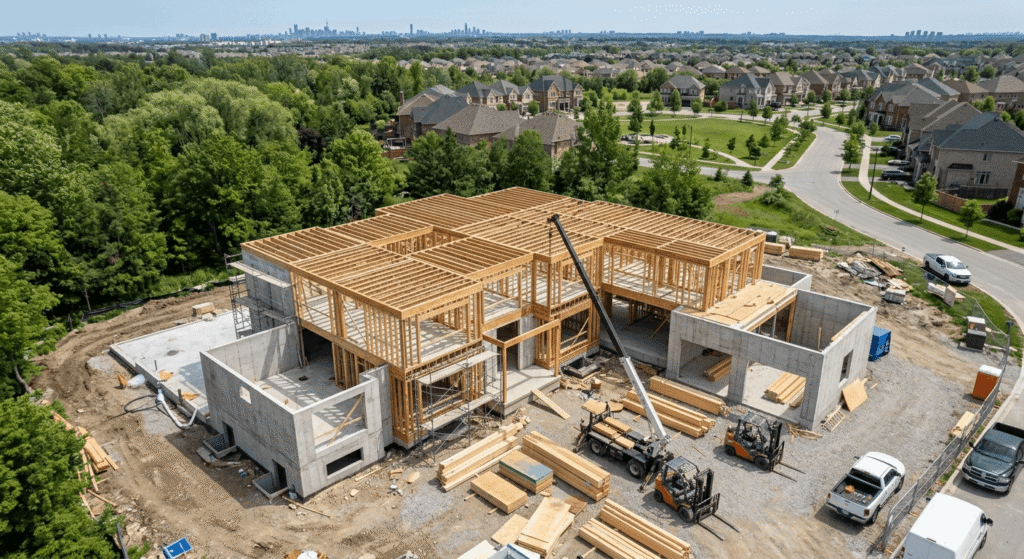
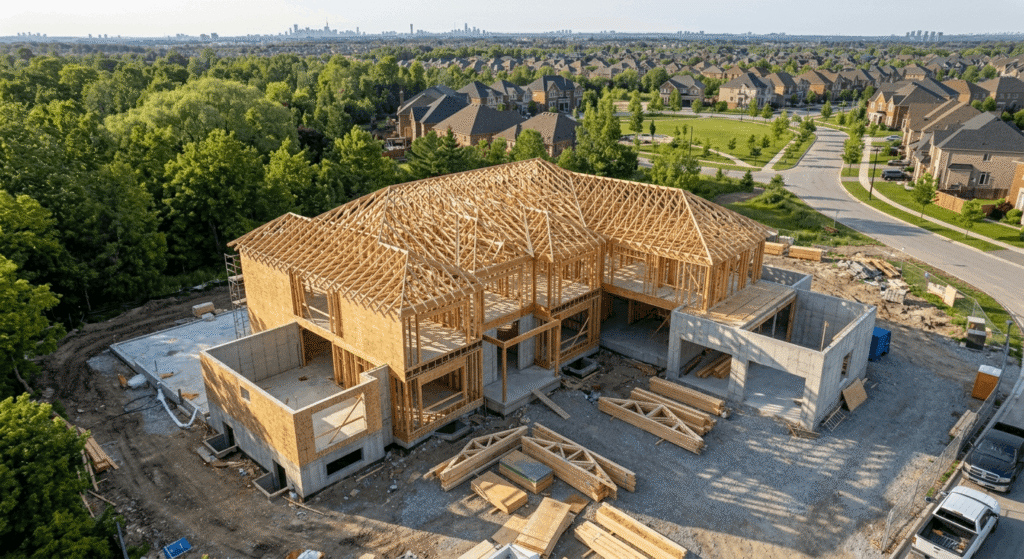
Excavation, footings, and foundation go in first. A foundation inspection must pass before backfilling. Framing follows: wall systems, floor assemblies, and roof structure built to engineering drawings. A mandatory framing inspection must pass before mechanical rough-ins begin. A failed framing inspection costs one to three weeks in corrections and re-inspection scheduling. Speed here isn’t progress; structural accuracy is what allows the rest of the project to move without rework.
Phase 5: Utilities Rough-In, Insulation, and Drywall (Months 8-13)
Electrical, plumbing, and HVAC rough-in runs simultaneously inside the dried-in shell. Trade sequencing is strict: each system’s rough-in inspection must pass before insulation goes in, and the insulation inspection must pass before drywall. The Electrical Safety Authority (ESA) and municipal building inspectors conduct separate sign-offs. Smart home, audio-visual, and low-voltage rough-ins also happen in this window. Drywall hanging, taping, mudding, and Level 4 finishing takes two to four weeks because of required drying time between coats.
Phase 6: Finishing, Grading, and Occupancy (Months 12-20)
Flooring, cabinetry, paint, plumbing fixtures, and finish hardware install in a planned sequence. Final exterior grading restores the lot and manages drainage away from the foundation. Before occupancy is permitted, structural, electrical, plumbing, HVAC, fire safety, and final building inspections all need sign-off. Your builder provides Tarion warranty documentation at handover, covering workmanship, distribution systems, and major structural defects under the 1-2-7 year framework.

Avoid early-stage delays with our pre-construction checklist for Ontario builds.
What Permits and Approvals Do You Need to Build a Custom Home in Ontario?
Building a custom home in Ontario requires several approvals in sequence, not just a single permit. Planning your finances and approval strategy early reduces costly surprises before a shovel enters the ground.
The core approvals every build needs:
- Zoning compliance or variance the project must conform to local bylaws before a permit can be issued. If it doesn’t, a Committee of Adjustment ruling comes first.
- Conservation Authority permit required for lots near regulated natural features. This must precede the municipal building permit.
- Building permit issued by the municipal building department once OBC-compliant drawings are submitted and reviewed.
- Tarion enrolment the builder registers the home with Tarion before the permit is issued, triggering warranty coverage.
- Trade permits separate permits for electrical (ESA), plumbing, and gas (TSSA) run alongside the main building permit.
Every builder of new homes in Ontario must hold an active HCRA licence under the New Home Construction Licensing Act, 2017. Verify any builder’s licence status through the HCRA Builder Directory at hcraontario.ca before signing a contract. No HCRA number on a quote or website is a clear red flag.
Frequently Asked Questions
1. How long does it realistically take to build a custom home in Ontario?
Plan for 12 to 20 months from design start to occupancy. Homeowners who budget for 9 months consistently finish in 15. The biggest variables are permit revision cycles, trade scheduling conflicts, and the timing of homeowner selections. A late decision on cabinetry or tile can stall construction by several weeks.
2. What is the difference between HCRA and Tarion when building a custom home in Ontario?
HCRA is Ontario’s home builder regulator: it licenses builders and sellers and investigates complaints. Tarion administers the Ontario New Home Warranties Plan, managing the warranty process and dispute resolution after possession. Both are part of the process your builder must be HCRA-licensed and Tarion-enrolled before the municipality will issue a building permit.
3. What inspections are required during a custom home build in Ontario?
Municipal building inspectors and trade authorities conduct mandatory inspections at each phase gate. Required inspections include:
- Footings and foundation before backfilling
- Framing before rough-in or insulation
- Rough-in sign-offs for plumbing, electrical, and HVAC
- Insulation before drywall
- Final building inspection and occupancy permit sign-off
Each inspection is a sequence gate. Missing a booking or failing an inspection delays every phase that follows and can trigger cascading schedule slips.
4. Can I build a custom home on any lot I own in Ontario?
Not automatically. Zoning bylaws, minimum lot size rules, setback requirements, and site conditions all determine whether a lot is buildable for the home you plan. If the lot sits near a conservation area or floodplain, Conservation Authority restrictions apply separately. Confirm lot viability with your municipality’s planning department before purchasing land or hiring a designer.
5. How much does it cost to build a custom home in Ontario?
Custom home construction costs in Ontario typically range from $250 to $450 per square foot for standard finishes, and $450 to $700-plus for luxury or high-performance builds. Site conditions, municipality development charges, material selections, and design complexity all move the number significantly. Northern Ontario builds add an estimated 8 to 15% in transport and trade costs compared to GTA projects. A realistic budget always includes a 10% contingency on top of the base construction estimate.
Conclusion
Ontario’s custom home build process rewards homeowners who treat sequencing, permitting, and planning as seriously as construction itself. The right custom home builders in Ontario handle zoning analysis, Conservation Authority checks, Tarion enrolment, and trade coordination before a single shovel breaks ground. Ready to map out your build? Contact Leedway Group to start your Ontario custom home timeline.
For full pricing context, read our Ontario custom home cost guide. Planning a project? Get in touch with the Leedway team.