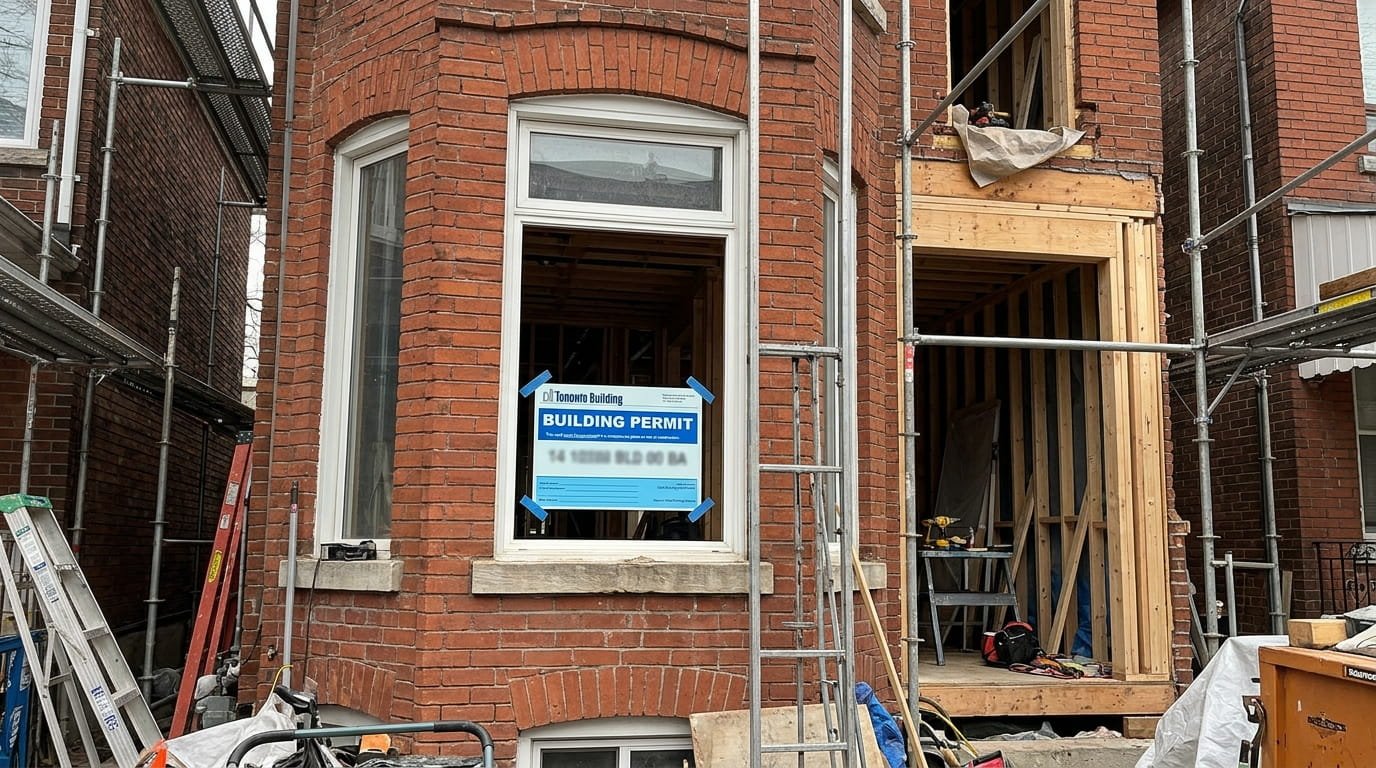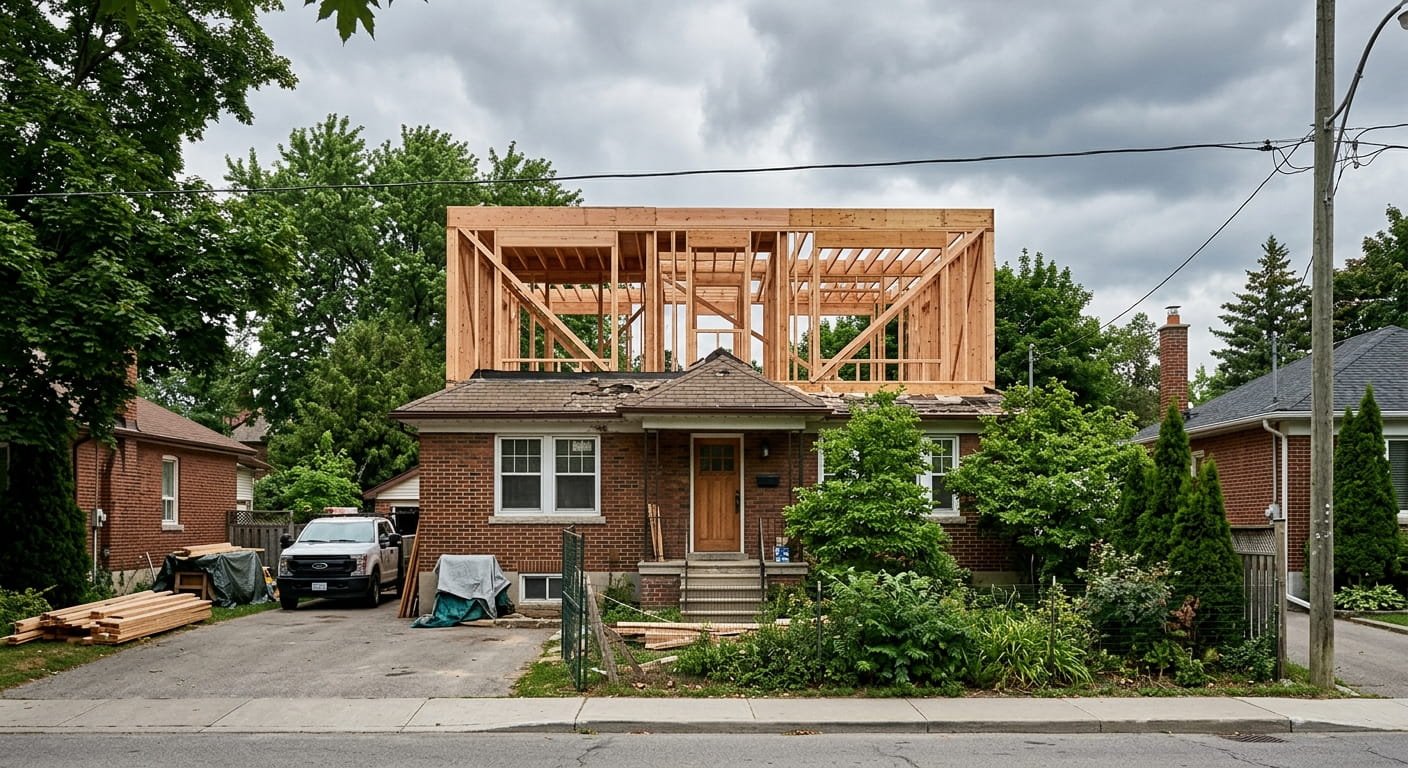



Quick Answer: A pre-construction checklist in Ontario is a sequential list of approvals, studies, and site-readiness tasks completed before construction legally begins. The 12 steps span zoning verification, building permits, HCRA licensing, Tarion enrolment, utility locates, soil investigation, and physical site preparation. Each must be confirmed before any ground disturbance.
Starting construction without completing these steps is one of the costliest mistakes an Ontario homeowner can make. A missing permit or unfiled utility locate can stop a project mid-dig and trigger stop-work orders and expensive redesigns.
This guide covers all 12 steps in the order you should complete them, whether your project is a new custom home or a major addition anywhere in Ontario and the GTA.
What Is a Pre-Construction Checklist?
A pre-construction checklist is a structured set of legal, regulatory, and physical readiness tasks that must be completed before Ontario construction requirements allow any ground disturbance. It is governed by the Ontario Building Code Act, 1992, local zoning bylaws, and provincial frameworks covering builder licensing, environmental protection, and underground utility safety.
Not sure what comes first? Our guide walks through the building permit process in Ontario step by step.
What Does an Ontario Pre-Construction Checklist Cover Before Breaking Ground?
Run these steps in order. A bottleneck at Step 3 delays everything downstream.
- Confirm title and land ownership. Order a title search to verify clear ownership and identify any easements or encumbrances that restrict your build footprint. Your real estate or construction lawyer handles this before anything else begins.
- Verify zoning and permitted land use. Contact your municipality’s planning department to confirm the property is zoned for your intended use. Check setbacks, lot coverage limits, and maximum building height. Properties outside permitted zoning need a rezoning application or minor variance before any permit application can proceed.
- Commission a registered property survey. An Ontario Land Surveyor (OLS) produces the plan of survey required for a site plan submission. Don’t rely on an existing purchase survey; easements and boundaries change between transactions.
- Prepare a site plan drawing. For single-family homes, the site plan is reviewed concurrently with the building permit application within 10 business days under the Ontario Building Code Act. Multi-unit projects require formal Site Plan Approval, which typically adds 2 to 6 months to the overall timeline.
- Commission a geotechnical investigation. A soil test confirms load-bearing capacity, groundwater depth, and soil classification. GTA clay and fill sites regularly require engineered foundation designs rather than OBC Part 9 prescriptive footings. Skipping this test can result in $30,000 to $60,000 in emergency foundation redesigns once excavation begins.
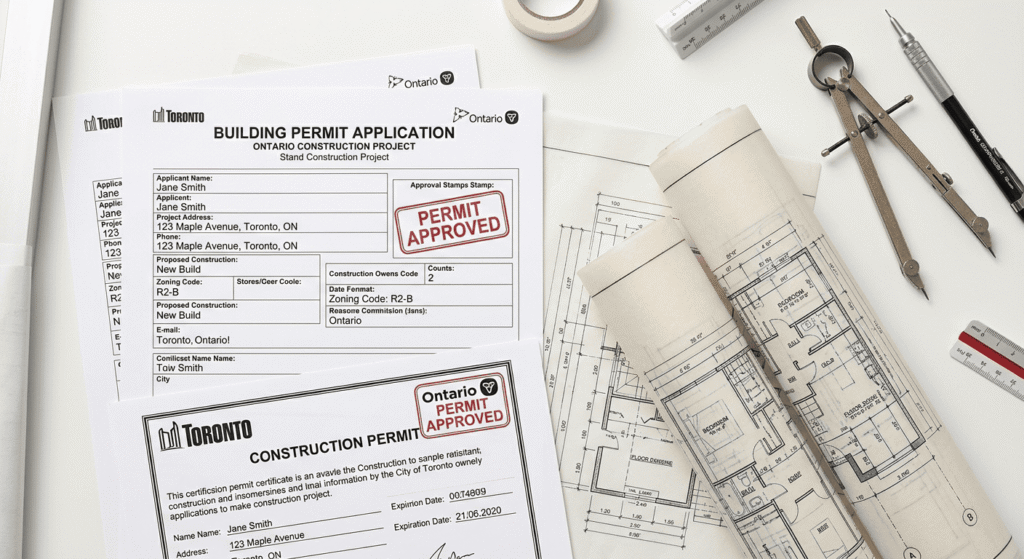
- Apply for a building permit. Submit your application to the municipal chief building official with architectural drawings, structural drawings, and the completed site plan. Single-family residential applications take up to 20 business days for review under the Building Code Act. An incomplete submission restarts the clock. Our Ontario Building Code guide covers how the 2024 OBC update affects your permit drawing requirements.
- Confirm HCRA builder licence and Tarion enrolment. All new home builders in Ontario must hold a valid licence from the Home Construction Regulatory Authority (HCRA). The specific home must also be enrolled in Tarion’s warranty plan via BuilderLink 15 to 30 days before construction starts. Most municipalities will not issue a building permit without the Tarion Enrolment Confirmation.
- Arrange construction financing and budget. Confirm your construction loan is approved and the draw schedule aligns with your build milestones. Lenders release funds at defined project stages, so a misaligned schedule creates cash-flow gaps during active framing and mechanical work. Our planning and financial guidance resource covers key budgeting decision points for new builds across Ontario.
- Hire your project team. Engage your general contractor and all primary trade contractors. Verify each holds current WSIB clearance and carries at least $2 million in general liability insurance. For new builds, confirm builder status on the HCRA Ontario Builder Directory before signing anything.
If you are still deciding how to hire, our breakdown of design-build vs a general contractor in Toronto weighs cost, speed and accountability.
Site Preparation and Final Approvals
- Confirm utility connections. Contact Hydro One or your local utility, Enbridge Gas, and your municipality’s waterworks department to confirm service locations and connection timelines. New service connections in the GTA regularly take 8 to 16 weeks. Lock in these timelines before fixing your construction schedule.
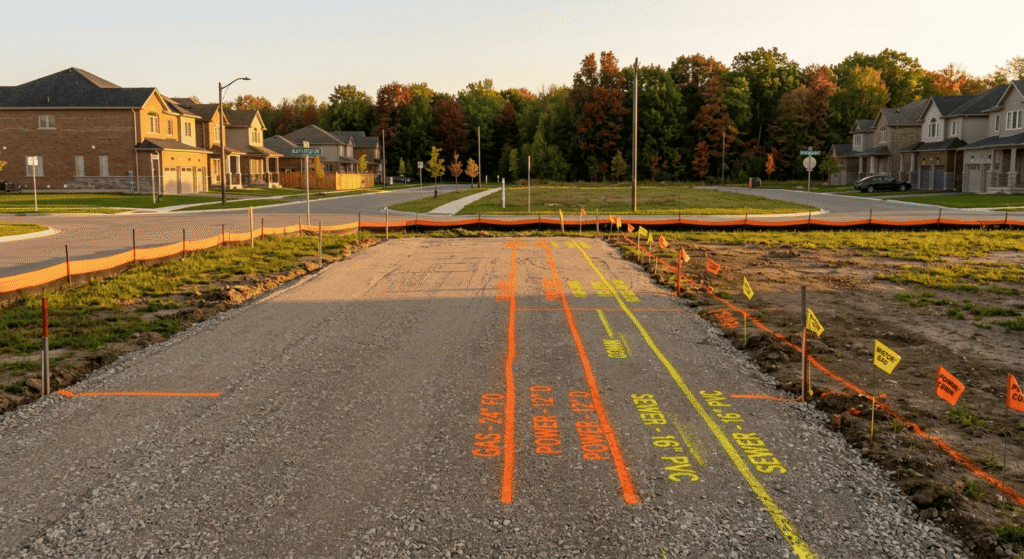
- Request underground utility locates. The Ontario Underground Infrastructure Notification System Act, 2012 requires every property owner and contractor to contact Ontario One Call at least 5 business days before any ground disturbance. The service is free. Excavating without locates is illegal under Ontario Regulation 213/91 and creates full personal liability for damage to any buried infrastructure.
- Hold a pre-construction meeting. Convene your contractor, site supervisor, and engineer for a formal site walkthrough. Confirm the construction documents match your approved permit drawings, establish inspection hold points, and review all site safety protocols under the Occupational Health and Safety Act.
From lot to move-in, here is how to build a custom home step by step in Ontario.
Which Ontario Construction Requirements and Timelines Cause the Most Delays?
Three steps on this checklist stop projects more often than all others: Tarion enrolment, utility locates, and geotechnical investigation.
Tarion enrolment catches first-time builders off guard. Even when the homeowner supplies the land, the hired builder must hold an HCRA licence, and that specific home must be enrolled before a permit issues. This is a hard legal requirement under the New Home Construction Licensing Act, 2017, not optional paperwork.
Utility locates are the most routinely skipped step. A 2024 Ontario One Call awareness study found that 57% of homeowners did not know a locate is legally required before any digging. One in four residential projects results in accidental damage to underground infrastructure. Striking a gas or telecom line creates immediate legal liability and repair costs under Ontario Regulation 213/91.
Geotechnical testing gets cut from budgets to save a few thousand dollars upfront. On GTA clay sites, skipping the soil test routinely generates $30,000 to $60,000 in emergency foundation redesigns once excavation exposes the actual conditions. Commission the test before you finalise your construction budget.
Frequently Asked Questions
1. How long does the Ontario pre-construction checklist take to complete?
Single-family residential builds in the GTA typically take 3 to 6 months from starting the checklist to receiving a building permit. Projects requiring a committee of adjustment hearing, formal Site Plan Approval, or conservation authority sign-off add 3 to 6 months on top. Completing Steps 1 through 4 early provides the biggest compression to the overall timeline.
2. Do I need Tarion enrolment for a custom home built on my own land?
Yes. Any new home built under contract with a licensed builder in Ontario must be enrolled with Tarion before a permit issues. The obligation sits with the builder, not the homeowner. You benefit directly: Tarion’s 1-2-7 warranty covers one year for workmanship defects, two years for building systems, and seven years for major structural defects.
3. What happens if I skip the utility locate step before breaking ground?
Excavating without a valid utility locate violates the Ontario Underground Infrastructure Notification System Act, 2012. The contractor or property owner bears full liability for damage to buried infrastructure, including gas leaks, power outages, and water main breaks. Submit a locate request through Ontario One Call at least 5 business days before any digging it’s free and takes minutes to complete online.
4. Can a homeowner pull their own building permit in Ontario?
Yes. Ontario homeowners can apply for and pull their own building permit if they plan to perform the work themselves. If a licensed contractor is doing the work, the contractor typically applies. Confirm the correct responsible party on the application before submitting, since liability for code compliance stays with the permit holder throughout the entire project.
5. Does a building permit in Ontario expire if construction is delayed?
Yes. Ontario building permits typically lapse if construction does not begin within six months of issuance. Permits can also expire if active work stops for an extended period without progress. Confirm your municipality’s specific expiry and renewal terms before applying, and align your application timing with a confirmed construction start date to avoid restarting the review process.
Conclusion
A complete pre-construction checklist is what separates a smooth Ontario build from a project derailed by stop-work orders and costly redesigns. Complete all 12 steps in sequence and your construction start date arrives with every approval confirmed, every utility located, and every regulatory obligation fulfilled. Leedway Group manages the full pre-construction process for custom homes and renovations and additions across the GTA, from zoning confirmation through Tarion enrolment and building permit approval.
For everything on approvals, see our complete Ontario building permits guide. Ready to start? Talk to the Leedway team about your build.