

Quick Answer: The building permit process in Ontario involves six key steps: confirm zoning compliance, prepare drawings with a BCIN-qualified designer, assemble your application documents, submit to your municipal building department, pass plan review, then schedule mandatory construction inspections. Residential applications are reviewed within 10 business days once the municipality considers them complete
Getting the building permit process right in Ontario saves more time and money than almost any other planning decision you make before breaking ground. A complete, code-compliant application moves through the municipal queue in as little as 10 business days for a standard house. An incomplete one stalls until you fix it. The statutory review clock doesn’t start until the municipality is satisfied with your submission.
This guide covers the full construction permit process Ontario homeowners face in 2026, from the first zoning check through to the final inspection that closes your file.
Before you break ground, our step-by-step guide to garden suite permits in Ontario walks through zoning, drawings and approval timelines.
What Is a Building Permit in Ontario?
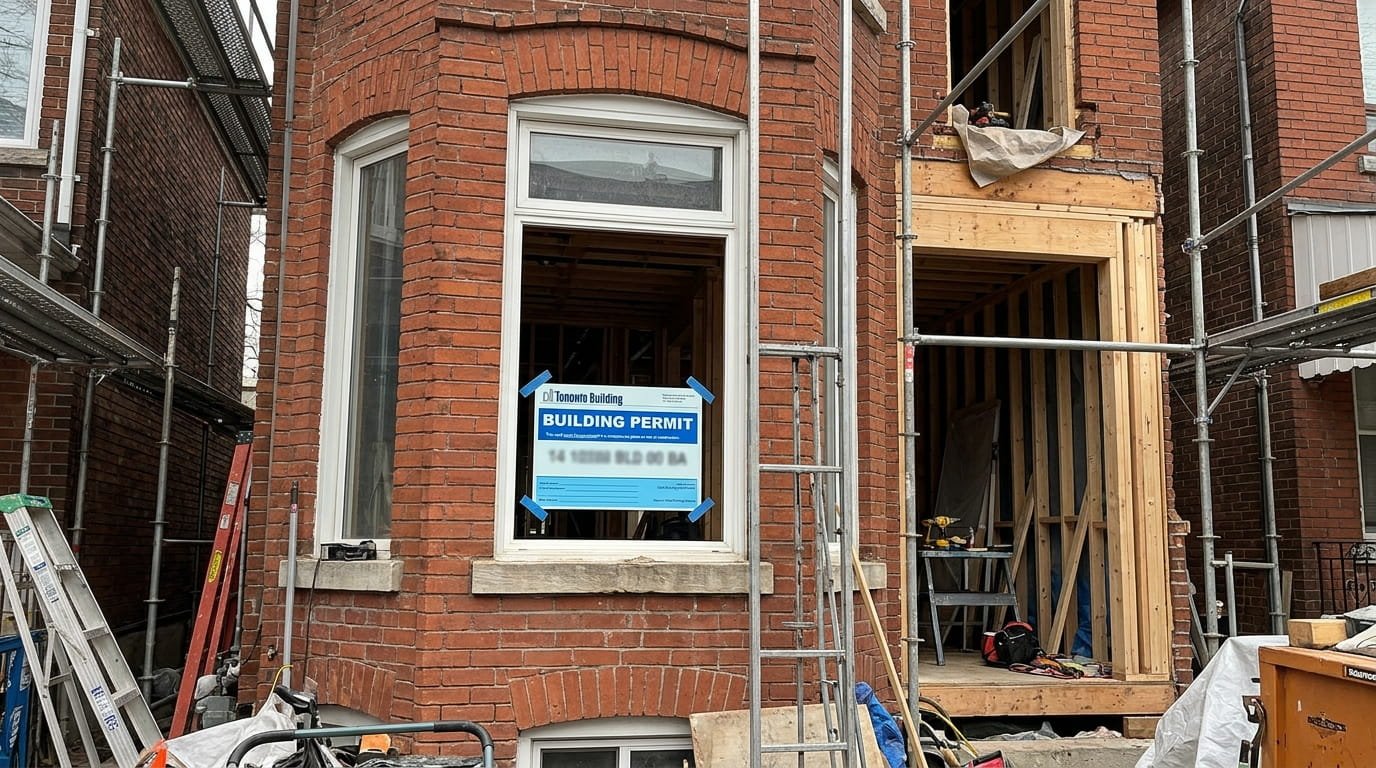
A building permit is an official document issued under the Building Code Act, 1992 that authorises you to construct, renovate, demolish, or change the use of a building. It confirms your project meets the Ontario Building Code (OBC), local zoning bylaws, and all applicable law requirements, including conservation authority approvals where relevant. Building without one is unlawful, and your home insurance may not cover damage from unpermitted work.
You need a permit before constructing any new structure over 10 square metres, adding to an existing building, altering plumbing or HVAC systems, finishing a basement with new bedrooms or secondary suites, and installing a pool or retaining wall. Cosmetic changes like painting or flooring typically don’t require one. When in doubt, check with your local building department before starting.
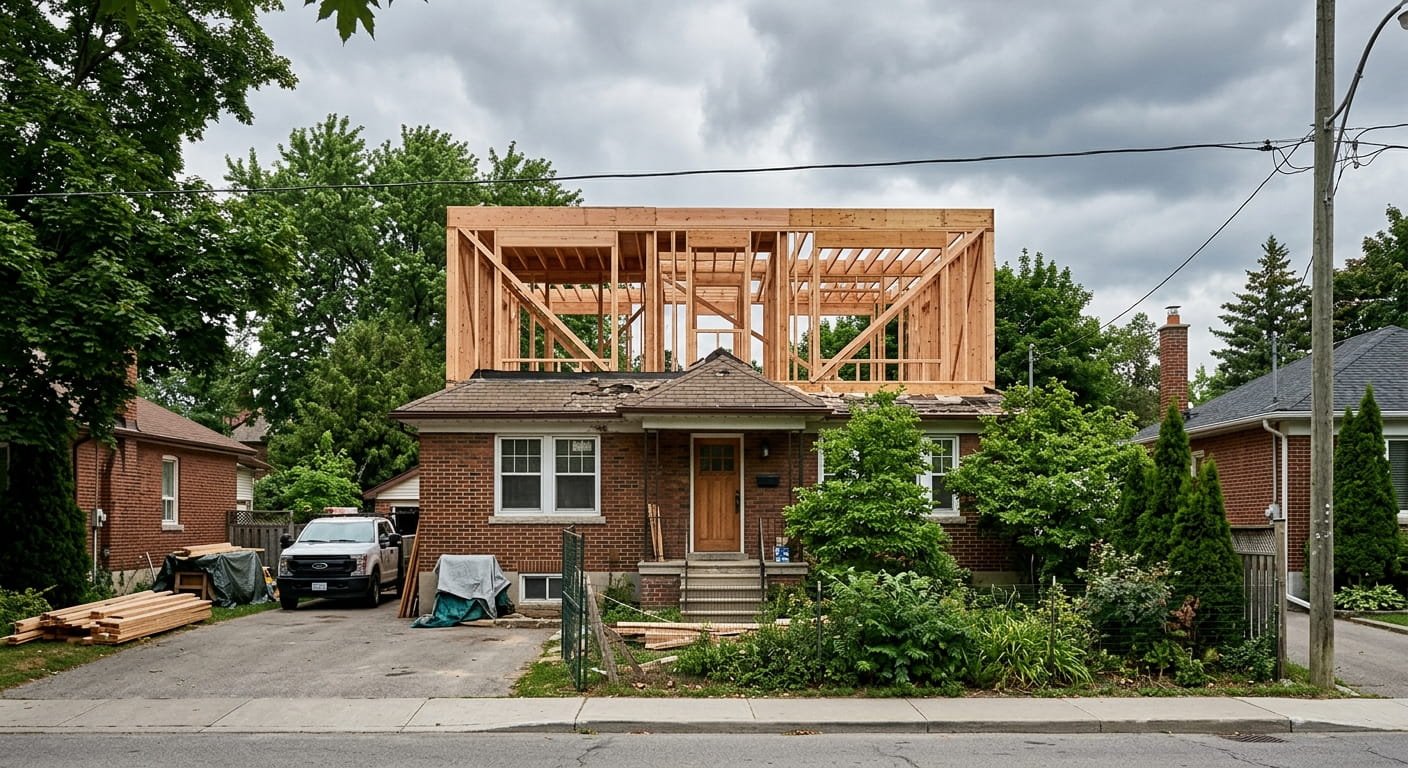
Adding up rather than out? Our step-by-step guide covers the 2nd-floor addition permit process in Toronto.
What Are the Steps to Apply for a Building Permit in Ontario?
The building permit process Ontario municipalities follow is governed by the Building Code Act, but each municipality administers it with its own portals, forms, and submission standards. Following these steps in sequence is the fastest way to approval.
- Confirm zoning compliance. Before spending on drawings, verify your project meets local zoning bylaws: setbacks, lot coverage, building height, and permitted uses. In Toronto, that means checking Zoning By-law 569-2013. If your project exceeds any limit, you’ll need a minor variance from the Committee of Adjustment before a permit can issue. Discovering a zoning conflict after your drawings are complete is the most common source of delays.
- Hire a BCIN-qualified designer or architect. Residential drawings in Ontario must be prepared by a designer registered under the Building Code Identification Number (BCIN) program, administered by the Ministry of Municipal Affairs and Housing, or by a licensed architect. Structural alterations require a professional engineer (P.Eng.) as well.
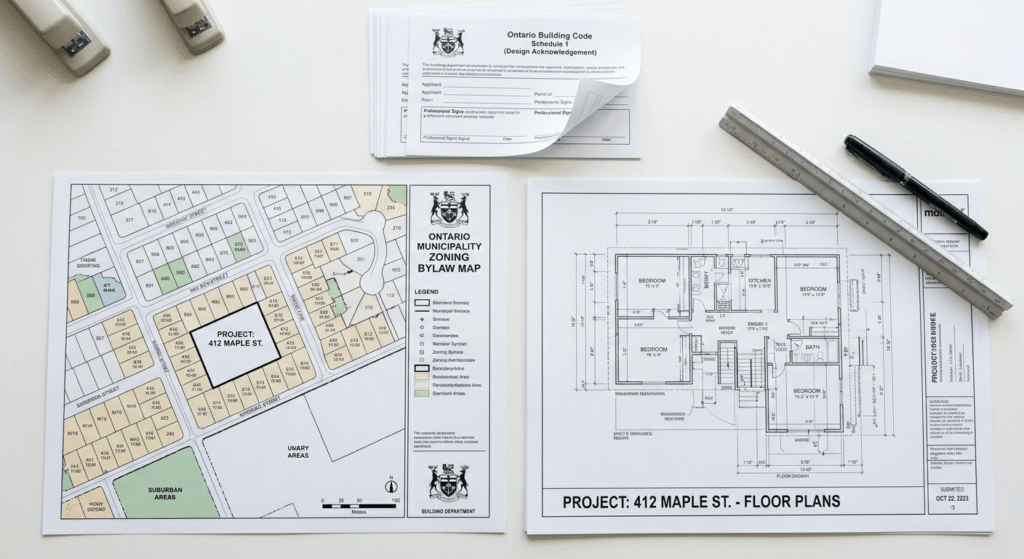
- Prepare a complete application package. A complete submission typically includes the provincial Application for a Permit to Construct or Demolish form (updated February 2026), architectural drawings, a site plan showing property boundaries and the proposed footprint with setbacks, structural drawings where load-bearing elements are involved, Schedule 1 and Schedule 2 design acknowledgement forms, and a completed Applicable Law checklist. Applicable law is the body of other legislation that must be satisfied before a permit is issued, including zoning bylaws, the Ontario Heritage Act, and Conservation Authority requirements.
- Submit to your municipal building department. Applications go to the municipality, not the provincial government. As of February 16, 2026, the City of Toronto requires all applications through its ePlans digital portal using the updated form. Most GTA municipalities have moved to digital or hybrid submission. Submitting electronically in Toronto or Mississauga reduces your fees by 8 to 12%.
- Respond to plan review deficiencies quickly. Municipal examiners review your submission for OBC and zoning compliance. If they flag deficiencies, respond promptly. Unresolved comments pause your file. The 10-business-day residential review window applies only to complete applications.
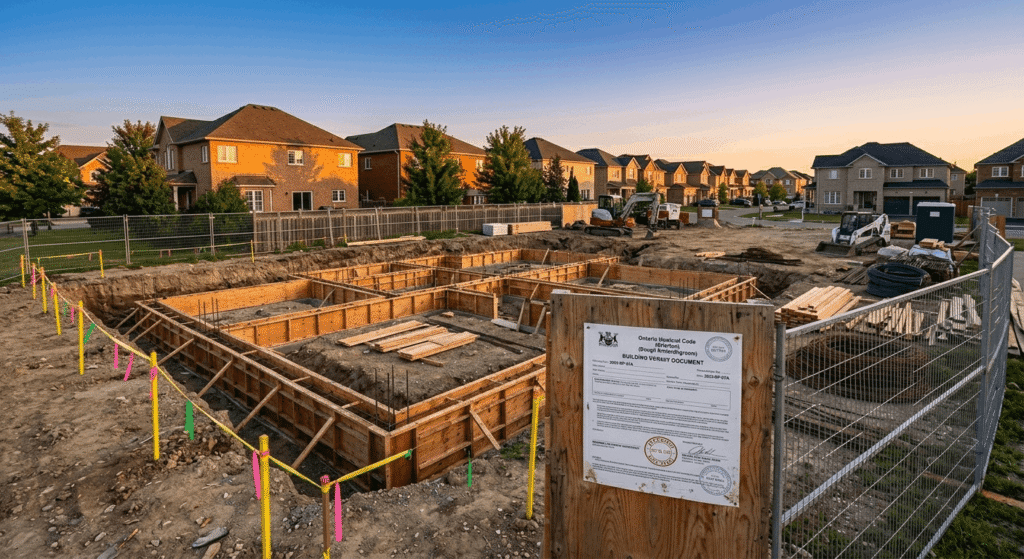
- Pick up your permit and book construction inspections. Once approved, keep the stamped drawings on-site throughout construction. You must book mandatory inspections at each required stage: footings before concrete is poured, structural framing before insulation, rough-in plumbing and HVAC before walls are closed, insulation and vapour barrier before drywall, and a final inspection to close the permit. The municipal building official must attend within two working days of your booking.
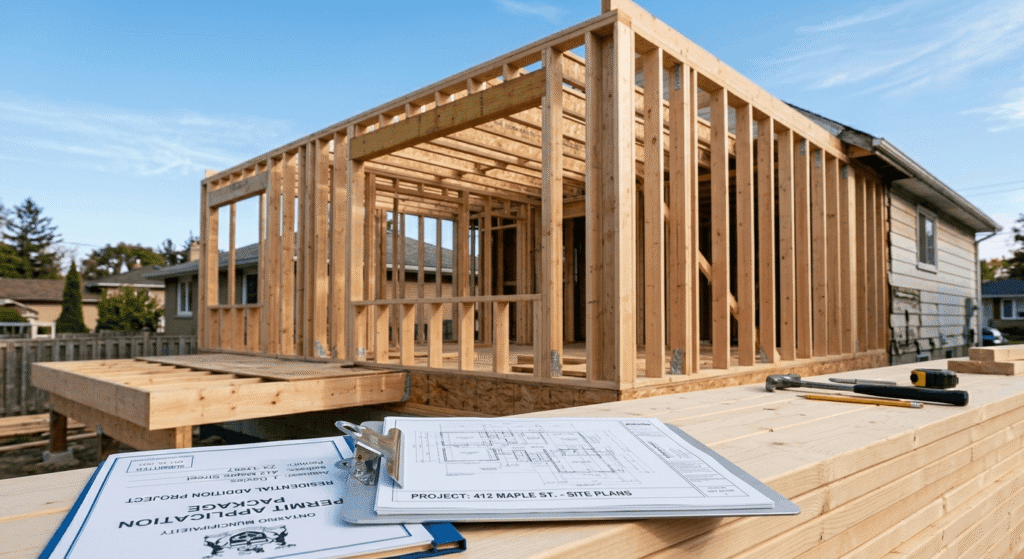
Leedway Group manages the complete renovation, addition, and custom build permit process across the GTA, including drawing preparation and submission, which eliminates the most common causes of stalled applications.
Before breaking ground, run through our 12-step Ontario pre-construction checklist.
How Much Are Building Permit Fees in Ontario in 2026?
Building permit fees vary by municipality. Most use a formula based on project value or gross floor area. On January 1, 2026, fees across Ontario rose by approximately 4.0% under the Building Code Act’s annual indexation provisions. Across the GTA, fees typically range from $10 to $15 per $1,000 of declared construction value, though Toronto uses a Service Index rate per square metre of construction area for residential work.
Permit fees cover plan review and all required inspections. They don’t include development charges, which are separate and often significantly higher. Under Bill 23 provisions, secondary suites and garden suites may qualify for reduced or waived development charges in many Ontario municipalities.
Budget a 10-15% contingency on your permit estimate. Re-inspection fees range from $250 to $555 depending on the municipality, and engineering sign-off can add cost if work is covered before an inspection is cleared.
Our Ontario Building Code guide for 2026 covers the regulatory updates affecting permit applications this year, including the energy efficiency requirements that now apply to most residential additions.
Frequently Asked Questions
1. What is applicable law in an Ontario building permit application?
Applicable law refers to legislation beyond the OBC that must be satisfied before a permit can be issued. Per Article 1.4.1.3. of Division A of the Ontario Building Code, this includes zoning bylaws, the Ontario Heritage Act, Conservation Authority regulations, and the Environmental Protection Act. Many municipalities, including the City of Hamilton, require a completed Applicable Law Checklist with applicable submissions. Sorting out these approvals before you apply reduces delays significantly.
2. Do I need a building permit to finish my basement in Ontario?
In most cases, yes. Adding bedrooms, creating a secondary suite, relocating walls, adding plumbing, or extending HVAC into a basement all trigger permit requirements. Finished basements must meet OBC standards for egress windows, fire separation, smoke and CO alarms, ceiling height, and ventilation. Even if the basement structure already exists, converting it to habitable living space requires a building permit in most Ontario municipalities.
3. What happens if I build without a permit in Ontario?
Building without a permit is an offence under the Building Code Act, 1992. Individuals face fines up to $50,000 for a first offence and $100,000 for subsequent offences. Corporations face up to $500,000 for a first offence. Beyond fines, unpermitted work can lead to stop-work orders, mandatory tear-outs to expose hidden structure, insurance claim denials, and serious complications at the time of sale.
4. Can I start construction before my building permit is approved?
No. The Building Code Act requires a permit to be issued before construction begins. For large or phased projects, some municipalities offer partial or conditional permits that allow site or foundation work to start while the full application is under review. These are granted at municipal discretion and require a deposit.
5. Who is responsible for booking construction inspections in Ontario?
The permit holder, either the homeowner or their builder, is responsible for booking inspections at each required construction stage. The Ontario Building Code requires the municipal building official to conduct the inspection within two working days of being notified. Missing an inspection and covering work before sign-off can result in stop-work orders or costly forced exposure of completed work.
Conclusion
The building permit process in Ontario rewards preparation. Complete applications move quickly; incomplete ones stall. Start with your zoning check, hire a BCIN-qualified designer, and treat your inspection schedule as part of the build timeline from day one. If you’re planning a renovation, addition, or custom home anywhere in the GTA, contact Leedway Group to get your project submission-ready before you break ground.
For everything on approvals, see our complete Ontario building permits guide. Thinking about building? Contact Leedway for a consultation.
Permit fees vary by city — our guide breaks down Ontario building permit costs by municipality.