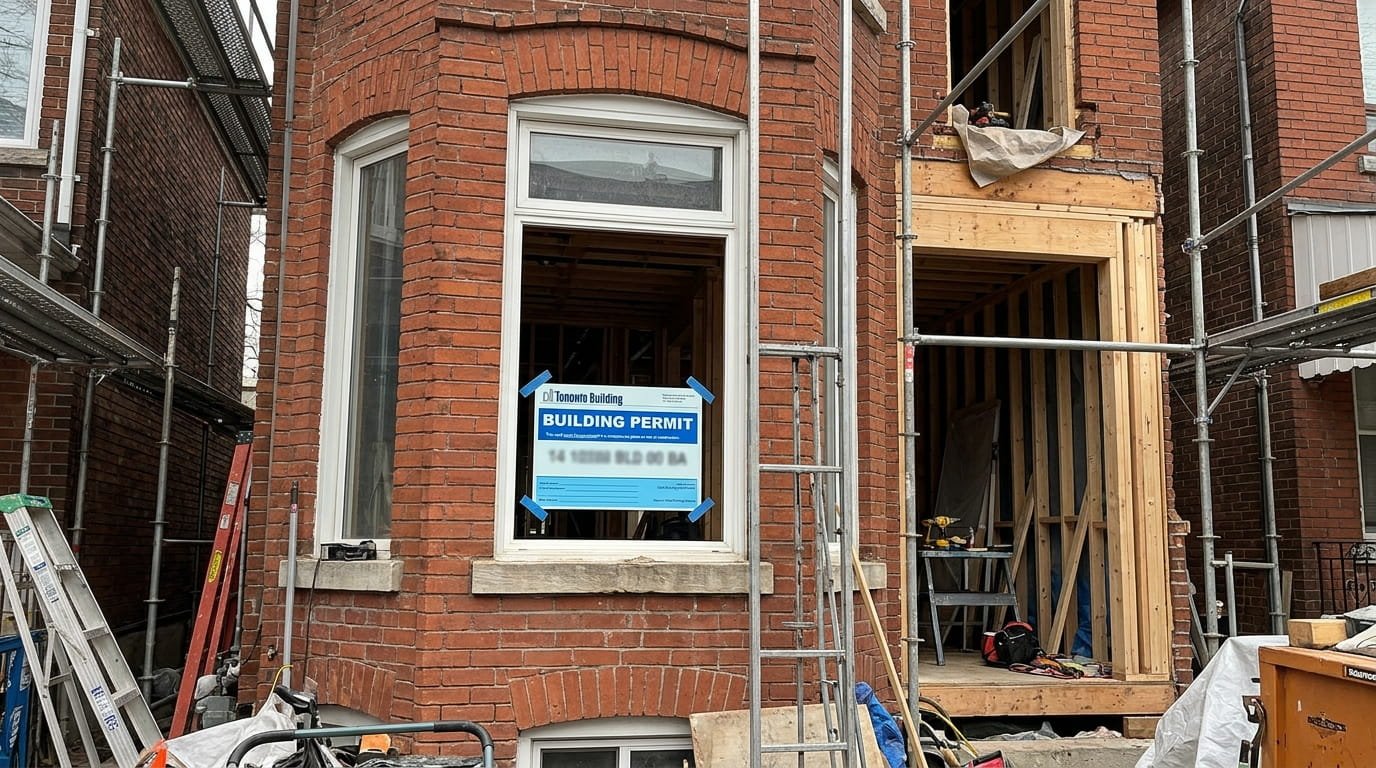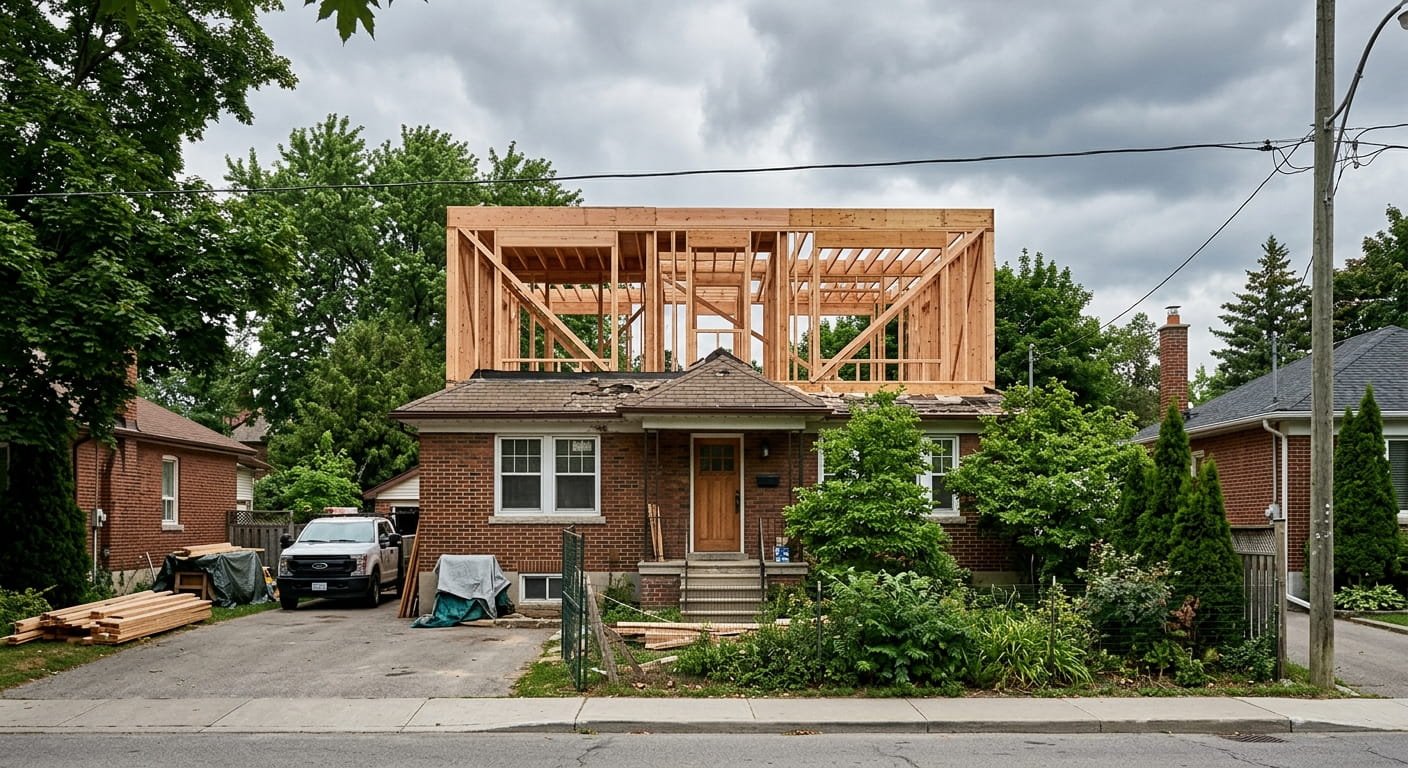


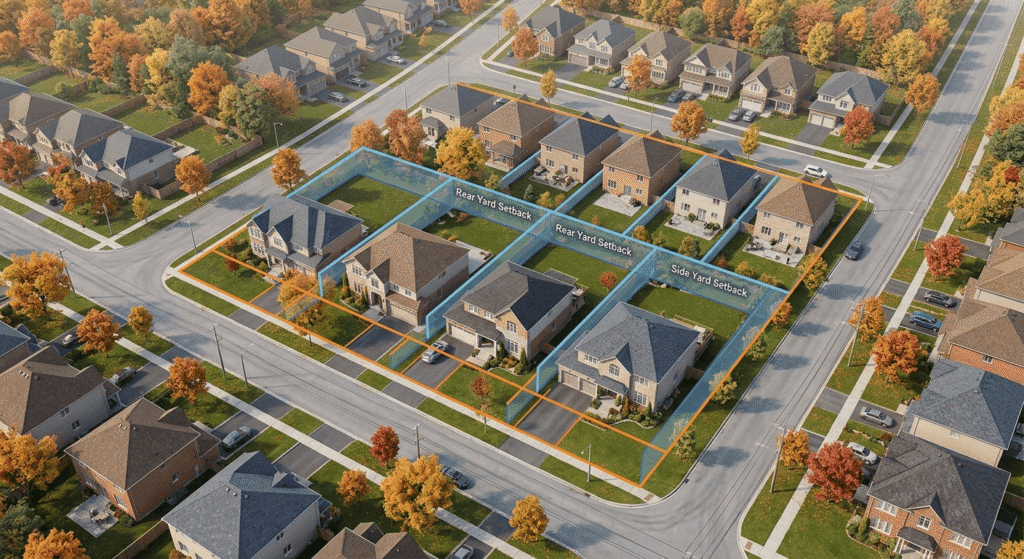
Quick Answer Box: Ontario zoning laws are legally binding municipal bylaws under the Planning Act that dictate how every parcel of land in the province can be used, what can be built on it, and exactly where on the lot a structure must sit. Ontario has no single province wide zoning code. Every municipality sets its own bylaws aligned with its Official Plan and provincial policy directives.
Developing a property? Leedway Group handles multiplexes, severances, rezoning and small developments across the GTA. See our multiplex and land development service.
TL;DR
- Ontario has no single provincial zoning code. Every municipality writes its own bylaws under the Planning Act.
- Residential zones run from R1 (single detached) through R5 and RM (multi-unit), each controlling what density is permitted.
- The building envelope setbacks, height, and lot coverage defines exactly where on your lot you can build.
- Bill 17, which received Royal Assent on June 5, 2025, introduced as-of-right 10% setback variations on most urban residential land outside the Greenbelt.
- Up to 3 residential units are now permitted as-of-right on most urban lots under Ontario’s Additional Residential Units (ARU) framework.
What Are Ontario Zoning Laws?
Ontario zoning laws are bylaws passed by municipal councils under Section 34 of the Planning Act (R.S.O. 1990, c. P.13). They control land use, building placement, height, lot coverage, density, and parking requirements for every parcel in the province. Your zone is determined before you buy the lot. It decides what you can build long before you apply for a permit.
Zoning bylaws are separate from the Ontario Building Code. The OBC governs how you build; zoning governs what, where, and how much. A project that passes an OBC inspection can still be refused a building permit if it conflicts with local zoning. Both apply, and zoning is checked first. Leedway’s Ontario Building Code Guide 2026 covers the technical side; this article covers the land use side.
What Are the Main Zoning Types in Ontario and What Do They Permit?
Ontario zoning regulations group every property into a category based on intended use. Here’s how the main categories work in practice across the province.
- Residential (R) covers the widest range of built forms. R1 limits land to single detached homes and is the standard for low-density suburban neighbourhoods. R2 and R3 expand permissions to duplexes, semi-detached homes, and townhouses. R4 and R5 allow low to mid-rise apartment buildings. Toronto maintains over 30 residential sub-classifications to reflect the variety of lot types across its neighbourhoods. Rural Residential (RR) designations apply outside urban settlement boundaries, where minimum lot sizes are significantly larger.
- Commercial (C) zones cover retail stores, offices, and restaurants.
- Industrial (M or I) separates light manufacturing (M1) from heavy industrial operations (M2 and M3), sited away from residential areas to prevent land use conflicts.
- Institutional (IN) applies to schools, hospitals, and government buildings.
- Agricultural (A) protects farmland and Greenbelt land from urban conversion.
- Open Space (OS) covers parks and conservation areas.
- Mixed-Use (MU) zones blend residential with commercial or institutional uses, most commonly found along transit corridors under Ontario’s intensification policies.
Ontario publishes no single province wide zoning codes list. Toronto, Mississauga, Brampton, and every other municipality maintain their own zoning maps and bylaw documents through their local planning department websites.
What Is a Building Envelope and How Does It Restrict Your Build?
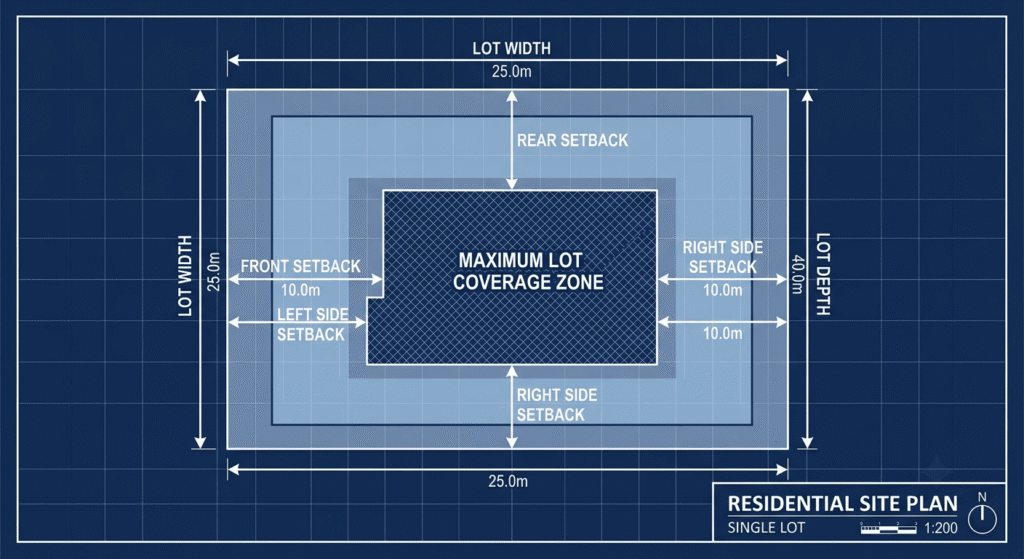
The building envelope is the buildable zone remaining on your lot once all required setbacks are applied. Your zoning bylaw sets it by specifying four key measurements: front yard setback, rear yard setback, side yard setbacks, and maximum height.
Ottawa’s 2026 bylaw for N1 and N2 residential zones is a useful reference. The front yard setback runs 3 to 6 metres depending on the street type. The rear yard requires a minimum of 7.5 metres for the main dwelling. Interior side yards require 1.2 to 1.5 metres per side, with 3 metres required on the exterior (flankage) side of corner lots. Once you draw those boundaries on your lot plan, the remaining rectangle is your buildable envelope.
Lot coverage adds a second constraint. If a bylaw sets 40% maximum coverage on a 500 m² lot, all structures combined house, garage, garden suite, covered deck can cover no more than 200 m². Every addition and accessory building counts toward that figure. Misreading the envelope is one of the most common reasons a design fails at the permit stage. Get the bylaw numbers before an architect draws the first line.
How Does Density Affect What You Can Build on Your Property?
Density in zoning bylaws controls how many units and how much floor area a given lot can hold. It’s expressed through lot coverage percentages, floor space index (FSI), and maximum unit counts.
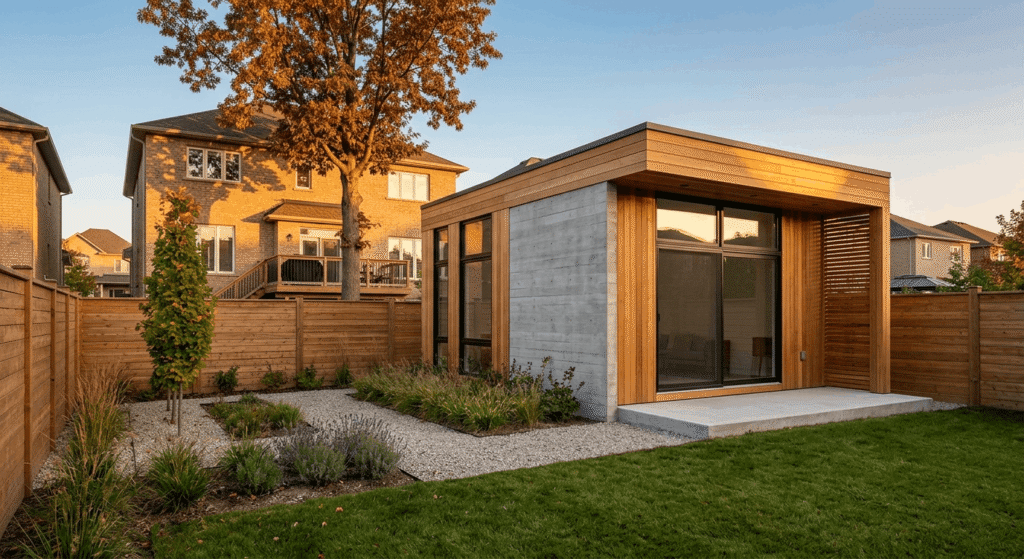
Ontario’s ARU framework allows most urban residential lots to accommodate up to 3 units as-of-right. A main house, a basement suite, and a garden suite can all sit on the same lot without a rezoning application. The provincial permission overrides local zoning for the use itself. Local setbacks, height limits, and lot coverage rules still apply to each structure individually.
Toronto’s 2026 bylaw is precise about garden suite limits: maximum height of 6.0 metres for a flat roof or 6.3 metres for a sloped roof, a footprint cap of 60 m² on most lots, 1.5 metres from the rear property line, and 0.6 metres from each side.
For larger developments, Community Benefits Charges (CBCs) replaced Section 37 density bonusing under the Planning Act. CBCs apply only to buildings five storeys or taller with 10 or more residential units, capped at 4% of the value of land being developed. For typical single-family or semi-detached projects, CBCs don’t apply.
What Changed in Ontario Zoning Regulations in 2025 and 2026?
Two recent legislative changes affect what you’ll need to do before you build.
Bill 17, the Protect Ontario by Building Faster and Smarter Act, 2025, received Royal Assent on June 5, 2025. It amended the Planning Act to allow as-of-right setback variations of up to 10% on urban residential land outside the Greenbelt. A homeowner who needs to build within 10% of a required side property line setback no longer needs a minor variance application. This change specifically targets delays around basement suites and secondary units, where small encroachments were sending projects to a Committee of Adjustment hearing.
Toronto’s By-law 58-2026 updated performance standards for multi-tenant houses. Garden suites and laneway suites remain permitted citywide under sections 150.7 and 150.8 of Toronto’s consolidated Zoning By-law 569-2013. Secondary suites are now permitted as-of-right in all detached, semi-detached, and townhouse dwellings across Toronto’s residential zones. Projects that required a minor variance or rezoning as recently as 2020 are now permitted without any planning application.
Inclusionary zoning was capped in May 2025. In protected major transit station areas, municipalities can require no more than 5% of residential units to be affordable housing, with a maximum affordability period of 25 years.
How Do You Find and Read the Zoning Codes for Your Ontario Property?
- Visit your municipality’s online mapping portal. Toronto uses Map Toronto. Ottawa, Mississauga, and most GTA municipalities have searchable zoning maps on their planning department websites.
- Search by address. Enter the street address to pull up the zone code assigned to your specific parcel.
- Identify the base zone and any subzone. R3 means something different in every city. Pull the full bylaw document and locate the section for your exact zone code.
- Review permitted uses. Check what is allowed as-of-right, what requires conditions, and what is prohibited on that parcel.
- Pull the performance standards table. Height limits, setback distances, maximum lot coverage, and parking minimums are all listed in a table within the zone section.
- Check for overlay designations. Heritage overlays, floodplain restrictions, Environmental Protection (EP) designations, and Greenbelt boundaries apply on top of the base zone.
- Book a pre-application consultation. Most Ontario municipalities offer a meeting with a planner before you submit. It’s low-cost or free and surfaces conflicts before your design is finished.
Ontario Zoning Types Compared
| Zone | Typical Use | Density | Garden Suite Permitted | Key Limit |
|---|---|---|---|---|
| R1 | Single detached homes | Low | Yes (ARU as-of-right) | No multi-unit buildings |
| R2 / R3 | Duplexes, semi-detached, townhouses | Low to medium | Yes | Lot coverage and setbacks |
| R4 / R5 | Low to mid-rise apartments | Medium to high | Varies by municipality | Height and FSI limits |
| RM | Condos, stacked units | High | Varies | Transit corridor density policies |
| C (Commercial) | Retail, offices, restaurants | Varies | Not in pure C zones | Residential use restricted |
| A (Agricultural) | Farming, greenhouses | Very low | No | Greenbelt and PPS protections |
Common Mistakes to Avoid With Ontario Zoning Bylaws
Skipping the zoning check before purchasing land is expensive. Zoning determines what can be built on a lot at all. The right-priced property may carry a zone that prohibits the intended build entirely.
Treating the ARU as-of-right permission as a blanket clearance is a related error. The provincial framework permits the use of up to 3 units without rezoning, but every structure must still fit within the local building envelope. A garden suite use might be permitted; a garden suite placed 0.5 metres from the rear property line on a lot requiring 1.5 metres is still a violation.
Confusing a minor variance with a full rezoning trips up many applicants. A minor variance under Section 45 of the Planning Act handles small deviations from existing bylaw standards through the Committee of Adjustment. A zoning bylaw amendment under Section 34 changes permitted uses or performance standards for a property through full municipal council. They carry different processes, different timelines, and different fees.
The costliest mistake is discovering a zoning conflict at the permit stage. Zoning review belongs at the beginning of project planning, not after drawings are complete.
Which Zoning Approval Path Is Right for Your Ontario Build?
The right path depends on what your project needs and how far it departs from existing zoning.
If your build fits within the current zone and every structure sits inside the building envelope, go straight to a building permit. No planning approvals are needed.
If you want a secondary unit or garden suite and your lot qualifies under the ARU framework, the use is permitted as-of-right. You still need a building permit and must meet all local setback, height, and coverage rules.
If your structure falls within 10% of a required setback on urban residential land outside the Greenbelt, the Bill 17 changes mean that deviation is now permitted without a formal variance application.
For deviations beyond 10%, a minor variance through the Committee of Adjustment is the right path. A full change of permitted use requires a zoning bylaw amendment under the Planning Act. Expect 3 to 12 months depending on the municipality. If council refuses, the applicant has 20 days from the notice of decision to appeal to the Ontario Land Tribunal (OLT).
For GTA homeowners planning additions, custom homes, or secondary suites, talking through planning and financial considerations early saves months. Pre-application consultation with a municipal planner and an experienced design-build team at the same time is the most efficient start.
Frequently Asked Questions
1. What is the difference between Ontario zoning bylaws and the Ontario Building Code?
Zoning bylaws govern land use, building placement, height, density, and setbacks. The Ontario Building Code sets technical standards for how a structure is built. Both apply to every construction project. Zoning is reviewed first. A building permit will be refused if the project doesn’t comply with local zoning, regardless of whether it meets OBC requirements.
2. Can I build a garden suite on any residential property in Ontario?
Under the ARU framework, garden suites are permitted as-of-right on most urban residential lots zoned for detached, semi-detached, or townhouse use. Local setbacks, height limits, and lot coverage caps still apply. In Toronto, the 2026 bylaw sets a maximum footprint of 60 m², a height limit of 6.0 to 6.3 metres depending on roof type, and a 1.5-metre rear setback requirement.
3. What does R1 zoning mean in Ontario?
R1 designates land for single detached residential use. One home per parcel, larger lots, and low-density neighbourhoods characterise R1. Under current ARU rules, a secondary suite within the main structure and a garden suite in the backyard are both permitted as-of-right. Higher-density uses such as duplexes or apartment buildings are not allowed in an R1 zone without a full rezoning.
4. What is the difference between a minor variance and a zoning bylaw amendment?
A minor variance under Section 45 of the Planning Act covers small deviations from existing bylaw standards, such as a setback encroachment, and is decided by the Committee of Adjustment. A zoning bylaw amendment under Section 34 changes permitted uses or performance standards for a property and goes through full municipal council approval. Minor variances are faster and less expensive. Amendments typically take 3 to 12 months and carry a higher risk of refusal.
5. How do I appeal a zoning decision in Ontario?
Decisions on zoning bylaw amendments and minor variances can be appealed to the Ontario Land Tribunal (OLT) within 20 days of the notice of council’s decision. The appeal is filed with the municipal clerk with written reasons and the OLT fee. The OLT can allow or dismiss the appeal, or amend the bylaw itself. Appeals are time-consuming and should only be pursued after exhausting pre-consultation and revision options.
Conclusion
Ontario zoning laws determine what you can build before a permit is filed or a dollar is spent. Understanding your zone, reading the building envelope precisely, and knowing the recent changes from Bill 17 and the ARU framework puts every project on firmer ground from day one. Leedway Group works with GTA homeowners from the zoning review stage through to final construction, making sure your design matches what your lot actually permits. Contact us today to start your project on solid ground.
For everything on approvals, see our complete Ontario building permits guide. Planning a project? Get in touch with the Leedway team.
If zoning is the obstacle, our guide covers how to rezone a property in Ontario and when a minor variance is faster.