

Quick Answer Box: The best Mississauga neighbourhoods for custom homes in 2026 are Lorne Park, Mineola, Gordon Woods, Rattray Marsh, and Lakeview. Custom homes in Mississauga range from $400 to $1,000+ per square foot to build, with land prices from $1.2M to $4M+ depending on the area. Each neighbourhood carries distinct zoning rules and tree protection requirements that shape what you can build.
Mississauga’s custom home market is more active than most GTA buyers realize. Beyond the condo towers near Square One, a collection of established south-end communities holds some of the most desirable residential lots in Ontario. Custom homes in Mississauga range from mid-sized infill builds on 40-foot lots to estate properties on land stretching over 200 feet deep. Your choice of neighbourhood sets the ceiling on your design, locks in your permit timeline, and shapes the long-term value of the investment more than almost any other early decision.
What to Look For When Choosing Among Premium Neighbourhoods in Mississauga
Selecting the right area from Mississauga’s premium neighbourhoods comes down to four factors: lot dimensions, zoning category, tree coverage, and transit or highway access. Getting any one of these wrong means costly redesigns or variance applications before a single permit is approved.
Lot width and depth set the ceiling on what your builder can actually deliver. In south Mississauga, frontage ranges from 40-foot infill parcels in Lakeview to 120-foot estate frontages in Gordon Woods. Depth matters just as much as width: a 200-foot-deep lot gives architects real room to place a detached garage, outdoor amenity space, and future additions without compromising the main footprint.
Zoning is the constraint most buyers underestimate until it’s too late. Most low-density residential areas in Mississauga fall under Zoning By-law 0225-2007, which sets height limits, lot coverage maximums, side-yard setbacks, and rules for accessory structures. A lot in an R1 zone has different limits than an R2, and those numbers determine how large a home you can build before the Committee of Adjustment gets involved. Budget two to four extra months for a minor variance application if your design pushes against any of those thresholds.
Tree protection adds another layer. Mississauga’s tree bylaw applies to private trees above a certain trunk diameter, and a proposed footprint that encroaches on protected root zones triggers a separate arborist review. In treed communities like Mineola and Lorne Park, that review adds both cost and time before permits are issued. It’s not a dealbreaker, but it needs to be in the schedule.
Transit proximity holds real long-term value. Neighbourhoods within walking distance of a GO Train station maintain buyer demand through interest rate cycles and broader market corrections. Before committing to a lot, Leedway’s planning and financial guidance resource is a practical tool for mapping acquisition, design, and permit costs from the start.
Which Mississauga Neighbourhoods with Large Lots Are Best for a Custom Build in 2026?
The best neighbourhoods in Mississauga in 2026 for custom home builds concentrate in the city’s south end, close to Lake Ontario. These are established communities with mature lot stock, very limited vacant land, and a culture of custom construction rather than speculative development. Experienced builders in Mississauga who operate regularly in these areas know the permit timelines, tree bylaw nuances, and design expectations that define each pocket.
Lorne Park: Mississauga’s Original Luxury Neighbourhood
Lorne Park is the benchmark for Mississauga’s luxury neighbourhoods. Lots frequently exceed 100-foot frontage, with many running 200 feet or deeper. Detached homes trade in the $1.8M to $3.5M range, with estate properties sitting well above that. The neighbourhood feeds Lorne Park Secondary School, consistently ranked among the GTA’s top public schools, which anchors a lot of the sustained buyer demand. New custom builds here typically respect the established streetscape, favouring traditional facades paired with updated interiors. Expect a Committee of Adjustment application if the design pushes any zoning dimension, and build that timeline into your planning from day one.
Mineola: Custom Home Design in Mississauga’s Most Exclusive Enclave
Mineola sits directly north of Port Credit and draws buyers who want a wooded, private lot with a 15-minute walk to the GO Train. Lots run up to 200 feet in depth. The average individual income in Mineola is $240,833, which tells you something about the quality of finishes and calibre of construction that defines the neighbourhood. French country with modern materials is the most common design direction on recent builds, though contemporary architecture is rising. Inventory is historically tight: Mineola rarely sees meaningful price corrections because the combination of lot quality, school catchment, and transit access is difficult to replicate anywhere else in the city.
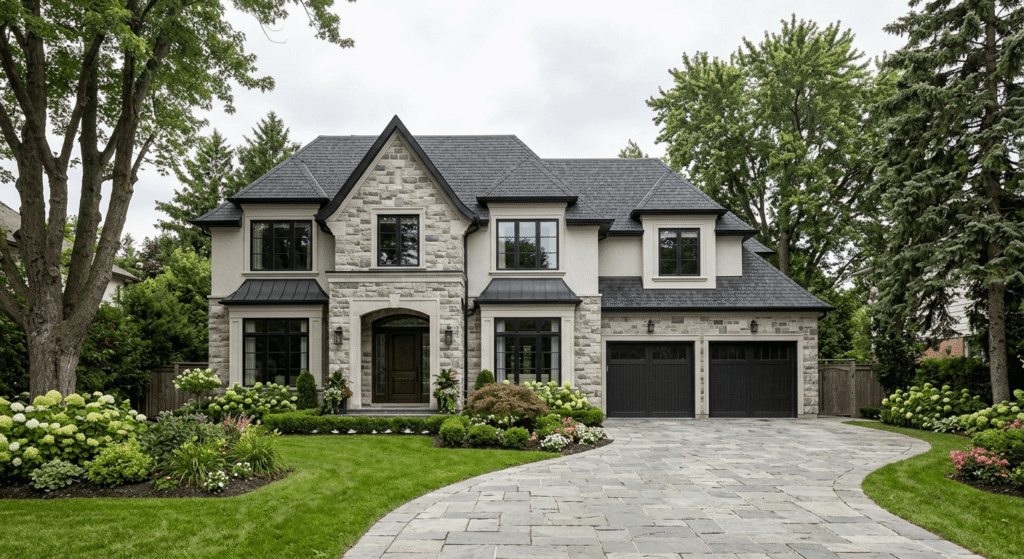
Gordon Woods: Large Estate Lots in a Quiet South Mississauga Enclave
Gordon Woods is a smaller community east of downtown Mississauga that consistently delivers some of the city’s largest single-family lots. Most properties are zoned R1 under By-law 0225-2007, meaning low lot coverage and strict setback requirements. For estate builders, that’s not a drawback: the constraints create homes that sit generously on their properties rather than pressing against every boundary. Some parcels near Cooksville Creek carry conservation constraints that require additional site studies before permits can issue. Confirm grading and servicing conditions with your builder before making an offer on any Gordon Woods property.
Rattray Marsh and Clarkson: Conservation Privacy with Waterfront Access
Rattray Marsh borders a protected conservation area on Mississauga’s western Lake Ontario shoreline. Nearly every home in this pocket is custom-built, and the mix of architectural styles here is notably broader than in Lorne Park or Mineola. Some lots back directly onto green space or the water. Clarkson GO Station is nearby, making this one of the quieter south Mississauga locations that still offers a reasonable Toronto commute. If you’re weighing whether to tear down an existing structure on a desirable lot versus building from scratch, Leedway’s renovation vs. rebuild guide addresses that decision with specific cost considerations.
Lakeview: Mississauga’s Active Infill Opportunity
Lakeview is where the custom home market meets the city’s most active transformation zone. Pre- and post-WWII bungalows on wide lots are steadily being replaced by custom infill homes. The Lakeview Village waterfront redevelopment is bringing parks, transit upgrades, and new commercial amenities to the area over the next decade. Lot prices sit below Mineola and Lorne Park, but south-of-the-highway positioning and improving waterfront infrastructure are closing that gap faster than most buyers anticipate. For builders seeking the best price-to-potential ratio among Mississauga’s lakeside communities, Lakeview is the current answer.
| Neighbourhood | Typical Frontage | Price Range | Stand-Out Feature |
|---|---|---|---|
| Lorne Park | 100+ ft | $1.8M–$3.5M+ | Top-ranked school catchment |
| Mineola | 60–100+ ft | $2M–$3M+ | GO Train proximity, private lots |
| Gordon Woods | 80–120+ ft | $2M–$4M+ | Largest estate lots in city |
| Rattray Marsh | Varies | $1.5M–$3M+ | Conservation views, diverse styles |
| Lakeview | 40–60 ft | $1.2M–$2M+ | Waterfront upside, infill opportunity |
Frequently Asked Questions
1. What permits are required to build a custom home in Mississauga?
Every new custom home in Mississauga requires a building permit from the City. Residential permits start at a minimum of $244, with a $50 non-refundable submission deposit credited toward the total. Final fees depend on project size and scope. Treed properties may also require an arborist report and a separate City approval before the building permit can be issued. Full fee schedules and current application timelines are on the City of Mississauga building permit page.
2. Are development charges still reduced for custom home builders in Mississauga in 2026?
Yes. Mississauga extended its development charge incentive program through December 31, 2027, following a City Council motion in March 2026. The current reduction is 50% on residential development charges. To qualify, builders must pull a permit for footings and foundations before the December 2027 deadline. Full eligibility details are confirmed on the City of Mississauga development charge incentives page.
3. What should I look for when comparing luxury home communities in Mississauga?
When comparing luxury home communities in Mississauga, prioritize these five factors before making any offer:
- Lot width and depth against your intended floor plan dimensions
- Zoning category and permitted lot coverage under By-law 0225-2007
- Tree protection constraints that may limit your footprint or add approval time
- School catchments and proximity to GO Train stations
- Neighbourhood design expectations and local Committee of Adjustment history
Each neighbourhood rewards a slightly different buyer profile. A zoning and lot feasibility review from a local builder before making an offer can save months of redesign later.
4. How long does it take to build a custom home in Mississauga?
Most custom home builds in Mississauga run 12 to 18 months from permit approval to occupancy, depending on project size and design complexity. Pre-construction work, including site assessment, architectural drawings, arborist reports, and permit submission, typically adds three to six months before construction even begins. Treed lots or properties requiring a Committee of Adjustment variance push that pre-construction window further. Planning for an 18 to 24-month total timeline from lot purchase to move-in is a realistic baseline for most south Mississauga custom builds.
5. Can I tear down an existing home and build a custom home on the same lot in Mississauga?
Yes, teardown and rebuild is common across Mineola, Lorne Park, Lakeview, and Gordon Woods, where older structures sit on lots with strong bones but outdated homes. You’ll need a separate demolition permit before the existing structure comes down, followed by a new building permit for the custom home. The City also requires a pre-demolition review confirming water, sewer, and utility disconnections. Zoning confirmation for the new build happens during this phase too, which is the right time to flag any variances before architectural drawings are finalized.
Conclusion
Custom homes in Mississauga in 2026 are being built across a distinct set of south-end communities: Lorne Park for prestige and school catchments, Mineola for private lots near transit, Gordon Woods for estate-scale space, Rattray Marsh for conservation privacy, and Lakeview for buyers who want waterfront proximity at a lower land cost. The development charge reduction, currently extended to December 2027, gives buyers a concrete financial reason to move this year. Leedway Group works with custom home clients across south Mississauga and brings direct experience in local zoning, tree protection bylaws, and permit timelines to every project. Explore our custom homes services or contact us to talk through a specific lot or neighbourhood.
For the full local picture, see our Mississauga custom home builder guide. Planning a project? Get in touch with the Leedway team.