

A 2nd storey addition in Ontario costs $375 to $550 per square foot in 2026, and Toronto and GTA projects often reach $400–$700+. For a standard 800–1,000 sq ft second storey, total costs including permits and engineering usually fall between $280,000 and $550,000. Budget another 10–20% for soft costs and contingency.
A second storey gets you a lot more living space without giving up your backyard, and you skip the $100,000–$150,000 in combined transaction costs that come with selling and buying a larger home in the GTA. The price range is wide, though. 2026 pricing reflects higher labour rates, stricter energy rules under the Ontario Building Code, and updated permit fees across Toronto and the province.
This guide covers what you’ll actually pay, what moves the price up or down, how the permit process works, and whether you can stay in the house while it’s built.
Leedway Group designs, permits and builds home additions across Toronto, Mississauga and the GTA, including full and partial second storeys.
For Toronto-specific numbers, our guide breaks down home addition costs by neighbourhood.
What is 2nd storey addition cost in Ontario?
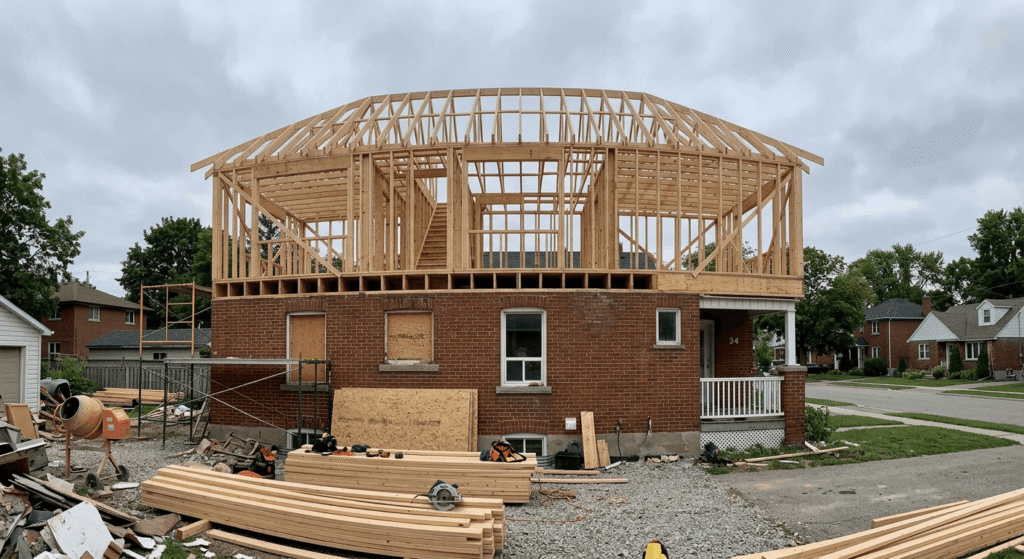
The 2nd storey addition cost in Ontario is the total expense of adding a full or partial upper floor to an existing single-storey home. It covers construction, structural reinforcement, architectural and engineering drawings, permit fees, HVAC upgrades, and interior finishing. Costs vary a lot by municipality, lot conditions, finish level, and zoning complexity.
Ontario’s Building Code Act governs all structural additions, and second storeys are among the most regulated project types. GTA projects also have to meet local zoning bylaws on top of the provincial code.
Adding up rather than out? Our step-by-step guide covers the 2nd-floor addition permit process in Toronto.
How much does a second storey addition cost in Ontario in 2026?
Standard second storey additions in Ontario cost between $375 and $550 per square foot in 2026. Toronto and the GTA push that range higher, usually $400–$700+ per square foot, because of labour rates and stricter local zoning. For reference, a typical 800 sq ft second storey in the GTA runs $280,000–$360,000 fully finished. A 1,000–1,200 sq ft second floor climbs to $350,000–$550,000 or more.
These figures are hard construction costs only. Soft costs add another 10–20% on top. Here’s what that category covers:
- Architectural and structural engineering fees: 10–20% of total project cost
- City of Toronto building permit: $18.56 per square metre (2026 rate), plus HVAC permit at $270.95 and plumbing permit where applicable
- Total permit package for a major second storey addition in Toronto: typically $8,000–$12,000
- Committee of Adjustment application if design exceeds zoning limits: $2,228.98 plus planning consultant fees of $2,000–$4,000
Some costs get left out of early budgets entirely. Put these on your list too:
- HST at 13% on construction and professional fees
- Development charges, in municipalities that apply them to residential expansions
- Heritage or conservation district review, if your street is in one
- Asbestos removal or knob-and-tube wiring replacement in older homes
- Rent while the house is unlivable (more on that below)
- Landscaping and driveway repairs after the crews leave, plus higher insurance and property tax once the addition is assessed
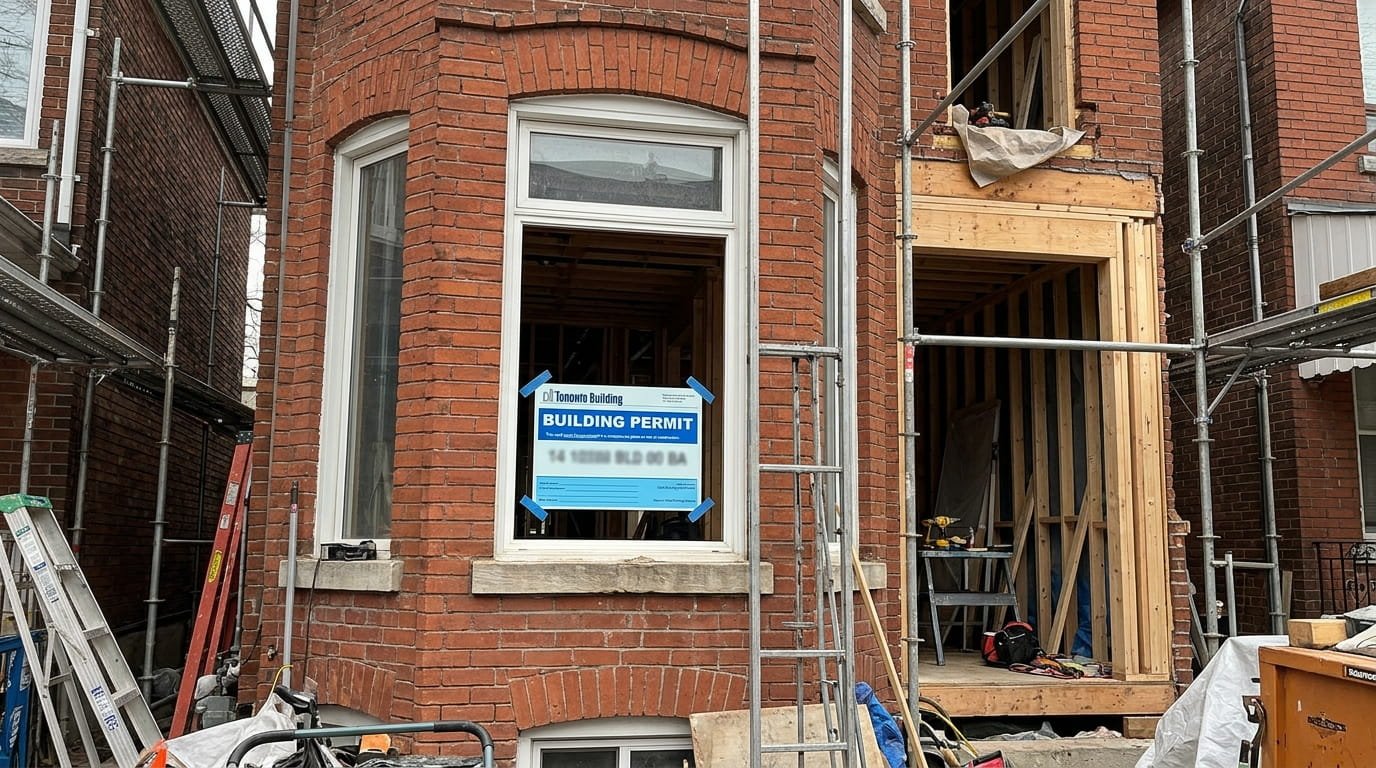
One detail many homeowners miss in 2026: Toronto’s FASTRACK permitting stream handles additions under 100 m² that comply fully with zoning bylaws in just 5–10 business days. Push height or lot coverage limits, and standard review takes 4–12 weeks. A Committee of Adjustment hearing adds another 3–6 months. A zoning-compliant design is the fastest way through the permit office.
Compared to Ottawa ($350–$450 per sq ft) or Hamilton, Toronto consistently runs 15–20% higher because of labour rates and tighter local bylaws. Smaller markets like Kitchener and Niagara also tend to price lower than Toronto. Factor those regional differences in before you ask contractors for quotes.
Many homeowners add a separate living space for family. Here’s what adding an in-law suite costs and which permits you need.
What drives the cost of a 2nd floor addition in Ontario?
Five things decide where your project lands in that wide price band. Sort them out early and your budget stays realistic.
Structural assessment
Every second storey addition starts with a licensed structural engineer checking that your existing foundation, load-bearing walls and first-floor framing can carry the added load. This is mandatory under the Ontario Building Code. Engineering studies run $1,200–$4,000 as a standalone cost before full drawings begin, and the findings shape your design options. If the foundation needs reinforcing, that work comes before anything goes up.
Roof removal and replacement
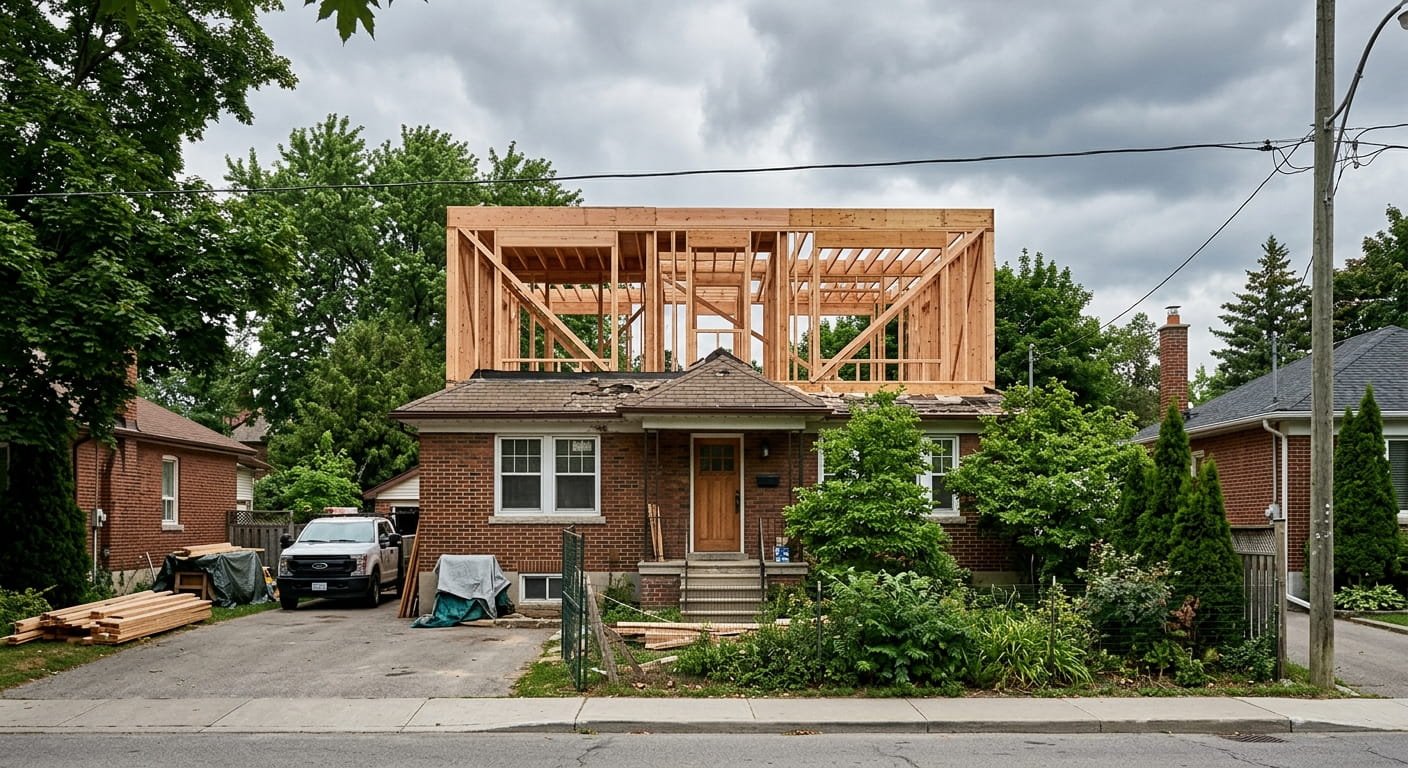
The entire existing roof comes off. That two-to-three-week open window needs careful scheduling, temporary weatherproofing, and experienced framing crews. New roof integration is typically 8–12% of total construction cost, and mismatched rooflines on older homes can push that share higher.
Mechanical systems
HVAC, electrical, and plumbing all have to be extended upward. The 2026 Ontario Building Code requires updated energy-efficiency compliance for all additions, so your project may need a heat pump or upgraded furnace to pass heat-loss calculations. Older homes often need a larger electrical panel and better insulation as well. HVAC and smart-appliance installation labour rose approximately 12% in late 2025, and that increase applies across the GTA.
Finish level
A three-bedroom second floor with one standard bathroom costs far less than the same footprint with an ensuite, walk-in closet, and engineered hardwood. A standard bathroom in an addition runs $18,000–$25,000. A luxury ensuite climbs past $45,000.
Zoning restrictions
Most Toronto residential zones cap building height at 10 metres. Angular plane restrictions also limit how much the new storey can shadow neighbouring properties. Review your property’s zoning envelope early using Ontario’s zoning bylaw framework before commissioning any drawings. Any design that needs a minor variance adds months and cost to the timeline.
The Planning & Financial Guidance resource on Leedway Group’s site walks through how to size your total budget against your property, zoning envelope, and finish goals.
Full, partial, or dormer: which kind of second storey?
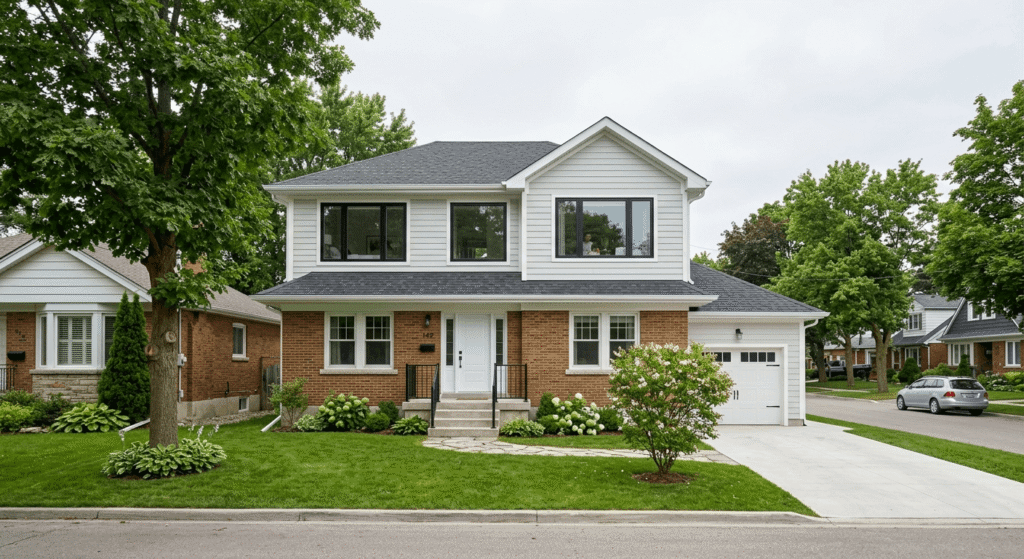
A full second storey covers the whole footprint and roughly doubles your living space. It has the highest cost and the heaviest structural demands. A partial second storey goes over one part of the house, often a garage or a single wing. It’s smaller, simpler, and usually less disruptive. A dormer is the lightest option: it adds headroom and usable floor area in an attic, and works best on houses with a steep roof pitch.
Here’s how building up compares with other ways to add space:
| Second storey | Rear addition | Over-garage | Sunroom or bump-out | |
|---|---|---|---|---|
| Yard space | No loss | Reduces yard | No loss | Minimal |
| Permit and zoning complexity | High | Moderate to high | Moderate | Lower |
| Structural upgrades | Always | Sometimes | Sometimes | Rare |
| Disruption | High, moving out is likely | Moderate | Lower, you may stay | Minimal |
| Common uses | Bedrooms, suites | Family room, kitchen | Bedrooms, playroom, suite | Sunroom, office |
How the permit process works
- Feasibility. A designer or builder reviews the structure and checks your lot against the zoning bylaw before any drawings are paid for.
- Drawings. Stamped architectural and structural drawings, a site plan, and HVAC, plumbing and electrical layouts. Some municipalities also ask for an energy efficiency report.
- Application. Submit the drawings with proof of ownership and pay the permit fees and any development charges.
- Zoning review. If the design doesn’t meet the bylaw, you apply for a minor variance through the Committee of Adjustment. That can involve public consultation, and approval isn’t guaranteed.
- Construction and inspections. The city inspects at each stage: foundation, framing, insulation, mechanical rough-in, and final.
- Sign-off. Once the final inspection passes, you can legally live in the new floor. Update your home insurance at this point.
Can you live at home during construction?
Usually not for a full second storey. Once the roof comes off and the upper floor is framed, the house is exposed to weather and full of active work, so most families move out for that stretch. With a partial addition over a garage or one wing, some families can stay in a separate part of the house, but expect noise, dust, and trades coming and going. Ask your builder which phases need the house empty and budget rent for at least that long.
Choosing a builder
A second storey touches the foundation, roof, structure and every mechanical system, so the builder matters as much as the price. Before you sign, check for:
- Current liability insurance and WSIB coverage
- Experience with permits, fees and inspections in your municipality
- References and finished second storey work you can look at, like the homes in our projects gallery
- A written, itemized quote, a clear timeline, and a straight answer on who books the city inspections
Frequently asked questions
How long does a second storey addition in Ontario take from start to finish?
For a project that fits within existing zoning limits, expect 5–9 months from the first design meeting to move-in. If your addition needs a Committee of Adjustment hearing, the full timeline stretches to 8–14 months. Construction alone runs 3–6 months once the permit is issued, materials are staged, and framing crews are on site.
Do I need a permit to add a second storey to my house in Ontario?
Yes, without exception. A complete building permit application for a second storey addition must include:
- Architectural drawings stamped by a licensed architect or BCIN-designated designer
- Structural engineering calculations and a stamped engineer’s assumption of responsibility
- Site plans showing lot coverage, setbacks, and proposed building height
Homes in heritage or conservation areas may need extra approvals. Working without a permit can lead to stop-work orders, heavy fines, and title problems at resale. The province’s current Ontario Building Code requirements spell out what applies to your project type and municipality.
Is adding a second storey cheaper than moving to a bigger house in Ontario?
In most GTA markets, yes. Selling and buying a larger home in Toronto typically costs $100,000–$150,000 in combined transaction costs: double land transfer tax, real estate commissions, legal fees, and moving expenses. A second storey addition puts that money into your own property instead, and well-executed additions typically recoup 60–80% of their cost in added home equity. If your existing structure or lot limits what’s feasible, a renovation vs. rebuild comparison helps you pick the better long-term path before you commit.
Is it cheaper to build up or out?
Per square foot, building up usually costs about the same as building out or a little more, because of the roof work and structural upgrades. Building up keeps your yard, though, and on a small urban lot it’s often the only way to add real space within the zoning limits.
Can any existing house support a second storey addition in Ontario?
Not every home is structurally ready. A licensed structural engineer assesses your foundation depth, load-bearing walls, and first-floor framing before design work begins. Many post-war Ontario bungalows can support a second floor with targeted reinforcement, but homes with undersized foundations or concrete block construction may need major structural upgrades first, which adds real money to the total project cost.
What rooms should I include in a second storey addition to maximize resale value in Ontario?
Bedrooms and bathrooms give the strongest return. Two or three bedrooms plus at least one full bathroom consistently do well in Ontario’s resale market. A primary ensuite tops buyer wish lists across the GTA. An open staircase connecting both floors also makes the house feel bigger and helps how appraisers value the finished addition.
Before you get quotes
Get the structural assessment done and confirm your zoning envelope before you pay for a full design. Those two answers tell you whether you’re looking at a FASTRACK permit or a variance, and how much foundation work sits under the price. Then build the budget: 10–20% above the construction estimate for soft costs, another 10–15% as contingency, plus HST and a few months of rent if you’ll need to move out.
When you compare quotes, compare scope line by line. A low number that leaves out engineering, permits, or mechanical upgrades isn’t cheaper. Leedway Group’s second storey addition and renovation services cover projects across the GTA with full permit support from initial assessment through final inspection. Contact the team for a project-specific estimate.
For the bigger picture, see our complete Ontario home addition cost guide. Planning a project? Get in touch with the Leedway team.