

Quick Answer Box: An in law suite addition Ontario 2026 typically costs between $40,000 for a basic basement or garage conversion and over $400,000 for a detached garden suite. Permit requirements, building code Ontario compliance, and suite design influence both cost and legality. Knowing your options helps ensure a legal, valuable addition.
Planning an addition? Leedway Group designs, permits and builds home additions across Toronto, Mississauga and the GTA. See our home additions service.
What is an In-Law Suite Addition?
An in-law suite addition also called an additional dwelling unit is a self-contained living area within or beside an existing home. In Ontario, these include secondary suites, legal basement suites, and detached garden suites. These units are commonly built for multigenerational living or rental income, improving property value and household flexibility.
If you are building for an aging parent, our guide to aging-in-place garden suites in Toronto covers accessible design, costs and regulations.
Types of In-Law Suites in Ontario
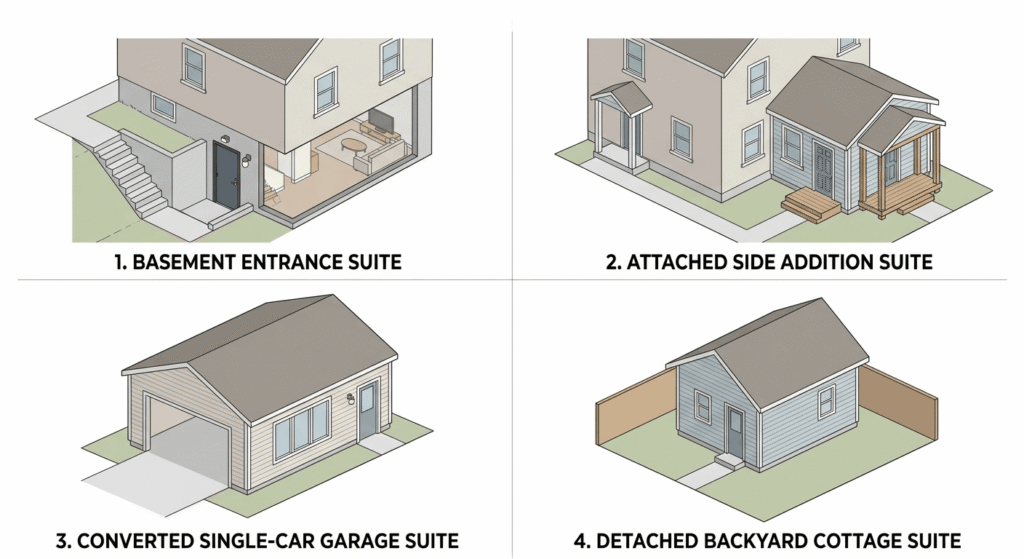
Ontario supports several types of in-law suites:
- Attached In-Law Suites: Built as home extensions with private entrances, kitchens, living space, and bathrooms.
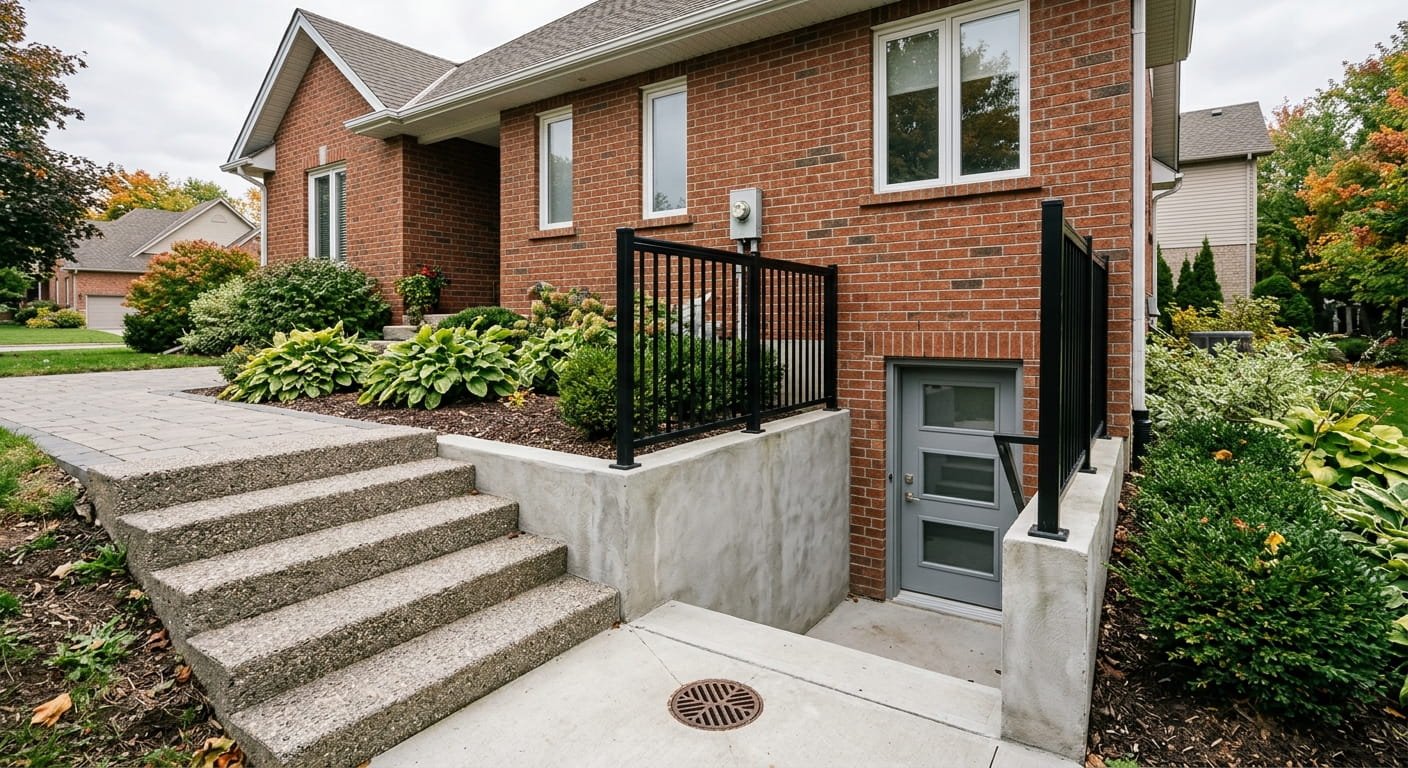
- Legal Basement Suites: Secondary suites created from existing basement space, designed to meet building code Ontario requirements for safety, egress, and fire separation.
- Garage Conversions: Utilize garage space and transform it into a compact additional dwelling unit.
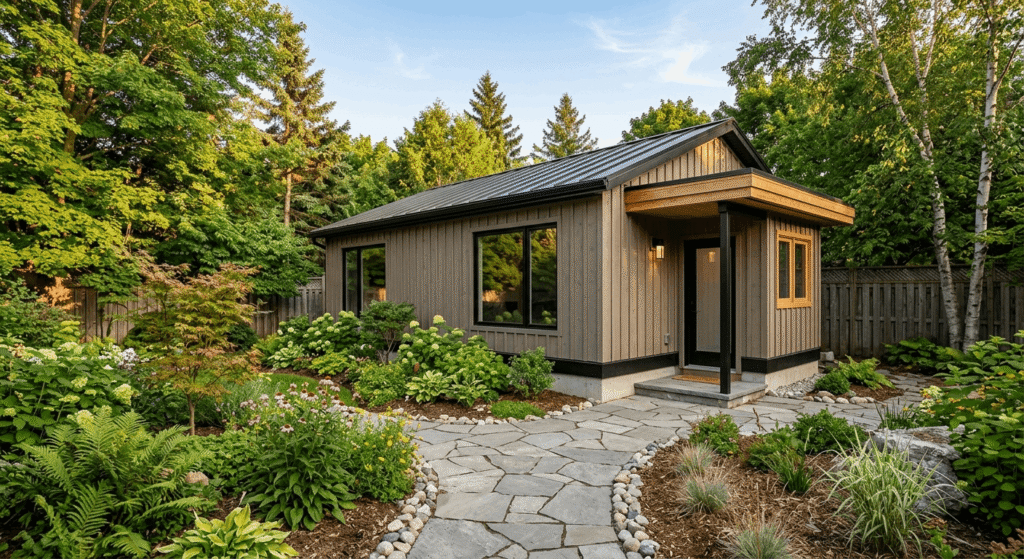
- Garden Suites: Detached backyard units, also known as ADUs, offering maximum privacy but requiring more permitting and cost due to zoning and independent utilities.
Each option has benefits regarding privacy, cost, and regulations. Attached and basement suites are more cost-effective, while garden suites provide more separation for residents.
Legal Basement Suite Requirements
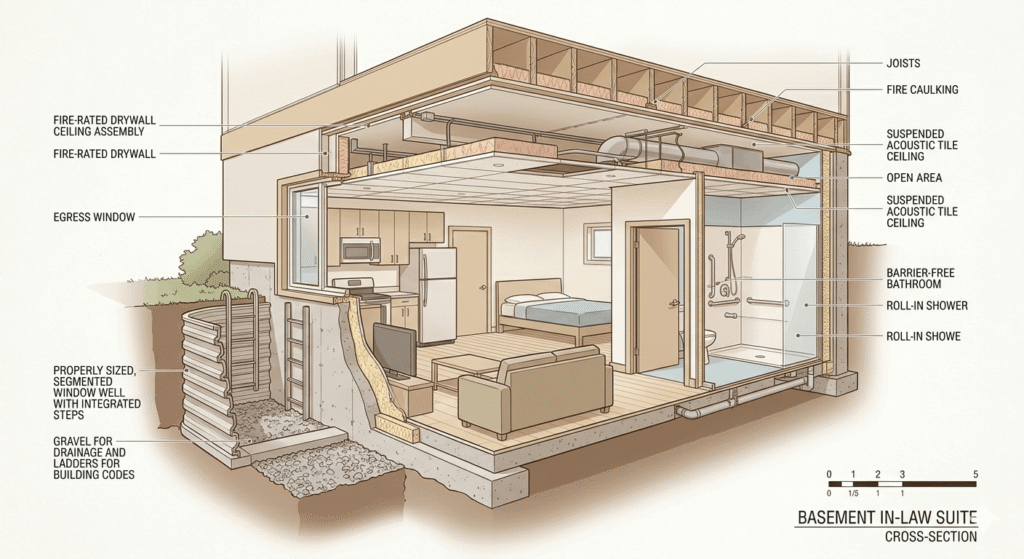
All legal basement suites in Ontario must meet building code Ontario for safety: separate entrances, fire-rated barriers, independent HVAC, and proper emergency exits.
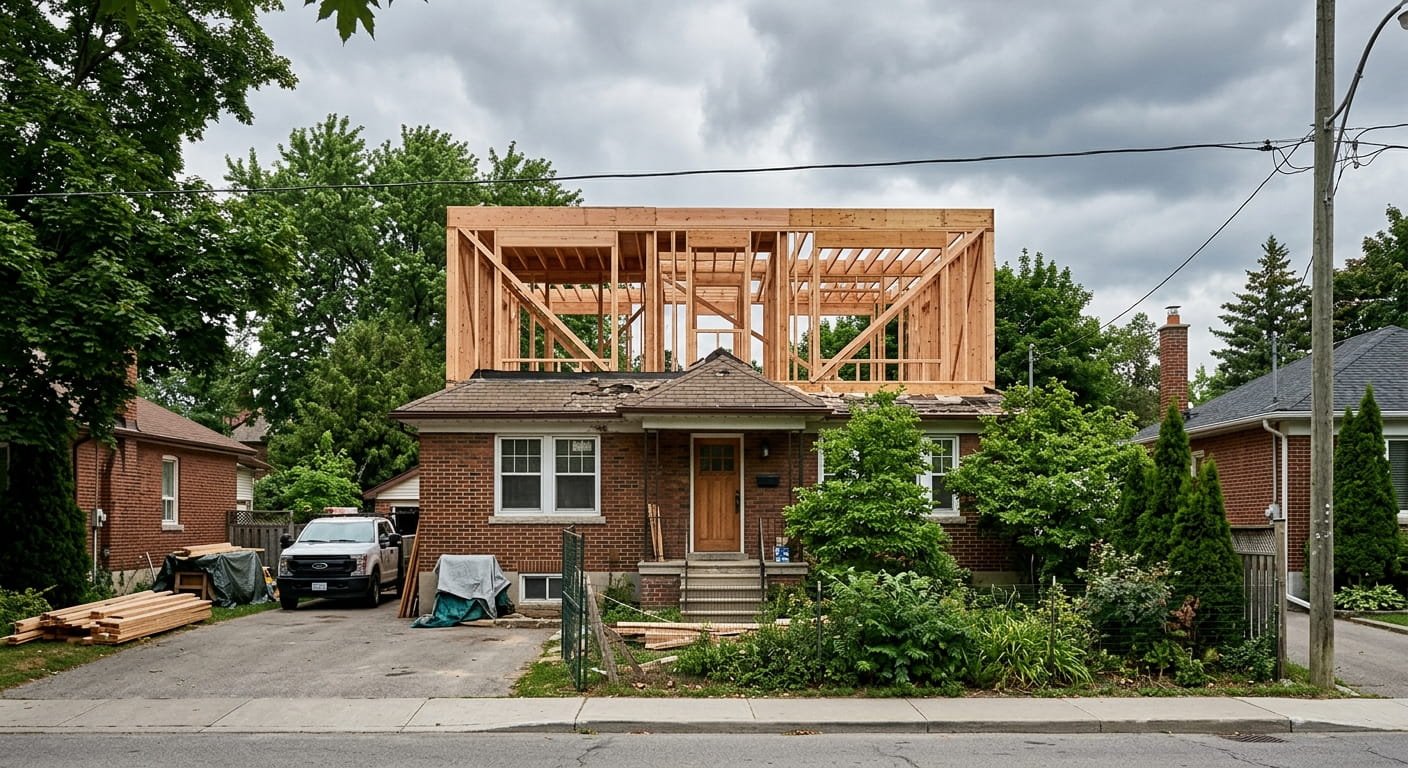
Thinking of going up a level? See what a 2nd storey addition costs in Ontario and what drives the price.
In-Law Suite Addition Cost in Ontario (2026)
The in law suite cost in Ontario in 2026 depends on suite type, scope, and location. Typical costs are:
- Garden Suite (Detached ADU): $200,000–$400,000, or $250–$350/sq ft. In Toronto, premium builds can exceed $500/sq ft.
- Attached Suite Addition: $100,000–$200,000+ ($100–$250/sq ft), with variables tied to finishes and layouts.
- Basement Suite Conversion: $40,000–$100,000+ ($40–$100/sq ft), usually the most affordable option.
- Garage Conversion: $30,000–$75,000+ ($30–$75/sq ft).
- Prefab/Modular: From $85,000, often $150,000+ including delivery, foundations, and utility hookups.
- Permit, Design, and Engineering Fees: Add 10–20% of total cost ($12,000–$50,000).
Key construction costs include framing, foundation, plumbing, electrical, HVAC, windows, and interior finishes. Urban areas like Toronto see higher prices due to labor demand and regulation. Always plan a 10–15% contingency for inflation and unexpected expenses.
Comparatively, annual assisted living in Ontario often exceeds $73,000, making home-based suites a valuable long-term choice. For more budgeting tips and project examples, visit Planning & Financial Guidance and our Projects.
Housing several generations? Our guide explores multigenerational home design in Ontario, from in-law suites to garden suites.
In-Law Suite Addition Cost
| Suite Type | Typical Cost Range | Cost per sq ft | Main Use Case | Permit Complexity | Example Size (sq ft) |
|---|---|---|---|---|---|
| Garden Suite (Detached) | $200k–$400k | $250–$350 | Maximum privacy | High | 400–800 |
| Attached Suite | $100k–$200k+ | $100–$250 | Elderly/parent care | Medium | 300–700 |
| Basement Suite | $40k–$100k+ | $40–$100 | Value/affordability | Medium | 400–900 |
| Garage Conversion | $30k–$75k+ | $30–$75 | Compact suite | Low–Medium | 200–450 |
| Prefab/Modular | $85k–$200k+ | $170–$400 | Speed/Ease | Medium | 300–700 |
| Assisted Living (Alt.) | $73k+/year | N/A | Off-site care | N/A | N/A |
This table shows the versatility and cost advantage of in-law suites compared to external care options. To see the impact on property value, visit our Real Estate services page.
Ontario Permit Requirements for In-Law Suites
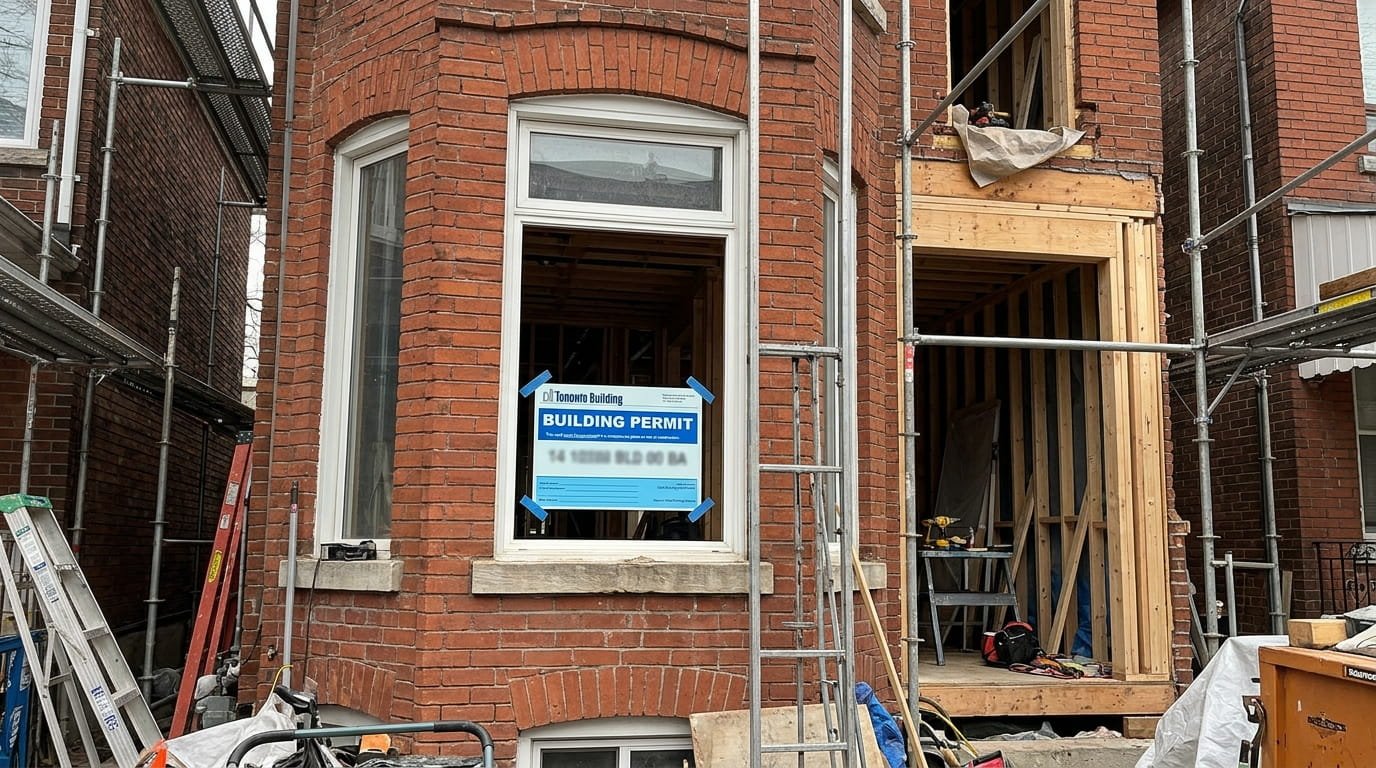
Every in-law suite, secondary suite, or additional dwelling unit with kitchen, bathroom, or sleeping space requires a building permit. Local municipalities regulate approvals, enforce building code Ontario, and conduct inspections.
You’ll need to:
- Submit architectural and construction plans (sometimes with engineer stamps)
- Pass zoning compliance for lot size, setbacks, parking, and eligibility for ADUs or garden suites
- Pay building permit fees (10-20% of construction)
- Complete multiple inspections (foundation, framing, plumbing, insulation, final)
- Provide supplemental documents (survey, title, etc.)
Permit reviews usually take 2–7 months, with delays possible. Early application and accurate documentation are essential. Use Ontario’s ADU guidelines for current processes.
Garden Suite Permit Requirements
Garden suites need extra zoning review and often municipal consultation based on their detached status. Work with professionals for smooth navigation. See Our Approach for our methodology.
Building Code Ontario 2026
The 2026 building code Ontario stiffens standards for in-law, basement, and garden suites:
- Egress: Every bedroom needs a direct escape route. Garden suites must also provide emergency first responder access.
- Fire Separation: Walls, floors, and ceilings separating the suite from the main home must be fire-rated.
- Ceiling Height: Living space especially for basement suites must be at least 1.95 m (6’4″).
- HVAC & Ventilation: Each unit must have proper heating and ventilation, often requiring independent systems.
- Accessibility: Barrier-free entries and bathrooms, widened hallways, lever hardware, and zero-threshold showers are becoming essential for new builds.
- Energy Efficiency: New standards impact insulation, windows, and HVAC.
Learn more in Policies & Standards or our detailed guide on “Ontario Building Code 2026 Updates: What Homeowners Need to Know”.
Designing an In-Law Suite
A thoughtful design keeps your in-law suite comfortable, safe, flexible, and future-friendly.
Must-have features:
- Independent entrance for privacy and safety
- Full kitchen and bathroom with clever storage
- Private laundry for autonomy
- Universal design: wide doors, accessible bathrooms, lever handles, step-free thresholds
- Soundproofing (especially for attached or legal basement suites)
- Flexible room layouts for living, sleeping, or home office
Work with experienced Custom Homes or Renovations experts. Explore real designs at Weldon Drive Custom Home or Thorah Park Custom Home.
Smart Design for Accessibility
Universal standards—like curbless showers, widened halls, and step-free entrances—boost senior-friendliness, long-term appeal, and compliance.
Planning and Building Your In-Law Suite in Ontario
- Clarify Needs and Budget: Define if the suite is for family, rental income, or resale, and estimate total in law suite cost.
- Check Property Eligibility: Review your municipal zoning bylaws and Ontario additional dwelling unit rules.
- Consult Professionals: Engage a designer, architect, or builder who knows local permit requirements and building code Ontario. See Our Approach.
- Prepare Building Plans: Floor plans, site layouts, and accessibility features must meet city and code standards.
- Submit for Permit: File your permit application with all documentation, pay building permit fees, and respond to city review.
- Undergo Inspections: Foundation, framing, plumbing, HVAC, fire separation, and final occupancy must be cleared.
- Construction & Oversight: Track budget, reserve at least 10% contingency, and oversee the build with regular site checks.
- Get Final Approval: Pass inspection, receive occupancy certificate, and update insurance/property tax details.
- Move In or Rent Out: Ensure all standards are met for safe, legal use.
For tailored advice or support, visit our Blogs or Contact our team.
Common Mistakes to Avoid
Avoid these errors when planning your Ontario in law suite:
- Not getting required building permits, risking fines or forced removals
- Lowballing in law suite cost don’t forget fees, code upgrades, contingency
- Overlooking zoning setbacks or suite size restrictions
- Ignoring building code Ontario on egress or fire separation, causing failed inspections or costly renovations
- Poor layout choices decreasing privacy or resale value
Professional support and proper planning reduce risks. Learn more via Services and our FAQ.
Frequently Asked Questions
1. Do I need a building permit for every type of in-law suite?
Yes. Every in-law, secondary, or garden suite any additional dwelling unit needs a permit, must meet building code Ontario, and pass inspections.
2. How much does a garden suite cost vs. a basement suite?
Garden suites: $200,000–$400,000 ($250–$350/sq ft). Legal basement suites: $40,000–$100,000 ($40–$100/sq ft). Garden suites also have higher permitting costs.
3. What are the zoning restrictions for additional dwelling units?
Ontario allows up to three units per lot, but each city sets its own rules on setbacks, suite size, parking, and access. Always check local codes.
4. How do I make sure my in-law suite is legal?
Apply for a building permit, submit plans meeting municipal and building code Ontario standards, pass inspections, and get occupancy approval.
5. Can I rent my in law or garden suite?
Yes, as long as it’s legal and permitted. Separate metering and updated insurance are advised. Some cities have additional rules for renters. See our guide on rental income from additional dwelling units.
Conclusion
An in-law suite addition Ontario 2026 provides financial benefits, supports multigenerational living, and opens rental opportunities. By budgeting wisely, following permit requirements and building code Ontario, and consulting qualified professionals, homeowners can ensure their suite is legal, functional, and valuable. Proper planning and expert guidance are key to long-term investment success.
For the bigger picture, see our complete Ontario home addition cost guide. Ready to start? Talk to the Leedway team about your build.