

Quick Answer Box:A demolition inspection in Ontario is the review done before a building comes down. It identifies asbestos and other designated substances, checks the structure and utilities, and produces the reports your municipality and contractor need. Skip it and you risk stop-work orders, worker exposure, and abatement bills that show up mid-project.
What Is a Demolition Inspection in Ontario?
A demolition inspection is a pre-work assessment of a building and its site, completed before tenders go out or machines arrive. In Ontario it centres on a designated substances survey, a structural review, and confirmation that services are disconnected, so the owner can meet provincial safety law and apply for a permit.
The legal duty sits with the owner. Before a project begins, the owner must determine whether designated substances are present on site and prepare a list of them, and that report must go to the demolition contractor. Asbestos is one of eleven designated substances, alongside lead, mercury and silica.
Leedway Group manages teardown and rebuild projects from Mississauga across the Greater Golden Horseshoe, including the Hagar Banquet Hall demolition. The pattern is consistent: the inspection sets the schedule and the budget, not the excavator.
What Does a Pre-Demolition Inspection Cover in Ontario?
A pre-demolition inspection in Ontario covers four things: hazardous materials, structure, utilities, and waste. Each one maps to a specific rule, and each produces a document that your municipality or your contractor will ask for. Missing any one of them can hold up the permit or stop work after it starts.
| Inspection item | What it checks | Governing rule |
|---|---|---|
| Designated substances survey | Asbestos, lead, mercury, silica and similar hazards | OHSA s. 30 and O. Reg. 278/05 |
| Structural review | Height, area, tensioned members, adjacent footings | Ontario Building Code, Div. C |
| Utility disconnection | Gas, electrical and other services | O. Reg. 213/91, s. 214 |
| Waste audit | Volume and type of material leaving site | O. Reg. 102/94 |
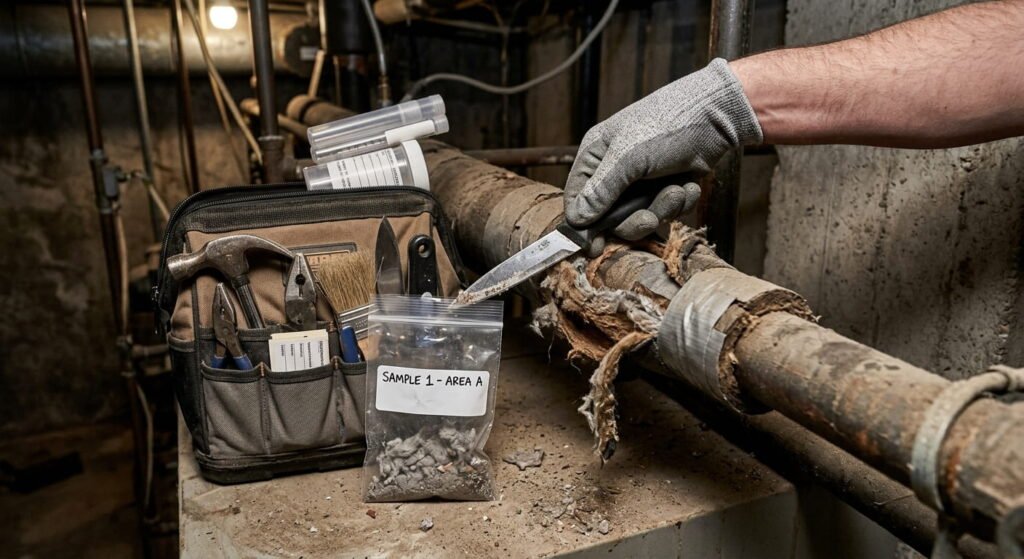
The asbestos portion is the strictest. Ontario defines asbestos-containing material as anything with 0.5 per cent or more asbestos by dry weight, and demolition can only proceed once material that may be disturbed has been removed to the extent practicable. The province’s guide to the asbestos regulation explains that all work that may expose a worker is classified as a Type 1, Type 2 or Type 3 operation. DESIGNATED SUBSTANCE – ASBESTOS ON CONSTRUCTION PROJECTS AND IN BUILDINGS AND REPAIR OPERATIONS, O. Reg. 278/05 – vLex Canada – vLex +2
One tradeoff to expect: a survey done for demolition is intrusive and potentially destructive. Consultants open walls and ceilings. An old walk-through report from a past renovation usually won’t do.
Site safety checks before the demolition contractor mobilizes
Site safety starts with services. Gas, electrical and other services that could endanger people must be shut off and disconnected before demolition and stay that way throughout. Precautions must also protect anyone on or near the project, including the adjoining property, which matters on tight infill lots. A good demolition contractor will ask for written disconnect confirmations before mobilizing. ontario
Demolition permit and building permit requirements
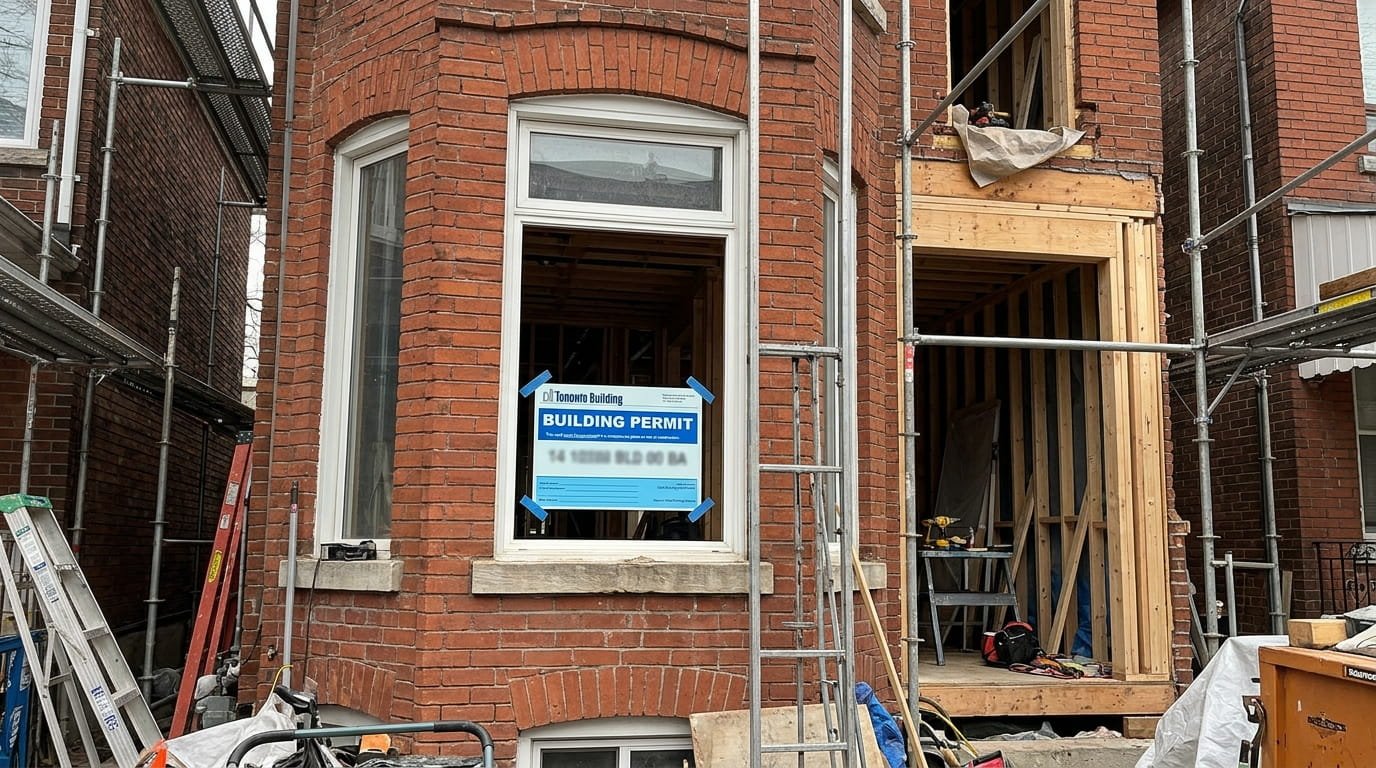
The Building Code Act says no one may demolish a building without first obtaining a permit. The City of Toronto’s demolition permit application checklist shows when an engineer is required: buildings over three storeys or 600 square metres, those with pre-tensioned or post-tensioned members, work extending below adjacent footings, or the use of explosives.toronto
Rebuilding afterward? The demolition permit and the building permit for the new structure are separate approvals. Properties designated under Part IV or Part V of the Ontario Heritage Act may need demolition control approval as well. If you’re still deciding, our renovation vs. rebuild comparison walks through the choice. ottawa
Waste disposal and debris removal planning
Large projects carry a paperwork duty for waste disposal. Demolition of buildings with a total floor area of at least 2,000 square metres requires a waste audit and a written waste reduction work plan, both prepared before demolition begins. Ontario’s source separation guide points to the companion guidance. Smaller jobs fall under the threshold, but debris removal still goes faster when the inspection has already sorted clean concrete and metal from contaminated material. canlii
How Much Does Skipping a Demolition Inspection Cost?
Skipping the inspection rarely saves money. The survey is a small line item compared with abatement found after walls are open, when crews are standing by and the schedule is already committed. Knowing the hazard inventory up front lets you price removal competitively instead of paying emergency rates.
Asbestos demolition cost: what the numbers look like
Public pricing comes from contractor rate guides, not a government schedule, so treat it as a range. Asbestos testing runs about $200 to $800. Professional removal in Ontario averages $8 to $15 per square foot in 2026, with minimum charges of $700 to $1,400. Whole-home removal in older houses can range from $4,000 to well over $11,000, and Toronto jobs lean higher because of urban logistics and labour rates.
Your asbestos demolition cost depends mostly on material type. Attic fill is a common surprise: Health Canada’s vermiculite insulation advisory says it is prudent to assume vermiculite produced before 1990 may contain some asbestos. canada
House demolition vs. commercial demolition
A house demolition usually stays below the engineer and waste audit thresholds, so the designated substances survey and utility disconnects do most of the work. Commercial demolition is different. Larger floor plates trigger engineering review and waste audits, and full structural demolition of a single-storey commercial building in Ontario runs roughly $15 to $35 per square foot, so an unplanned abatement delay costs more per day.
Who coordinates all of this? On an integrated project, one team does. Our guide to design-build vs. general contractor delivery in Ontario explains how that accountability works.
Frequently Asked Questions
1. Is a designated substances survey legally required before demolition in Ontario?
Yes. Section 30 of the Occupational Health and Safety Act requires a project owner to determine whether designated substances are present and list them before work begins. That list must go to prospective constructors before contracts are finalized, so every bidder prices the same hazards.
2. Do I need a demolition permit to tear down a garage or shed in Ontario?
Usually, yes. A demolition permit is required for any building or part of a building that would need a building permit, generally structures larger than 10 square metres, excluding farm buildings. Confirm with your municipal building department, since local by-laws can add conditions.
3. What does a pre-demolition inspection report include?
A complete report typically includes:
- A list and location of designated substances
- Lab results for suspect asbestos materials
- Structural notes and demolition method
- Utility disconnection confirmations
- A waste audit, where floor area requires one
4. When must a professional engineer be involved in a demolition?
The Ontario Building Code requires one in specific cases. An engineer must review the work when the building exceeds three storeys or 600 square metres, or when demolition extends below the footings of an adjacent building. Tensioned structural members and explosives are further triggers. brampton
5. Can demolition start while the building is still occupied?
No, with a narrow exception. The Ontario Building Code states that demolition cannot begin before occupants have vacated the building, except where their safety is not affected. Plan tenant move-out dates and utility disconnects together so the site is empty and de-energized on day one.
Conclusion
A demolition inspection in Ontario decides whether your teardown runs on schedule or stalls at the first wall. Get the designated substances survey, engineer review and disconnects done before you tender, and the permit and pricing follow. Planning a teardown in the Greater Golden Horseshoe? Talk to the Leedway Group team first.