

Quick Answer Box: Design build construction Ontario is an integrated project delivery method where a single entity manages both design and construction for commercial projects. This unified approach streamlines processes, reduces costs by up to 20%, and completes builds up to 33% faster compared to traditional construction in Ontario.
What is Commercial Design-Build Construction in Ontario?
Commercial design-build construction in Ontario is a single-contract delivery model where both the design and construction phases are managed by one firm or team. Unlike traditional commercial projects—where design consultants, architects, and contractors all work under separate contracts—design-build brings all roles together for consistent accountability and seamless collaboration. This approach is especially effective in Ontario’s regulated environment, helping commercial renovations and new builds reduce delays and keep costs predictable.
How Design-Build Construction Works
Design build construction in Ontario follows a unified pathway from initial planning through post-completion support, adapting all steps to fit the province’s legal and code requirements. By integrating design consultants, construction teams, and procurement under one roof, the process delivers clear communication, enhanced cost control, and expedited timelines for both new builds and commercial building renovation projects.

1. Initial Project Planning and Feasibility
Every Ontario commercial renovation or new build begins with an in-depth review of the client’s business requirements, space needs, regulatory environment, and project budget. Design-build contractors such as Vista Builders or MC Design Build assemble multi-disciplinary teams—including design consultants with BCIN registration and Red Seal-certified tradespeople—to evaluate site and scope. Site feasibility studies, code risk analysis, and reviews of commercial lease requirements ensure all constraints are identified before design work begins.
2. Concept Development and Cost Alignment
Conceptual drawings and construction design options are produced with real-time cost and procurement input. In Ontario, experienced design consultants align preliminary concepts with on-the-ground construction pricing, factoring in realities such as material lead times, energy requirements, and code compliance. This step reinforces transparency, with decisions on building features made alongside instant feedback on costs, helping owners avoid budget overruns.
3. Permitting, Ontario Building Code, and Regulations
All commercial projects must obtain permits under the Ontario Building Code (OBC) and local zoning. The design build construction approach involves design-build contractors and design consultants facilitating early and ongoing interaction with municipal authorities, often submitting all permit documents digitally. This centralized and proactive process delivers faster review cycles, fewer back-and-forths, and less chance of rework, especially important in commercial renovation where unexpected code issues often arise.
4. Construction Execution and Overlapping Phases
Upon permit approval, construction moves forward with significant overlap between design completion and on-site work. This concurrent scheduling—unique to design build construction in Ontario—lets site preparation, foundation work, and procurement of long-lead materials proceed while interiors and building systems are still being finalized. The result is a shorter overall project duration for office retrofits, tenant fit-outs, and full-scale new commercial builds.
5. Delivery, Commissioning, and Post-Completion Support
Once construction concludes, the design-build team conducts thorough inspections and system commissioning to meet OBC and client standards. As-built documentation, warranties, and aftercare instructions are supplied, with leading firms offering ongoing post-completion service agreements. Further enhancements, such as participation in energy performance workshops provided by partners like Enbridge Gas, can help clients optimize building utility and operational savings.
Design-Build Construction in Ontario
Design build construction Ontario is a method in which one firm manages both the design and construction of commercial projects. This integrated approach streamlines communication, cuts costs, and accelerates completion compared to traditional, multi-contract construction delivery models.
Why Design-Build Saves Money in Ontario
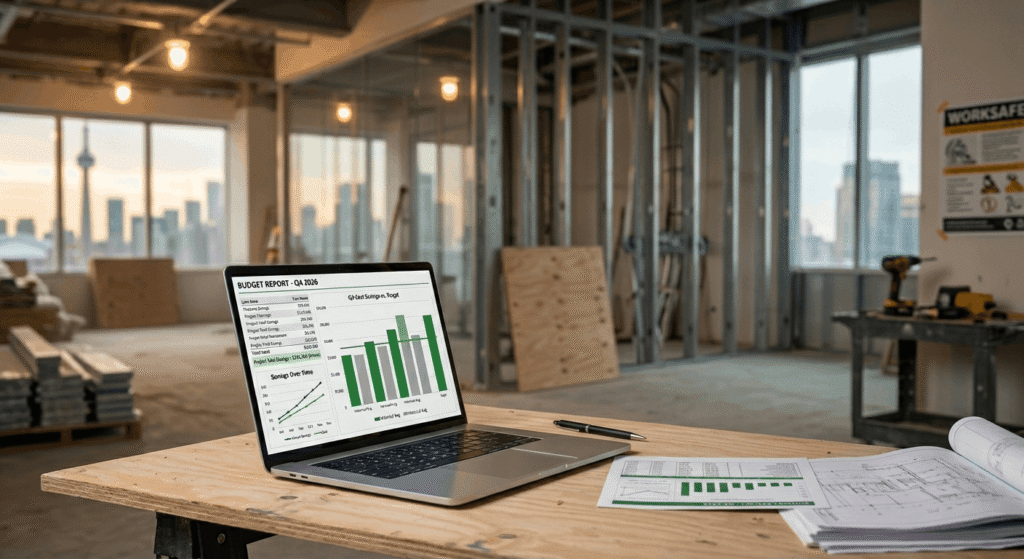
Design build construction Ontario is proven to drive significant cost and schedule advantages for commercial projects compared to traditional design-bid-build. Ontario businesses benefit from faster delivery, fewer disputes, and tightly controlled budgets—a combination ideal for commercial building renovation, retail upgrades, and new commercial developments alike.
Cost Savings: Design-build models lower project costs by an average of 15–20% through accurate early budgeting, fewer change orders, and efficient procurement. By uniting design and build phases, clients avoid duplication in fees and overhead, keeping expenditure predictable and eliminating late-stage sticker shock.
Faster Delivery: Overlapping phases and digital permitting reduce timelines by at least 33%. Ontario municipalities like Toronto now encourage digital submissions, making it possible for design-build contractors to secure approvals and begin building months sooner than the traditional sequence allows.
Reduced Risk: With one project delivery partner responsible for all tasks, disputes and miscommunications are minimized. All Ontario design-build contracts stipulate clear accountability, so responsibility doesn’t become diluted across multiple contractors or consultants.
Tighter Budget Control and Real-Time Cost Validation
A major advantage of design build construction Ontario is that every proposed design or scope change is instantly priced and checked against the full project budget. Continuous cost validation prevents “scope creep” and helps owners avoid overruns—unlike traditional methods where surprise bids can derail a project late in the process.
For business owners planning commercial renovation or a major build commercial project, this control translates to more reliable financial planning, easier reporting to stakeholders, and clearer projections for the commercial construction budget.
Faster Project Delivery and Reduced Delays
By eliminating the need to fully finish all design or engineering details before building starts, design build construction Ontario compresses schedules. Construction work, procurement, and finishing often run in parallel with design finalization. According to Infrastructure Ontario, the majority of integrated delivery projects are completed on or ahead of schedule. This is a crucial edge for businesses looking to minimize downtime, especially in high-value locations where opening sooner means starting revenue flow earlier.
Fewer Change Orders and Less Risk of Overruns
The integrated nature of design build construction minimizes finger-pointing and hasty change orders that balloon costs and lengthen timelines in traditional builds. All details, from construction design to materials procurement, are coordinated and approved within the same team—resolving issues internally before they reach the site.
Unifying “design consultant” and contractor input means that commercial renovation clients are less likely to encounter expensive surprises mid-project. Risk management is continuous and collaborative.
Design-Build vs. Traditional Construction
| Factor | Design-Build Construction Ontario | Traditional Construction (Design-Bid-Build) |
|---|---|---|
| Project Timeline | 6–14 months (33% faster) | 9–21 months (linear, sequential phases) |
| Cost Control | Real-time validation, 20% cheaper | Prone to overruns, late budget surprises |
| Accountability | Single point of contact/team | Multiple contracts, diluted responsibility |
| Change Orders | Less frequent, issues resolved early | Common, can increase costs/timeline |
| Regulatory Compliance | Integrated from start, faster permits | Can delay start, more permit friction |
| Owner Involvement | High transparency, early decisions | Heavy involvement needed at each hand-off |
| Quality Assurance | Collaborative, integrated | Separate designers/contractors may conflict |
| Risk to Owner | Less—shared and managed | More—owner mediates disputes |
Commercial Renovation Projects: Design-Build Advantages
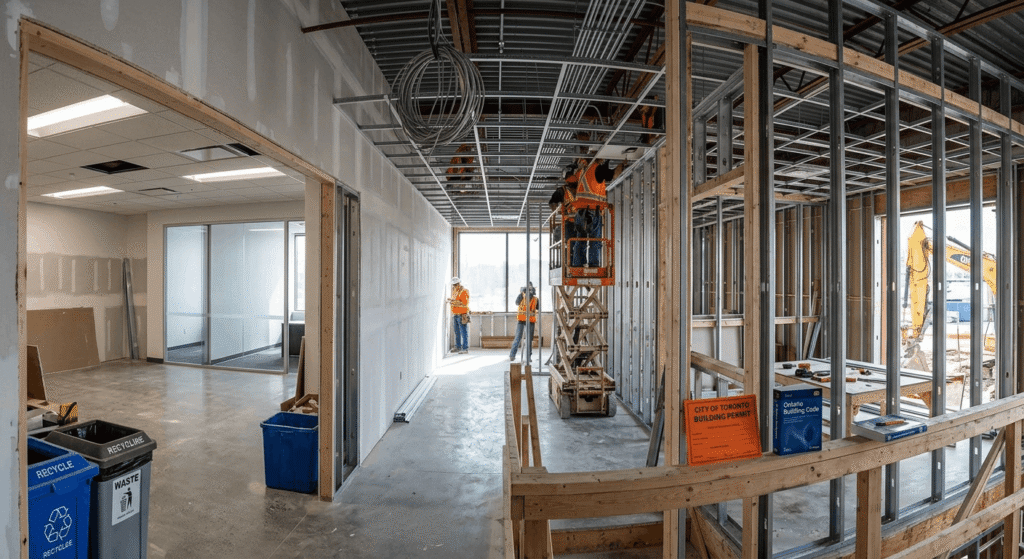
Commercial renovation in Ontario—such as office retrofits, retail fit-outs, or industrial upgrades—often poses higher risk due to unknown site conditions and the need to coordinate around existing tenants or operations. The design build construction Ontario model gives renovation clients fast identification of risks and collaborative solutions.
For instance, if a commercial building renovation uncovers asbestos or unexpected structural needs, the integrated design-build team quickly adapts both the construction design and cost plan. This prevents the project from stalling or the budget from spiraling.
Landlord and tenant coordination is prioritized from the outset. Detailed review of lease terms, phased turnovers, and careful planning enable on-time handovers. The transparent nature of design build construction ensures all communication is documented and that commercial renovation remains compliant with the Ontario Building Code and any evolving regulatory standards.
Energy Performance and Sustainability in Renovation
Modern design build construction Ontario approaches leverage programs like Savings by Design from Enbridge Gas to enhance building sustainability. Design consultants in the design-build team help renovation clients tap incentives for efficiency upgrades, future-proofing their assets for energy and financial savings.
Ontario Construction Act and Legal Considerations
All commercial projects, including those using the design build construction Ontario method, are governed by the Ontario Construction Act. The Act protects contractors, design consultants, subcontractors, and owners by regulating payments, holdbacks, liens, and dispute resolution.
Key Considerations for Design-Build Projects
Ontario’s prompt payment regime requires owners to pay contractors within 28 days of proper invoice, with contractors required to pay subcontractors within seven days. Each payment must withhold a mandatory 10% holdback until the lien expiry period passes, ensuring all parties are fairly compensated.
If payment issues arise, parties can file liens against the project, and the Act provides expedited dispute resolution to avoid lengthy litigation and keep the project on schedule. Robust documentation of every stage—required by the Act—also ensures that audits and compliance checks are straightforward.
For complete details, see the Ontario Construction Act overview.
Working with a Project Delivery Partner
Selecting a project delivery partner with extensive Ontario experience is essential for legal compliance. Firms with a strong track record in design build construction and commercial renovation are more likely to have robust processes for managing prompt payment, lien rights, and regulatory risk.
Compliance with the Ontario Building Code and Other Requirements
All commercial design build construction Ontario projects must be meticulously aligned with the Ontario Building Code (OBC). The code’s detailed requirements for safety, accessibility, structure, and energy performance create both opportunities and risks for commercial building renovation and new builds.
How Design-Build Teams Ensure Compliance
Certified BCIN design consultants are indispensable, as only they—along with licensed architects and engineers—can submit permit documents to Ontario municipalities. Red Seal-certified trades must execute physical construction to meet both warranty thresholds and code minimums.
Digital permitting: Major cities like Toronto now require or encourage electronic submission of permit documents, and most design-build contractors have adapted their systems accordingly for speed and accuracy.
Municipal coordination: The design-build team manages all communication with planning and building departments to prevent misinterpretation of code requirements. They also oversee the final occupancy and post-construction inspections needed for commercial spaces.
Documentation: At project close, owners receive full records to demonstrate Building Code compliance, as well as materials and performance reports for facility management.
For the most current province-wide requirements, check Ontario Building Code resources.
Choosing a Design-Build Contractor or Project Delivery Partner
Choosing the ideal design-build contractors or project delivery partner dramatically affects the quality, compliance, and ultimately the ROI of any Ontario commercial project. Rigorous due diligence is necessary to differentiate between qualified firms and those unprepared for Ontario’s regulatory landscape.
What to Look For in a Design-Build Partner
Prioritize firms with completed Ontario portfolios such as MC Design Build or Leedway Group, as featured in the Projects gallery. Verify that design consultants on the team are BCIN-registered and that tradespeople possess Red Seal credentials, since both are required for code compliance and warranty eligibility.
An exemplary project delivery partner should provide:
- End-to-end collaborative workflow between architects, engineers, consultants, and builders.
- Transparent budgeting and real-time reporting.
- A clear, written warranty and ongoing aftercare (Warranty details).
- Verified client testimonials and references (see About Us).
- In-depth descriptions of methodology (explained under Our Approach).
Also, review a company’s philosophy and eco-focus at Sustainable Construction Practices.
Common Mistakes in Commercial Design-Build Projects
Despite the powerful benefits of design build construction Ontario, commercial clients sometimes encounter pitfalls. The most common mistakes include underestimating the complexity of local regulations, missing early tenant/landlord involvement, and hiring unqualified design consultants or design-build contractors.
- Ignoring Regulatory Nuances: Overlooking Ontario Building Code or municipal bylaw specifics can cause delays, added costs, and compliance headaches. Involve an experienced design consultant early.
- Unclear Consultant Credentials: Only BCIN-registered or professionally accredited individuals should be trusted for code compliance, especially on larger or mixed-use commercial renovations.
- Poor Communication: Successful design-build depends on clear and regular dialogue. Document decisions and milestones to avoid “he said, she said” issues down the road.
- Legal Oversights: Not complying with the Ontario Construction Act’s prompt payment and lien provisions can tie up funds, halt progress, and trigger disputes. Work closely with firms experienced in the Act’s requirements.
- Weak Aftercare: Skimping on warranty or post-occupancy support leads to unresolved issues, impacting facility value and usability.
- Insufficient Tenant/Landlord Coordination: For successful commercial renovation, align all stakeholders at the planning stage. Utilize internal resources such as Planning & Financial Guidance to avoid these pitfalls.
Consult expert Blogs and FAQ pages to explore additional insights on flawless project delivery.
FAQs:
1. Is design-build suitable for all types of commercial buildings?
Design build construction is effective for a wide range of Ontario commercial projects, including offices, retail, industrial, medical, and hospitality spaces. It especially excels for both new builds and commercial renovation, providing speed and budget control. Highly customized or technically complex projects might need specialized delivery approaches, so always consult with a qualified design consultant.
2. How does the Ontario Construction Act impact payment timelines?
The Ontario Construction Act directly shapes payment cycles on all commercial projects, including those completed through design build construction Ontario. It mandates prompt payment for contractors within 28 days and for subcontractors within 7 days, with a statutory 10% holdback to safeguard all parties. This framework ensures every participant, including designers and trade professionals, receives compensation on time.
3. Are Tarion warranty protections available for commercial projects?
Tarion warranty primarily protects residential units and does not extend to standard commercial-only buildings. However, mixed-use projects or live-work developments with residential components may qualify. Leading design-build contractors in Ontario still provide their own written warranty and aftercare for purely commercial renovation and construction. Always confirm available warranty coverage with your selected project delivery partner via the Warranty section.
4. How are permits handled in design-build construction?
In design build construction Ontario, the integrated contractor and design consultant team prepares all necessary permit packages and submits them, often digitally, to the relevant municipal authorities. They ensure all documents align with the Ontario Building Code, reducing compliance risk and speeding up approvals for both new builds and commercial building renovation projects.
5. What is the role of a design consultant in a design-build project?
A design consultant leads the transformation of client needs into compliant construction designs and guides code compliance documentation for permits in Ontario. They collaborate closely with construction managers and procurement teams, enabling real-time adaptation of plans to changing site or client requirements. For commercial renovation and new builds in Ontario, certified design consultants are essential for regulatory approval and efficient project delivery.

Conclusion
Design build construction Ontario stands out as the leading approach for commercial building renovation and new development in the province. By integrating every phase—from planning and construction design to procurement and compliance—design-build ensures faster project delivery, reduced costs, and minimized risks. As Ontario’s legal and regulatory environment evolves, more businesses are relying on the design build construction Ontario model for dependable, future-ready commercial spaces.