

Quick Answer Box: A garage conversion to living space costs roughly $40,000 to $90,000 in most of Ontario, though a basic home office can run under $15,000. Every project needs a municipal building permit, since switching a garage from parking to habitable space triggers Ontario Building Code rules for insulation, fire separation and egress windows.
Planning an addition? Leedway Group designs, permits and builds home additions across Toronto, Mississauga and the GTA. See our home additions service.
What Is a Garage Conversion to Living Space?
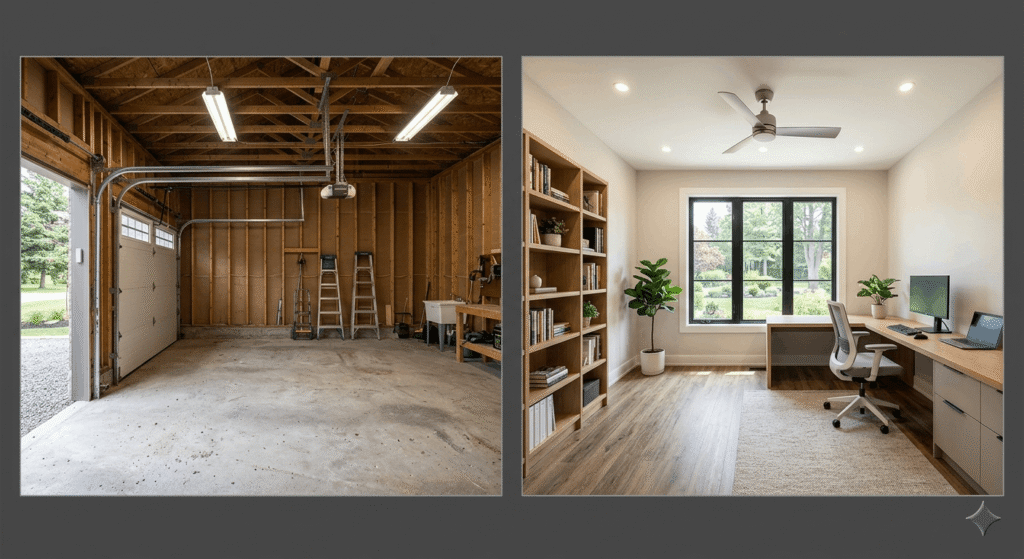
A garage conversion to living space turns an attached or detached garage into a livable room such as a bedroom, office or rental suite. The remodel typically keeps the existing slab, walls and roof, then adds insulation, electrical work, flooring and a code-compliant fire separation, which keeps costs well below a full home addition. Leedway Group’s custom renovation and addition services cover this kind of project from initial design through final inspection.
How Much Does It Cost to Convert a Garage Into Living Space?
Converting a garage into living space in Ontario runs from about $15,000 for a simple office to $90,000 or more for a fully finished suite with plumbing. Size, finish level and whether you add a bathroom or kitchen drive most of the difference, and labour typically makes up over half the total bill.
Insulation and Flooring Costs
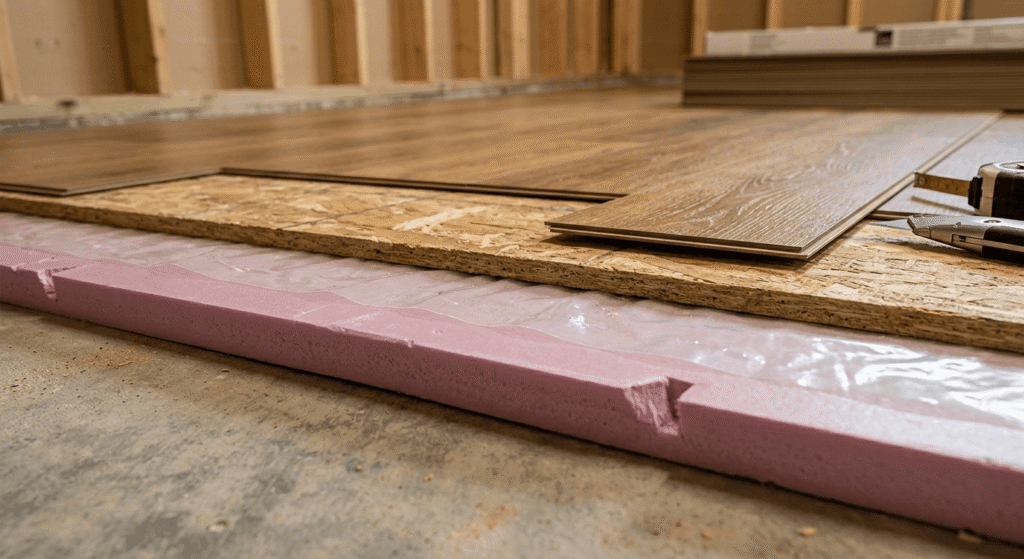
Most Ontario garages arrive as an uninsulated shell on a bare concrete slab, so insulation is rarely optional. Builders generally aim for roughly R-22 to R-24 in the walls and R-50 to R-60 in the ceiling to meet the energy efficiency targets in the Building Code’s SB-12 standard, with the slab insulated and covered by a vapour barrier before any subfloor goes down. Insulation work commonly adds $3,000 to $8,000 to a midsize garage conversion.
Flooring choices matter just as much. Luxury vinyl plank over a 6-mil vapour barrier is the most common pick in the GTA, running about $3 to $7 per square foot installed. A damaged or uneven slab can add another $1,000 to $3,000 in levelling before the new floor goes down. Skip that step and the planks won’t stay flat for long. For a deeper look at where renovation budgets typically go off track, our renovation budgeting and financial planning guidance covers the line items homeowners forget to price in.
Permit Fees and Other Garage Remodel Costs
Permit fees for a garage conversion in Ontario generally land between $300 and $1,000, though a secondary suite application can cost more once electrical and plumbing permits are added. Electrical upgrades for outlets, lighting and a dedicated circuit or two often run $1,500 to $5,000, while a new window for natural light and emergency egress can add $1,000 to $3,000 per opening. If the garage becomes a legal secondary suite with its own kitchen and bathroom, plumbing alone can add $8,000 to $15,000, which is why a basic office or gym conversion stays so much cheaper than a full apartment-style remodel.
| Conversion Type | Typical Cost Range | What’s Included |
|---|---|---|
| Home office or gym | $5,000 to $15,000 | Insulation, drywall, flooring, electrical, no plumbing |
| Bedroom | $12,000 to $25,000 | Above, plus a closet, egress window and HVAC tie-in |
| Legal secondary suite | $60,000 to $150,000+ | Kitchen, bathroom, separate entrance, fire separation, full permits |
What Permits Do You Need for a Garage Conversion in Ontario?
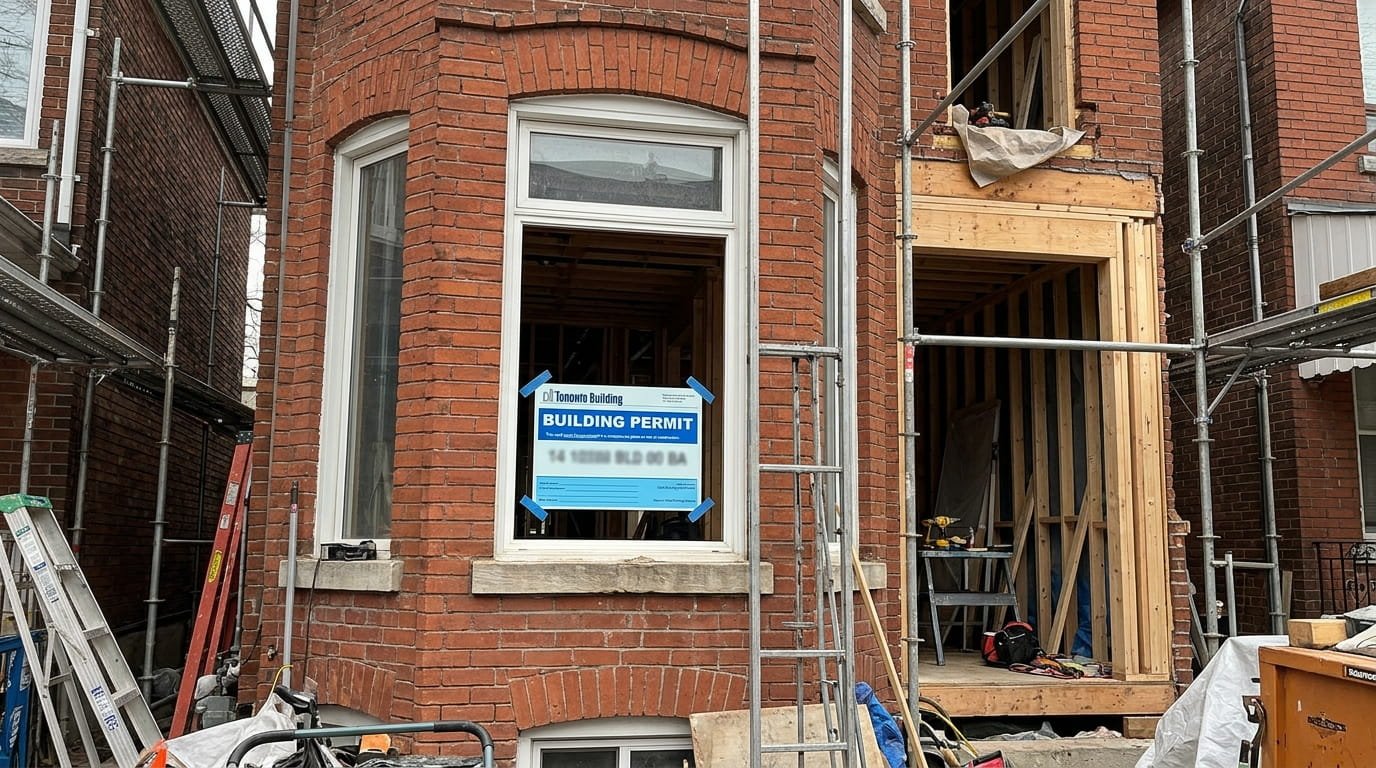
Changing garage into living space always triggers a building permit in Ontario, because shifting the garage’s use from parking or storage to habitable space falls under the Building Code Act. Municipalities must review a complete house-related application within 10 business days, and you may need separate electrical or plumbing permits depending on scope.
Planning for Garage Conversion Success
Planning for garage conversion projects starts well before you call a contractor. Confirm your garage meets the minimum ceiling height for habitable rooms, since many older one-car garages sit close to the legal limit and may need the roof raised or the slab lowered. Check whether your zoning bylaw lets you remove a required parking space, because losing your only spot can trigger a minor variance application through your local Committee of Adjustment, a process that can take two to three months and cost $1,500 to $3,000 in fees depending on the municipality. A BCIN-registered designer can draw plans that satisfy zoning and Building Code review together, which avoids a second round of corrections once your application is in queue. Our Ontario Building Code overview walks through the broader 2026 code changes if you want context before drawings are finalized.
Zoning, Parking and Garage Transformation Approvals
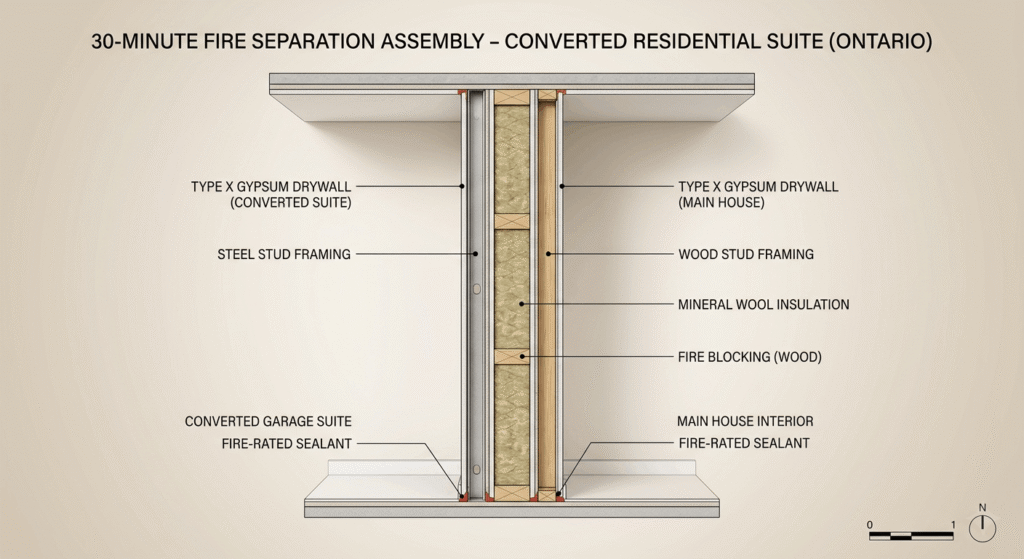
A garage transformation that creates a full secondary suite carries extra layers of approval beyond a simple room conversion. You will need a 30-minute fire separation between the suite and the rest of the house, interconnected smoke and carbon monoxide alarms, and a dedicated electrical permit inspected by the Electrical Safety Authority. Ontario’s Building Code guidance for second units covers most of these requirements in detail, including ceiling height and window sizing, though it notes openly that the guide is written for second units inside a house and that garages and coach houses follow some, not all, of the same rules. That distinction is easy to miss, and it’s worth raising directly with your building department before you finalize drawings, since it can change which compliance path your designer chooses.
Frequently Asked Questions
1. Do you need a permit to convert a garage into living space in Ontario?
Yes. Ontario’s Building Code Act requires a permit any time a building’s use changes, and turning a garage from parking into habitable space counts as a change of use. Skipping the permit risks fines up to $50,000 for a first offence, plus complications with insurance and resale later on.
2. Can you legally convert a garage into a bedroom in Ontario?
Yes, provided the room meets Building Code minimums for ceiling height, window area and an emergency escape opening. Bedrooms also need an interconnected smoke alarm, and most municipalities require a carbon monoxide alarm wherever the space shares a wall with an attached garage or a fuel-burning appliance.
3. Does a garage conversion to living space add value to your home?
Generally yes. Garage conversions often return 60% to 80% of their cost at resale, and a legal bedroom or income suite tends to perform better than a hobby room. Losing covered parking can offset some of that gain in neighbourhoods where buyers expect a garage, so local demand is worth checking first.
4. How long does a garage conversion permit take to get approved in Ontario?
Municipalities must review a complete house-related building permit application within 10 business days under the Building Code. Incomplete drawings or a required zoning variance pause that clock, so a straightforward office or bedroom conversion usually clears faster than a secondary suite needing Committee of Adjustment approval.
5. What is the best flooring for a converted garage?
Flooring choice depends on moisture and budget. Four options cover most GTA garage conversions:
- Luxury vinyl plank over a vapour barrier, the most common choice
- Engineered hardwood for dry, above grade conversions
- Porcelain tile where a bathroom or in floor heating is planned
- Laminate once the slab is fully insulated and dry
Conclusion
A garage conversion to living space is one of the most cost-effective ways to add a bedroom, office or rental suite in Ontario, since the foundation, walls and roof already exist. The real cost and complexity sit in insulation, flooring, fire separation and the permit process that makes the new room legal to occupy. Get the planning right early, from ceiling height to parking bylaws, and the build moves through inspections without surprises. If you’re ready to turn your garage into livable square footage, contact Leedway Group for a feasibility review of your property.