

Quick Answer:To safely demolish a house in Ontario, you need a demolition permit under the Building Code Act, a designated substance survey, asbestos removal before teardown, disconnected utilities and an insured contractor. In Toronto, extra demolition control rules can apply. Start with your municipal building department.
What Does It Mean to Safely Demolish a House in Ontario?
To safely demolish a house in Ontario, you need a municipal permit before work starts and a hazardous materials check before the first wall comes down. Ontario has no separate demolition licence, so safety comes from municipal permits and workplace regulations working together.
This guide covers house demolition across the province, with extra detail for homeowners in the GTA and the Greater Golden Horseshoe.
How Do You Safely Demolish a House in Ontario Step by Step?
Work through seven stages in order: confirm the property has no heritage or planning limits, survey for hazardous materials, hire an insured demolition contractor, disconnect utilities, get the demo permit, remove asbestos and other hazards, then demolish and restore the site. Each stage feeds the next, because permit packages often ask for the survey and utility proof.
Step 1: Check Heritage Status and Zoning
Call your municipal planning department before you spend anything. A house designated under the Ontario Heritage Act, or one inside a Heritage Conservation District, needs extra approval, and the city can refuse. Some municipalities, Toronto and Ottawa among them, also run demolition control programs that can require council-level sign-off. The Building Code Act blocks any permit that would break zoning or other applicable law.
Step 2: Order a Designated Substance Survey for Hazardous Materials
Before you request quotes, find out what’s inside the walls. Ontario Regulation 278/05 requires owners to determine whether materials likely to be disturbed contain asbestos, defined as 0.5 per cent or more by dry weight. Health Canada notes that before 1990, asbestos insulated and fireproofed homes, and it still turns up in siding, plaster, floor tiles, roofing and insulation.
A typical survey means a site inspection, bulk samples of suspect materials and lab analysis. It also checks for lead, mercury and silica. The report often goes straight into your permit package.
Step 3: Hire an Insured Demolition Contractor
Ontario doesn’t issue a dedicated demolition contractor licence, so vetting falls to you. Ask for WSIB coverage and liability insurance that names demolition, since standard contractor policies often exclude it unless it’s declared. A good crew also pulls the permit, coordinates utility shutoffs and hauls waste to approved facilities.
If a new build follows, it’s worth reading design-build vs. general contractor in Toronto before you sign anything.
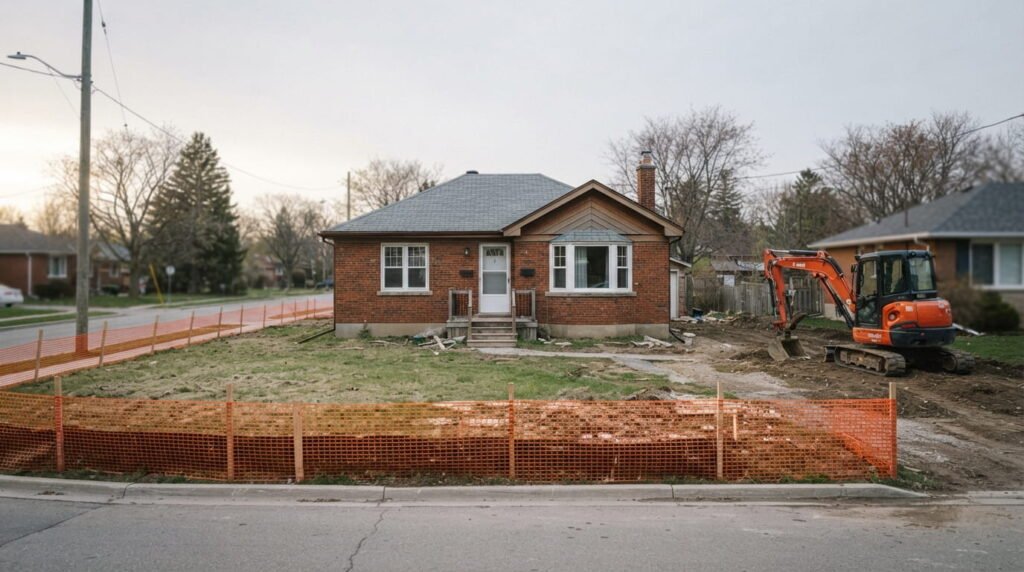
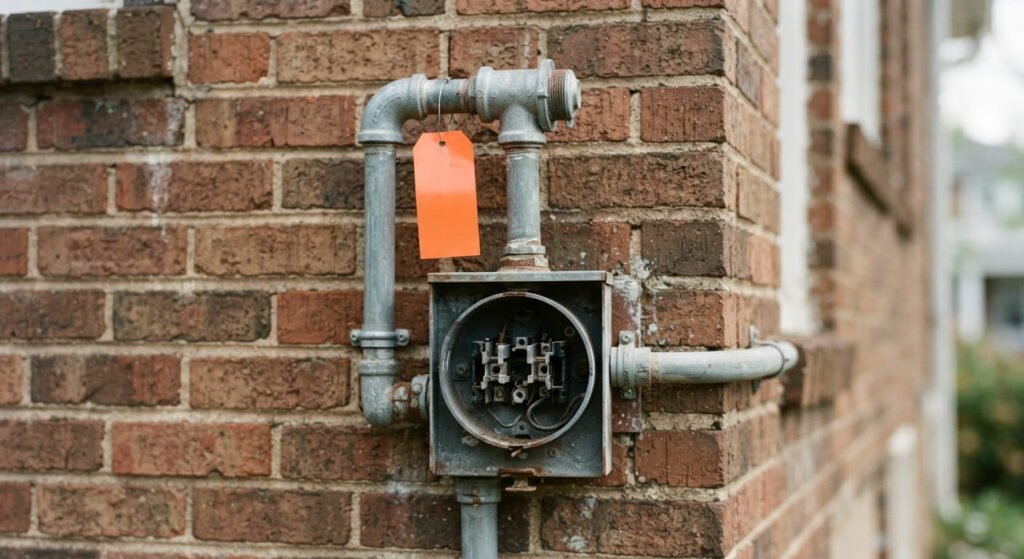
Step 4: Disconnect Utilities
Contact your gas, hydro, water and telecom providers. Get written confirmation that each service is off and capped. Many municipalities ask for a utility sign-off form before they’ll issue the permit, so treat this as paperwork, not just safety.
Step 5: Apply for Your Demo Permit
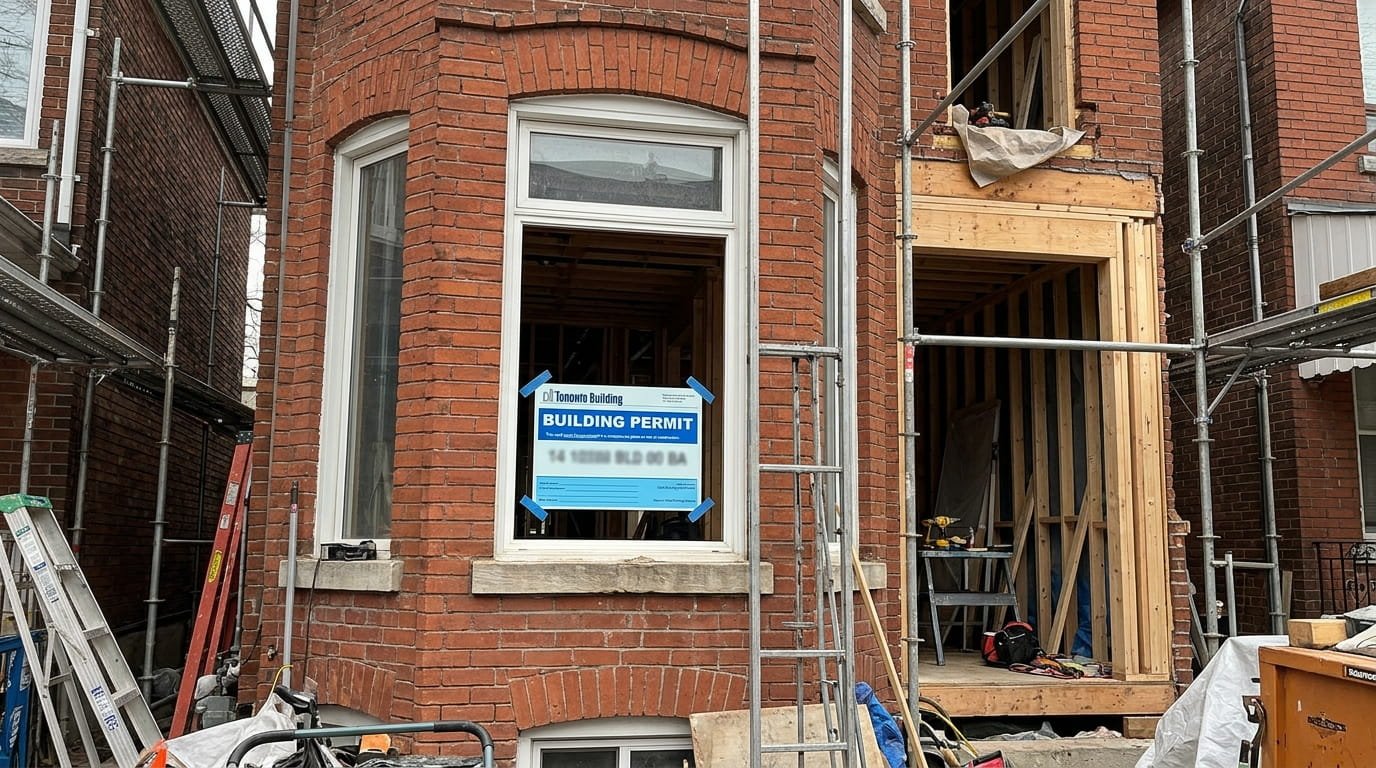
The Building Code Act bars anyone from demolishing a building without a permit. It generally covers structures over 10 square metres (108 square feet), with farm buildings excluded. Ontario’s application for a permit to construct or demolish was updated effective February 16, 2026, so download the current version.
Expect to submit the form, a site plan showing what’s coming down, the utility sign-off, and an owner’s authorization if an agent applies. Buildings over three storeys or 600 square metres need a professional engineer. Starting without a permit can bring penalties, and some cities add an administrative surcharge. Check the Ontario Building Code changes for 2026 too.
Step 6: Arrange Asbestos Removal, Then Demolish
Under Ontario Regulation 278/05, demolition can proceed only after asbestos-containing material that may be disturbed has been removed as far as practicable, with limited exceptions. Hire a qualified asbestos removal specialist. Health Canada’s renovation video on asbestos gives homeowners a short overview.
Book the demolition date only after abatement is scheduled. Waste audits under Regulation 102/94 target large projects of 2,000 square metres or more, so a typical house falls below that threshold.
Step 7: Grade the Site and Close the Permit
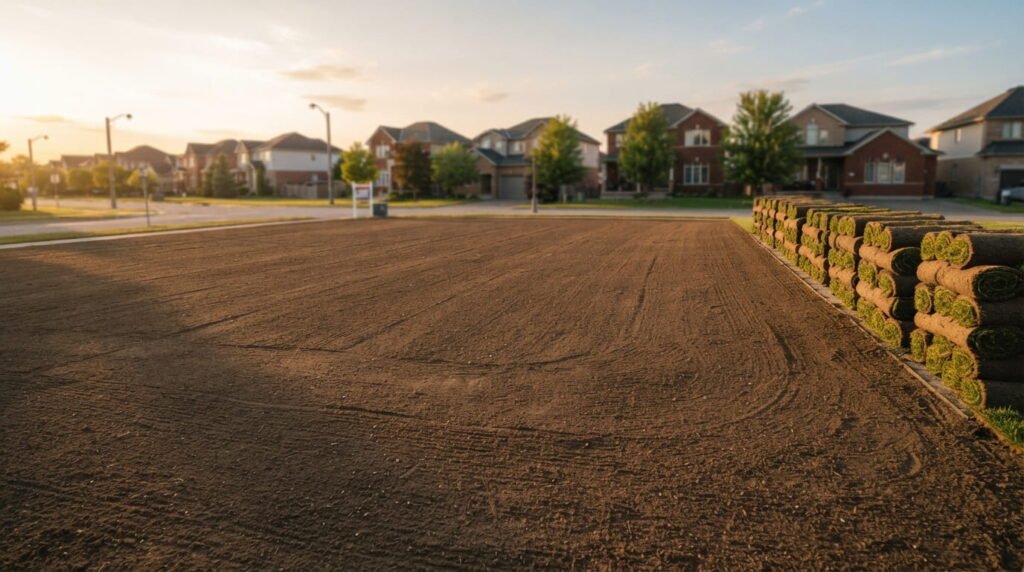
Once the debris is gone, the lot must be graded so it doesn’t settle unevenly or hold water, and a building inspector confirms it’s clear. Toronto has attached conditions like sod and clean fill to past approvals.
Keep your paperwork. Some municipalities, Brampton among them, want proof of demolition before crediting development charges. Sorting salvageable material also cuts landfill volume, which ties into sustainable construction practices in Ontario.
Does Toronto Residential Demolition Follow Different Rules?
Yes. Toronto adds demolition control on top of the Ontario Building Code through Municipal Code Chapter 363 and Section 33 of the Planning Act. A residential building with fewer than six units and no replacement building permit needs Community Council approval before the demolition permit is issued.
If a replacement building permit is already in place, the Chief Building Official can issue the demolition permit directly, usually with conditions tied to building the new home. Buildings with six or more units go through the same approval route as sites without a replacement permit, and rental buildings can trigger a separate review under Chapter 667. Approvals can also carry conditions, such as construction fencing and prompt debris removal.
What works in Toronto won’t necessarily apply in Ottawa or Brampton. Still weighing a teardown against keeping the structure? Our renovation vs. rebuild page covers the tradeoffs.
Frequently Asked Questions
1. Do you need a permit to demolish a house in Ontario?
Yes. The Building Code Act says no one may demolish a building without a permit, and the rule covers most structures over 10 square metres, excluding farm buildings. Your municipality issues it. Starting without one can bring penalties under the Act and, in some cities, an administrative surcharge under the local building by-law.
2. What hazardous materials should you test for before house demolition?
A designated substance survey checks the materials Ontario regulates, and older homes carry the most risk:
- Asbestos in insulation, tiles, plaster and roofing
- Lead, mainly in older paint
- Mercury
- Silica
3. Can any contractor handle the demolition of homes in Ontario?
Ontario has no dedicated demolition contractor licence, so any firm can bid. Check WSIB coverage and liability insurance that names demolition, then ask about asbestos experience. Standard contractor policies often exclude demolition unless it’s declared, and an uninsured job can leave the liability with you as the owner.
4. Do you need to remove asbestos before demolishing a house in Ontario?
Yes, in most cases. Under Ontario Regulation 278/05, demolition can proceed only after asbestos-containing material that may be disturbed has been removed as far as practicable, with limited exceptions. Owners must first determine whether materials contain asbestos, defined as 0.5 per cent or more by dry weight. Hire a qualified asbestos removal specialist, and book the demolition date only after abatement is scheduled.
5. Does Toronto have different rules for demolishing a house?
Yes. Toronto adds demolition control on top of the Ontario Building Code through Municipal Code Chapter 363 and Section 33 of the Planning Act. A residential building with fewer than six units and no replacement building permit needs Community Council approval before the demolition permit is issued. If a replacement building permit is already in place, the Chief Building Official can usually issue the demolition permit directly, often with conditions. Rental buildings can also trigger a separate review under Chapter 667.
Conclusion
To safely demolish a house in Ontario, treat the permit, the hazardous materials survey and the contractor as one plan rather than separate errands. Call your local building department first, because municipal rules differ. In Toronto, expect demolition control on top of the standard process. Get the paperwork right, and the teardown itself becomes the simple part.