

Quick Answer: Interior home renovations update the inside of your house to improve daily comfort and boost resale value. Across Canada, popular 2026 projects run from modern kitchens and bathroom remodels to open floor plans and refreshed hardwood flooring. The right upgrade depends on your budget, your home’s condition, and how long you plan to stay.
What Are Interior Home Renovations?
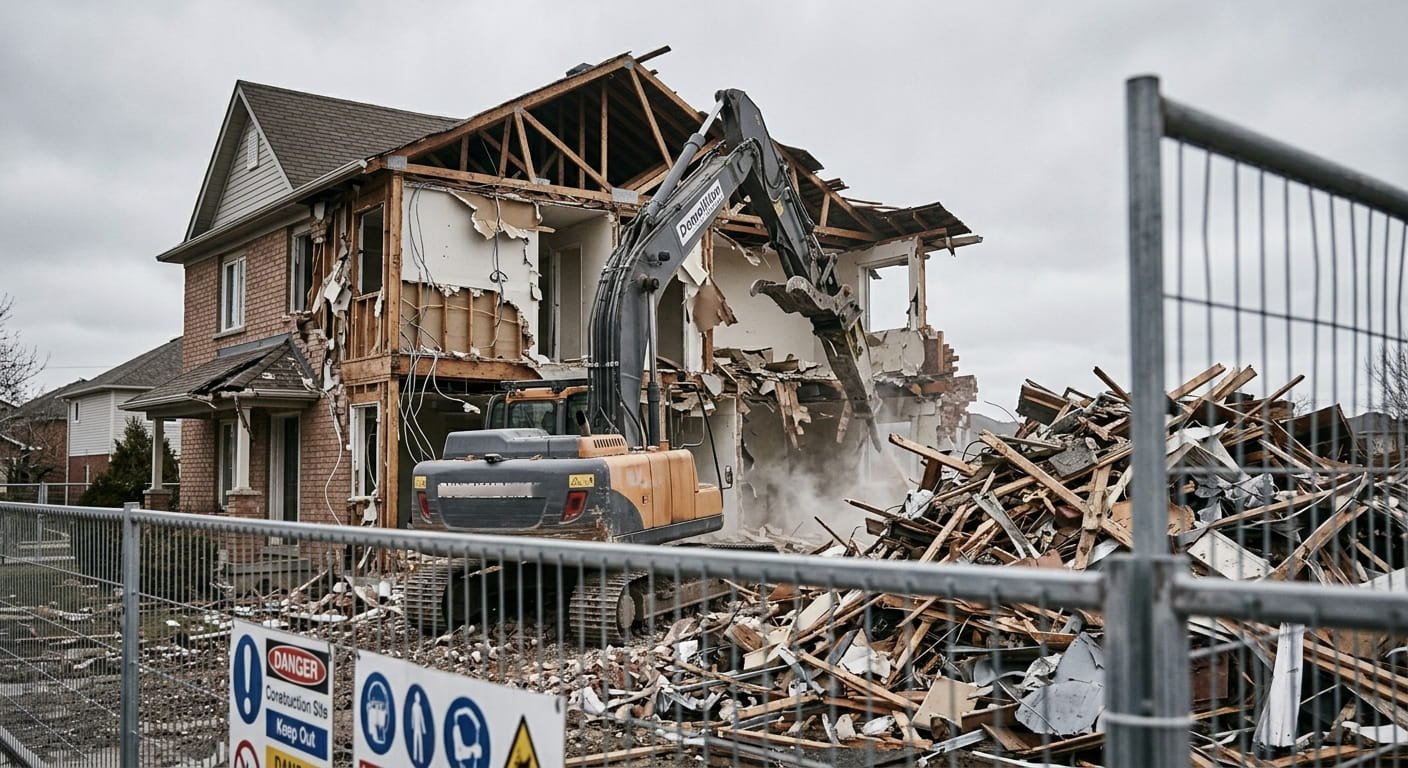
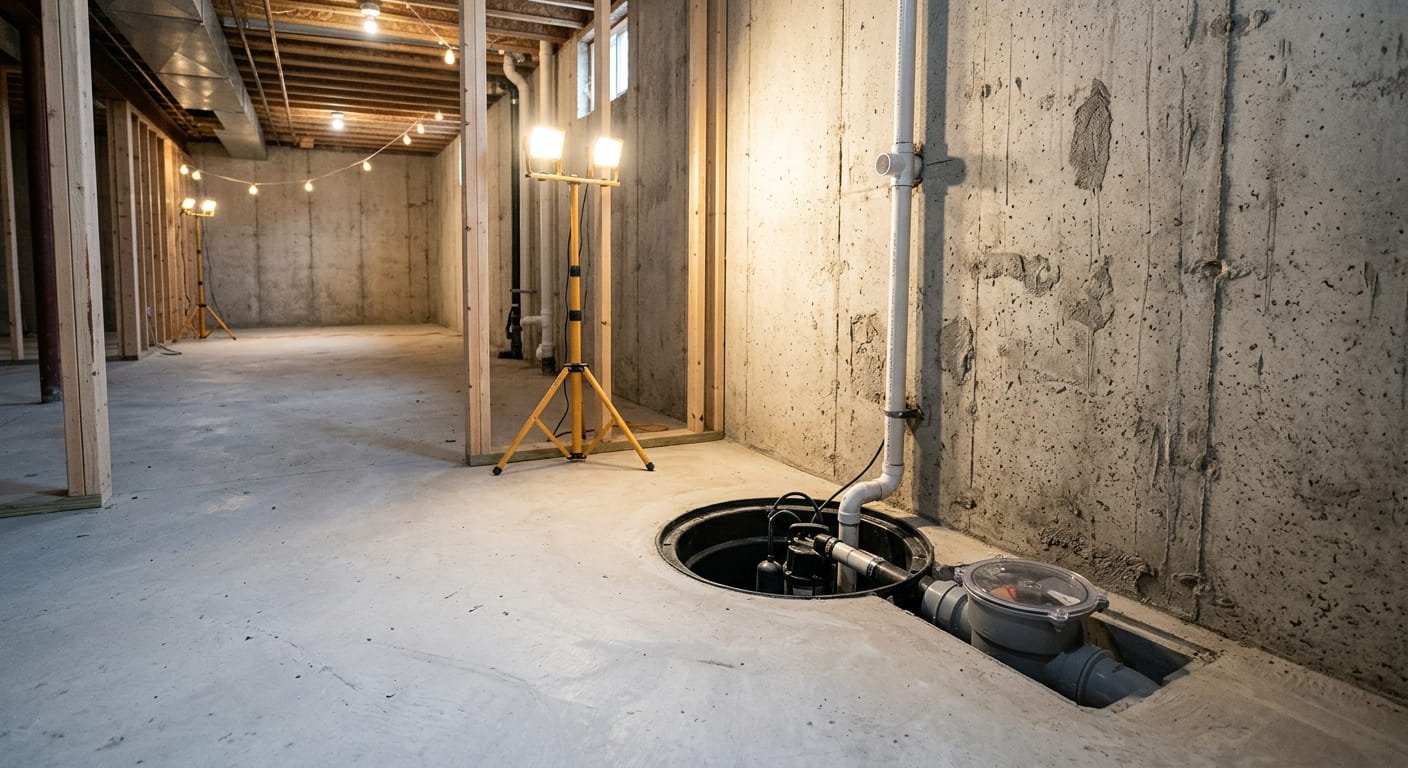
Interior home renovations are improvements made inside a home rather than to its exterior or structure. They cover cosmetic work like interior painting and finishes, plus larger projects such as a bathroom remodel or a new open floor plan. In Canada, these upgrades help homes feel current and perform better through long winters.
10 Noteworthy Interior Home Renovation Examples in Canada
Not every renovation needs to gut the house. Some of the most noteworthy interior home renovations are targeted projects that change how a space looks and works without a full teardown. Here are ten examples Canadian homeowners keep coming back to in 2026.
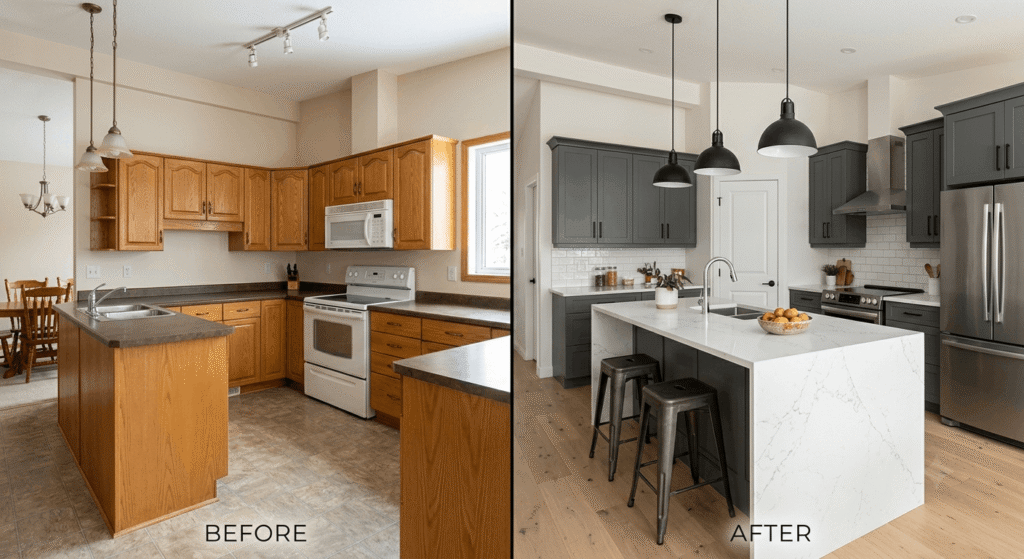
1. A Modern Kitchen Refresh
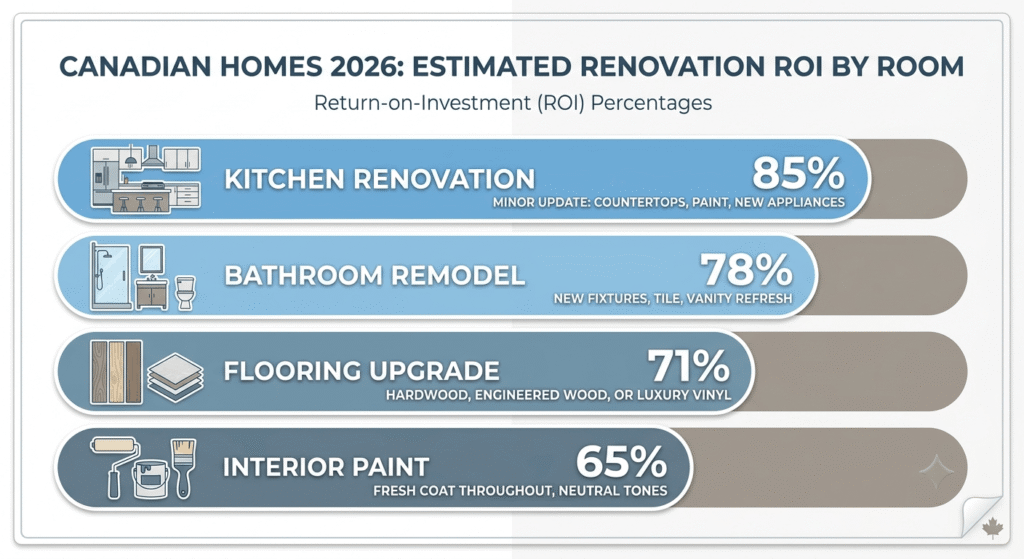
The kitchen sets the tone for the whole house, so a modern kitchen is usually the headline project. In Toronto, a mid-range kitchen renovation of roughly $35,000 to $75,000 recovers about 75 to 90 percent of its cost at resale. Painted shaker cabinets and quartz counters remain the safe, high-demand choice in 2026.
2. A Spa-Inspired Bathroom Remodel
A bathroom remodel delivers some of the highest impact per dollar. Buyers notice dated tile and yellowed fixtures immediately. A mid-range main bathroom, around $15,000 to $35,000, typically returns 70 to 85 percent at resale. For a serious bathroom renovation project, curbless showers, frameless glass, and warm neutral tones have replaced the stark all-white look.
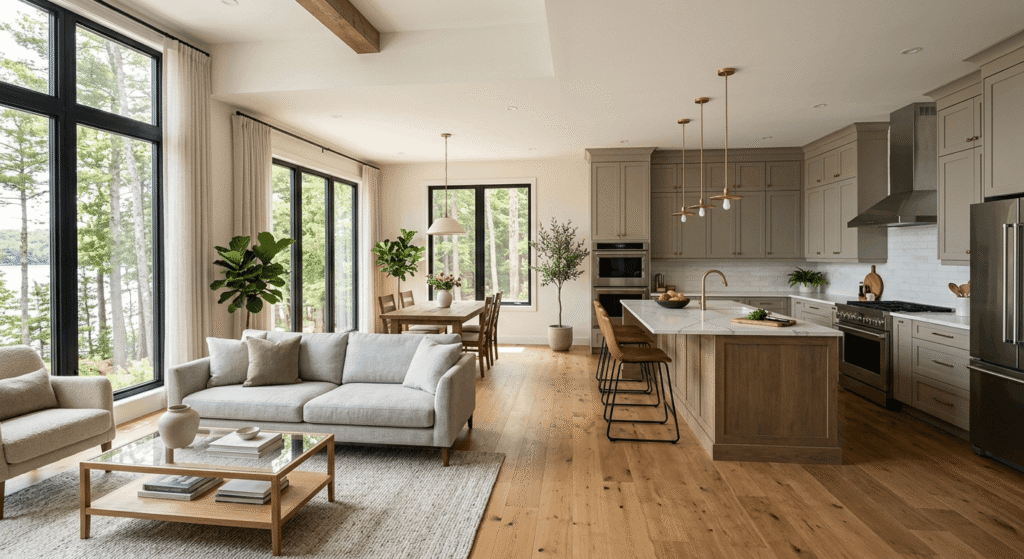
3. Opening Up to an Open Floor Plan
Removing the wall between a closed kitchen and living room creates an open floor plan that feels larger and brighter. It suits how families actually live, cooking and gathering in one connected space. One caution: if the wall is load-bearing, you’ll need an engineer and a municipal building permit before anything comes down.
4. Refinished or New Hardwood Flooring
Few things date a home faster than worn carpet or scuffed laminate. Swapping it for hardwood flooring instantly lifts a room. In most Canadian homes, engineered hardwood handles the humidity swings between dry winters and humid summers better than solid planks, which makes it a practical pick for main floors and finished basements alike.
5. A Fresh Interior Painting Update
The cheapest high-impact change is paint. A fresh interior painting job covers scuffs and brightens dim rooms for a fraction of what other projects cost. Warm whites and soft, muted neutrals appeal to the widest pool of buyers, so booking interior painting services is a smart first move before a sale.
6. A Statement Feature Wall
Feature walls add personality without committing the whole room to a bold look. Wood slat panelling, fluted millwork, tile, or a single painted accent wall all work. They photograph well and give a living room, bedroom, or entryway a clear focal point. Keep the rest of the palette calm so the wall does the talking.
7. A Staircase Makeover
A staircase makeover turns a builder-grade set of stairs into a centerpiece. Refinishing the treads and swapping dated spindles for slim metal or wood balusters can transform an entryway over a weekend or two. Because the staircase is often the first thing guests see, the visual payoff is out of proportion to the cost.
8. Interior Door Upgrades
Interior door upgrades are an underrated detail. Replacing flat hollow-core doors with panelled or solid-core versions makes a home feel quieter and better built. Matching black or brushed hardware across every door ties the look together. It’s a small project, but it’s one buyers register the moment they walk down a hallway.
9. A Dedicated Home Office Renovation
Remote and hybrid work turned the home office renovation into a standard request. Converting a spare bedroom or nook into a proper workspace with built-in storage and good lighting adds real daily function. If you’re self-employed in Canada, a portion of the renovation cost tied to a dedicated office may be deductible.
10. Cohesive Home Aesthetics with Updated Lighting
Sometimes the win is pulling a whole-home look together. Strong home aesthetics come from small, coordinated choices: updated light fixtures, plus matching trim and a single repeated hardware finish from room to room. None of these are dramatic on their own, but together they make a house read as intentional rather than piecemeal.
Which Interior Renovations Add the Most Value in Canada?
Value depends on where you spend. In Canada, kitchens and bathrooms move the needle most on resale, while paint and flooring give the best return per dollar on a tight budget. A useful rule of thumb: cap total renovation spending at 10 to 15 percent of your home’s current market value.
Before you start a full interior renovation, check what the government will help cover. A few Canadian programs can offset eligible costs:
- The federal Multigenerational Home Renovation Tax Credit refunds 14.5 percent of up to $50,000 in eligible expenses, a maximum of $7,250, when you add a self-contained secondary suite for a senior or an adult with a disability.
- The Home Accessibility Tax Credit gives a 15 percent non-refundable credit on up to $20,000 in accessibility work, worth as much as $3,000, for homeowners 65 or older or those eligible for the disability tax credit.
Over-customizing also rarely pays off. Bold, niche finishes and luxury upgrades that outrun the neighbourhood ceiling return less at sale. If resale is the goal, warm and current beats trendy and personal. If you plan to stay for years, spend on the projects that improve daily life and treat resale value as a bonus.
Frequently Asked Questions
1. How much do interior home renovations cost in Canada?
Costs vary widely by project and region. A room repaint might run a few hundred dollars, while a mid-range kitchen in a major market like Toronto often lands between $35,000 and $75,000. Bathrooms commonly fall between $15,000 and $35,000. Getting three written quotes from licensed contractors is the best way to budget accurately.
2. Which interior renovation adds the most resale value?
Kitchens and bathrooms consistently return the most in Canada. A mid-range kitchen recovers roughly 75 to 90 percent of its cost, and a mid-range bathroom returns about 70 to 85 percent. On a smaller budget, fresh paint and updated flooring give the strongest return per dollar.
3. Do I need a permit for interior renovations?
It depends on the work. Cosmetic updates usually don’t need one, but structural and mechanical changes do. In most Canadian municipalities, a permit is required if you:
- Remove or alter a load-bearing wall
- Move plumbing, such as relocating a toilet or shower drain
- Change or add electrical circuits
- Add square footage or alter the home’s structure
Always confirm with your local building department before work begins.
4. Are there tax credits for interior home renovations in Canada?
Yes, though most target specific situations rather than general upgrades. The Multigenerational Home Renovation Tax Credit and the Home Accessibility Tax Credit both offset eligible costs tied to secondary suites or accessibility work. Energy-related upgrades may also qualify for provincial and utility rebates. Confirm current eligibility on the Canada Revenue Agency website before you file.
5. What is the easiest interior renovation for a big visual change?
Interior painting is the easiest project with the biggest visual payoff. A single weekend of painting can brighten a room and hide wear for a small fraction of what larger renovations cost. Swapping light fixtures and cabinet hardware are two more low-effort updates that noticeably lift a room’s look.
Conclusion
The best interior home renovations are the ones matched to your goals, your budget, and how long you plan to stay in the home. For Canadian homeowners in 2026, that might mean a full modern kitchen, a quick paint refresh, or a small run of interior door upgrades that make the whole place feel considered. Start with the rooms you use most, sort out the load-bearing and permit questions early, and treat any tax credit as a bonus rather than the reason to renovate.