

Quick Answer Box: Net-zero home cost in Ontario typically runs 5% to 15% above a standard build, or roughly $50,000 to $120,000 extra on a new home in 2026. A deep retrofit of an existing house to net-zero usually costs $100,000 to $200,000. Provincial rebates can offset $10,000 or more.
What Is a Net-Zero Home?
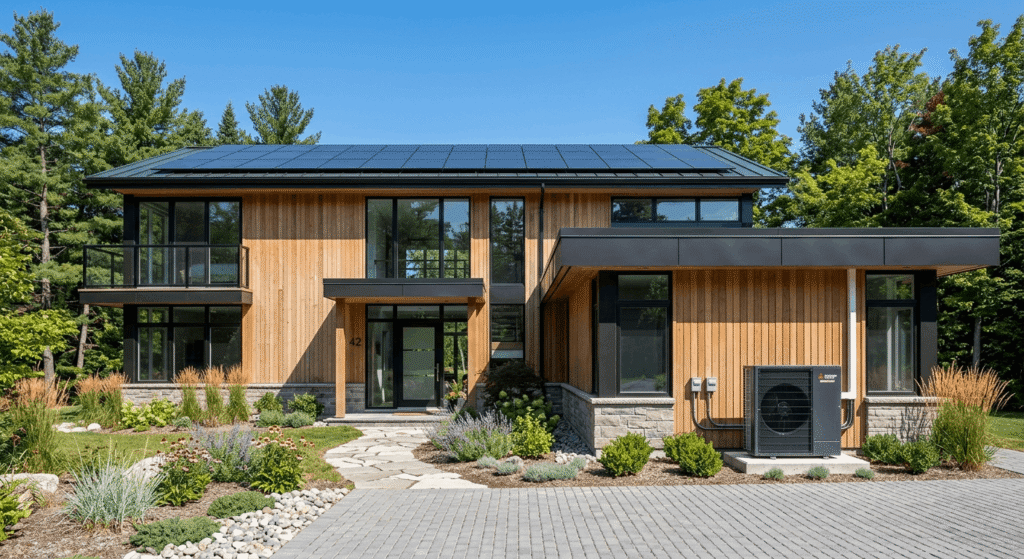
A net-zero home produces as much clean energy over a year as it consumes. In Ontario, net-zero energy home construction pairs an airtight, heavily insulated shell with a heat pump and rooftop solar. Energy-efficient homes like these cost more upfront. That premium is why net-zero home cost in Ontario draws so much attention from builders and buyers alike.
How Much Does a Net-Zero Home Cost in Ontario?
Expect a net-zero build to add 5% to 15% over a code-minimum home. On a typical $650,000 to $900,000 Ontario build, that premium works out to roughly $50,000 to $120,000 for the upgraded envelope, mechanicals, and solar. Converting an older house is pricier: a deep retrofit to net-zero usually lands between $100,000 and $200,000.
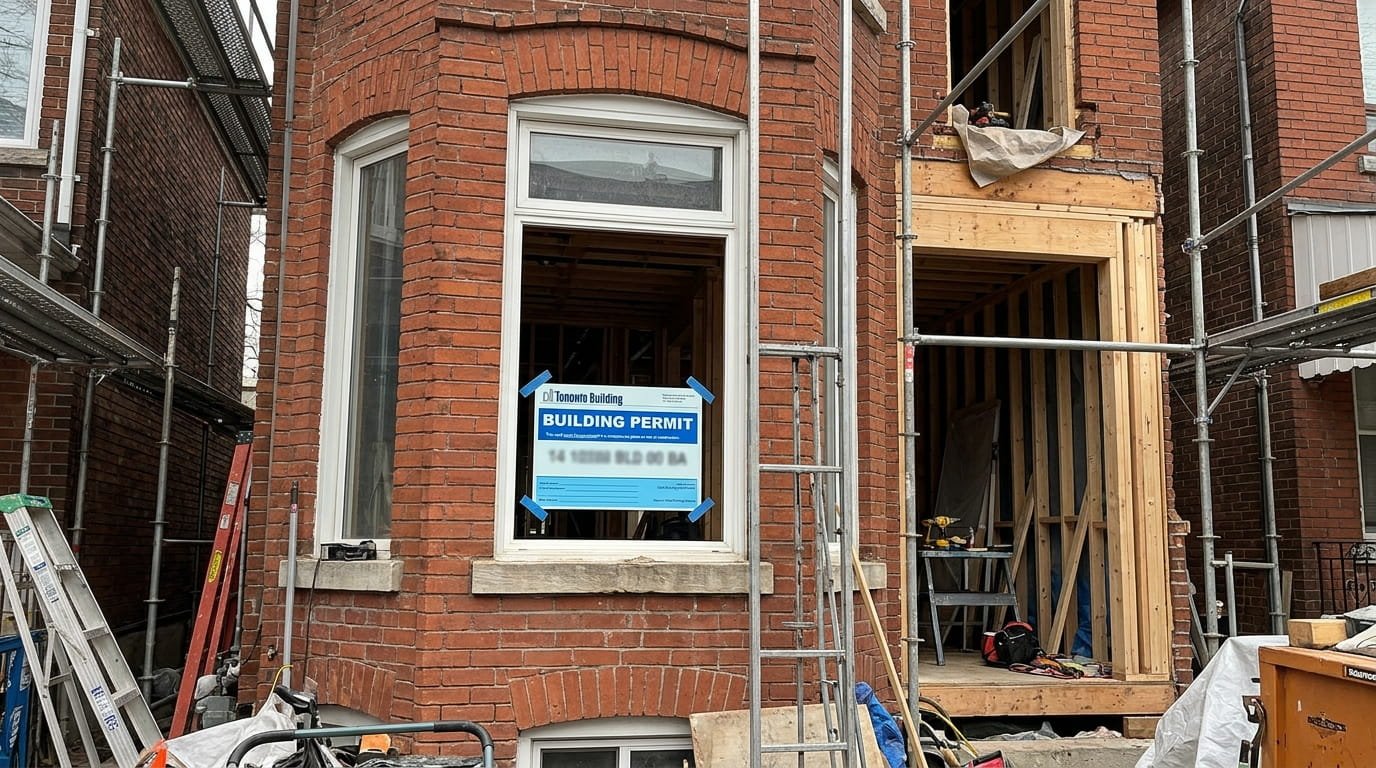
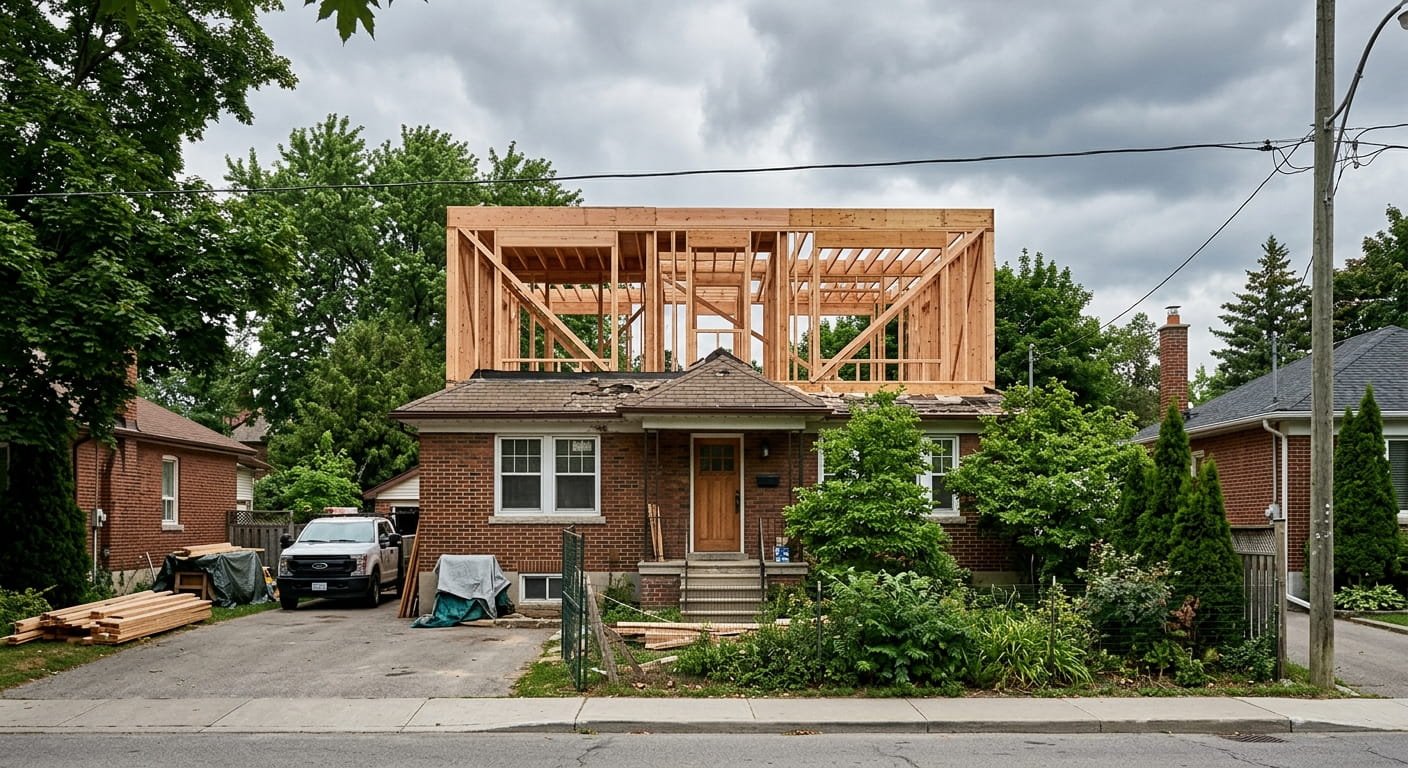
Two paths reach the same result. A new net-zero build designs efficiency in from the start, so the incremental cost stays contained. Retrofitting means tearing into finished walls, upgrading the electrical panel, and often replacing windows and heating at once, which is why the renovation versus rebuild math matters before you commit.
Green building specialists often quote net-zero-ready construction at 8% to 12% above base cost per square foot. Net-zero-ready means the envelope and mechanicals are in place but solar has not been added yet. Panels close the final gap and take the house to true net-zero. Here is a rough component breakdown at 2026 Ontario prices.
| Net-zero component | Typical installed cost (2026) | Ontario rebate available |
|---|---|---|
| Envelope upgrade + air sealing | $45,000-$75,000 (deep retrofit) | Up to $7,700 insulation, $250 air sealing |
| Cold-climate air-source heat pump | $10,000-$18,000 | Up to $7,500 |
| Triple-pane windows and doors | Varies by count | $100 per rough opening |
| Rooftop solar (7.5-10 kW) | $18,000-$35,000 | Up to $5,000 |
| Battery storage (optional) | $10,000-$18,000 | Up to $5,000 |
Separating hard construction costs from these energy upgrades keeps budgeting clear and stops the premium from disappearing into a single lump-sum quote.
What Drives the Cost of a Net-Zero Home?
Four systems account for most of the spend: the building envelope, the heat pump, high-performance windows, and solar. Each one either cuts energy demand or replaces fossil fuel, and the order matters. Build the shell tight first, then size a smaller and cheaper heating system, then add renewable energy to cover what remains.
The Building Envelope and Triple-Pane Windows
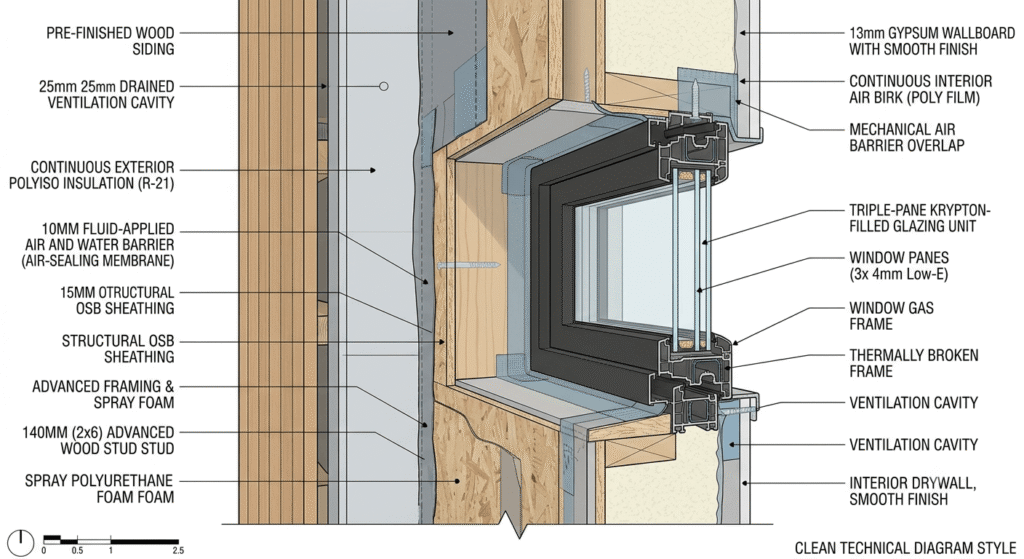
The shell is where net-zero starts. A deep envelope upgrade with continuous insulation and careful air sealing runs $45,000 to $75,000 on an existing bungalow. Triple-pane windows insulate the weakest point in any wall and can cut heating and cooling losses by 15% to 25% versus older units. This approach borrows from the passive house standard, which targets an ultra-tight, well-insulated shell so mechanical loads stay small. Ontario keeps raising its tiered energy code, so review the 2026 Building Code changes before locking in wall assemblies.
Heat Pump Installation
A tight shell makes heating cheaper. A cold-climate air-source heat pump installation for a whole Ontario home typically costs $10,000 to $18,000, while ground-source geothermal systems run $20,000 to $45,000 because of the ground loop. One heat pump both heats and cools, replacing the furnace and air conditioner in a single unit. Ontario’s clean electricity grid means running one produces very little carbon.
Solar Panels and Renewable Energy
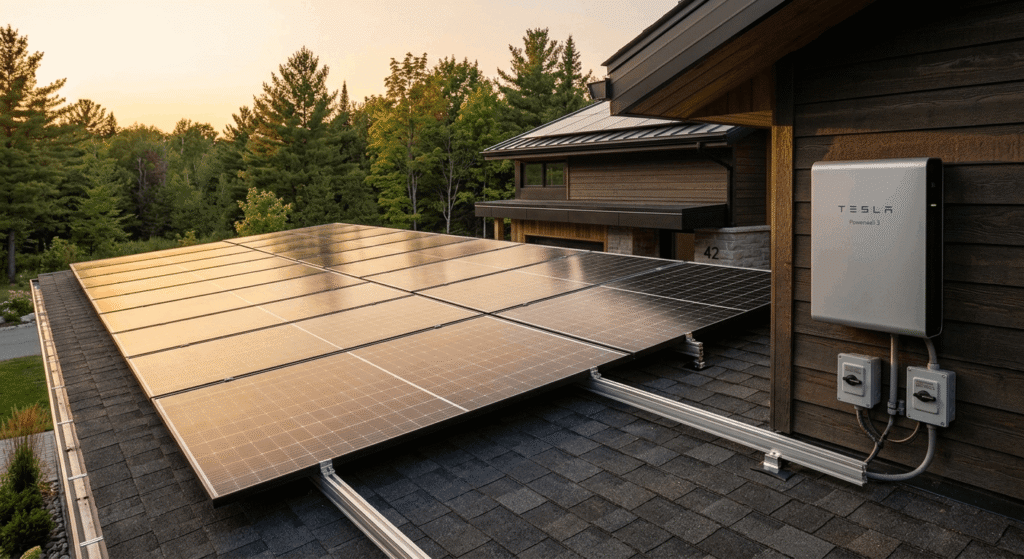
Solar closes the loop. Most Ontario homes need a 7.5 to 10 kW system to offset annual use, priced at $18,000 to $35,000 before rebates at 2026 rates of $2.42 to $3.50 per watt. Solar panels are HST-exempt in Ontario, saving a few thousand more. Pairing panels with battery storage adds $10,000 to $18,000, so solar homes can bank daytime power for evening use. That stored renewable energy carries the house overnight. On-site generation is what separates an efficient, eco-friendly home from a genuine net-zero one.
What Rebates Lower Net-Zero Home Costs in Ontario?
The single biggest program in 2026 is Ontario’s Home Renovation Savings Program, delivered through Save on Energy and Enbridge Gas with support from the province. It replaced the older Home Efficiency Rebate Plus, and both major federal programs have since closed, so ignore older articles that still point to them.
Here is the correction that trips up most budgets. The Canada Greener Homes Grant of up to $5,000 closed to new applicants in early 2024, and the interest-free Canada Greener Homes Loan of up to $40,000 stopped taking applications on October 1, 2025. Neither is available for a new project today.
What is active is the provincial program, funded through late 2026 as part of a $10.9 billion energy-efficiency investment, though the province can change or end it without notice. Ontario’s energy-efficiency program announcement explains the rollout, and the program backgrounder lists eligible upgrades. Typical amounts include:
- Cold-climate air-source heat pump: up to $7,500
- Ground-source geothermal heat pump: up to $12,000
- Attic and wall insulation: up to $7,700
- Rooftop solar: up to $5,000, plus up to $5,000 for battery storage
- ENERGY STAR windows and doors: $100 per rough opening
One trade-off to plan around: taking the solar rebate generally rules out net metering on the same system, so have both modelled before you sign a contract.
Is a Net-Zero Home Worth It in Ontario?
For most Ontario homeowners, yes, over a long enough horizon. Time-of-use peak rates now hit 39.1 cents per kWh, so cutting grid draw is worth real money. Rooftop solar typically pays back in 7 to 12 years, faster when paired with a battery and the provincial rebate. A well-built envelope and heat pump keep returning value in lower bills and steadier comfort for decades. Net-zero also hedges against future energy prices and tends to lift resale value. Mapping those savings against the build premium early, with help from our planning and financial guidance, keeps the upfront net-zero home cost in Ontario in perspective.
Frequently Asked Questions
1. Is a net-zero home more expensive to build in Ontario?
Yes. A new net-zero build costs about 5% to 15% more than a code-minimum home, roughly $50,000 to $120,000 extra in 2026. The premium covers a better envelope, a heat pump, high-performance windows, and solar. Rebates and lower energy bills offset part of that over time.
2. What is the difference between net-zero and net-zero-ready?
A net-zero-ready home has the airtight, insulated envelope and efficient mechanicals in place but no solar yet. A net-zero home adds the renewable generation to fully offset annual energy use. Net-zero-ready costs less upfront, and owners can add panels later when the budget allows.
3. Which rebates are available for net-zero upgrades in Ontario in 2026?
The provincial Home Renovation Savings Program is the main source. Common amounts include:
- Up to $7,500 for a cold-climate air-source heat pump
- Up to $12,000 for a geothermal heat pump
- Up to $7,700 for insulation
- Up to $10,000 for solar plus battery storage The federal Greener Homes Grant and Loan are both closed to new applicants.
4. How long does it take to recoup net-zero home costs?
It varies by system and energy use. Rooftop solar usually pays back in 7 to 12 years in Ontario, and faster when paired with a battery and the provincial rebate. Envelope and heat pump upgrades return value through lower bills and comfort rather than on a single payback date.
5. How much can a net-zero home save on energy bills in Ontario?
A net-zero home can cut annual energy bills to near zero, since on-site solar offsets most or all grid electricity. A cold-climate heat pump alone typically saves $600 to $1,800 a year versus a gas furnace, and a well-sized solar array trims a hydro bill by 70% to 90%. Rising Ontario rates widen those savings yearly.
Conclusion
Net-zero home cost in Ontario comes down to how much work you do at once and how well you stack rebates. A new build carries a 5% to 15% premium, while a deep retrofit runs $100,000 to $200,000. With the provincial Home Renovation Savings Program active through late 2026 and hydro rates climbing, the case for building efficient in Ontario keeps getting stronger. Work with a builder who prices the envelope, mechanicals, and solar as one system rather than three separate line items.