

Quick Answer: Rezoning and land development in Ontario run through the Planning Act. When your property’s zoning doesn’t permit a project, you apply to council for a rezoning that fits the official plan and provincial policy. If council hasn’t decided within 90 days of a complete application, or 120 days alongside an official plan amendment, you can appeal.
What is rezoning and land development in Ontario?
Rezoning and land development together cover two linked steps: changing what a property is legally allowed to hold, then preparing that land for buildings. Rezoning, formally a zoning bylaw amendment, alters the permitted uses or standards on a site. Land development covers approvals and site work such as severances, subdivision, site plan approval, servicing and building permits.
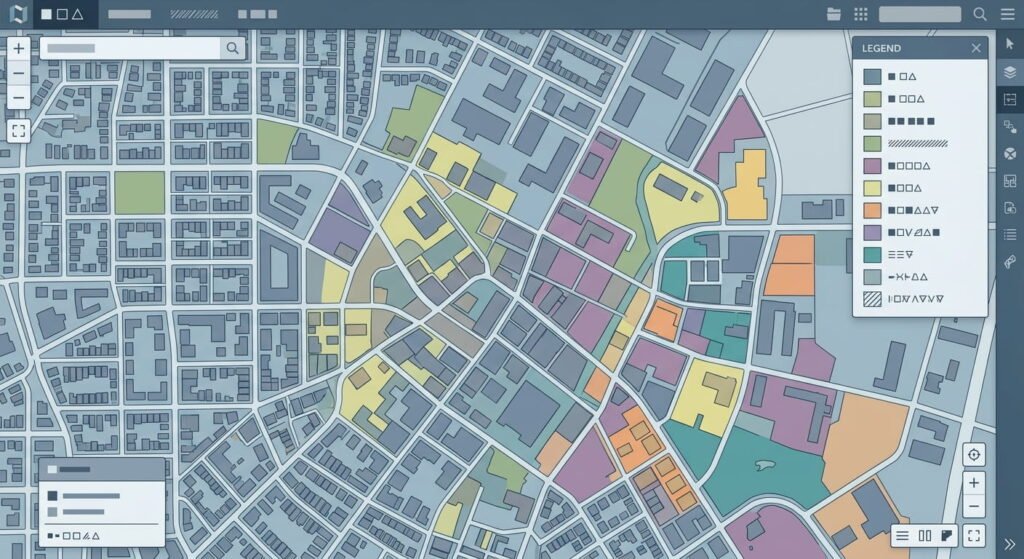
Many Ontario municipalities divide land into zones through a comprehensive bylaw that sets uses, lot sizes, parking, height, density and setbacks. Construction that breaks those rules won’t get a building permit, so zoning is the first check on any site. It’s also a core part of the due diligence Leedway Group does on sites across the Greater Golden Horseshoe through its land development and design-build services.
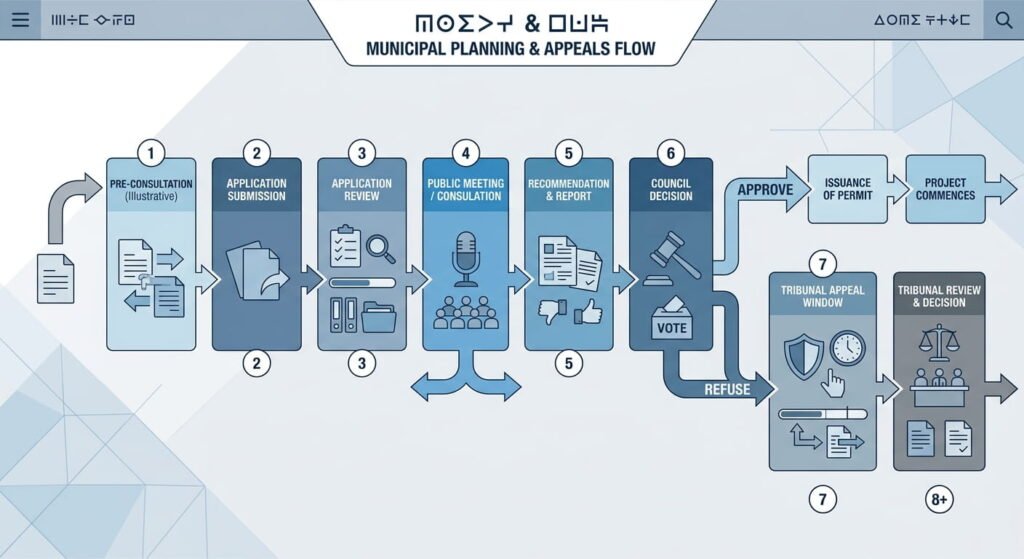
How does rezoning work under Planning Act Ontario rules?
A rezoning starts with an application to your local council, which can only consider a new use that the official plan already allows. Council must hold at least one public meeting with 20 days’ notice, and its decision has to be consistent with the Provincial Planning Statement. Refusals and missed deadlines can go to the Ontario Land Tribunal.
Is there a municipal planning code in Ontario?
No. Ontario doesn’t have a single municipal planning code. The Planning Act sets the process. The Provincial Planning Statement, 2024, in effect since October 20, 2024, sets provincial policy that every planning decision must be consistent with. Your official plan sets local direction, and the zoning bylaw turns it into enforceable rules for each lot. Our guide to how Ontario zoning categories and setbacks work explains those rules in more detail.
Where does a development review committee fit?
The Planning Act doesn’t formally create a development review committee. In practice, the term describes the municipal staff and outside agencies who review a file and send comments before it reaches council. Council can also delegate certain decisions to a committee of council or senior staff, so who signs off varies by municipality.
Pre-consultation is now optional, because Bill 185 removed municipalities’ power to make it mandatory in 2024. Book one anyway. The statutory clock starts only once your application is complete, and that meeting is where you learn which studies staff expect. In January 2026, the province named professional engineering a prescribed profession for complete applications, which gives engineers’ studies more weight.
The province’s applying for land use changes page, last updated July 2, 2026, lists these decision windows:
| Application | Typical decision maker | Days before a non-decision appeal |
|---|---|---|
| Rezoning | Local council | 90 |
| Official plan amendment | Council or approval authority | 120 |
| Plan of subdivision | Municipality or province | 120 |
Treat those numbers as the point where you gain appeal rights, not an approval date.
Bill 185 also repealed the fee refunds municipalities once owed for late zoning and site plan decisions. Appeals of a passed bylaw must be filed within 20 days of the notice, and third-party rights are limited to the key participants named in Ontario’s citizen’s guide on zoning.
What other approvals shape property development in Ontario?
A rezoning is seldom the last approval. Depending on the site, property development in Ontario can also require site plan approval, a minor variance, a severance or plan of subdivision, and permits from other agencies. Waterfront lots can trigger the Public Lands Act, and designated heritage properties may need a separate heritage approval.
Minor variance or rezoning?
If your design follows the intent of the zoning bylaw but misses one standard, such as a setback on an irregular lot, apply to the committee of adjustment for a minor variance. A variance excuses you from that requirement without changing the bylaw. A new use or a large jump in density needs a full rezoning.
Some small misses now need neither. A Bill 17 regulation lets a building encroach up to 10% into a required setback as-of-right on urban residential lots outside the Greenbelt. Hazardous lands and sites near shorelines or railways are excluded, so waterfront infill still needs the usual variance.
Public Lands Act permits for shoreline and Crown land
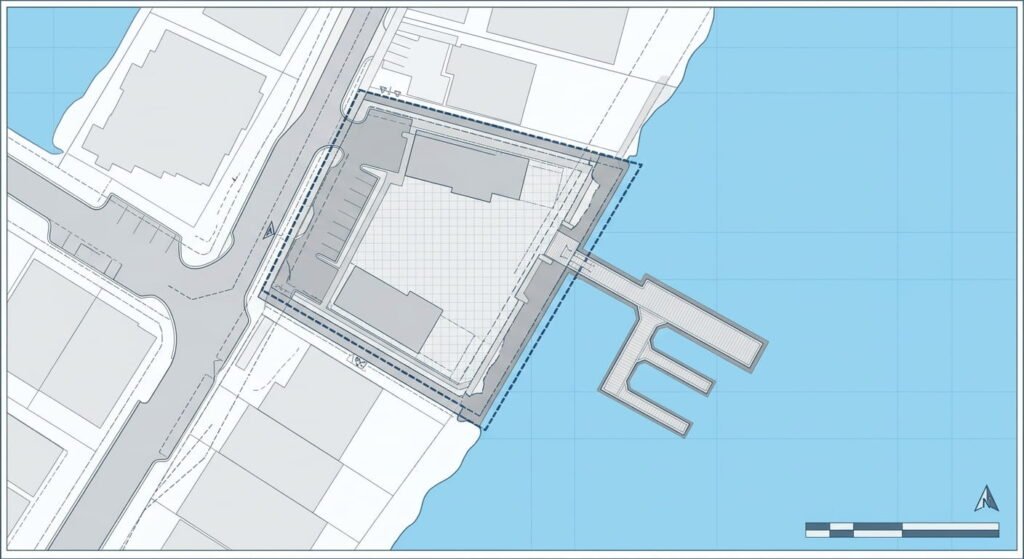
The Public Lands Act covers work on Crown land and on shore lands, meaning land below the high-water mark, including privately owned shoreline. A structure in contact with more than 15 square metres of shore lands generally needs a work permit, and starting that work without one is an offence. Review Ontario’s Crown land and shore land work permit rules before you design a dock or boathouse.
What changed for rezoning and land development in 2026?
Bill 98, the Building Homes and Improving Transportation Infrastructure Act, 2026, received Royal Assent on June 2, 2026. It sets standard land use designations for official plans, scheduled for January 1, 2028 in 29 large, fast-growing municipalities and January 1, 2029 everywhere else. It also removes sustainable design from site plan control and bars zoning from requiring EV charging. The minister gained power to cap minimum lot sizes on serviced urban residential land outside the Greenbelt.
Upper-tier planning is shrinking too. Durham, Halton, Niagara, Peel, Waterloo and York have already lost their planning responsibilities, and Bill 98 lets the province remove Simcoe County’s role in up to three phases, starting with Innisfil, Bradford West Gwillimbury and New Tecumseth. For a real example of rezoning and land development approvals on one file, see Leedway Group’s 70-unit Niagara condominium rezoning. In any of these regions, confirm who the approval authority is before you file.
Frequently Asked Questions
1. How long does the rezoning and land development approval process take in Ontario from application to decision?
Ontario’s Planning Act lets an applicant appeal to the Ontario Land Tribunal if council hasn’t decided within 90 days of a complete application, or 120 days when an official plan amendment is filed the same day. The clock starts only at completeness, and an appeal adds tribunal time.
2. How much do rezoning and land development applications cost in Ontario?
Municipal rezoning fees vary, so check your city’s schedule. Where the Ministry of Municipal Affairs and Housing is the approval authority, posted fees include:
- $14,065 for ministry approval of an official plan amendment in southern Ontario
- $4,337 for the same in northern Ontario
- $11,721 plus $100 per lot over 100 for a southern subdivision
- $938 for a consent or land severance
3. Can I add units to my lot in Ontario without a rezoning?
Up to 3 residential units are allowed as-of-right in most existing urban residential areas under Ontario’s additional residential units framework, either all in the main house or 2 there plus 1 in a building such as a garage. Setbacks and height can still require a minor variance or rezoning.
4. Can neighbours appeal a rezoning to the Ontario Land Tribunal?
Third-party rezoning appeals in Ontario are limited to key participants: the province, public bodies, affected landowners and specified persons such as utility providers. Neighbours without appeal rights can still speak at the public meeting or send written comments before the bylaw passes, and council may change the proposal in response.
5. Do I still need site plan approval after my property is rezoned in Ontario?
Site plan control applies wherever your official plan designates it, whether or not the land was just rezoned. It checks matters such as access, landscaping, drainage and protection of nearby properties. Municipalities can also set a deadline for issuing a building permit before approval lapses, and Bill 98 removes sustainable design from what they can require.
Conclusion
Rezoning and land development in Ontario reward owners who do their homework before they buy or design. Confirm what the official plan allows and book a pre-consultation, even though it’s voluntary now. If you’re weighing a site in the Greater Golden Horseshoe, talk to Leedway Group about your site’s approval path before you firm up an offer. Then budget for appeal time, because the 90-day window gives you appeal rights, not a decision.