

Quick Answer: A minor variance is permission from your Committee of Adjustment to depart slightly from one zoning rule, such as a setback or height limit. In Ontario, it must pass four tests under Section 45 of the Planning Act. Once the 20-day appeal period ends with no appeal, the decision is final and you can move on to your building permit.
What is a minor variance in Ontario?
A minor variance is an approval that lets you depart slightly from one measurable standard in your municipality’s zoning bylaw, like a side yard setback or a height cap, without rezoning the property. In Ontario, a Committee of Adjustment decides these requests under Section 45 of the Planning Act, and the zoning on your lot stays exactly as it was. ahtwpdeseronto
Ontario’s land use planning system leaves zoning to each municipality, so every town writes its own rules. Committees are residents appointed by council. Oshawa’s has five members and Haldimand County’s has seven. Zoning Explained: What You Can Actually Build on a Lot in Ontario +2
A variance fixes a standard, not a use. If the zoning doesn’t allow what you want to do with the land, or you want a big jump in density, you usually need a zoning amendment instead. Our guide to Ontario zoning laws in 2026 explains zone types and building envelopes in more detail. Substance Law
The four tests a zoning bylaw variance must pass
The Planning Act sets out a fourfold test, and the Committee can’t approve your request unless all four are met: ahtwpEnvironmental Registry of Ontario
- The change is minor.
- It’s desirable for the appropriate development or use of the land.
- It keeps the general intent and purpose of the by-law.
- It keeps the general intent and purpose of the Official Plan.
“Minor” isn’t a fixed percentage. Ramara’s information sheet puts it plainly: the change has to be small, and it can’t have a significant impact on your property or the ones around it. ramara
Check the Bill 17 setback rule before you apply
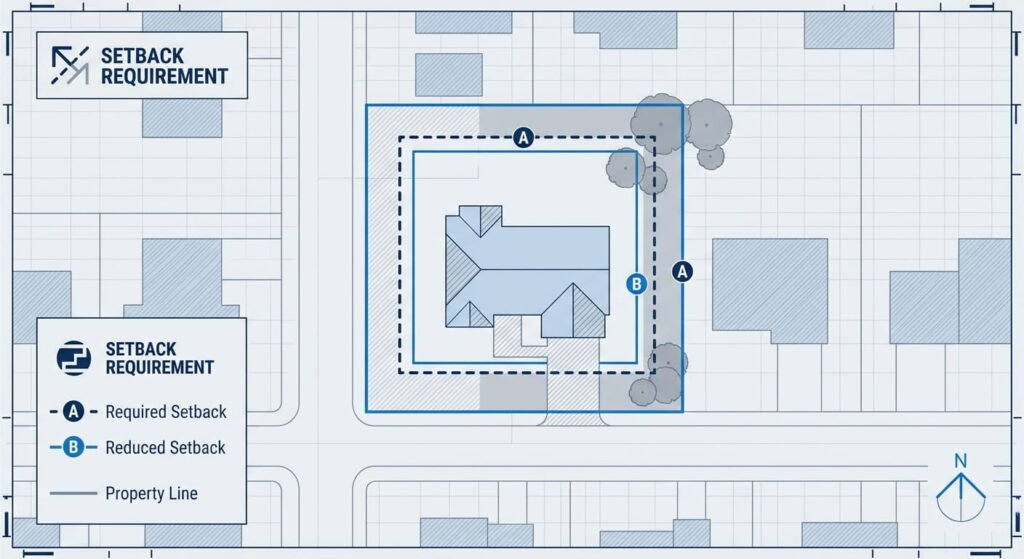
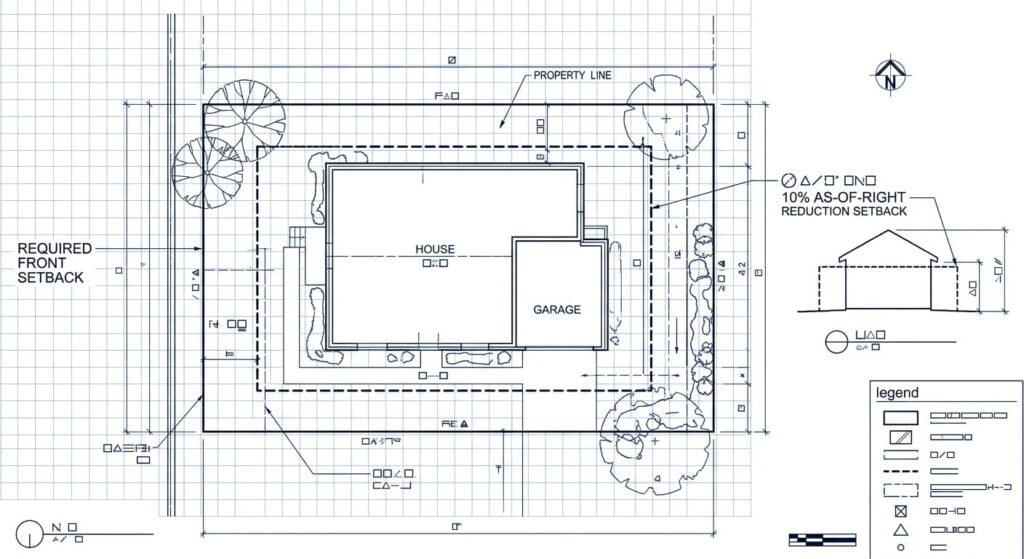
Some owners no longer need a variance at all. In a decision posted November 24, 2025, Ontario amended O. Reg. 545/06 to carry out Bill 17. Building within 10% of a required setback is now permitted as-of-right on urban residential lands outside the Greenbelt, excluding hazardous lands and sites near shorelines or railways. The Environmental Registry of Ontario notice gives an example: a 5-metre front yard setback effectively becomes 4.5 metres.
There’s a catch. The 10% rule covers setbacks only. Bill 60, which received Royal Assent on November 27, 2025, lets the province extend as-of-right variations to standards like height and lot coverage by regulation. Confirm what’s actually in force for your lot before you pay a fee. Environmental Registry of Ontario
How does the minor variance application process work?
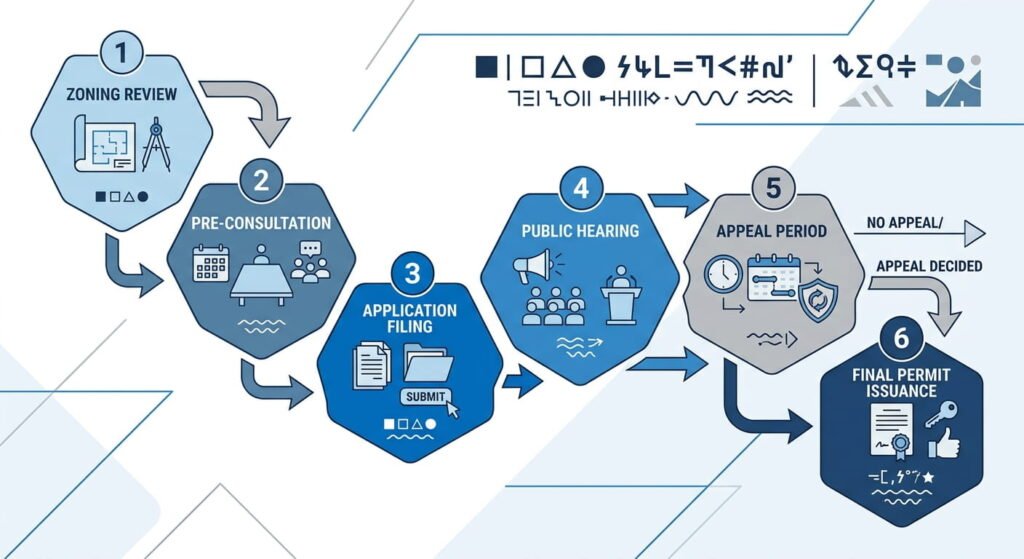
You apply to your local Committee of Adjustment, not the province. The application lists each zoning standard your plans can’t meet. Planning staff review it, and the Committee rules at a public hearing after neighbours receive notice. If no eligible party appeals within 20 days, the decision becomes final and binding. stratfordclarington
Minor variance application steps, start to finish
- Confirm the relief you need. Ask your planning department about a zoning review so the application lists every variance. Toronto strongly encourages one before you apply. Toronto
- Book a pre-consultation. Many municipalities recommend it, and Kingston makes it mandatory. ahtwpcityofkingston
- File the application with drawings and the fee. Toronto accepts applications only as PDFs by email. Toronto
- Let staff review it. Planning staff circulate the file to agencies, then prepare a variance report that evaluates the request and includes public and agency comments. stratford
- Wait for notice. O. Reg. 200/96 requires notice at least 10 days before the hearing, typically mailed to owners within 60 metres plus a sign on the property. In zones limited to detached, semi-detached or duplex housing, the Committee can cut that radius to 30 metres.
Ontario - Attend the hearing. The Committee can grant the variance, grant it with conditions, adjourn, or reserve its decision. parrysound
- Wait out the 20-day appeal period.
What happens at the public hearing
Anyone can speak or send written comments, but an objection doesn’t automatically sink an application. The Committee has to weigh the evidence against the four tests. Toronto’s 2026 application form strongly recommends talking with adjacent residents first, which is good advice anywhere. Our Committee of Adjustment and minor variance Toronto guide covers how the city’s panels work. forterieToronto
Appeal rights narrowed in 2022. Under Bill 23, the More Homes Built Faster Act, individual neighbours can no longer take a decision to the Ontario Land Tribunal. Only the applicant, the municipality, the Minister and certain public bodies can. The OLT fee chart lists $400 for a minor variance appeal, plus $25 for each connected appeal. Toronto is different: its appeals have gone to the Toronto Local Appeal Body since May 3, 2017. mississauga.ca +2
What a minor variance costs in 2026
Fees vary a lot between municipalities, and they’re only part of the bill. Most files also need drawings, and some towns want a sketch from an Ontario Land Surveyor. quintewest
| Fee | 2026 amount | What to know |
|---|---|---|
| Toronto, addition or alteration to a dwelling with up to three units | $2,228.98 | After-the-fact variances cost double |
| Oakville, base application | $4,303 | $2,152 for decks, pools, driveways and accessory structures under 15 square metres |
| Ontario Land Tribunal appeal | $400 | $25 for each connected appeal |
Legalizing work that’s already built costs more. Toronto’s Committee of Adjustment fee page doubles the charge for after-the-fact variances, and Oshawa’s January 2026 form does the same. Torontooshawa
Getting your building permit after approval
A variance isn’t a permit. In Clarington, planning staff sign off on the permit only once the appeal period is over and the decision is final. Our Ontario building permit process and cost guide walks through the drawings, fees and inspections that follow. Fort Erie accepts permit applications at any time but won’t issue one until the 20 days have passed. claringtonforterie
Frequently asked questions
1. How long does a minor variance take in Ontario?
Clarington holds a hearing within 30 days of a complete application, and Stratford estimates 60 to 75 days of total processing. Add the 20-day appeal period before the decision is final. If an eligible party appeals, Fort Erie warns that an Ontario Land Tribunal hearing can take six months or more to schedule. Minor Variance and Consent Information Sheet 2020 11 +2
2. Can my neighbours appeal a minor variance decision?
No, not as individuals. Since Bill 23, only the applicant, the municipality, the Minister and certain public bodies can appeal to the Ontario Land Tribunal. Neighbours can still comment at the public hearing, and they can request participant status to make written submissions if an eligible party files an appeal. mississauga
3. What documents do I need for a minor variance application?
O. Reg. 200/96 sets the core requirements, and each municipality adds its own. Expect to provide: govstack
- A completed form with authorization from every registered owner Toronto
- Drawings showing the proposed variances
- A survey sketch, which Quinte West requires from an Ontario Land Surveyor quintewest
- The application fee
- In Toronto, a tree declaration form and current yard photos Toronto
4. What is the difference between a minor variance and a rezoning?
A variance gives relief from a measurable standard, like a setback or lot coverage, and leaves the zoning unchanged. A zoning amendment changes the rules themselves. You’ll usually need one when the zoning doesn’t permit the use you want or when you’re proposing a significant increase in density. Substance Law
5. Do I get my fee back if my application is refused?
Usually not. Fort Erie keeps the fee because staff time is spent whatever the outcome. Toronto’s policy covers withdrawals only: up to 80% back before internal circulation, 50% before the Notice of Hearing is mailed, and nothing after that. Toronto files closed as incomplete can get all but $100 returned. forterieToronto
Conclusion
A minor variance is the right tool when your project fits the zoning but misses one measurable standard by a small margin. Check the Bill 17 setback rule first, then get a zoning review so your application lists every variance you need. Permit costs come next, and our 2026 permit fee comparison by municipality shows what Toronto, Oakville and other cities charge. Once the 20-day appeal window closes without an appeal, you’re clear to apply.