

Quick Answer: Yes. Winter construction carries on across Ontario every year, and the Ontario Building Code sets the rules for it. The bottom of an excavation can’t freeze at any point, and concrete poured when the air is below 5°C has to stay at 10°C or warmer for 72 hours. Interior work and most renovations continue as normal.
What is winter construction?
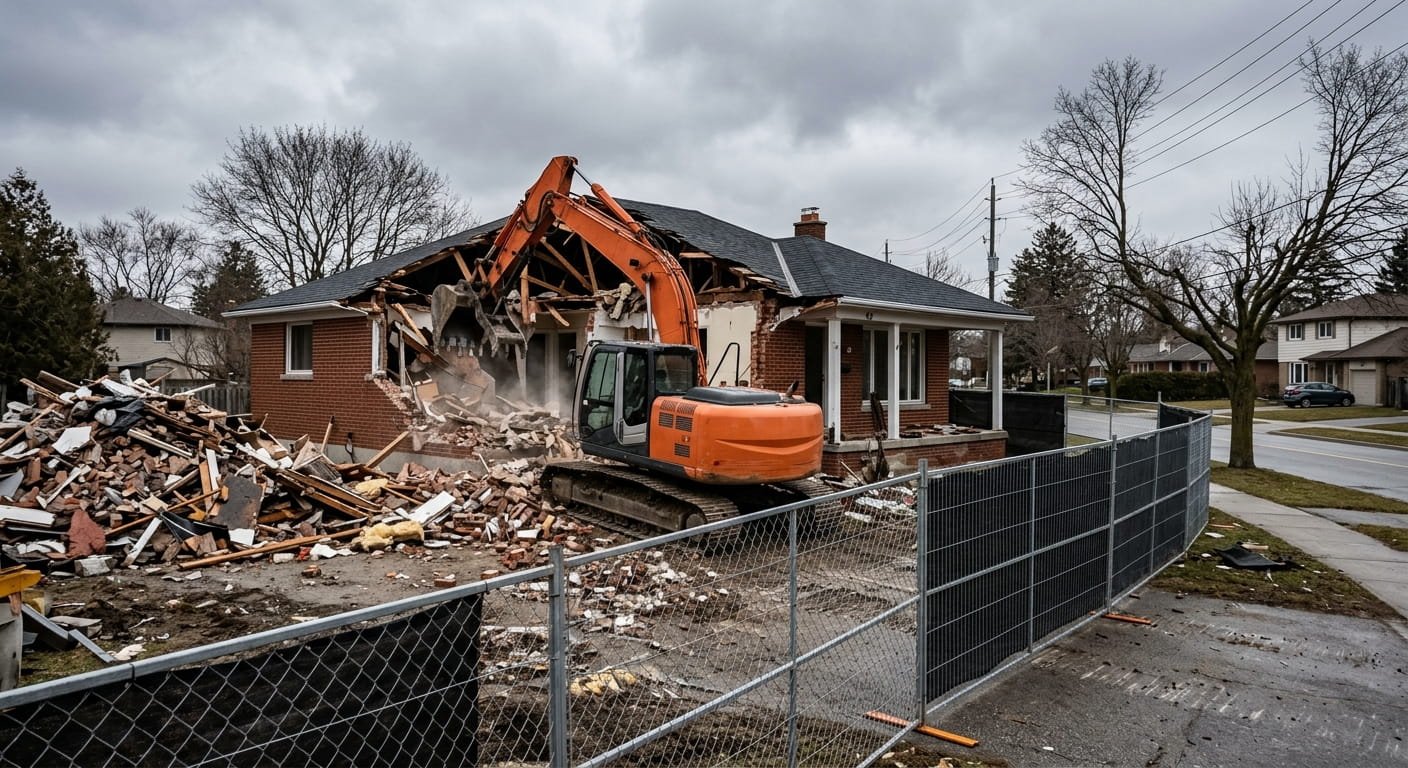
Winter construction is building or renovation work done in cold weather. The City of Markham’s building department counts that as more than three days in a row with an average daily temperature below 5°C, usually from fall until spring. The work is legal and routine, though the Ontario Building Code adds rules for soil, concrete and masonry.
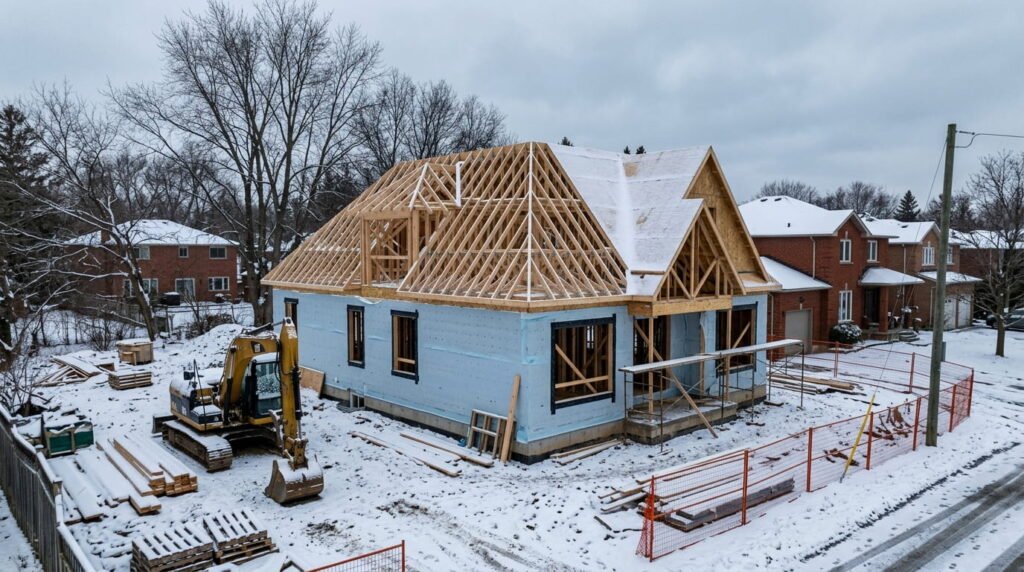
Leedway Group has built custom homes, additions and garden suites across Mississauga, Oakville, Burlington and the wider GTA since 2009. Job sites here don’t close in December. What changes during winter construction is the order of work, because some trades need heat and cover that others don’t.
Can you build in winter in Ontario?
Yes. You can build through an Ontario winter if the site follows the cold weather rules in the 2024 Ontario Building Code, which took effect on January 1, 2025. The winter construction rules protect three things: the soil under the footings, fresh concrete, and mortar. The rest comes down to heat, cover and each product’s temperature limits. oaa
| What’s protected | Ontario Building Code rule | For how long |
|---|---|---|
| Soil at the bottom of the excavation | Keep it from freezing (9.12.1.3) | The entire construction period |
| Concrete, when the air is below 5°C | 10°C to 25°C while mixing and placing, then 10°C or warmer (9.3.1.9) | 72 hours after placing |
| Mortar and masonry | 5°C or warmer (9.20.14.1) | During installation and 48 hours after |
The City of Barrie sets out these requirements in its cold weather concrete information sheet. Inspectors across the province enforce the same code. barrie
Frost protection for frozen ground
Water expands by about 10% when it freezes. In wet soil the freezing zone also draws in more water, which forms ice lenses and lifts whatever sits on top. A footing poured on frozen ground settles unevenly when the thaw comes.
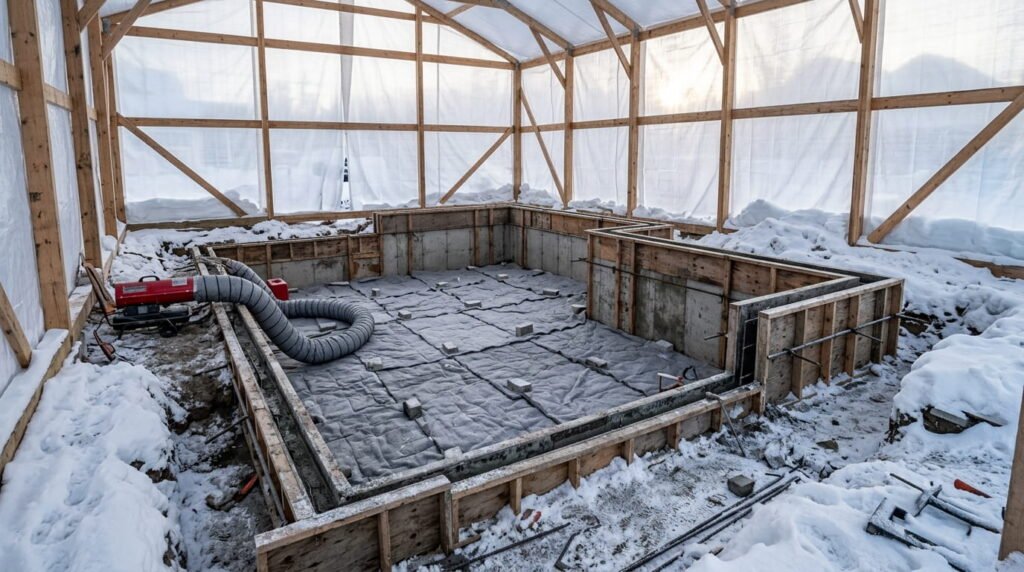
Frost protection starts the day the hole is dug. Markham’s builder guidance warns that an open excavation can freeze to a significant depth within hours, so crews cover the floor with insulated blankets and keep it covered until the building is enclosed and heated. The city also recommends a frost protection plan written by a geotechnical engineer.
Depth matters too. In Southern Ontario, footings for a heated house on clay or silt sit at least 1.2 m below finished grade.
Foundation work and concrete curing in the cold
Foundation work is the hardest part of a winter build, because concrete needs warmth to gain strength. Below 5°C the mix has to arrive warm, with no ice or frozen material in it.
Builders manage concrete curing with heated enclosures and insulated blankets over every exposed surface. Barrie’s building department suggests leaving wall forms in place to help guard against freezing. Too much heat causes its own trouble, since the concrete loses moisture it needs. Fuel-fired heaters inside an enclosure also need ventilation so carbon monoxide doesn’t build up. barrie
None of this is free. Enclosures, fuel and short working days add to the cost of winter construction. The payoff is the schedule: pour in January and framers can be on site while other lots wait for the thaw.
Which projects suit an Ontario winter, and what should you plan first?
Interior renovations suit winter best, because the house is already enclosed and heated. Additions and new builds work too if the foundation goes in before the deep cold or the budget covers temporary heat. Whatever the project, use the cold months for zoning review and permit applications so approvals don’t eat into the building season.
Winter renovations and interior work
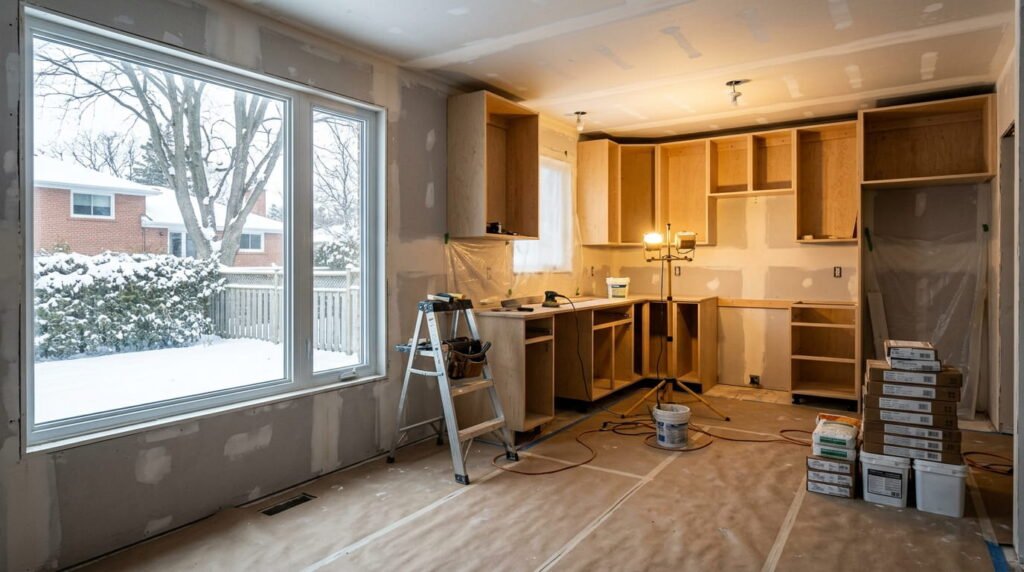
Kitchens, bathrooms and basements don’t care about snow. Winter renovations do raise two practical issues. Materials left in a cold garage have to stay within the manufacturer’s temperature limits, and any opening cut into an exterior wall should be closed the same day.
Wondering whether the house is worth renovating at all? Our renovation vs. rebuild guide walks through that decision.
Insulation and moisture control
January is when a house shows you where it leaks. Natural Resources Canada’s Keeping the Heat In guide treats heat, air and moisture as one system and puts air sealing first in any upgrade. The reason: warm indoor air that escapes into a wall or attic carries moisture with it, and that moisture condenses on cold surfaces. New insulation works best once those leaks are sealed. Keeping The Heat In – Section 2: How your house works +2
On a new build, moisture control means clearing snow and ice off the framing and letting the structure dry before the walls are closed in.
Building permit and zoning bylaw timing
Cold weather changes nothing about approvals. Ontario requires a building permit before you renovate, add on, or excavate for a foundation, and an individual caught building without one can be fined up to $50,000 for a first offence. For a house, the municipality has 10 days to issue or refuse a complete application. ontario
Zoning comes first. If the design needs a minor variance or a change to the local zoning bylaw, the permit waits until that’s resolved. In Mississauga, zoning rules apply even when no permit is required. ontariomississauga
That’s the argument for doing paperwork in winter. Our post on building a garden suite in Mississauga shows how the zoning and permit steps fit together, and our approach explains how Leedway runs design, permits and construction under one contract.
Frequently asked questions
1. Can you pour concrete in winter in Ontario?
Yes. Under Ontario Building Code article 9.3.1.9, when the air is below 5°C the concrete must be between 10°C and 25°C while it’s mixed and placed, then held at 10°C or warmer for 72 hours. No ice or frozen material can go into the mix. Heated enclosures and insulated blankets do the job.
2. How deep do footings need to be in Ontario?
At least 1.2 m (about 4 ft) below finished grade for a heated building on clay or silt in Southern Ontario, under article 9.12.2.2 of the Ontario Building Code. Soil type and location change the number, so confirm the depth with your municipal building department or a geotechnical engineer before you dig.
3. Is winter construction more expensive in Ontario?
Ground work costs more. Excavation and concrete need insulated blankets, heated enclosures, fuel and snow clearing, and crews get less done in short, cold days. There’s no standard premium, because the extra cost swings with each year’s weather. Interior renovations are mostly unaffected, so they’re the easier winter project.
4. Do you need a building permit to renovate in winter in Ontario?
Yes. The rules are the same in every season. Ontario requires a permit before you renovate or add to a building, or excavate for a foundation. Your municipality must issue or refuse a complete house application within 10 days. Zoning can still apply to work that doesn’t need a permit, so check both first. ontario
5. What construction work can be done in winter?
Most of it. These jobs carry on through an Ontario winter with the least extra cost:
- Interior renovations such as kitchens, bathrooms and basements
- Framing and roofing on a foundation that’s already in
- Plumbing, electrical and HVAC rough-ins inside an enclosed shell
- Zoning review and permit applications for a spring start
Conclusion
Winter construction in Ontario comes down to scheduling. Pour the foundation before the deep cold, or budget for heat. Keep interior work for January and February. File the permit application while the ground is frozen, so the site is ready when it thaws.
Ready to discuss your project?
Book a free consultation with Leedway Group to discuss your property and project.