

Quick Answer: Aging in place renovations in Ontario typically cost $5,000 to $10,000 for basic safety upgrades and $30,000 to $50,000 for a full accessibility overhaul. Bathroom conversions, wider doorways, and single-floor living deliver the biggest safety gains. Federal and provincial tax credits can return $3,000 to $7,500 of what you spend.
What Are Aging in Place Renovations?
Aging in place renovations are permanent changes to an Ontario home that let an older adult keep living there safely as mobility, balance, and eyesight change. Think curbless showers, wider doorways, better lighting, and single-floor living. The goal isn’t a medical-looking house. It’s a home that stops working against you.
The case for doing this work early is uncomfortable but clear. In 2022, 7,621 Canadians aged 65 and older died from falls, a 51% increase over 2017, and the direct cost of fall-related injuries in that age group was estimated at $5.6 billion, per Public Health Agency of Canada data. Most Ontario housing stock was designed long before anyone thought about that. Health Canada
How Much Do Accessibility Renovations Cost in Ontario?
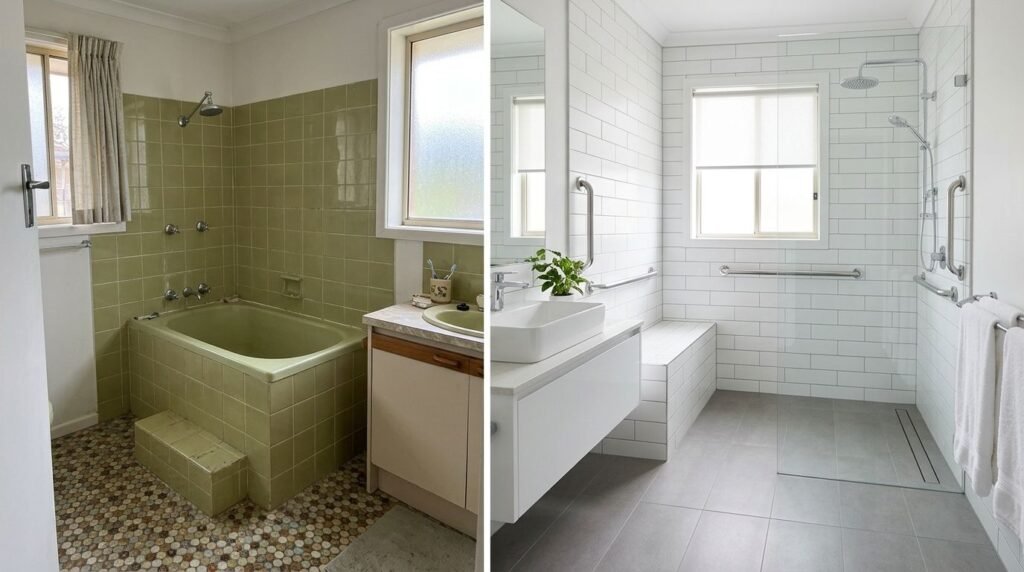
Accessibility renovations in Ontario run from roughly $5,000 for grab bars, handrails, and lighting to $30,000 or $50,000 for a full package covering a bathroom, entrance, doorways, and flooring. Most households land in the middle. Scope, structural work, and whether plumbing or walls have to move are what actually drive the number.
| Project scope | Typical Ontario cost | What moves the price |
|---|---|---|
| Basic safety package (grab bars, handrails, lighting) | $5,000 to $10,000 | Rooms covered, electrical upgrades |
| Accessible bathroom with curbless shower | $8,000 to $25,000 | Drain relocation, waterproofing, fixtures |
| Comprehensive retrofit (bath, entry, doorways, lighting) | $30,000 to $50,000 | Total scope, structural changes |
| Main-floor bedroom suite or major reconfiguration | $50,000 to $80,000+ | Load-bearing walls, plumbing runs, permits |
| Single-room modification, national average | About $9,500 | Limited, one-room scope |
Set that against the alternative. Assisted living in Ontario commonly runs $3,500 to $8,000 a month, and even government-subsidized long-term care carries a basic accommodation co-payment near $25,000 a year. A $40,000 renovation costs about what one year of care costs. The difference is that the renovation stays with the house, which is worth weighing alongside broader questions of homeownership and long-term care planning.
Which Home Accessibility Renovations Matter Most for Safety?
Start with the bathroom, then the entrance, then everything between them. Bathrooms pair wet floors with a raised tub edge, which is why home accessibility renovations almost always begin there. After that, safe entry, hallways wide enough for a walker, and single-floor living do the most to protect independence.
Barrier-Free Bathrooms Come First
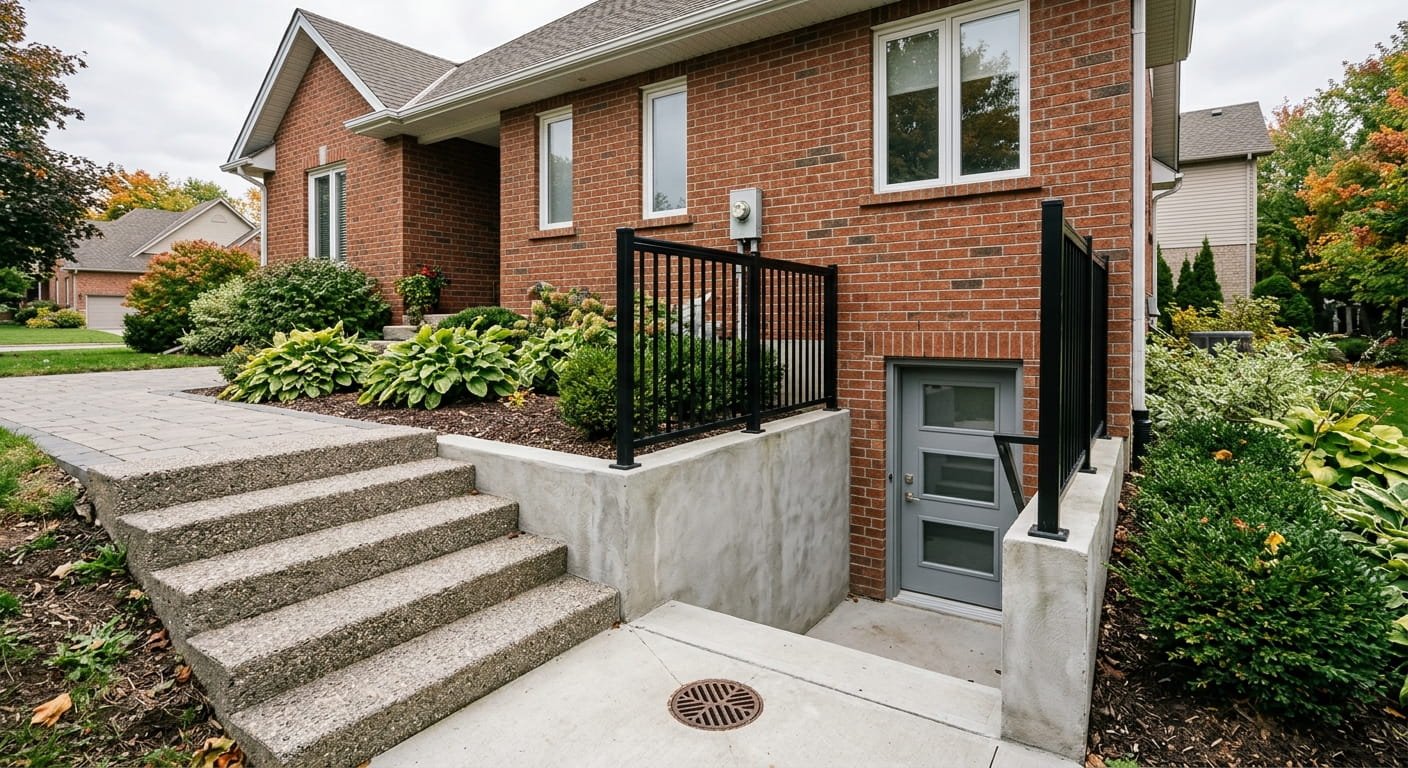
A curbless walk-in shower is the highest-value single change. Add blocking behind the walls for grab bars even where you aren’t installing them yet, a comfort-height toilet, non-slip flooring, and lever taps. A properly barrier-free home usually plans for about 1,500 mm (60 inches) of clear turning space so a walker or wheelchair can pivot without a three-point turn.
Universal Design Beyond the Bathroom
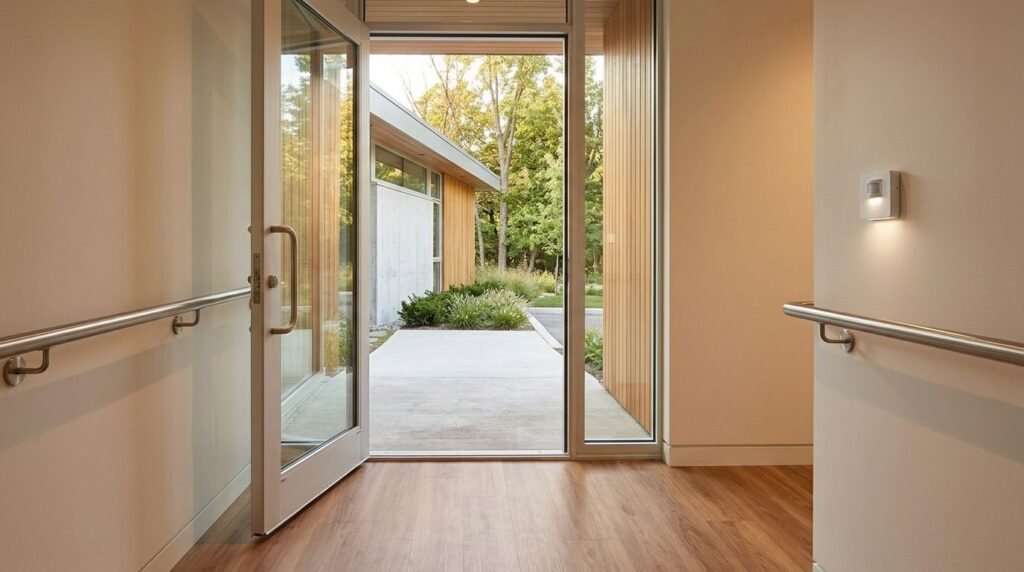
Universal design means the change helps everyone, not just the person who needs it. Lever handles instead of knobs. Rocker switches. Motion-sensor lighting in hallways. Contrasting nosings on stair treads. None of it looks like medical equipment, and all of it works just as well for a 40-year-old carrying groceries.
One-Floor Accessible Living
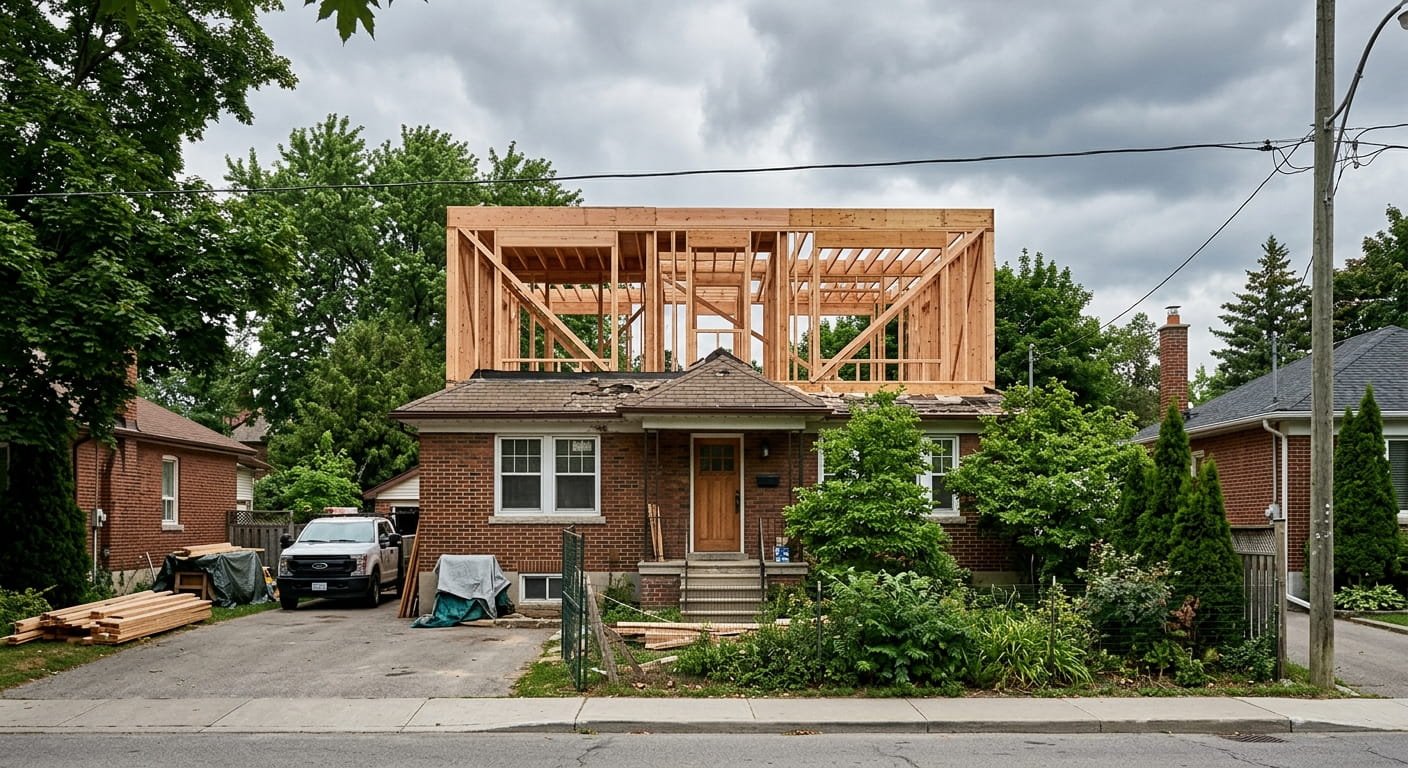
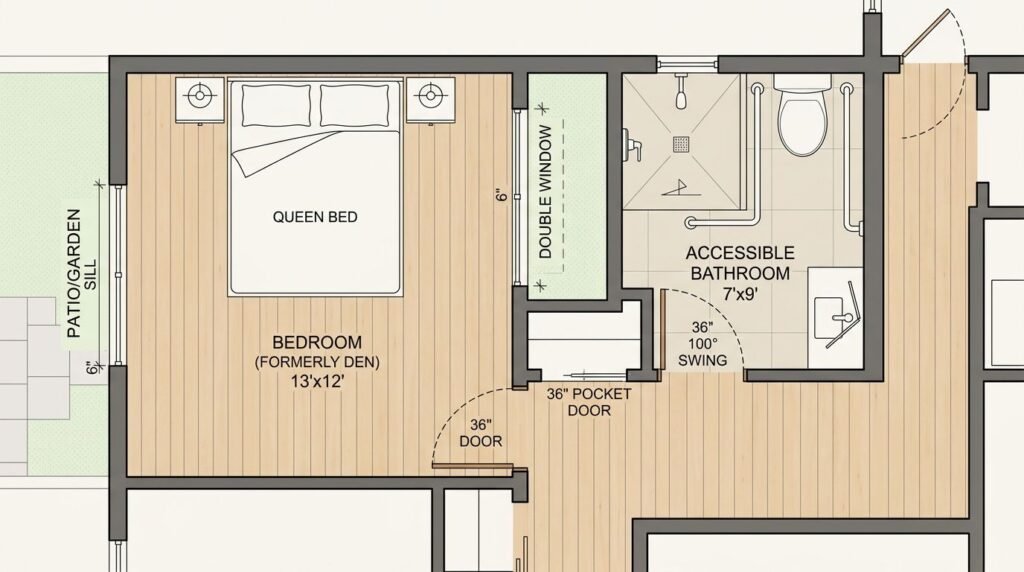
Stairs are the problem people postpone longest and regret most. Converting a main-floor den into a bedroom with an adjacent full bathroom removes the daily climb outright. Where the existing layout won’t allow it, a garden suite or addition often can. Under Ontario’s More Homes Built Faster Act, most serviced residential lots now permit up to three residential units as of right, though a building permit and full Ontario Building Code compliance are still mandatory. That turns a suite for a parent into a permit application instead of a rezoning battle. Accessible living on one level is the outcome, whichever route gets you there. Myowncottage
What Grants and Tax Credits Cover Home Modifications for Seniors in Ontario?
Ontario homeowners can stack several programs. The federal Home Accessibility Tax Credit returns 15% of up to $20,000 in eligible costs. The Multigenerational Home Renovation Tax Credit is refundable and worth up to $7,500. Municipal Ontario Renovates funding adds grants and forgivable loans for lower-income households.
The Home Accessibility Tax Credit covers permanent work for anyone 65 or older or eligible for the Disability Tax Credit, claimed on line 31285. Here’s the detail most guides leave out: CRA states the credit is not reduced by government assistance, including grants, forgivable loans, or tax credits from federal, provincial, or territorial governments. Municipal money doesn’t shrink your claim. Canada.ca
Building a self-contained suite is a separate credit. The Multigenerational Home Renovation Tax Credit is refundable, so it pays out even with zero tax owing, and it’s worth 15% of up to $50,000 on line 45355. Only one qualifying renovation can be claimed for a qualifying individual in their lifetime. Do the suite in one project, not in phases.
Ontario adds the Seniors Care at Home Tax Credit for households where someone turned 70 or older during the year, refunding 25% of claimable medical expenses up to $6,000, for a maximum of $1,500. Now note what’s gone. The Ontario Seniors’ Home Safety Tax Credit was temporary, covering the 2021 and 2022 tax years only, and is no longer offered. Dozens of renovation blogs still list it as current funding. It won’t reduce your 2026 bill. OntarioVisavie
Ontario Renovates delivers the largest direct funding, but amounts differ by city because municipalities run the program. Ottawa offers up to $20,000: a 10-year forgivable loan of $15,000 plus a $5,000 grant for accessibility modifications only. London’s 2026 round goes to $25,000, with the first $5,000 provided as a grant for approved accessibility projects. Funding is first-come, first-served and does run dry, so apply early in the fiscal year and settle your budget with proper planning and financial guidance before you sign a contract. City of OttawaCity of London
Frequently Asked Questions
1. What is the average cost of aging in place renovations in Ontario?
Most Ontario households spend $15,000 to $40,000. Basic safety work involving grab bars, handrails, and lighting sits between $5,000 and $10,000. A comprehensive retrofit covering bathroom, entry, doorways, and flooring typically runs $30,000 to $50,000, and structural reconfiguration can pass $80,000.
2. Are renovations for seniors tax deductible in Canada?
They’re credited rather than deducted. The federal Home Accessibility Tax Credit gives back 15% of up to $20,000 in eligible permanent renovation costs, a maximum of $3,000, on line 31285. CRA also allows an expense qualifying as a medical expense to be claimed under both credits.
3. Do I need a building permit for accessibility renovations in Ontario?
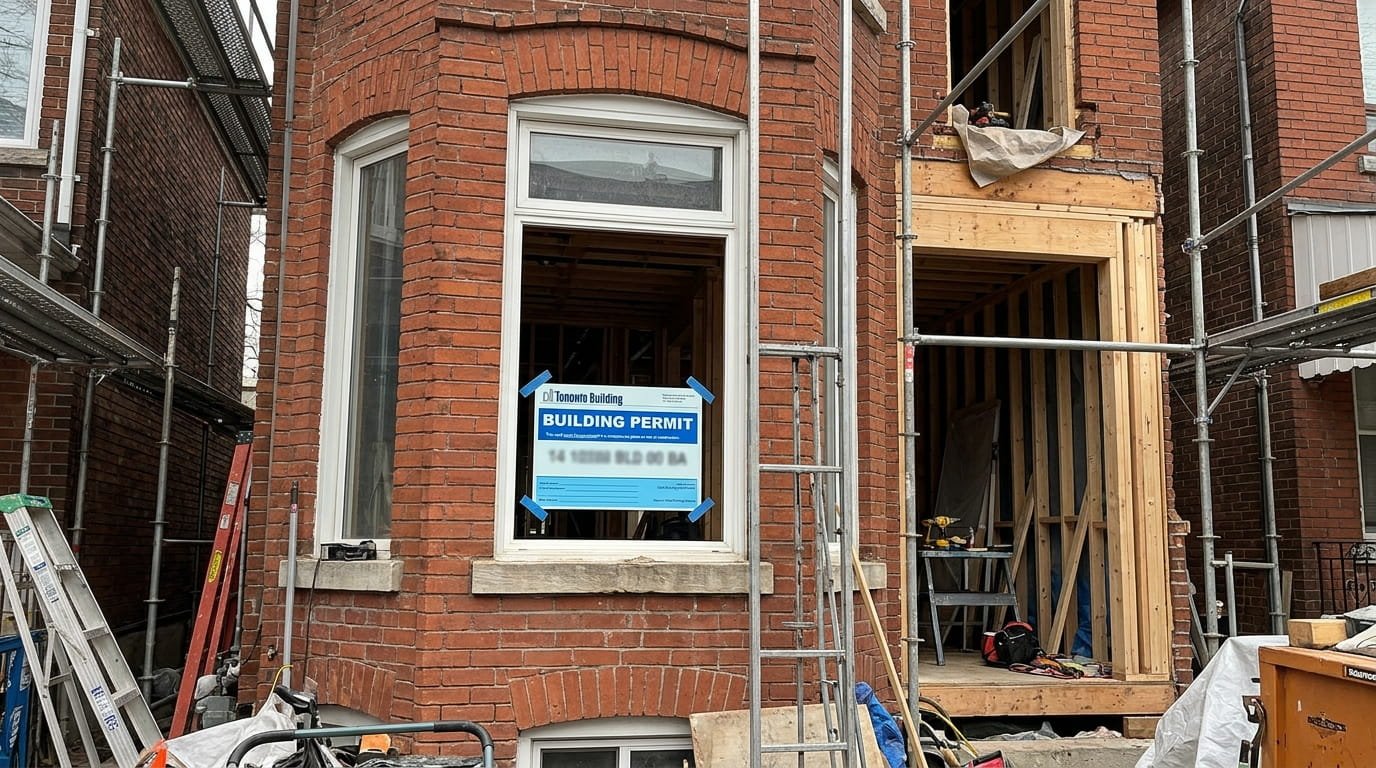
Grab bars, lighting swaps, and fixture replacements generally don’t require a permit. Structural work does. Widening a doorway in a load-bearing wall, relocating plumbing, adding a ramp with footings, or building a garden suite all need a building permit and Ontario Building Code compliance review.
4. What are the most important home modifications for seniors?
Priority order, based on where injuries actually happen:
- Curbless walk-in shower with grab bars and non-slip flooring
- Step-free entry with handrails on both sides
- Brighter, motion-activated lighting in halls and stairways
- Doorways wide enough for a walker or wheelchair
- A main-floor bedroom near a full bathroom
5. Is it cheaper to renovate or move to a retirement home?
Renovating usually wins on cost. Assisted living in Ontario runs $3,500 to $8,000 monthly, recurring for life and rising with care needs. A $40,000 renovation is a one-time expense that stays in the property. Care needs beyond daily supervision can still shift the answer.
Conclusion
The mistake isn’t spending too much on aging in place renovations. It’s waiting until after a fall, when decisions get made in a hospital hallway under time pressure and the work costs more because it’s urgent. Ontario homeowners who plan five years ahead get better design, better pricing, and a full year to line up grant applications and tax credits. If you’re weighing scope against the age and condition of the house, the renovate versus rebuild comparison is a useful next step.