

Quick Answer: Home renovation Ontario budgets in 2026 usually land between $25,000 and $75,000 for partial projects. A typical GTA bathroom averages close to $15,000, and mid-range kitchens start near $30,000. You’ll save the most by leaving plumbing where it is, bundling electrical work, and pairing Ontario’s Home Renovation Savings rebates with federal tax credits.
What Is a Budget Home Renovation in Ontario?
A budget home renovation upgrades one or more rooms without major structural work and stays inside a fixed spending cap. Across Canada, partial renovations typically cost $25,000 to $75,000, while whole-home projects run $100,000 to $300,000 or more. Most Ontario homeowners on a budget aim for the lower band.
Location moves the number. Toronto renovations generally cost $120 to $380 per square foot, depending on complexity and materials, and Ottawa’s 2026 standard range sits at roughly $150 to $350+ per square foot.
Labour is the biggest line item. It takes up 50 to 60% of most Canadian renovation budgets, with electricians and plumbers charging $100 to $150 an hour. Remember HST, too: Ontario applies 13% to both labour and materials.Maserat
A good ceiling? One Canadian cost guide recommends keeping renovation spending to 10% to 15% of your home’s current market value.
How Much Do Room-by-Room Renovations Cost in Ontario?
Room costs in Ontario depend mostly on whether you’re moving plumbing, wiring or walls. Kitchens and basements carry the biggest totals, bathrooms cost the most per square foot, and smaller jobs like lighting, shelving, guest rooms and home offices can often be done for a few thousand dollars each.
Kitchen Renovation
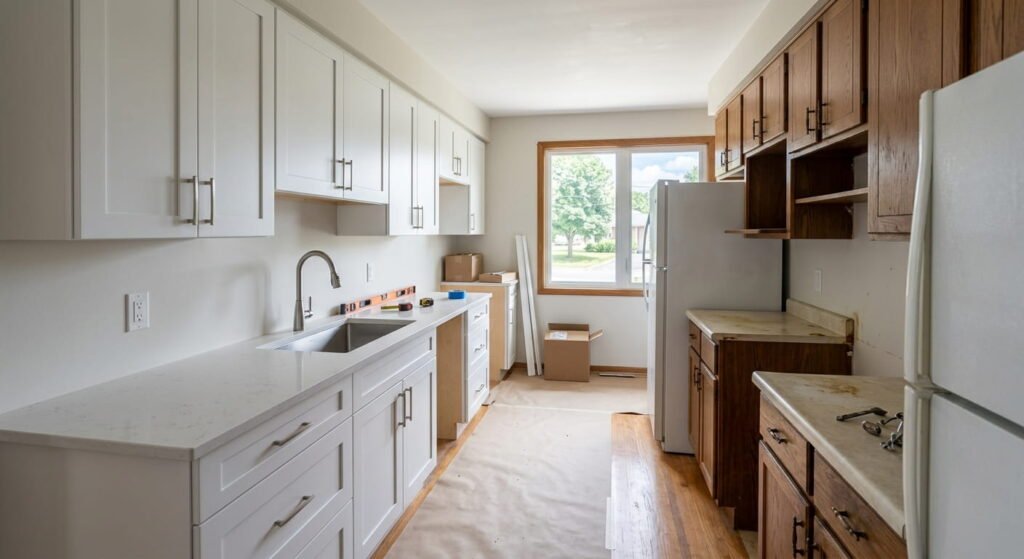
A mid-range kitchen renovation commonly costs $30,000 to $75,000, and custom kitchens with layout changes and premium finishes can pass $100,000. In Ottawa, a minor refresh with painted cabinets, new counters and a backsplash usually runs $15,000 to $30,000.
Here’s the 2026 twist most guides skip. A 25% U.S. Section 232 tariff on imported cabinets took effect October 14, 2025, and because about 60% of cabinets sold in Canada are imported, a stock package that cost $3,000 in mid-2025 now lands around $3,750 to $4,200. That makes refacing worth pricing. Refacing kitchen cabinets in Ontario generally costs about $11,000 to $12,500
Bathroom Renovation
Data from more than 498 GTA projects puts the average bathroom renovation at roughly $14,800, with cosmetic refreshes possible under $8,000 and luxury ensuites reaching $30,000 to $50,000. The biggest lever is simple. Relocating plumbing fixtures drives cost more than anything else, and keeping them in place can save 20 to 35%.
Basement Renovation
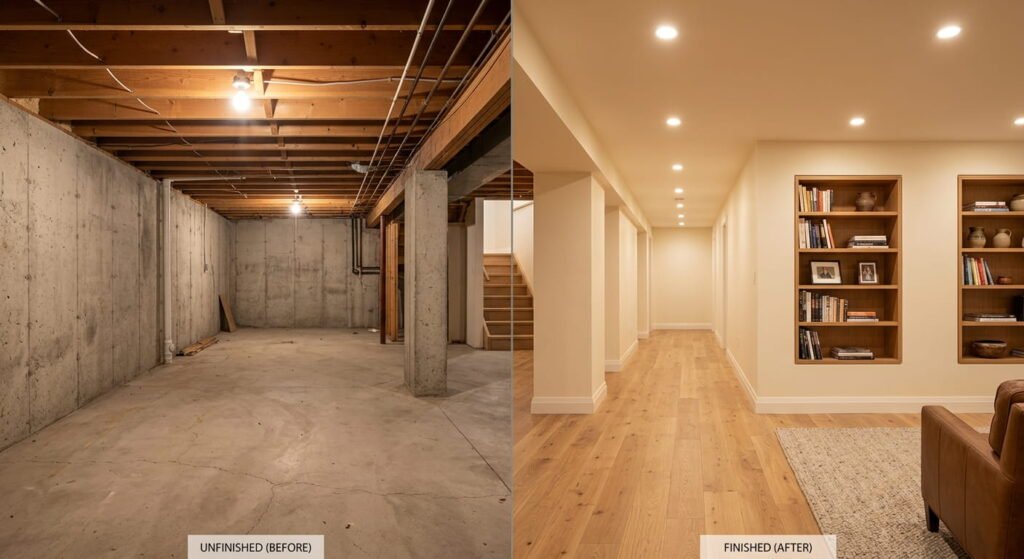
Finishing a GTA basement in 2026 typically costs $55 to $95 per square foot, or about $45,000 to $85,000 for an 800 to 1,000 sq ft space with a bathroom. For newer homes, MeinHaus treats $75 per square foot as a realistic planning figure for a mid-range finish. Budget for paperwork: expect $1,000 to $1,500 in permit fees plus $1,500 to $5,000 for drawings on an average basement.
Guest Room Renovation Cost
Public data on guest rooms specifically is thin, so treat this as a cosmetic job. A cosmetic refresh of a single room can start under $2,000, and minor cosmetic updates start around $10 per square foot, covering paint, trim, drywall repairs and laminate or vinyl flooring. Adding pot lights or a built-in closet pushes the total up.
Home Office Renovation Cost and Shelving Renovation Cost
A home office usually needs three things: good light, extra outlets, and storage. Built-in bookshelves for a home office cost $1,000 to $8,000, and general built-ins run $300 to $850 per linear foot installed. Those figures come from U.S. cost guides, so confirm local quotes. Labour makes up 70% to 80% of built-in shelving costs, which is why a simple, adjustable design saves real money.
Lighting Renovation Cost
Ontario benchmarks put basic pot light installs at $90 to $200 per light. Even DIY electrical work needs an ESA permit filed before starting and an inspection afterward, and the permit typically costs $100 to $200.
| Project | Typical 2026 Cost | Biggest Cost Driver |
|---|---|---|
| Kitchen (mid-range) | $30,000 to $75,000 | Cabinetry and tariffs |
| Bathroom (GTA average) | About $14,800 | Moving plumbing |
| Basement (800 to 1,000 sq ft) | $45,000 to $85,000 | Bathroom and moisture |
| Pot lights | $90 to $200 per light | Ceiling access |
| Built-in shelving | $300 to $850 per linear ft | Carpentry labour |
How Can You Save on a Home Renovation in Ontario in 2026?
The biggest 2026 savings come from government programs and smart scoping. Ontario’s Home Renovation Savings program covers energy upgrades, two federal tax credits help with accessibility and family suites, and keeping plumbing and walls where they are protects the rest of your budget.
Rebates and Tax Credits
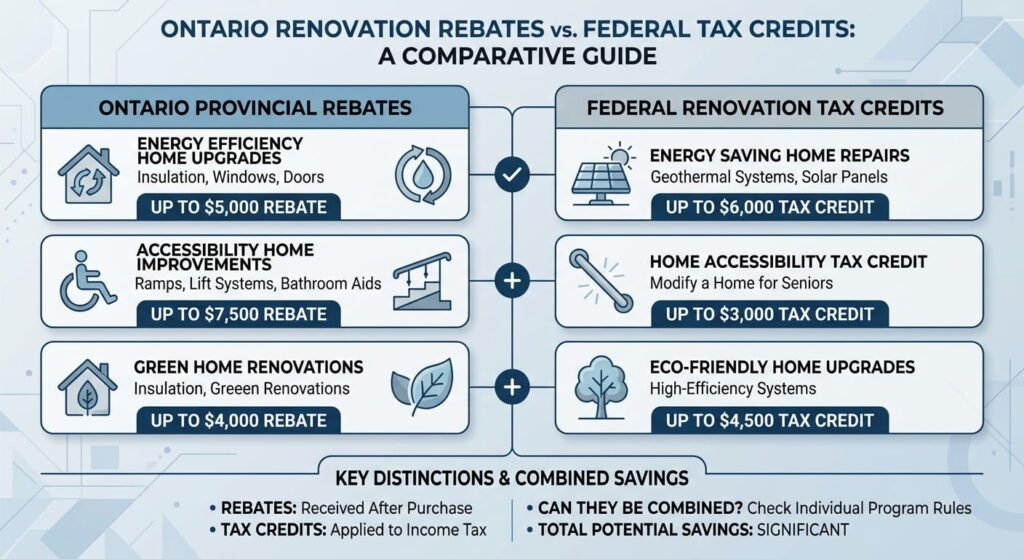
Enbridge Gas and Save on Energy, backed by the Ontario government, run the Home Renovation Savings program, which offers rebates on insulation, heat pumps, smart thermostats, solar panels and efficient appliances. Rebates range from $100 up to $12,000, and most homeowners receive $1,500 to $7,500. Check current terms on the official
Timing matters. On the bundled path, no work can begin before the pre-retrofit energy assessment, and the official program pages don’t publish a firm end date.
For family suites, the Multigenerational Home Renovation Tax Credit is refundable and lets you claim up to $50,000 in qualifying costs per renovation, worth up to $7,500. Confirm it applies to the year your project finishes. Seniors can also look at the Home Accessibility Tax Credit, which covers up to $20,000 in costs. Multigenerational home renovation tax credit (MHRTC) : Personal income tax – Canada.ca +2
Smart Upgrades That Stretch Your Budget
- Keep toilets, sinks and showers in their current spots.
- Install pot lights where fixtures already exist, since existing wiring makes those spots cheaper.
- Reface cabinets instead of replacing them.
- Hold back a contingency, as hidden moisture damage and subfloor rot show up often.
Skipping permits isn’t a saving. Unpermitted basement work risks fines, stop-work orders or forced removal. If your list keeps growing, weighing whether to renovate or rebuild your Ontario home can prevent overspending on a tired structure. For larger scopes, a design-build team handling renovations, additions and garden suites keeps trades and approvals under one contract.
Frequently Asked Questions
1. How much does a bathroom renovation cost in Ontario in 2026?
The GTA average is about $14,800, with full Toronto-area renovations typically costing $15,000 to $22,000. Cosmetic updates can stay under $8,000. Costs rise quickly when you relocate plumbing, add heated floors or choose luxury tile.
2. Do I need a permit to finish my basement in Ontario?
Yes, in most cases. Any basement renovation involving framing, electrical, plumbing or HVAC needs an Ontario building permit. Electrical work also needs an ESA permit and inspection. Permits protect your insurance coverage and make resale much smoother.
3. Can I get government money for a home renovation in Ontario?
Several programs can help in 2026:
- Home Renovation Savings rebates for energy upgrades
- The Multigenerational Home Renovation Tax Credit for family suites
- The Home Accessibility Tax Credit for seniors and people with disabilities
- A $600 assessment rebate, which requires both assessments plus at least two qualifying upgrades
4. Is it cheaper to reface or replace kitchen cabinets in Ontario?
Refacing usually wins on a budget. Ontario refacing typically runs $11,000 to $12,500, while semi-custom packages that cost $10,000 before tariffs are now quoted at $12,500 or more. Replacing makes sense only if your cabinet boxes are damaged or the layout isn’t working.
5. Do pot lights need an ESA permit in Ontario?
Any new circuit work in Ontario needs a permit and ESA inspection, although adding lights to an existing circuit may not. Ask your electrician before work begins. Insulated ceilings also need IC-rated fixtures to avoid fire risk. Our renovation FAQ for Ontario homeowners covers inspection steps in more detail.
Conclusion
A budget-friendly year for your home is realistic if you plan around 2026’s cost pressures. Price kitchens with tariffs in mind, leave plumbing alone where you can, file your permits, and line up rebates before any work starts. For inspiration from finished projects, browse this portfolio of Ontario renovation work. With a clear scope and the right programs, your home renovation in Ontario can deliver more value for every dollar.