

Quick Answer: Basement finishing can increase your home value and living space by turning unused, below-grade square footage into insulated, code-compliant rooms. In Canada, a finished basement typically returns 70 to 75 percent of its cost at resale. A legal secondary suite can do even better, generating rental income of roughly $1,500 to $2,600 a month while adding usable floor area.
What Is Basement Finishing?
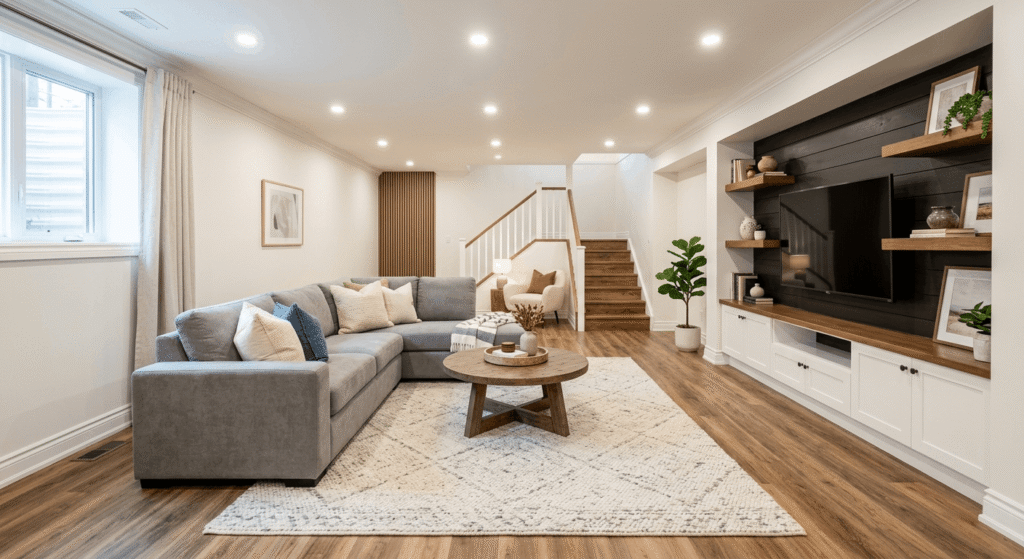
Basement finishing is the process of turning a raw, below-grade space into insulated, drywalled, code-compliant rooms you can actually live in. Done well, it shows exactly how basement finishing can increase your home value and living space at the same time, adding usable square footage without the price of a full addition. Typical work covers framing, a vapour barrier, insulation, flooring, and lighting.
How Much Does Finishing a Basement Increase Your Home Value?
A finished basement typically returns 70 to 75 percent of its cost when you sell, and it lifts your usable floor area at the same time. In Canada, a standard finish runs roughly $25,000 to $75,000 in 2026, so the resale bump usually lands in the tens of thousands, before you even count the daily use you get from the space.
Basement finishing and your return on investment
Not every dollar comes straight back at resale, and that’s normal for interior renovations. As of early 2026, finishing an interior basement runs about $35 to $95 per square foot across Canada, with Toronto and the GTA at the higher end because skilled trades and permits cost more. Payback improves sharply when the space earns income. A basic rec room recovers most of its cost through added value; a legal rental suite can recover more than 100 percent once you factor in rent. The table below shows how scope changes the math. If you’re still weighing a finish against bigger structural work, our guide on choosing between a renovation and a full rebuild is a useful starting point.
| Basement project (2026, Canada) | Typical cost | What it returns |
|---|---|---|
| Basic finished space (rec room or office) | $25,000–$55,000 | About 70–75% at resale |
| Finish with a bedroom and bathroom | $45,000–$75,000 | 70–75%, plus stronger buyer appeal |
| Legal secondary suite | $60,000–$110,000 | $1,500–$2,600/month rent; can exceed 100% |
Building home equity and property value
Every renovation that raises your home’s market value also builds home equity, the share of the property you actually own outright. A finished basement raises the appraised value lenders work from, which can matter later if you refinance. It lifts property value on paper too. Keep in mind that a formal appraisal, not a rough online estimate, sets the number a bank will actually use.
Can a Finished Basement Generate Rental Income?
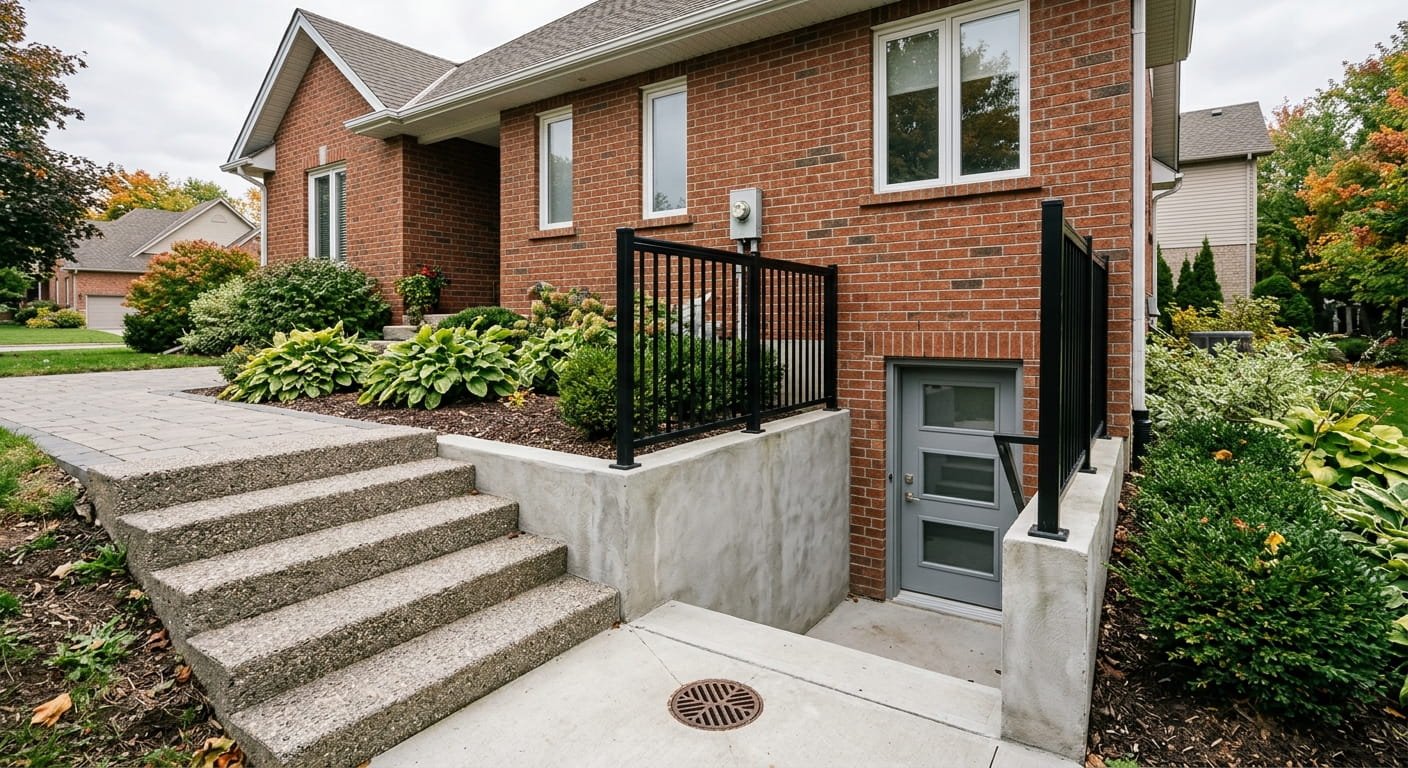
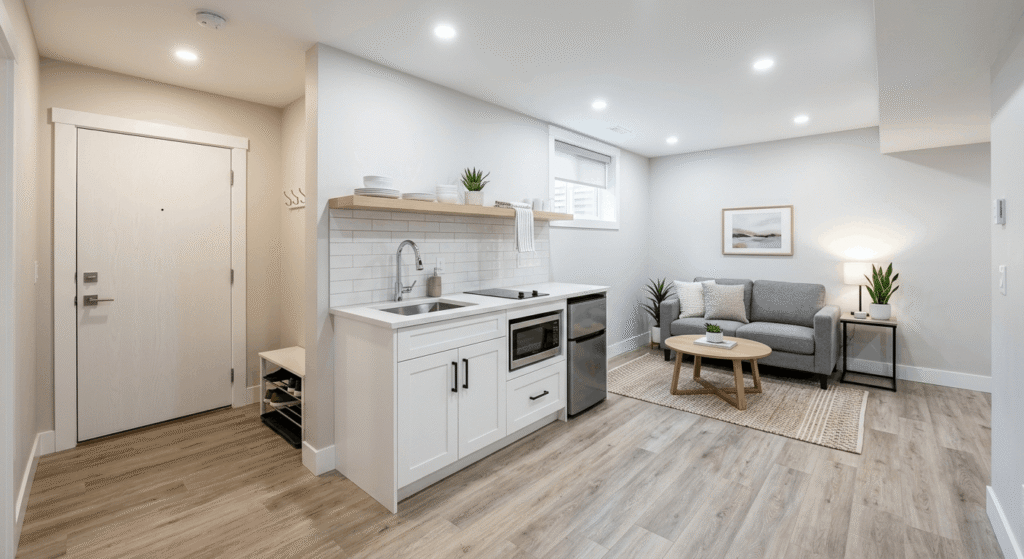
Yes. A basement finished as a legal secondary suite can bring in real rental income potential, often $1,500 to $2,600 a month in major Canadian markets in 2026. The catch is that a rentable suite has to be self-contained and code-compliant, which costs more than a plain finish and needs municipal permits before work starts.
To count as a legal suite, the space generally needs its own entrance, kitchen, bathroom, and sleeping area, plus fire separation and interconnected smoke alarms. That’s why suite conversions add 30 to 50 percent over a basic finish. Rent is taxable income, though you can deduct a proportional share of mortgage interest, property tax, insurance, and eligible renovation costs. In a strong rental market, a $60,000 suite renting at $2,000 a month can pay back its cost in roughly three years. That math is why secondary suites often top the list of highest-return home improvements, and why many owners explore the added perks of building an accessory dwelling unit before they commit.
Financing a basement suite
Here’s where outdated advice trips people up. Plenty of 2024-era guides still promote an $80,000 secondary suite loan at 2 percent interest. That federal program, the Canada Secondary Suite Loan Program, was cancelled in the 2025 budget because it overlapped with an existing option, so it is no longer something you can apply for. The route that works today is CMHC’s refinance option for secondary suites, which lets qualifying owners refinance up to 90 percent of the home’s post-renovation value, to a maximum property value of $2 million, amortized over as long as 30 years. Approval has to happen before construction begins. You can also fund the work by tapping existing home equity through a line of credit. For a broader look at budgeting the project, see our planning and financial guidance resource.
Best Ways to Add Living Space With a Finished Basement
The most valuable finished basements solve a real need instead of just adding empty rooms. A home office, a guest bedroom, a family room, or an in-law suite for a parent each turns dead space into everyday living space. What you build should match how your household lives and what local zoning allows.
A dedicated home office
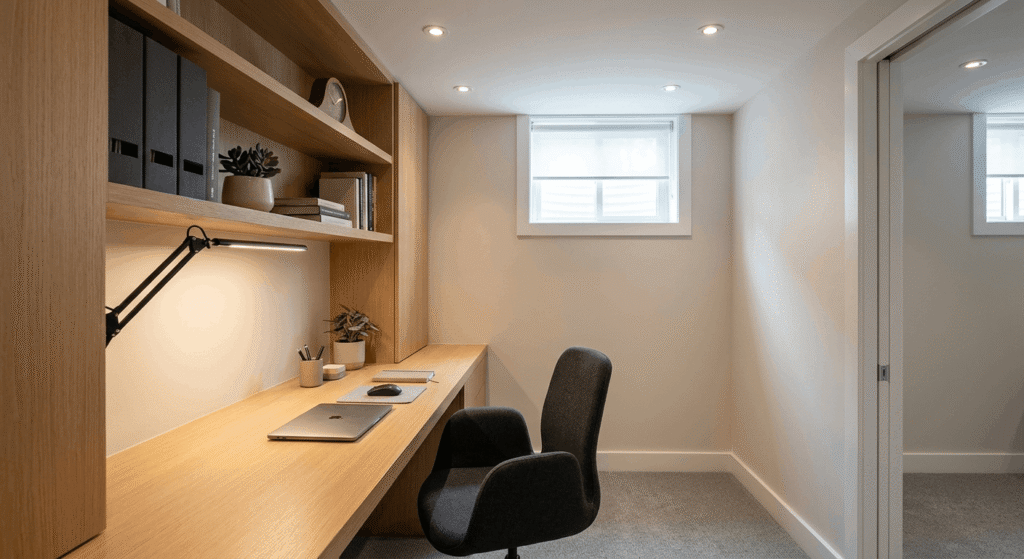
Remote and hybrid work made the basement home office one of the most requested conversions in Canada. A quiet, separate room with good lighting, dedicated electrical circuits, and proper insulation reads to buyers as a genuine bonus room, not a finished storage area. Even a small office nook can change how a listing is perceived. A family room or home gym won’t earn rent, but it still counts as finished living space and removes the “unfinished basement” flag that makes buyers hesitate.
A basement home improvement checklist before you start
A few conditions decide whether your basement can become quality space at all. Sort these out before the first wall goes up:
- Ceiling height: the Ontario Building Code requires a minimum of 1.95 m, about 6 ft 5 in, for habitable rooms, and many older homes fall short.
- Moisture: any water infiltration has to be fixed first, or the finish will fail and grow mould.
- Egress: a basement bedroom needs a compliant egress window for emergency exit, usually $1,500 to $4,000 per opening.
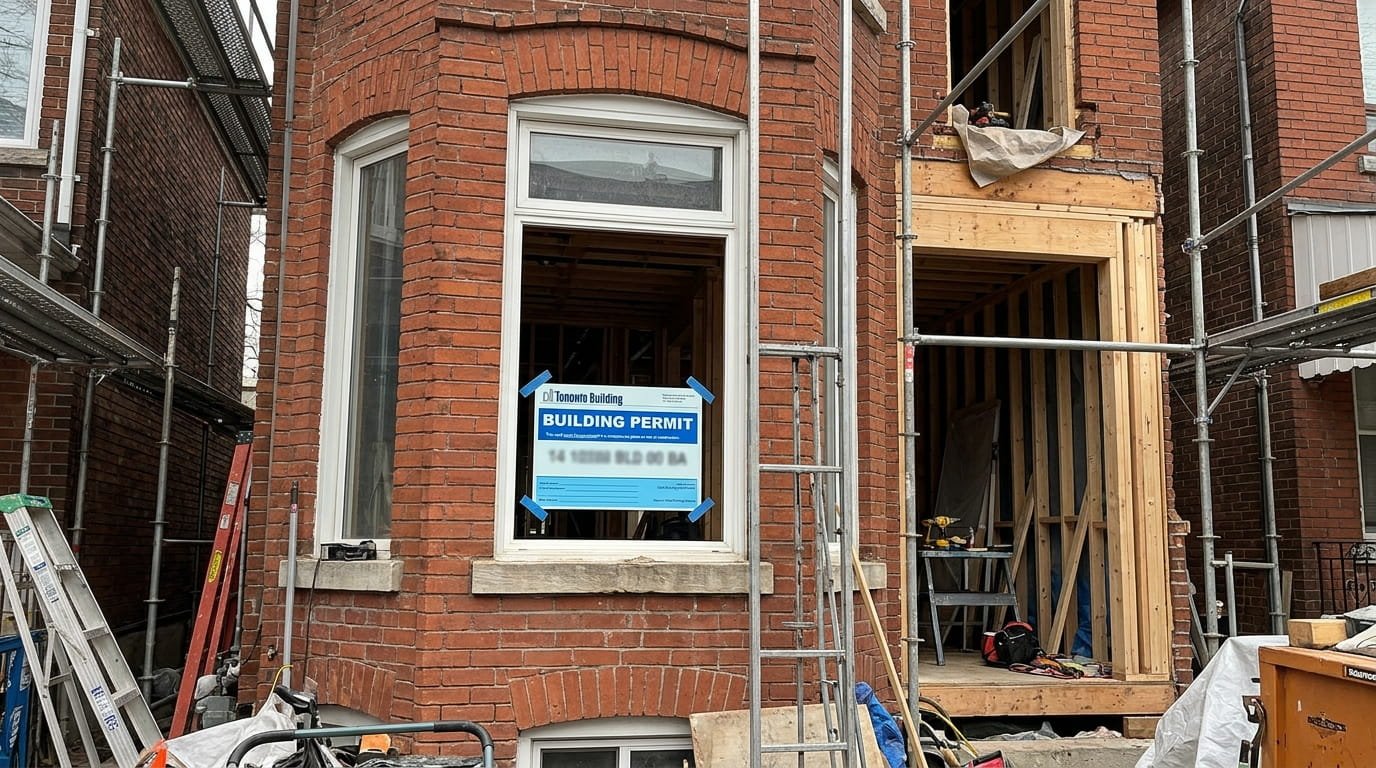
- Permits: interior finishing almost always needs a municipal permit, and skipping it causes insurance and resale problems.
If you’re building the suite for a parent 65 or older, or a relative eligible for the disability tax credit, the Multigenerational Home Renovation Tax Credit is a refundable federal credit worth 15 percent of up to $50,000 in eligible costs, so as much as $7,500 back.
Frequently Asked Questions
1. How much does a finished basement add to home value in Canada?
A finished basement typically returns 70 to 75 percent of its cost at resale, which in 2026 usually means tens of thousands of dollars on a $25,000 to $75,000 project. A legal rental suite can return even more, since monthly rent of $1,500 to $2,600 keeps paying back long after the work is done.
2. Is finishing a basement worth it for the money?
For most Canadian homeowners, yes, though the return depends on your goal. If you want resale value, a clean, permitted finish recovers most of its cost and adds livable space. If you want the strongest return on investment, a legal secondary suite that generates rental income is the clear winner, often paying back in three to five years.
3. How long does it take to finish a basement?
A basic basement finish usually takes four to six weeks once the permit is approved. Adding a bathroom stretches that to six to ten weeks. A full legal suite with a separate entrance and kitchen can run ten to sixteen weeks, including the two to four weeks needed for permit approval.
4. Can I finish my basement myself to save money?
You can handle parts of it. Framing, batt insulation, painting, and click-together vinyl plank flooring are realistic DIY jobs that can save roughly $8,000 to $15,000. Electrical, plumbing, spray foam, and drywall finishing are better left to licensed trades, and any electrical work must be permitted and inspected either way.
5. What should I check before finishing my basement?
Start with four things that decide whether the project even works:
- Ceiling height of at least 1.95 m for habitable space.
- No active moisture or water issues in the foundation.
- A compliant egress window for any bedroom.
- A municipal building permit secured before work begins.
Confirming these first protects both your budget and your home’s resale value.
Conclusion
Basement finishing is one of the most reliable ways to increase your home value and living space in Canada, whether you want a home office, a guest room, or income-producing rental space. A standard finish recovers most of its cost and adds real usability, while a legal secondary suite can more than pay for itself through rent. Verify current programs before you budget, because older financing advice online is often out of date. Then confirm ceiling height, moisture, and permits before the first wall goes up.