

Quick Answer: Concrete pouring in Ontario is possible in every month, but the easy season runs from about May through October. Once the air temperature drops below 5°C, the Ontario Building Code requires the concrete to stay at 10°C or warmer for 72 hours after placing, which means heated mixes plus insulated blankets or enclosures.
When Can You Actually Pour Concrete in Ontario?
Ask two neighbours when the season ends and you’ll get two answers: Thanksgiving, or the first hard frost. Neither is the rule. Concrete pouring in Ontario isn’t governed by the calendar. It’s governed by temperature, and the number that decides everything is 5°C.
Leedway Group builds custom homes, renovations, additions and garden suites across Mississauga, Oakville, Burlington and the wider GTA, so the figures below reflect Southern Ontario conditions.
What Is Concrete Pouring?
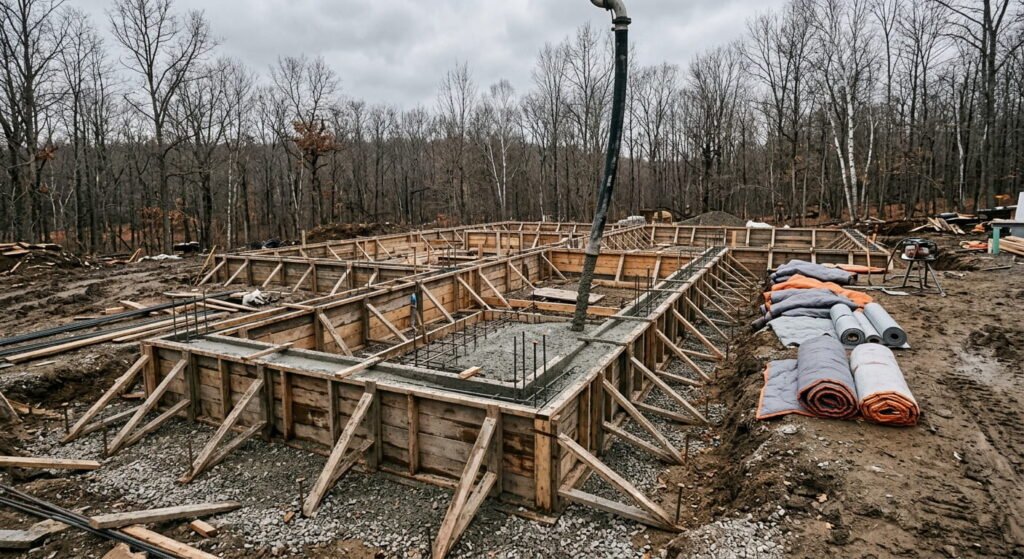
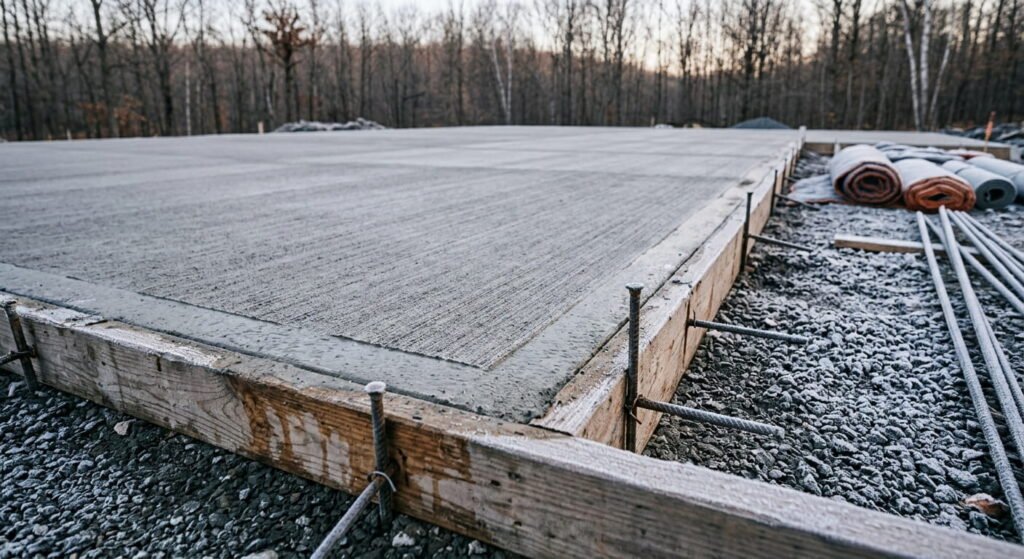
Concrete pouring is the placement of fresh ready-mix concrete into prepared forms or onto a compacted base, followed by levelling, finishing and curing. On Ontario homes it covers footings, foundation walls, basement floors, garage slabs, driveways and steps. The pour takes hours. The curing that follows decides how long the concrete lasts.
When Can You Pour Concrete in Ontario?
You can pour concrete in Ontario whenever the mix can be kept warm enough to cure. Without extra protection, that means days when the air stays above 5°C around the clock, which in the GTA usually runs from May to October. Outside that window, cold weather requirements apply.
The requirement sits in Division B, Article 9.3.1.9 of the Ontario Building Code. When the air temperature is below 5°C, concrete has to be between 10°C and 25°C while it’s mixed and placed, then held at 10°C or higher for 72 hours. No frozen material or ice can go into the mix. Those requirements carry on under the 2024 code, O. Reg. 163/24, which took effect January 1, 2025 and adopts the National Building Code of Canada 2020 with Ontario amendments.
CSA A23.1, the concrete standard the code references, looks ahead rather than at the thermometer. Weather counts as cold when the temperature is likely to fall below 5°C within 24 hours of placing. A sunny 9°C afternoon doesn’t help if the overnight low is 1°C. Check the Environment Canada forecast for Toronto the day before pouring concrete, not the morning of.
So which months clear the bar? Statistics Canada’s table of Environment Canada climate normals gives Toronto’s average daily temperature by month.
| Period | Toronto average daily temperature | What it means for a pour |
|---|---|---|
| May to October | 8.9°C to 20.8°C | Standard pour, though late October nights cool fast |
| April | 6.3°C | Workable, but cold nights can trigger protection |
| November | 3.2°C | Cold weather protection on most days |
| December to March | -6.3°C to -0.4°C | Heated mix plus blankets or enclosures |
Those figures are 1971 to 2000 normals for Toronto. Sites farther north run colder, so the unprotected window there is shorter. statcan
The ground matters as much as the air. The code requires the bottom of an excavation to be kept from freezing for the whole construction period, so a foundation for a custom home or addition needs the dig date planned around the forecast too. brampton
Can You Pour Cement in the Winter?
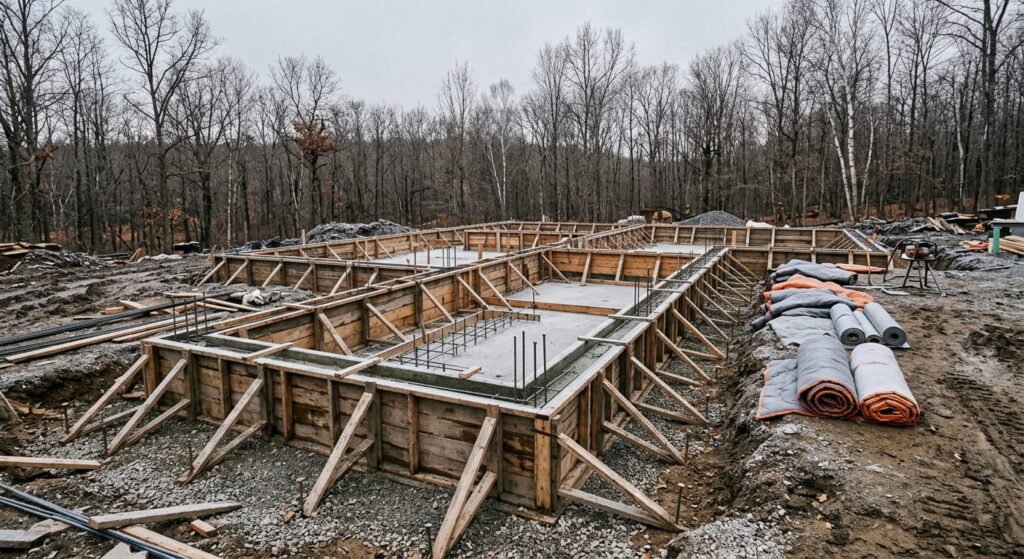
Yes. You can pour cement in the winter in Ontario, and builders do it every year, as long as the ground isn’t frozen and the concrete stays at 10°C or warmer for its first 72 hours. Strictly speaking, cement is the powder and concrete is the finished mix, but the cold weather rules don’t change with the name.
The National Research Council was telling builders decades ago that winter work had become routine across Canada. What winter concrete pouring changes is cost and care. Concrete placed on a frozen base can freeze and crack before it cures, and heat, tarps and monitoring all land on the invoice. Heated enclosures also need proper ventilation so carbon monoxide doesn’t build up.
What All Weather Concrete Really Means
All weather concrete isn’t one product. The phrase usually describes a ready-mix order adjusted for the cold: water heated at the plant and an accelerator so the set starts sooner. That buys time. It doesn’t replace protection, and it never makes frozen ground an acceptable base.
Concrete Curing Time in Cold Weather
At moderate temperatures, concrete takes foot traffic after 24 to 48 hours, reaches roughly 70% of its specified strength at 7 days and hits full strength at 28 days. Cold stretches every one of those numbers. The City of Barrie’s building department advises holding curing temperatures between 10°C and 20°C and covering 100% of the exposed surface with insulated blankets and tarps. Leaving the forms on walls longer also helps guard against freezing.
Concrete Slab Installation for Garages and Exterior Steps
Concrete slab installation has its own durability rule. The Ontario Building Code calls for 32 MPa concrete with 5 to 8% air entrainment in garage floors and exterior steps. The reason is exposure: Canadian winters bring freeze-thaw cycles that damage ordinary concrete quickly, especially where de-icing salt is used. That applies to a detached garage or the entry steps of a garden suite in Mississauga as much as to a driveway. Ask your concrete contractors to confirm the mix on the delivery ticket.
Frequently Asked Questions
1. Can you lay concrete in the winter in Ontario?
Yes, you can lay concrete in the winter in Ontario. The Ontario Building Code allows it when the mix is placed at 10°C to 25°C and kept at 10°C or warmer for 72 hours. That usually takes heated ready-mix, insulated blankets and sometimes a heated enclosure around the forms. brampton
2. What temperature is too cold for concrete pouring?
5°C is the trigger, not the limit. Below that air temperature, Ontario’s cold weather requirements apply, and CSA A23.1 treats a forecast drop below 5°C within 24 hours the same way. Article 9.3.1.9 sets no lower cut-off, but protection gets more demanding as the temperature falls.
3. How long is concrete curing time before you can use a new slab?
At moderate temperatures, plan on these milestones: kansaspolymer
- 24 to 48 hours before foot traffic
- About 7 days before parking a passenger car
- 28 days to reach specified design strength
- Longer for all of the above in cold weather
4. Can concrete be poured on frozen ground?
No. Concrete should never be placed on frozen ground, ice or snow. Ontario’s code also requires excavation bottoms to be kept from freezing throughout construction, and builders typically do that with insulated tarps, blankets or hay extended past the forms.
5. Is it better to wait until spring to pour concrete?
For non-urgent flatwork like a driveway or patio, waiting for steady temperatures above 5°C avoids the cost of heat and protection. For a foundation on a tight schedule, a protected winter pour that meets the 10°C for 72 hours requirement keeps the build moving. The right answer depends on what the delay costs you.
Conclusion
Concrete pouring in Ontario has no closed season, only a temperature threshold. Above 5°C, it’s a standard job. Below it, the code asks for warm concrete, unfrozen ground and 72 hours of protection, and the work costs more. Plan the pour around the forecast rather than the month, and hire a builder who treats curing as part of the job. You can see how Leedway Group handles foundations across the GTA in our completed projects.
Ready to discuss your project?
Book a free consultation with Leedway Group to discuss your property and project.