
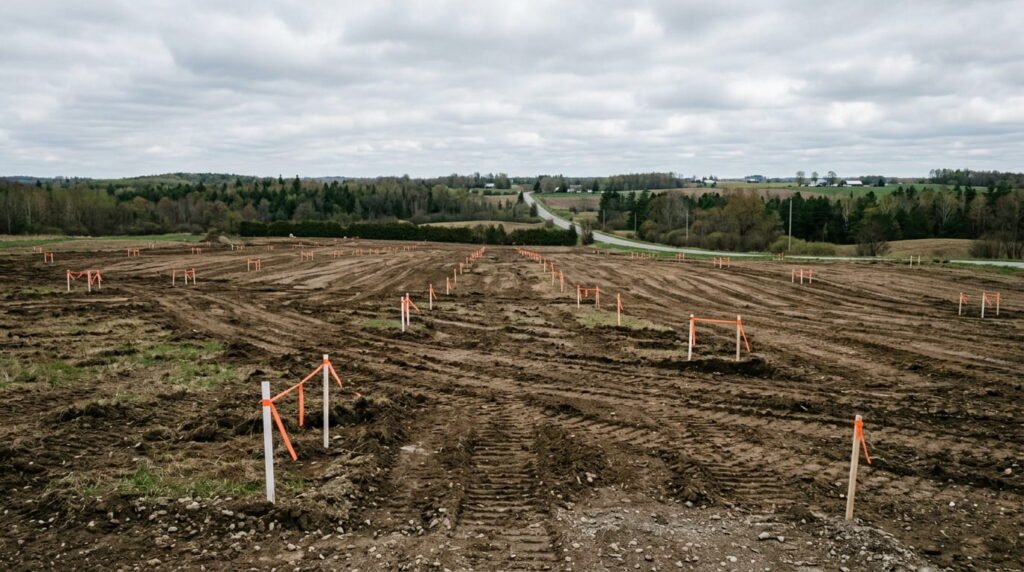
Quick Answer: Land development is the process of converting raw or underused land into serviced, permit-ready building lots. In Canada it runs through six stages: due diligence, planning approvals, technical studies, engineering, permits, and construction. Costs are driven less by dirt work than by municipal charges, which reached $180,600 per single-detached home in Toronto.
What Is Land Development?
Land development turns raw or underused property into serviced, buildable lots. In Canada that means winning planning approvals, dividing and registering parcels, installing roads, water mains, sewers, and power, then pulling permits before a single foundation gets poured. Municipalities run most of the process, and provincial legislation sets the rules they follow.
What Are the Key Steps in the Land Development Process?
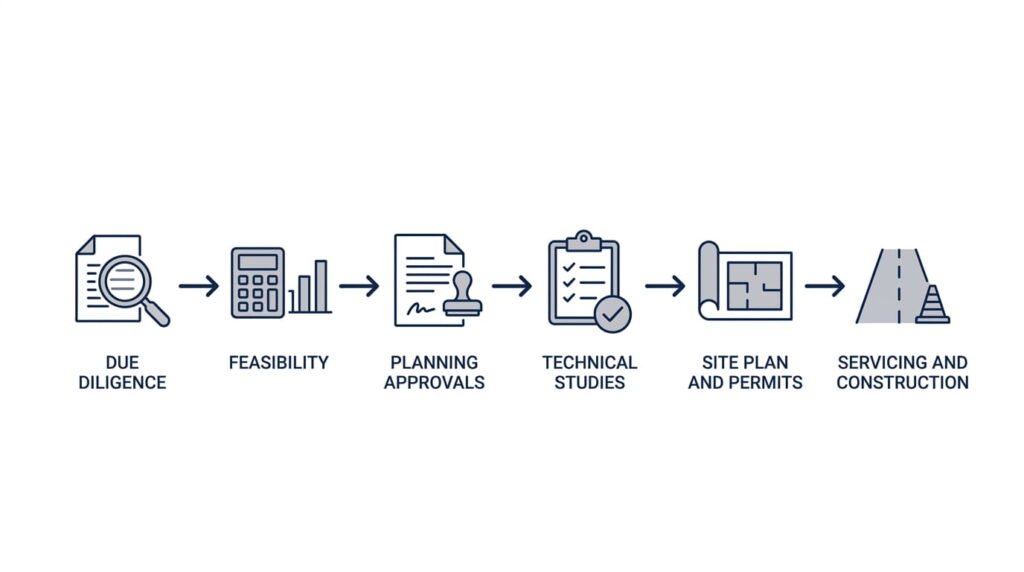
Most Canadian projects move through six stages, and skipping one rarely saves time. Due diligence comes first, then planning approvals, technical studies, engineering design, permits, and construction. Each stage produces a document the next stage depends on, so a weak report early on creates expensive delays later.
- Due diligence. Confirm title, easements, access, servicing capacity, and what the current zoning actually permits.
- Feasibility and pro forma. Price the site against realistic unit yields and absorption, not best-case ones.
- Planning approvals. Apply for an official plan amendment, rezoning, or draft plan of subdivision where required.
- Technical studies. Commission survey, geotechnical, environmental, servicing, traffic, and stormwater work.
- Site plan and permits. Finalize engineering drawings, then apply for building permits.
- Servicing and construction. Install roads and utilities, then build.
Land-Use Planning and the Zoning By-Law
Zoning decides what you can build, regardless of what you own. A zoning by-law puts a municipality’s official plan into daily effect, and Ontario’s guidance on this is blunt: if a project breaks the by-law, the municipality won’t issue a permit for it. Rezoning is possible. It also takes months of public notice and council meetings, with appeals to the Ontario Land Tribunal always possible. Land-use planning elsewhere in Canada follows the same pattern under provincial statutes, so confirm who the approval authority actually is before you write an offer. Teams that combine planning, approvals, and construction under one roof, as Leedway Group does through its integrated design-build and development services, tend to lose less time between those handoffs.
Land Surveying and Soil Testing
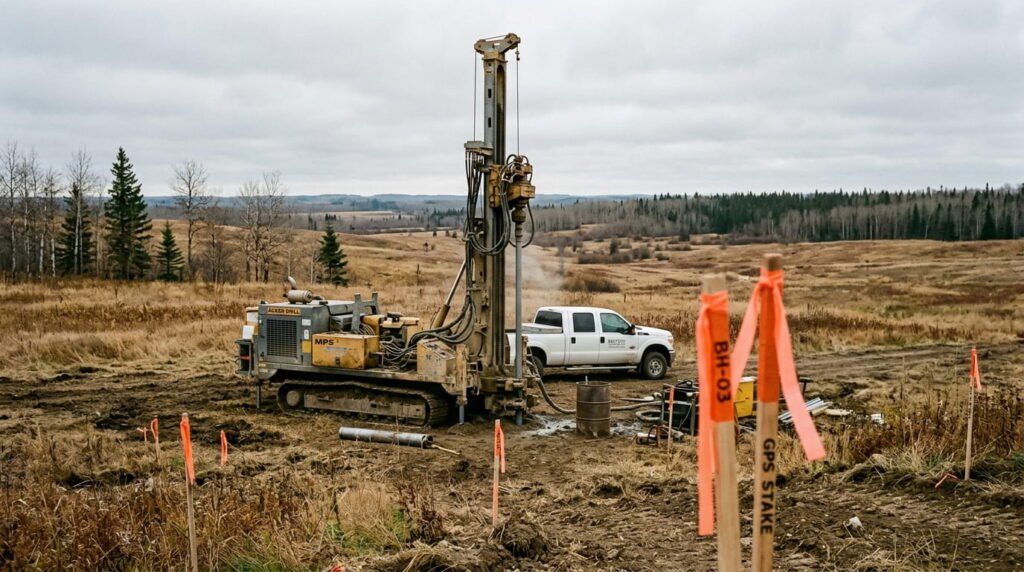
Two reports decide whether a site is real. Land surveying establishes legal boundaries and monuments, though a boundary isn’t legally established until the approving authority accepts it and the plan is recorded in the proper registry. Soil testing splits into two jobs people constantly confuse. A geotechnical investigation drills boreholes to measure bearing capacity, groundwater, and frost depth for foundation design. A Phase I environmental site assessment, conducted to CSA Standard Z768-01, reviews site history and looks for contamination without sampling anything. Order the wrong one and you’ll pay for both.
Permits and Site Development
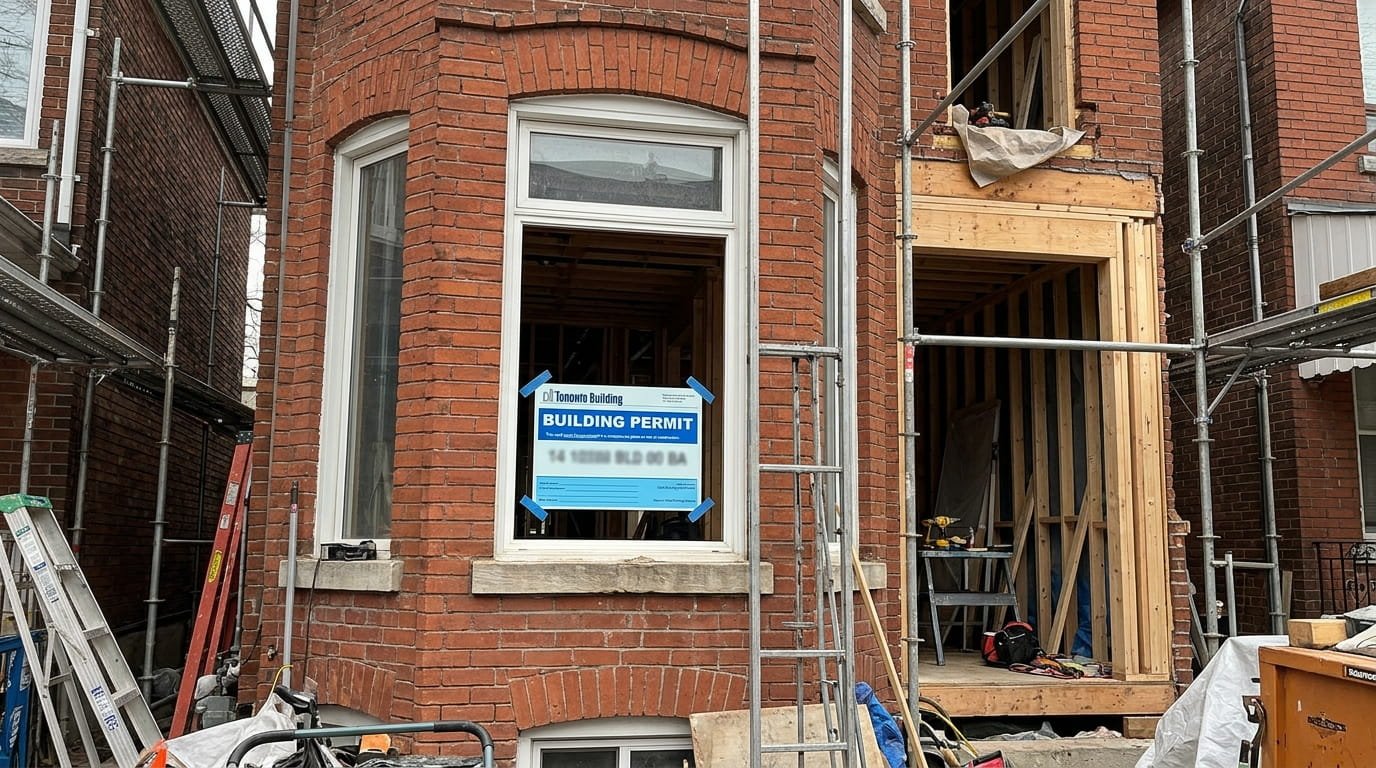
Permits are the last gate and often the slowest one. Building permits, site alteration permits, conservation authority approvals, and utility connection approvals each run on separate clocks. Site development work follows: clearing, grading, stormwater management, road base, and servicing trenches. Canadian municipalities issued $14.9 billion in building permits in June 2026, an 18.5% jump over May, which tells you how much competition your file has for a reviewer’s attention.
What Does Land Development Cost in Canada, and Is It Worth It?
Land is rarely the biggest line item. Municipal development charges, consultant fees, financing carry, and servicing usually decide whether a project pencils out. CMHC’s first national dataset, collected across 30 municipalities to October 31, 2025, found that development charges alone can add 8 to 16 percent to a new condo’s price in Ontario.
The spread between cities is the part that catches people off guard.
| Municipality | Development charge per apartment unit | Province |
|---|---|---|
| Toronto | $130,200 | Ontario |
| Markham | $121,500 (two-bedroom) | Ontario |
| Brampton | $97,676 | Ontario |
| Pickering | $77,106 | Ontario |
| Coquitlam | $62,104 | British Columbia |
| Montréal | $8,584 | Quebec |
Single-detached charges climb higher still, from roughly $125,000 in Pickering to $180,600 in Toronto. Budget separately for surveys, geotechnical and environmental reports, planning consultants, legal work, and the interest you’ll carry through an approval period measured in years.
How to Buy Land for Development Without Overpaying
Price the approvals, not the acreage. Before committing, pull the official plan designation and zoning, confirm servicing capacity directly with the municipality, and check for wetlands, floodplains, heritage listings, and conservation authority regulated areas. Then structure the deal to match the risk. A conditional purchase with a real due diligence window, or an option agreement that buys time to secure rezoning before closing, keeps your capital from sitting idle in a file that may never get approved. Raw land financing is also stricter than a residential mortgage, so plan for a larger down payment and work the numbers through proper feasibility and budget planning first.
The Benefits of Land Development
Done well, land development creates value that buying a finished building can’t replicate. Rezoning a single lot into a townhome block, or adding density to an underused parcel, converts approvals directly into equity. Ontario’s shift toward gentle density has made four-plex and multiplex projects viable on lots that once permitted one house. Developed land also produces housing where it’s needed most. Between May 2025 and April 2026, Canadian municipalities authorized 303,700 dwelling units. The tradeoff is time and carrying cost, and margins vanish fast when approvals stall.
Frequently Asked Questions
1. How long does the land development process take in Canada?
Most projects run two to five years from purchase to construction start. Planning approvals drive the timeline: rezoning and subdivision applications require public meetings, agency circulation, and council decisions. Appeals to a body like the Ontario Land Tribunal can add another year or more.
2. Do I need soil testing before buying land?
Yes, or at minimum a condition allowing it. A geotechnical investigation confirms the ground can support your foundation design. A Phase I environmental site assessment under CSA Z768-01 flags contamination risk from past uses. Municipalities and lenders commonly require both before subdivision or site plan approval.
3. What permits do I need for land development?
Requirements vary by municipality, though most Canadian projects need several of the following:
- Zoning by-law amendment or minor variance approval
- Draft plan of subdivision, or a consent to sever
- Site plan approval
- Building permit for each structure
- Conservation authority or environmental permits where applicable
4. How much do development charges cost per unit?
They vary enormously by city. CMHC data collected to October 2025 shows apartment charges from $8,584 in Montréal to $130,200 in Toronto, with single-detached homes reaching $180,600 in Toronto. Check the current development charges by-law for your specific municipality, since rates are usually indexed annually.
5. Can I do land development without rezoning?
Sometimes. If existing zoning already permits your intended use, density, and building form, you can proceed straight to site plan approval and permits. That’s the fastest route available. Confirm permitted uses with municipal planning staff before assuming a rezoning application is necessary.
Conclusion
Land development rewards patience and punishes assumptions. The parcel is the cheap part; approvals, engineering, financing, and municipal charges decide the outcome. Confirm zoning early, order the right survey and soil work, budget development charges against the actual by-law rather than a national average, and build a schedule that can survive a public meeting or two. You can see how that discipline plays out across completed rezoning and site plan projects.