

Quick Answer Box: Pre-construction planning Ontario is the process of determining every project detail—including budget, permits, design, and regulations—before breaking ground. Thorough planning in Ontario greatly reduces risk, controls costs, prevents delays, and ensures your build fully complies with local construction laws and building code.
What is Pre-Construction Planning in Ontario?
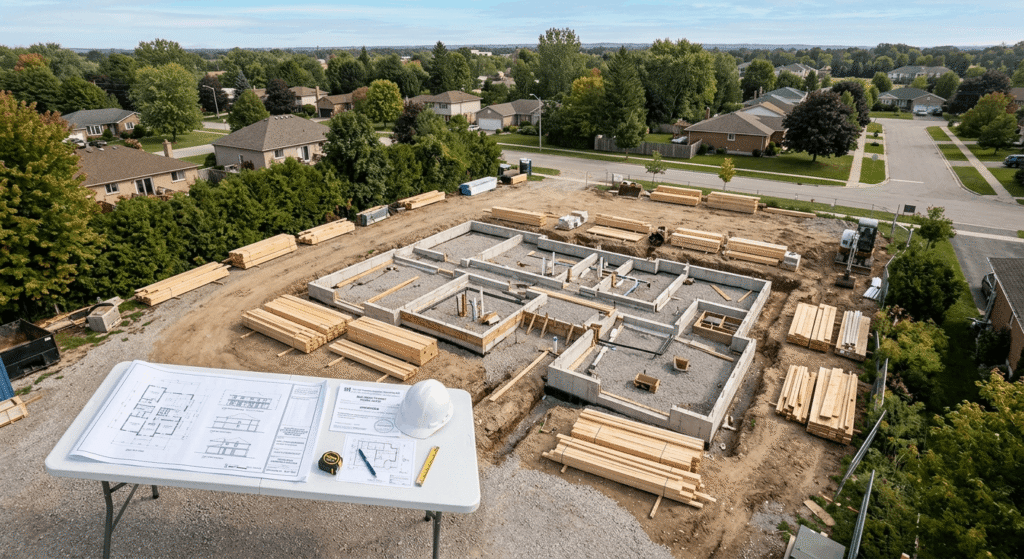
Pre-construction planning in Ontario refers to the in-depth process undertaken before physical construction begins. During this phase, project stakeholders define scope, outline design, set cost estimates, organize the schedule, and assemble the team, all while ensuring regulatory and permit compliance under Ontario law. This upfront diligence saves time, money, and stress by identifying risks and ensuring legal compliance from the outset.
A well-structured pre-construction plan secures your vision, fixes costs, allocates responsibilities, and ensures every Ontario Building Code, zoning rule, and permit requirement is met. Neglecting this crucial phase can result in costly mistakes, legal delays, and failed inspections once the building process starts.
Why Pre-Construction Planning is Crucial for Your Ontario Build
Thorough pre-construction planning is the single biggest predictor of project success across Ontario’s construction sector. In a province governed by detailed regulations, evolving building code updates, and varying municipal bylaws, skipping or rushing this phase exposes you to unnecessary risk.
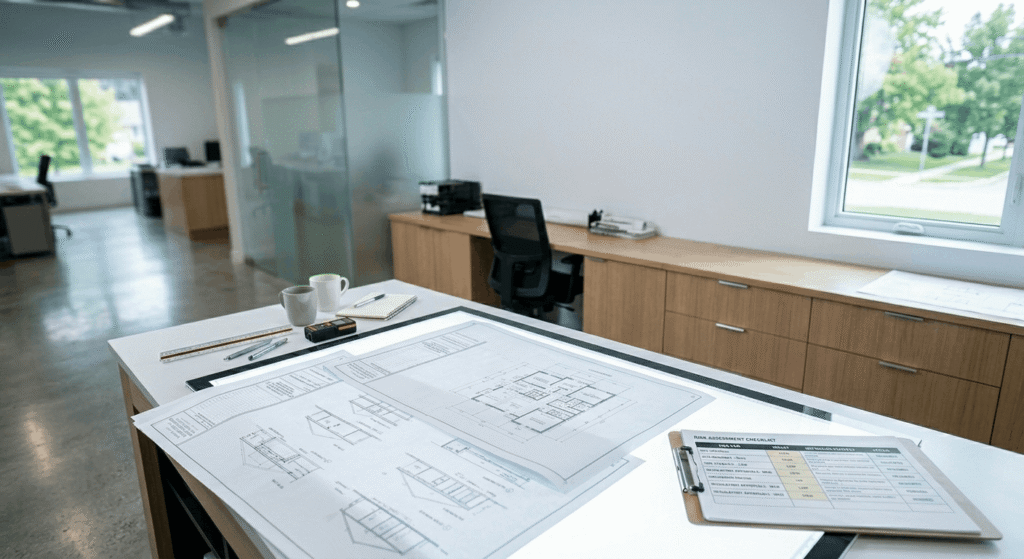
Projects that dedicate time to robust pre-construction planning experience measurable benefits:
- Risk Mitigation: Issues like unsuitable soil, permit holdups, or code violations are identified and resolved early, sparing you expensive fixes during construction.
- Cost Control: Detailed budgets, based on local market data and Ontario-specific construction laws, allow for more accurate forecasting, enabling you to avoid hidden costs.
- Quality Assurance: Careful planning enforces design alignment, sets project standards, and strengthens accountability for all team members.
The Impact of Ontario Regulations
Ontario’s construction environment is shaped by requirements including the Ontario Building Code (updated for 2026), the Home Construction Regulatory Authority (HCRA), and Tarion warranty mandates. These standards ensure safety and consumer protection but add complexity. Pre-construction planning Ontario aligns your project with these obligations, avoiding common pitfalls such as improper zoning usage, missed inspections, or insurance gaps.
Failure to invest in pre-construction planning can result in:
- Expensive change orders from missed details
- Delayed occupancy due to slow permit approvals
- Disputes over unclear contracts and shifting project scope
Pre-Construction Planning for Custom Homes
Custom home projects demand even more rigorous pre-construction planning in Ontario. Because each custom home is unique, every design choice directly affects compliance, permitting, budget, and construction risk.
Custom Home Budget Planning
For a custom home, pre-construction planning Ontario should include deep collaboration between the homeowner, designer, builder, and other professionals. Each iteration of the design must be validated against local zoning regulations, environmental protections, and the latest building code. Lot-specific characteristics like topography, utilities, and setback requirements dictate what is feasible.
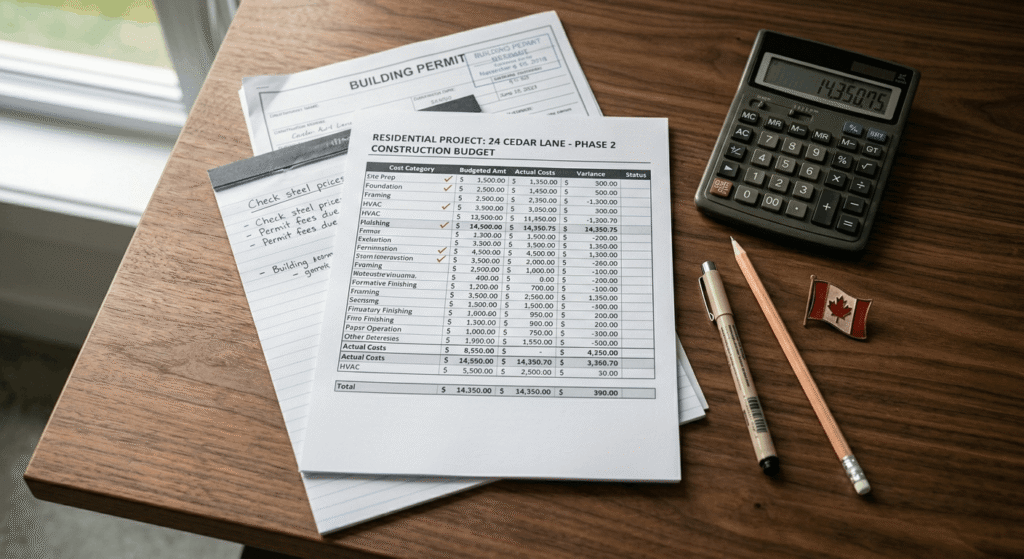
Budgeting for a custom home goes beyond standard estimates. Features such as advanced energy systems, luxury finishes, or sustainable materials introduce complexity and cost volatility. The average cost to build a house in Ontario can vary significantly depending on these choices.
It is essential to work with a builder licensed by the HCRA and covered by the Tarion warranty program to protect your investment. To review approved builders, see the HCRA Ontario Builder Directory. These measures ensure your project is not just legal but fully protected from major defects and contractual pitfalls.
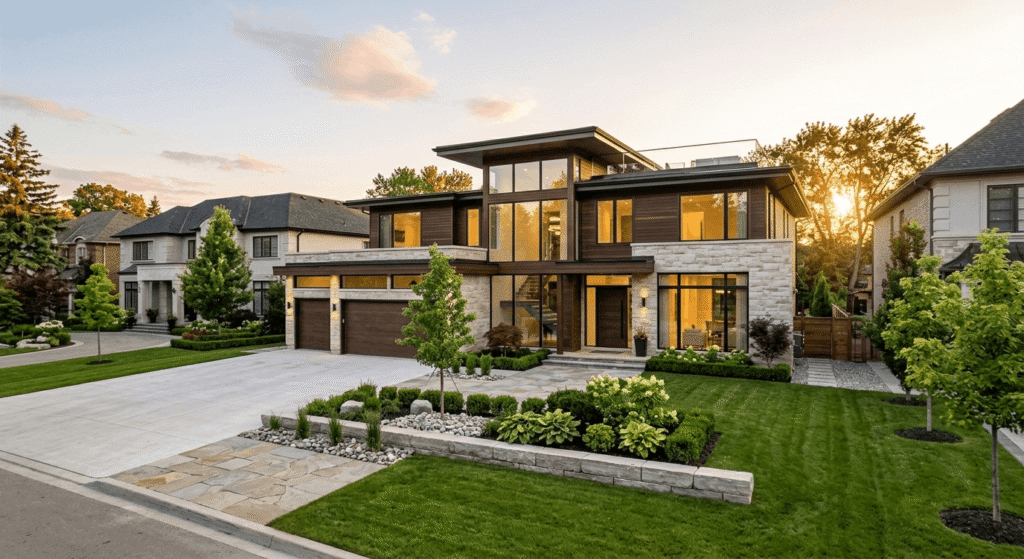
Check out some examples of completed custom homes—like our Weldon Drive Custom Home or Thorah Park Custom Home—to see the results of detailed pre-construction planning in action.
Ontario Budgeting and Cost Estimates: Planning for Success
Building in Ontario requires careful financial planning tailored to the region’s unique conditions. Cost estimates must be collaborative, transparent, and anchored in market reality to protect your project from shocks.
Key elements to include in your budget:
- Material and labor estimates confirmed by local contractors
- Realistic costs for upgrades and personalizations, which can inflate the final budget
- All relevant taxes, such as HST/GST, and local municipal fees
Development Charges, Deposits, and Contingency
Custom home deposits in Ontario typically range from 15–25%, depending on project scope and builder. These deposits are governed by law and often staged to protect both parties until closing.
A standard best practice is to add a 10% contingency fund to the total budget. This buffer handles unforeseen conditions like material cost spikes or unplanned changes in the scope of work. Failure to include such a contingency frequently leads to delays, disputes, or incomplete projects.
Municipal adjustments at final closing—like additional utility connections or landscaping fees—can come as a surprise. Early consultation with your builder and a review of Ontario-specific budget resources, such as a construction budget calculator Ontario, can prevent these unexpected expenses.
Navigating Ontario’s Design Build Process
The design build method is especially effective for Ontario projects because it unifies design and construction under a single responsible team. By streamlining workflow and communication, design build prevents the misalignments common in traditional design-bid-build approaches.
Advantages of Design Build in Ontario
- Single Point of Accountability: From pre-construction planning to final walk-through, your firm manages every aspect, simplifying project management and dispute resolution.
- Faster Project Delivery: Overlapping design and construction activities reduce total build time.
- Integrated Regulatory Compliance: Building code reviews, permit submissions, and zoning checks are managed by a team deeply familiar with local laws.
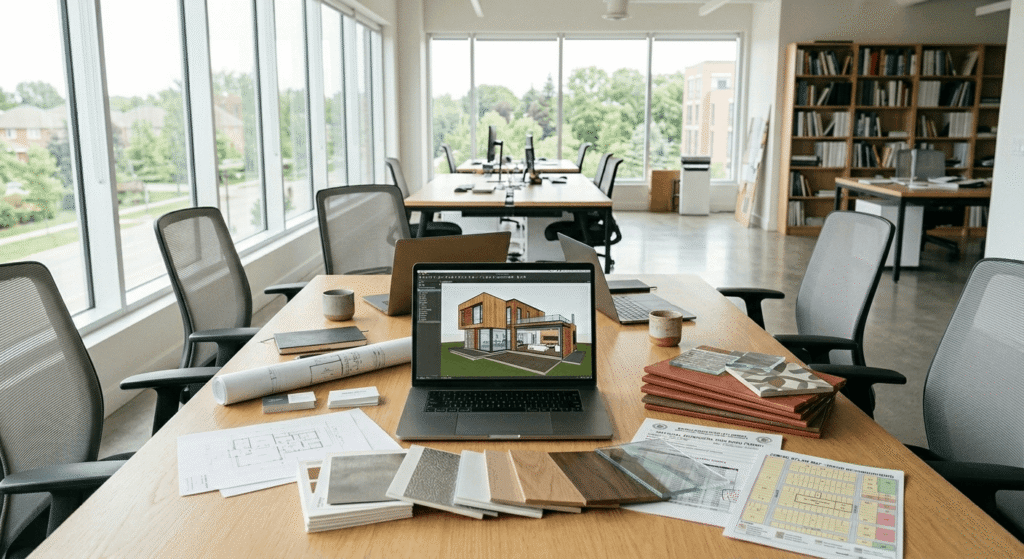
When selecting a design build team, confirm they are HCRA-licensed, have in-house architects and engineers, and maintain strong local permitting expertise. Learn more about how our firm applies this methodology in Ontario on our Our Approach page.
Reducing Risk Through Early Planning
Design build supports risk mitigation by identifying regulatory barriers and hidden costs before they escalate. Build teams coordinate with the owner to ensure all decisions are documented, streamlining the path to obtaining necessary permits.
Understanding Ontario Construction Laws, Zoning, Building Code, and Permits
Ontario’s legal landscape is among the strictest in Canada, requiring builders and owners to follow an array of construction laws and evolving regulations. Neglecting legal and permitting steps leads to inevitable delays, cost overruns, or lawsuits.
Building Code and Permits
The Ontario Building Code (OBC) is the foundation of quality and safety for every new build. Its upcoming 2026 update introduces new energy efficiency, accessibility, and structural requirements. Every step from application to inspection must adhere to these standards or risk stop-work orders.
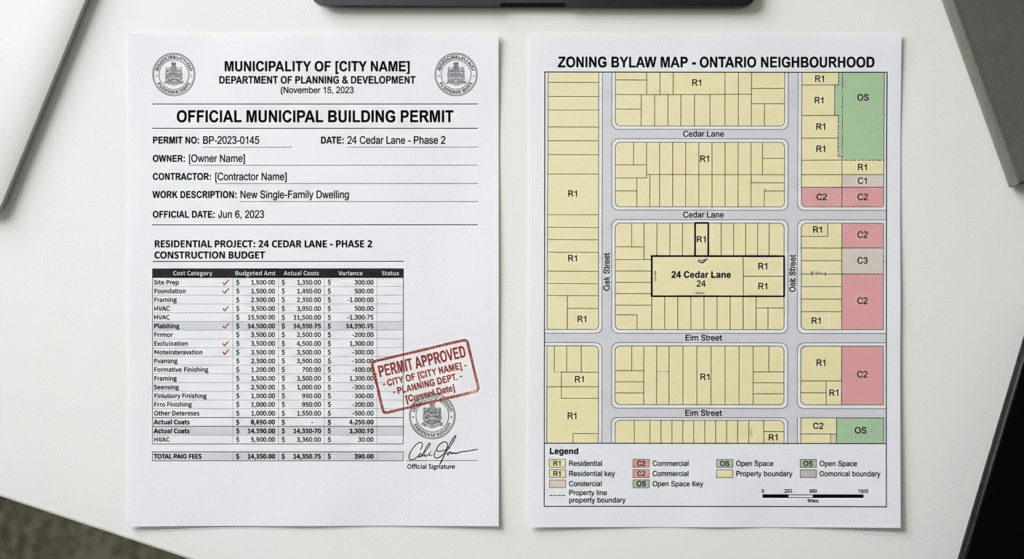
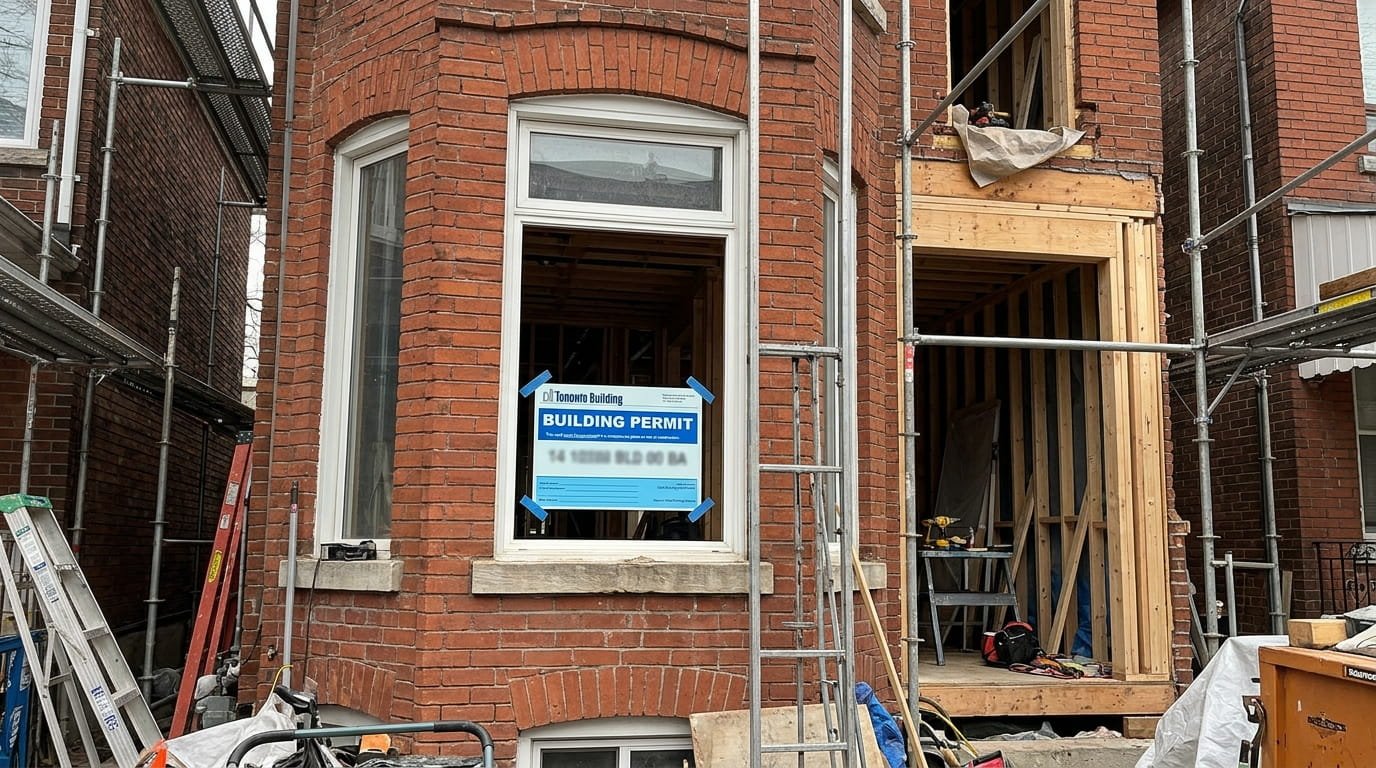
- Permits: All residential and commercial projects require building permits, granted by the local municipality. Permit processing times can range from a few weeks to several months based on complexity and municipal workload. To understand more about Ontario building permit processing time in 2026, consult the official permit portal.
- Zoning Compliance: Municipal zoning bylaws control lot size, setbacks, height, and land use. Early failure to secure zoning certificates or variances can shut down even the most well-designed project.
- HCRA and Tarion: Only HCRA-licensed builders are allowed to construct or sell new homes; Tarion provides warranty coverage on major defects and deposit protection. To ensure compliance, always verify builder credentials on the HCRA Directory and review Tarion warranty details at Tarion Warranty Corporation.
For more on regulations and company standards, see our Policies & Standards.
Regulations Affecting Custom Builds
Custom homes are more affected than conventional projects because zoning, OBC amendments, and environmental rules must be individually accounted for. Consulting with experienced professionals—like an Ontario-licensed architect, Red Seal-certified trades, and an experienced real estate lawyer—ensures you avoid legal snags or expensive rework during construction.
How to Plan a Successful Pre-Construction Phase in Ontario
- Define Project Scope and Requirements:
Gather input from all stakeholders, identify mandatory project deliverables, estimate timelines, and clarify what is non-negotiable (for example, accessibility or energy efficiency requirements). For inspiration, explore our custom homes and net zero energy homes. - Create a Realistic Budget and Secure Funding:
Base your budget on local data and builder input, listing all anticipated costs, including permits, design fees, construction, insurance, and contingencies. Use the Planning & Financial Guidance to map out your financial plan and determine mortgage or loan needs. - Assemble the Right Ontario Team:
Hire an OAA-certified architect and an HCRA-licensed builder for your custom home or commercial construction. Verify that trades have Red Seal certification and that legal advice covers all contracts. For advice on how to vet a custom home builder in Ontario, review our FAQ. - Submit Municipal Permits and Approvals:
Complete permit applications with comprehensive design documents and compliance data. Secure necessary zoning certificates and prepare for potential timelines ranging from four to ten weeks, especially in municipalities adapting to the 2026 OBC. For more on timelines, see our guide to Ontario building permit processing time 2026. - Implement Risk Mitigation and Quality Control:
Identify likely risks—such as adverse weather or supply chain disruptions—then design quality control protocols around Ontario’s building code and regulatory expectations. Track all project changes, ensure frequent documentation, and maintain open communication across owners, designers, and trades. Explore Sustainable Construction Practices for proactive risk management options.
Design-Build vs. Traditional Build in Ontario
| Feature | Design-Build | Traditional (Design-Bid-Build) |
|---|---|---|
| Contract Parties | Single contract, one team | Separate contracts for design and build |
| Speed | Faster (overlapping design/construction) | Slower (sequential phases) |
| Risk | Shared risk, single-point accountability | Split responsibility; more dispute risk |
| Cost Predictability | Higher (integrated estimates) | May be less predictable; more change orders |
| Regulatory Complexity | Integrated code/permit compliance | May require more coordination |
| Owner Involvement | Early/continuous involvement | Heavy early, less during build |
| Ontario Relevance | Well-suited for custom builds | Common for large, public projects |
If you want deeper insights into which approach matches your needs—or to see project examples using both models—visit our Projects page.
Common Mistakes to Avoid in Pre-Construction Planning (Ontario Edition)
Many Ontario builders and homeowners repeat the same costly mistakes during pre-construction. Avoid these traps to safeguard your project:
- Skipping legal review: Always have an Ontario real estate lawyer review every contract and deposit arrangement to ensure compliance and protection.
- Underestimating permits or municipal timelines: Permit delays are common and can derail carefully planned schedules.
- Using generic budgets: Only Ontario-specific budgets account for local taxes, development fees, and market-driven price changes.
- Ignoring zoning bylaws: Not consulting with the municipality about zoning or possible variances can lead to rejected designs or costly revisions.
- Selecting unlicensed teams: Only HCRA-approved builders and registered architects are allowed to manage new home construction in Ontario.
- Skipping contingency funds: Insufficient contingencies lead to financial overrun when the unexpected occurs.
- Not documenting changes: Relying on informal verbal agreements fuels disputes. Always document every approval and change in writing.
Frequently Asked Questions
1. How long does the pre-construction phase typically take in Ontario?
Most Ontario projects spend 2–6 months in pre-construction, influenced by municipal permit processing (which can run 4–10 weeks), design revisions, and regulatory approvals. Larger or custom builds may need up to 9 months, especially if variances or complex site/utility conditions are involved.
2. What are the most important permits needed for a new build in Ontario?
A standard Ontario new build requires a municipal building permit for all structural work, a zoning certificate to verify legal use and setbacks, and potentially site plan approval for larger or commercial projects. Permit applications must include a final design, code compliance evident by documents, and evidence that your builder is HCRA-licensed. Review the Ontario official permit resource for further details.
3. How do zoning bylaws affect my custom home design in Ontario?
Zoning bylaws in Ontario restrict what you can build, where, and to what size—controlling lot coverage, maximum height, and intended use. Ignoring these rules often results in denied permits or forced revisions. Early review with municipal authorities saves time and money when planning your custom home.
4. What is a reasonable budget contingency for an Ontario project?
Best practices recommend carrying at least a 10% budget contingency for any construction project in Ontario. This covers cost increases or surprises that inevitably arise from volatile prices, code upgrades, or unforeseen site conditions. Not budgeting for contingencies frequently results in financing issues late in the project.
5. How do I choose the right design-build team for my Ontario project?
Look for a design-build team licensed by the HCRA, with OAA-certified architects, Red Seal trades, and a proven Ontario project track record. Make sure the firm has transparent insurance, experience managing local permits, and positive feedback from former clients. Reviewing portfolios, such as those on our Projects page, ensures you select the right partner.
Conclusion
Pre-construction planning Ontario is the foundation of a smooth, compliant, and successful build—protecting your investment from the start. Whether you are planning a custom home, a commercial structure, or a new land development, careful attention to regulations, zoning, permits, budgeting, and risk mitigation at this stage delivers long-term value. To ensure your project proceeds without setbacks, contact our team for guidance on every facet of pre-construction planning Ontario.