

Quick Answer Box: The sunroom pros and cons come down to season and budget. A 3-season sunroom costs $15,000 to $30,000 in Canada but goes unused once temperatures drop below freezing. A 4-season sunroom runs $45,000 to $75,000 or more, works year-round, and adds to your property assessment.
What Are the Main Sunroom Pros and Cons?
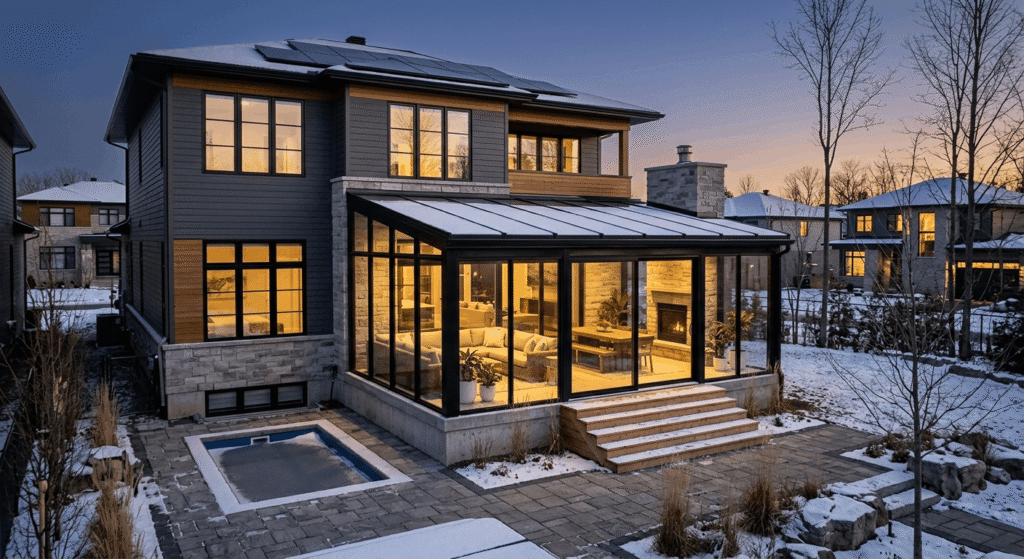
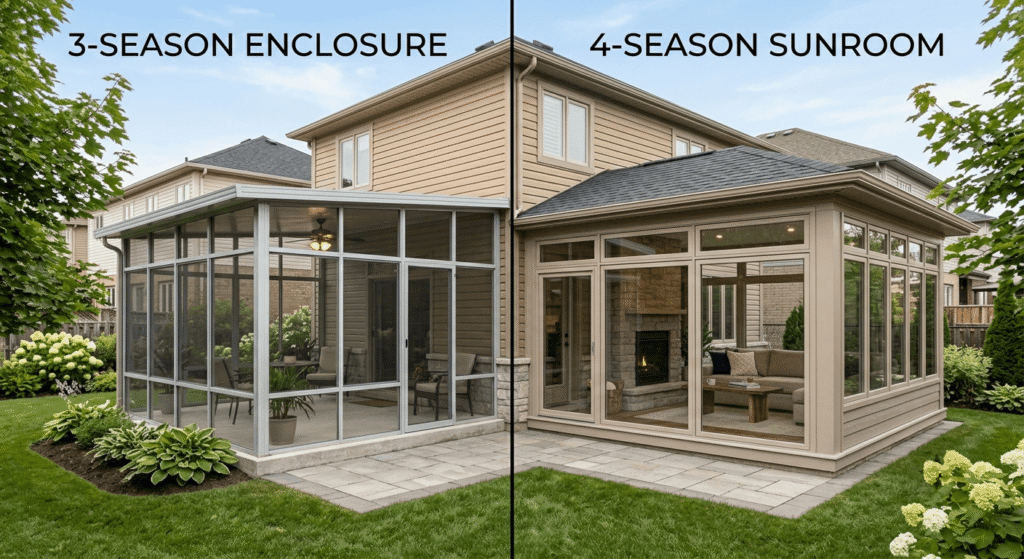
A sunroom is a glazed room attached to the house, built either as a seasonal enclosure or as a fully conditioned extension. Which one you build changes every number in this article. The 3-season and 4-season versions share a name and almost nothing else.
That single decision drives cost, code, comfort and taxes.
| 3-season sunroom | 4-season sunroom | |
|---|---|---|
| Cost in Canada, 2026 | $15,000 to $30,000 | $45,000 to $75,000+ |
| Heating and cooling | None, relies on outdoor temperature | Connected or dedicated HVAC |
| Usable in a Canadian winter | No | Yes |
| Building code treatment | Enclosure, lighter requirements | Same as a standard room addition |
| Counts as finished floor area | No | Yes |
| Property assessment impact | Minimal | Reassessed as an addition |
Is a Sunroom Worth the Money in Canada?
For year-round use, only the 4-season version delivers, and it costs roughly what a modest room addition costs. For a summer lounge, the 3-season version is genuinely cheap. The mistake is buying the cheap one while expecting the expensive one’s benefits.
Sunroom cost in 2026
Basic 3-season enclosures start around $15,000 and run to about $30,000. A 4-season build begins near $45,000 and passes $75,000 with larger footprints, better glazing and finished interiors.
Those figures cover the enclosure. They don’t cover footings, frost protection, deck reinforcement or the permit itself. Existing decks frequently can’t carry a glazed room, and discovering that after quoting is a common source of budget overrun. Our complete sunroom and room addition price breakdown covers what sits under those headline numbers.
Sunroom value at resale
Sunroom value at resale is real but limited. Canadian appraisal data consistently ranks sunrooms below second-storey additions and rear extensions for cost recovery, partly because buyers discount space they can’t use in January. A 4-season room recovers meaningfully more than a 3-season one because it counts as finished living space and a seasonal enclosure does not.
If resale is the main goal, the honest answer is that a sunroom is one of the weaker options. Our ROI guide for Canadian home additions sets out how the alternatives compare.
Living space and entertaining space you’ll actually use
Where sunrooms earn their keep is daily use rather than resale math. A glazed room facing a garden works as an entertaining space in a way a basement never will, and it handles overflow at family gatherings without a full addition’s disruption. Households that use theirs daily rarely regret the spend.
Ask one question before you commit. How many months a year will you actually sit in it? Divide the cost by that number and the 3-season and 4-season options look very different.
What Are the Real Drawbacks of a Sunroom?
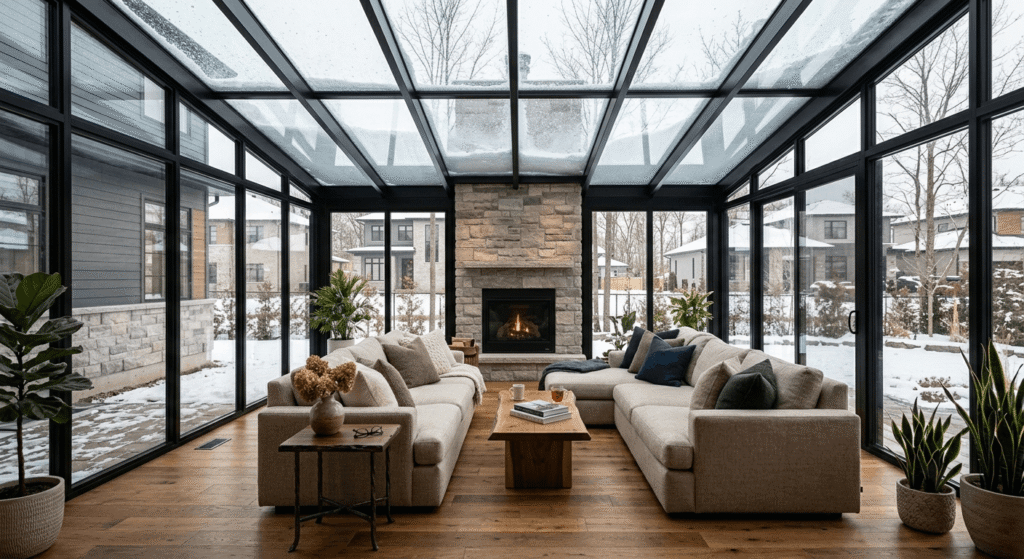
Three drawbacks of a sunroom get glossed over in most sales conversations: what glass does to your heating bill, what the room demands in upkeep, and what your municipality does with your assessment once the work is finished. None of these are reasons to avoid a sunroom. They’re reasons to budget properly.
Glass walls and heat loss
Natural Resources Canada reports that windows, doors and skylights account for up to 25 percent of a home’s energy loss. A sunroom is almost entirely made of that weakest component, so the room you add will nearly always be the least efficient part of the house.
Glazing choice matters more here than anywhere else in a renovation. ENERGY STAR certified windows run about 20 percent more efficient than average, and the top tier reaches up to 55 percent. Summer is the other half of the problem: a south-facing glazed room overheats badly without shading, ventilation or a cooling source.
Sunroom maintenance
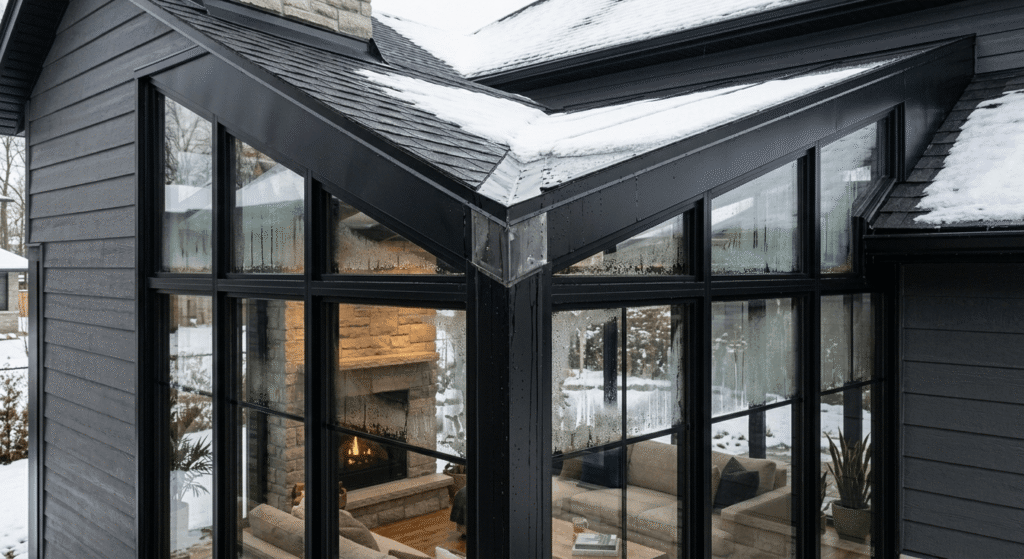
Sunroom maintenance runs higher than a conventional room. More glass means more cleaning, and seals degrade over time, showing up as fogging between panes on double-glazed units. Frames need inspection where the roof of the sunroom meets the main house, because that flashing junction is the most common leak point.
Wood-framed rooms need refinishing. Aluminum frames conduct cold and can cause condensation in a Canadian winter unless thermally broken. Budget for periodic reglazing over a twenty-year horizon rather than assuming the room is maintenance-free.
The property tax nobody budgets for
Here’s the cost almost no article mentions. A 4-season sunroom is an addition, and assessment bodies treat it as one. In Ontario, supplementary and omitted assessments capture any increase in value from an addition or improvement, and the resulting tax bill can be applied retroactively for the current year plus the two preceding years.
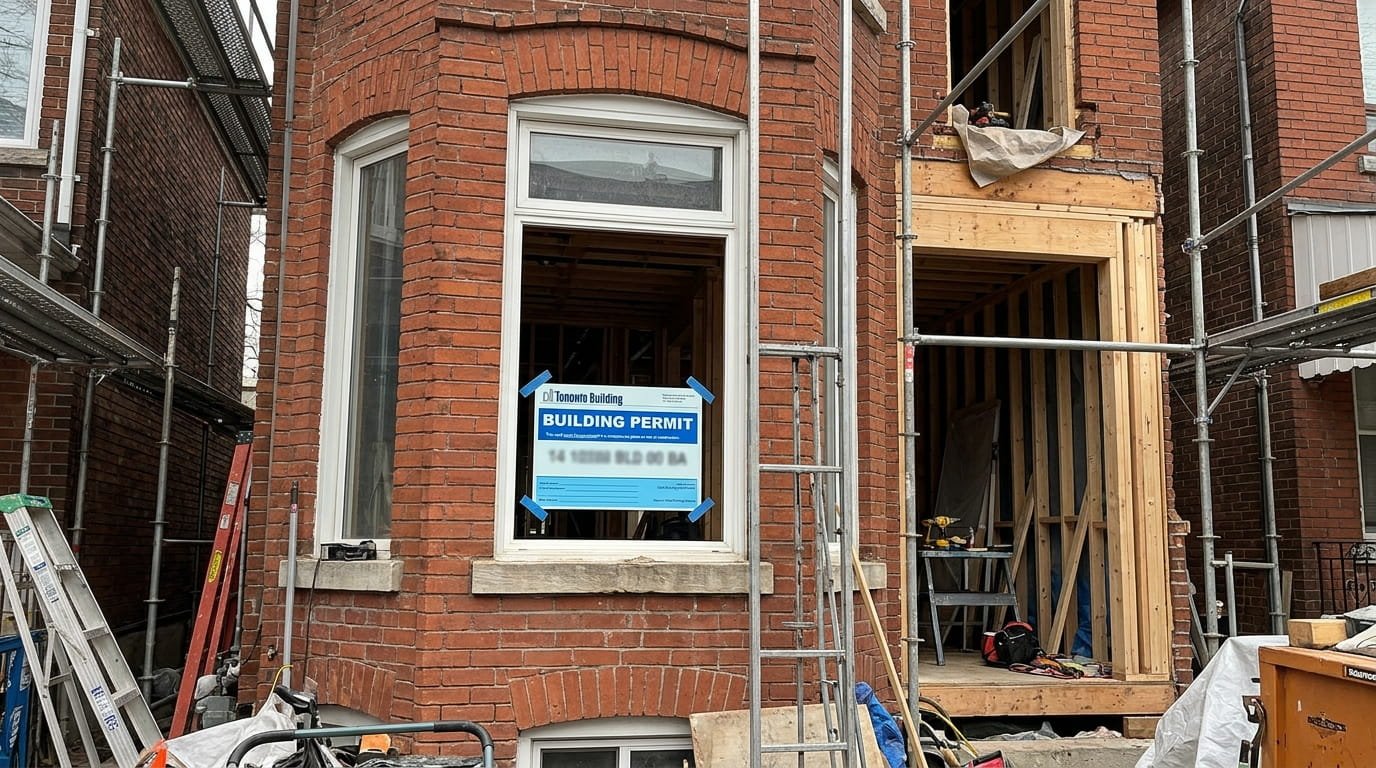
Permits are what trigger this, which leads some homeowners to skip them. Don’t. Unpermitted structural work surfaces at closing, and the City of Toronto building permit guide shows the sort of documentation most Canadian municipalities expect for a project like this.
Frequently Asked Questions
1. Does a sunroom need a building permit in Canada?
Yes, in most municipalities. A sunroom is generally treated as a home addition or a permanent structural change, so it must meet provincial building code requirements for frost protection, wind resistance and snow loads. Permit fees commonly run a few hundred to roughly $1,500, with approval taking two to eight weeks.
2. Can I convert a 3-season sunroom to a 4-season one later?
You can, but it usually costs more than building 4-season from the start. Upgrading means new insulated glazing, wall and roof insulation, air sealing, an HVAC connection, and often foundation work the original enclosure never needed. Decide which version you want before the footings go in.
3. How long does it take to build a sunroom?
Construction typically runs six to ten weeks for a sunroom, with larger room additions reaching fourteen weeks. Add two to eight weeks upfront for permit approval. Weather delays are common in Canada, since foundation work stalls once the ground freezes.
4. What are the biggest drawbacks of a sunroom in a Canadian climate?
The main ones:
- A 3-season room is unusable once temperatures fall below freezing
- Glass walls make it the least energy-efficient room in the house
- South-facing rooms overheat in summer without shading or cooling
- Higher ongoing maintenance from seals, flashing and glazing
- A 4-season build triggers a property reassessment
5. Does a sunroom qualify for the Multigenerational Home Renovation Tax Credit?
No. That credit applies to creating a self-contained secondary unit for a qualifying senior or adult with a disability. A sunroom adds shared living space rather than an independent dwelling unit, so it falls outside the eligibility rules. Check current criteria before assuming any tax treatment.
Conclusion
Weigh the sunroom pros and cons against how you’ll actually use the room, not against the brochure. Build 3-season if you want a cheap warm-weather space and accept it sits empty half the year. Build 4-season if you want real living space, and budget for the code requirements, the glazing, the maintenance and the reassessment that come with it. If neither fits, compare the numbers against a conventional home addition in Ontario before deciding.