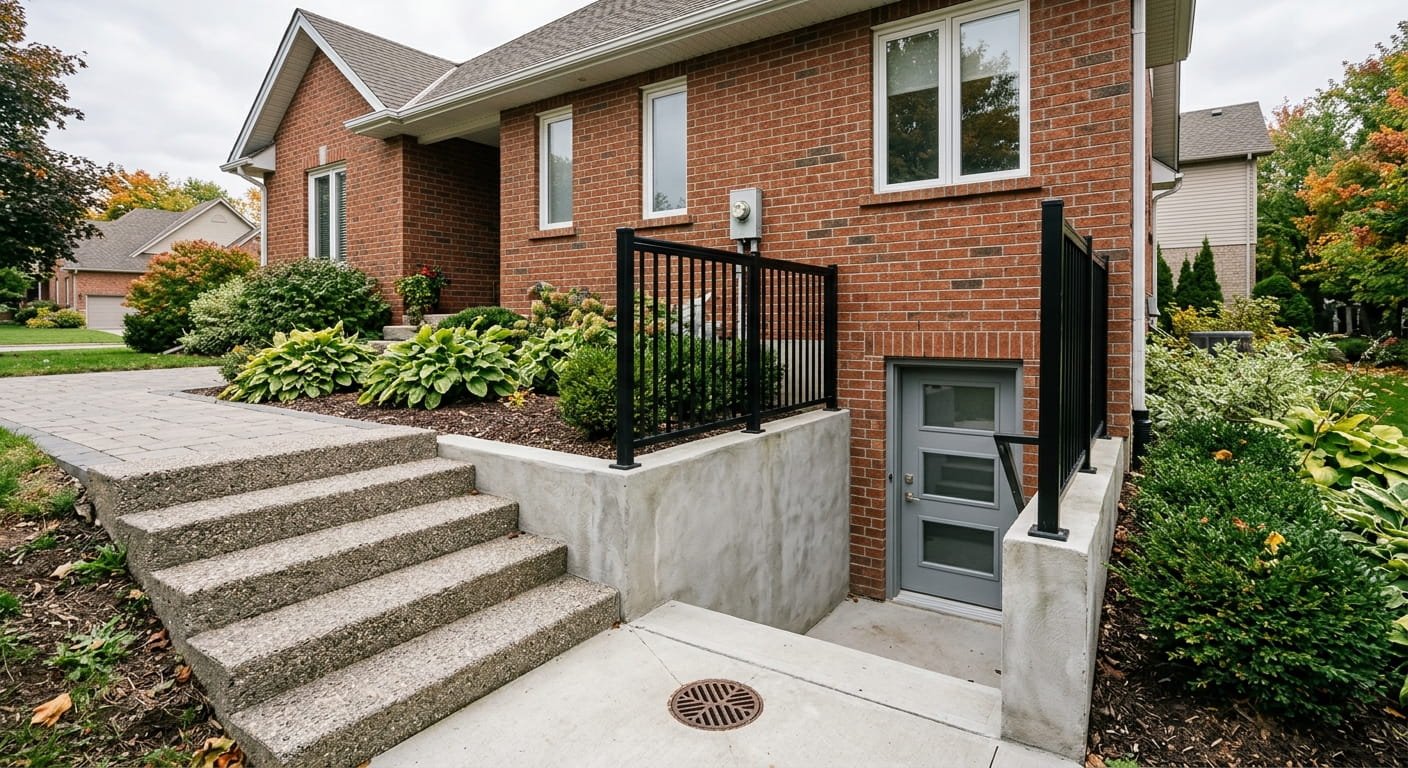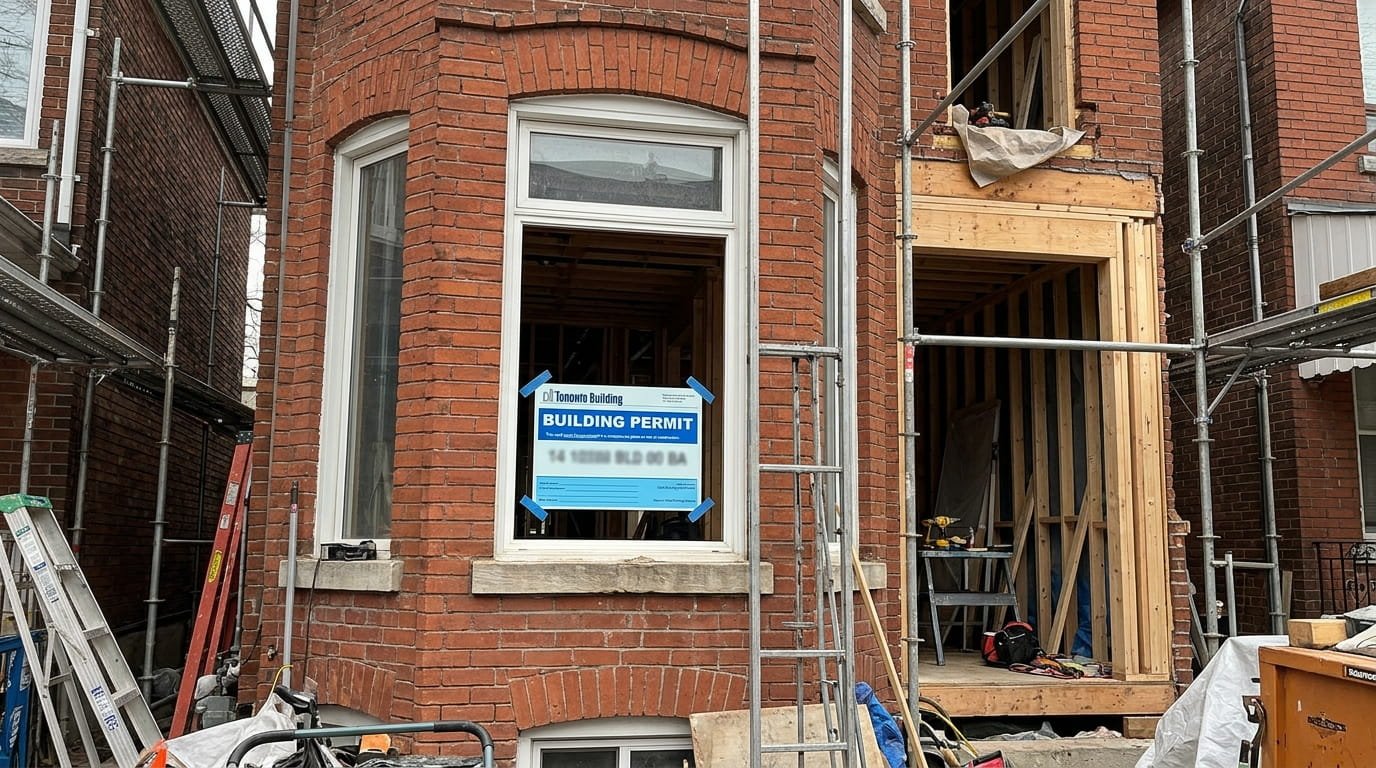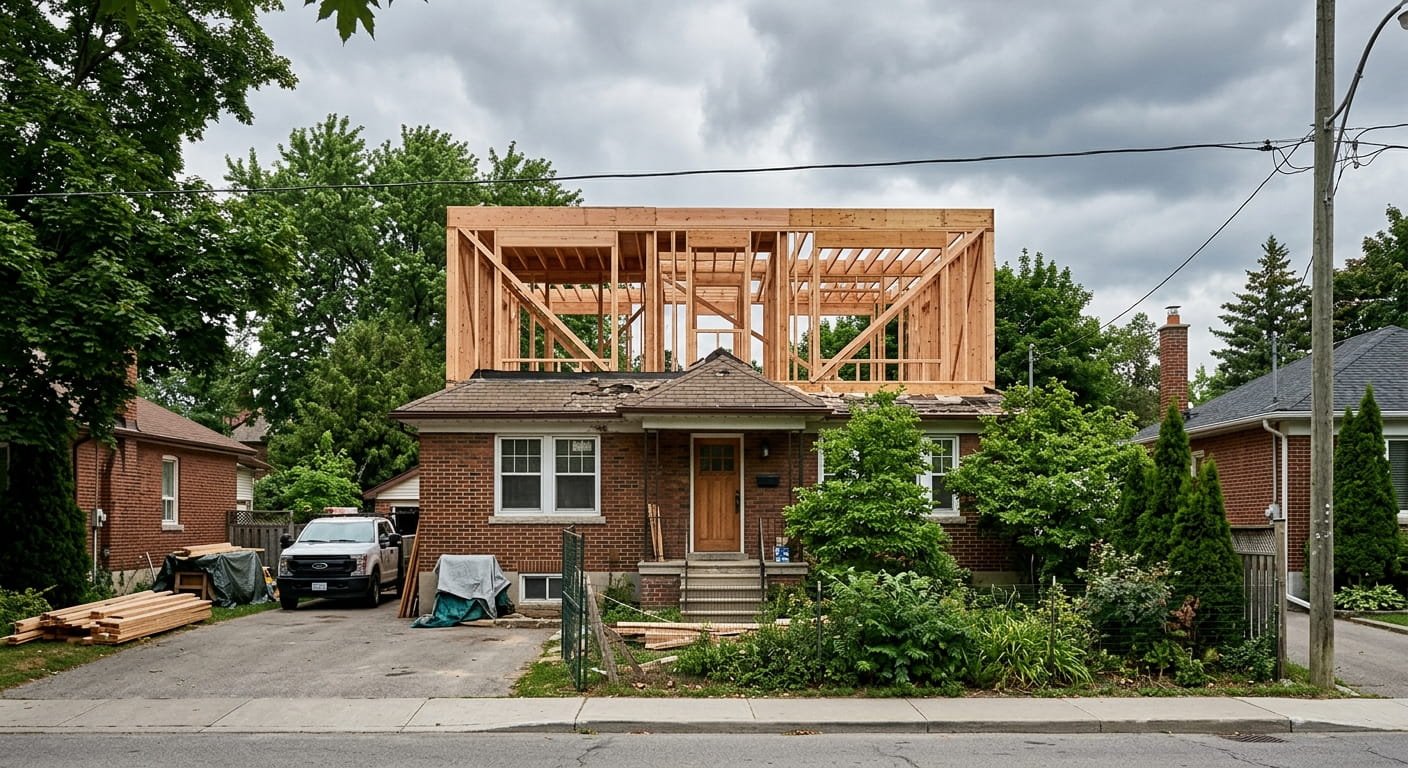


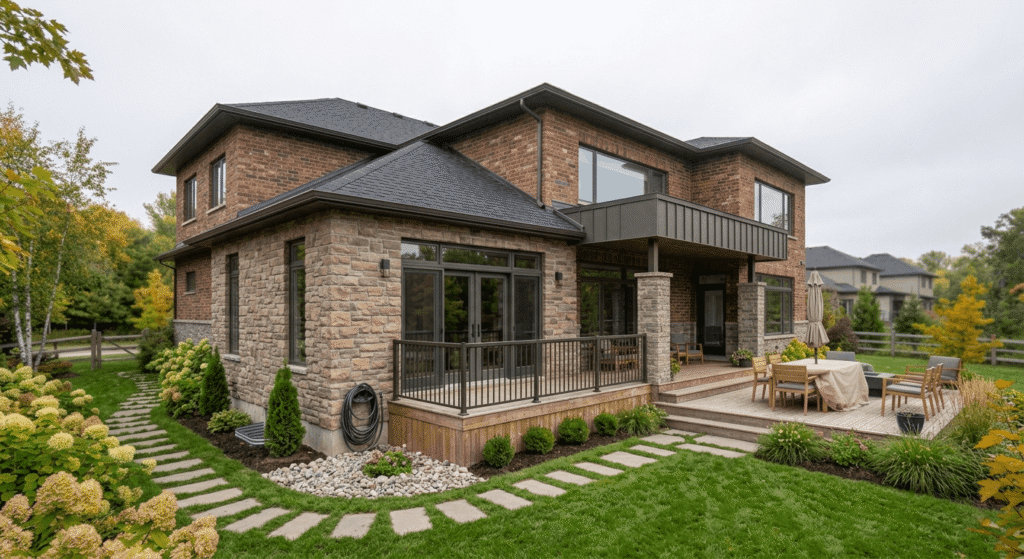
Quick Answer Box: Advance exterior renovations are planned upgrades to a home’s outer shell: roof, cladding, entry, garage, lighting and grounds, sequenced so each one protects the next. In Canada, the work that pays off combines weather durability with visible curb appeal, and much of it is governed by municipal permit rules, not just provincial code.
What are advance exterior renovations?
Advance exterior renovations describe a staged approach to the outside of a house. Instead of one-off fixes, the roof, cladding, entry, garage, lighting and landscaping get planned together so the sequence makes sense. Water gets managed first. Finishes come after. The result is a facade that reads as deliberate.
Timing matters more than most homeowners expect. Statistics Canada’s Residential Renovation Price Index tracks contractor pricing across 37 project types in 15 census metropolitan areas, and in the first quarter of 2025 it flagged concrete-heavy projects as the steepest quarterly gainers. Anything involving footings, walkways or masonry carries that pressure.
Which exterior upgrades do Canadian buyers actually notice?
Buyers notice the roof, the front door and the garage door, roughly in that order, because those three cover most of what you can see from the street. Curb appeal is really just condition plus coherence. A tidy, matched facade signals a maintained house, and a maintained house negotiates better. Most advance exterior renovations start there, then work outward to the exterior renovation ideas that hold their value.
Advanced level roofing comes before anything decorative
Advanced level roofing means more than swapping shingles. It covers deck condition, underlayment, ice and water membrane at the eaves, flashing details and attic venting, all of which decide whether the new surface lasts fifteen years or twenty-five. In cold-climate Canada, ice damming is usually an air-sealing problem showing up on the roof. Provincial codes adopt the National Building Code of Canada as their base, so venting and moisture rules follow you across the country.
Stone veneer changes the permit picture
Swap siding for siding and most Canadian municipalities treat it as maintenance. Swap siding for stone veneer or brick and you’ve changed the cladding material, which is a permit trigger. Mississauga spells this out plainly: re-cladding with a new material needs a permit, re-cladding with the same material does not. Weight is the reason. Masonry loads the wall differently, and the drainage plane and flashing underneath have to be reworked.
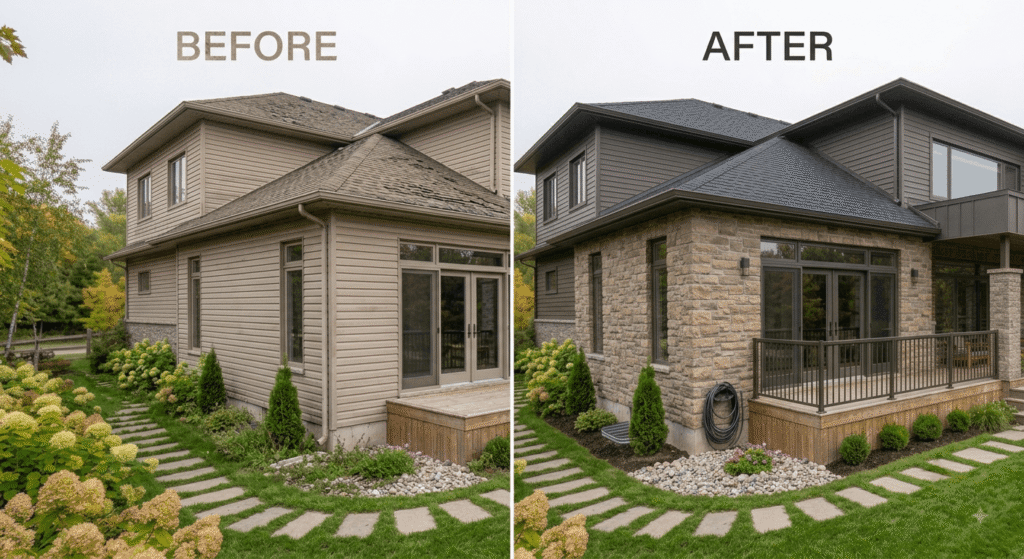
A custom entryway is a permit question too
A custom entryway that reuses the existing opening is usually maintenance. Widen that opening for a taller door or a sidelight and it becomes structural work, with a permit and a header calculation attached. That distinction moves the budget more than the door itself does.
Federal help here is narrower than most blogs suggest. The Canada Greener Homes Affordability Program covers windows and doors, but it’s income-tested and delivered province by province. As of its July 2026 update, Natural Resources Canada lists British Columbia, Manitoba, Nova Scotia, Prince Edward Island and Quebec. Ontario isn’t on that list.
Garage renovation on a front-facing facade
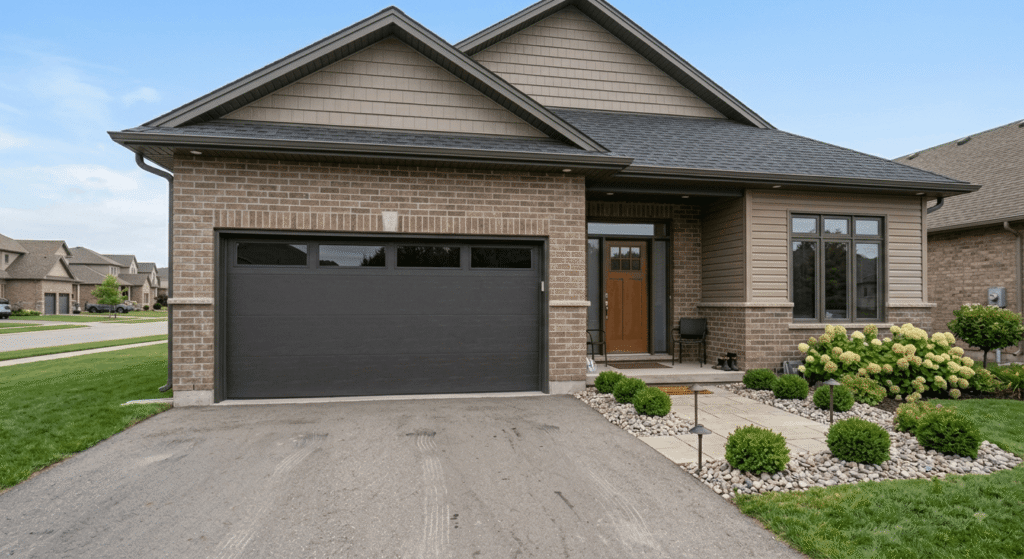
On many suburban Canadian lots the garage door takes up close to a quarter of the front elevation, so a garage renovation moves curb appeal further per dollar than almost anything else on the house. Insulated sectional doors also cut heat loss where the garage is attached. A detached garage is a different animal: it needs its own permit, its own setbacks and a zoning check before drawings start. Teams handling renovation and addition work confirm zoning first.
Do you need a permit for exterior renovation work in Canada?
Permit rules sit with your municipality, so the answer changes across a city boundary. The general test is whether you’re changing something structural, changing a material, or changing an opening. Re-shingling and painting are typically exempt. New openings, new cladding materials and detached structures over ten square metres typically aren’t.
| Exterior project | Permit usually needed | What triggers it |
|---|---|---|
| Re-shingling the same roof | No | Structure and slope stay the same |
| Siding changed to stone veneer | Yes | Cladding material changes |
| Widening a front door opening | Yes | New or enlarged opening |
| Detached garage | Yes | Standalone structure over 10 sq m |
| Retaining wall under one metre | No | Height stays below the threshold |
If the list keeps growing, price the alternative honestly. There’s a point where renovating versus rebuilding stops being obvious, and exterior scope is often what pushes a project past it.
Outdoor lighting after the ENERGY STAR change
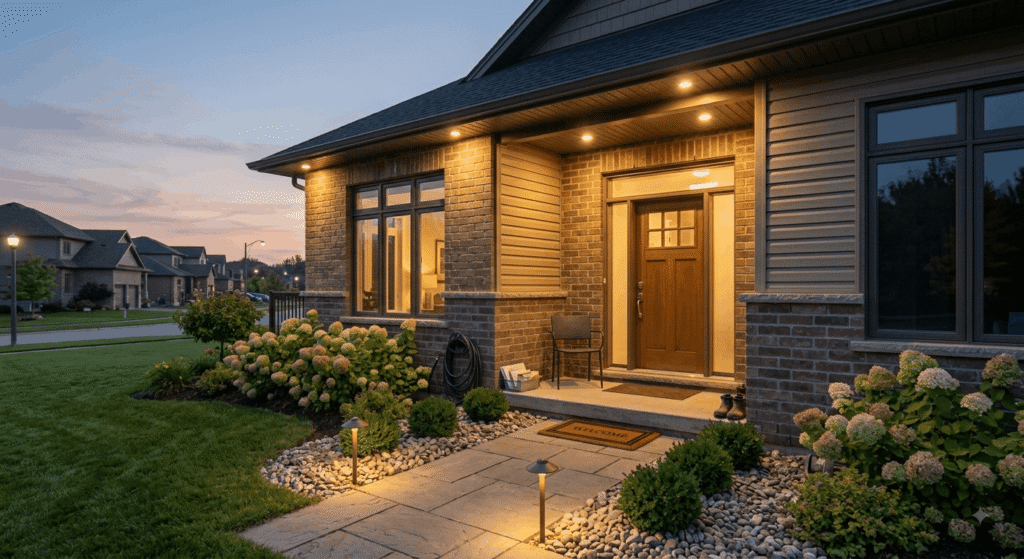
Outdoor lighting is the cheapest visible upgrade here and the one most often bought badly. Lighting accounts for roughly 3.5% of energy use in the average Canadian home, so placement and colour temperature matter more than efficiency claims. Natural Resources Canada has retired ENERGY STAR certification for bulbs and common fixtures, so that label is no longer the shortcut it was. Read lumens, not watts, and put path fixtures on motion sensors.
Modern landscaping, drainage and the one-metre rule
Modern landscaping usually needs no building permit at all, which is exactly why it goes wrong. Zoning still applies, water still has to leave the lot the way the grading plan says, and a retaining wall reaches permit territory once it hits one metre. Grade soil away from new masonry and fresh footings or you’ll be repairing both within a few winters. The plantings are the easy part. If a sale is coming, weigh all of this against the upgrades worth doing before you list.
Frequently Asked Questions
1. How much do exterior renovations cost in Canada?
Statistics Canada tracks 37 renovation project types across 15 census metropolitan areas, and quarterly price movement differs by province, so a single national figure would mislead you. Get three itemized quotes against one written scope. Compare line by line, and treat any quote missing disposal, permits or flashing as incomplete.
2. What order should advance exterior renovations be done in?
Work from the top down and from water outward. A typical sequence runs:
- Roof, flashing and attic venting first
- Cladding, including stone veneer or new siding
- Windows, doors and the custom entryway
- Grading, walkways and modern landscaping
- Outdoor lighting last, once fixture locations are fixed
Finishing before the envelope is sound means paying twice.
3. Does new siding or stone veneer need a building permit?
Changing cladding material triggers a permit in most Canadian municipalities, while replacing like with like usually doesn’t. Mississauga’s building department states it directly: siding to siding is exempt, siding to brick is not. Call your municipal building department before ordering material, since fees and drawing requirements differ.
4. Is exterior lighting worth adding to an older home?
Lighting accounts for roughly 3.5% of household energy use in Canada, so the case for adding fixtures is safety and appearance, not savings. Soffit pot lights, two path lights and a warm entry fixture change how a house photographs at dusk, which matters directly for listings.
5. What is the best time of year for exterior renovations in Canada?
Late spring through early autumn is the working window for most Canadian exterior trades. Asphalt shingle sealant needs warmth to bond, mortar cures poorly near freezing, and grading needs unfrozen ground. Book roofing and masonry crews in winter for summer slots, because the good ones fill months ahead.
Conclusion
Advance exterior renovations reward sequencing more than spending. Fix water first. Change materials second. Treat the permit question as a design input from day one. Canadian rules differ by municipality, and federal retrofit money now flows through the provinces, so verify both before you sign anything. Curb appeal follows a sound envelope. It rarely works the other way round.