
Quick Answer: Buying a multi-unit building in Canada means underwriting a business, not a home. Past four units, lenders switch to commercial rules and judge the property’s income instead of yours. You also inherit existing leases, rent-control limits, operating costs of roughly 35% to 50% of gross income, and a different property tax class.
What counts as a multi-unit building in Canada?
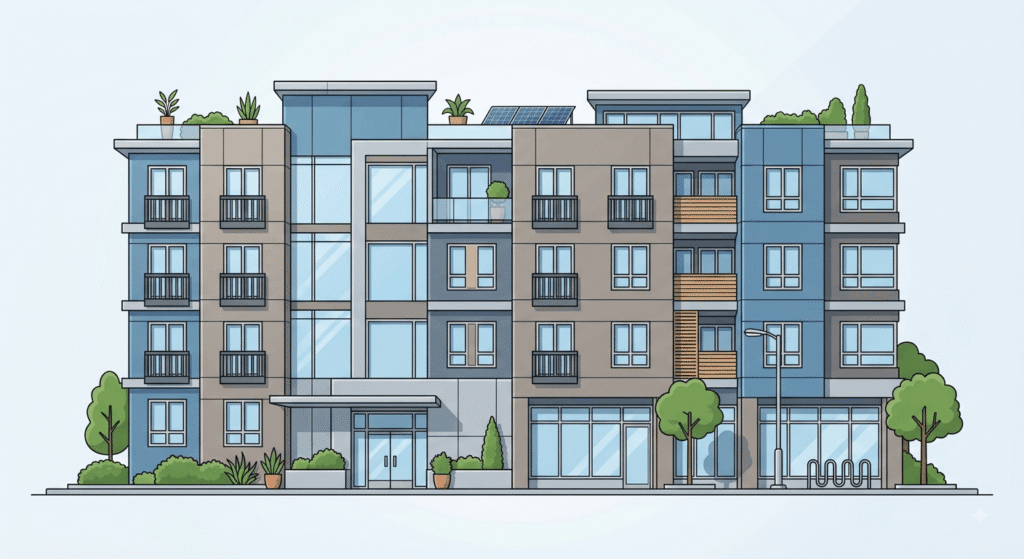
A multi-unit building is a single property containing two or more self-contained residential units, each with its own kitchen, bathroom and entrance. Canadian lenders split the category at five units: one to four are financed like houses, while five and up are treated as commercial real estate.
That line matters more than most buyers expect. Buying a multi-unit building on the wrong side of it changes your down payment, your amortization and the questions your lender asks about your track record.
What should you know before buying a multi-unit building?
Six things decide whether buying a multi-unit building works. Financing rules shift at five units. You inherit the tenancies and the rents that come with them. Day-to-day costs run higher than most buyers model, the municipality may assess the building into a different class, and somebody has to actually manage it. Miss one and your pro forma stops matching reality.
1. Real estate financing changes completely at five units
One to four units gets you a residential mortgage, underwritten against your income and the federal stress test. Five units and up is commercial. Lenders price it off the building’s net operating income and a debt service coverage ratio, usually 1.20 or better. CMHC also wants a net worth of at least 25% of the loan amount.
Its MLI Select program trades lower premiums and longer amortizations for affordability, accessibility or climate commitments, with a five-unit minimum. Energy targets sit inside that scoring, so sustainable construction practices can move your premium, not just your utility bill.
2. You inherit the lease agreements, not just the building
A sale doesn’t end a tenancy. Existing lease agreements transfer to you on closing, at the same rent, on the same terms, with the last month’s deposit passed along. In Ontario, the 2026 rent increase guideline is 2.1%, capped by law at 2.5%, with 90 days’ notice and one increase per 12 months. Units first occupied after November 15, 2018 fall outside it. Every province writes its own version.
3. Rental income on paper is rarely what lands in the bank
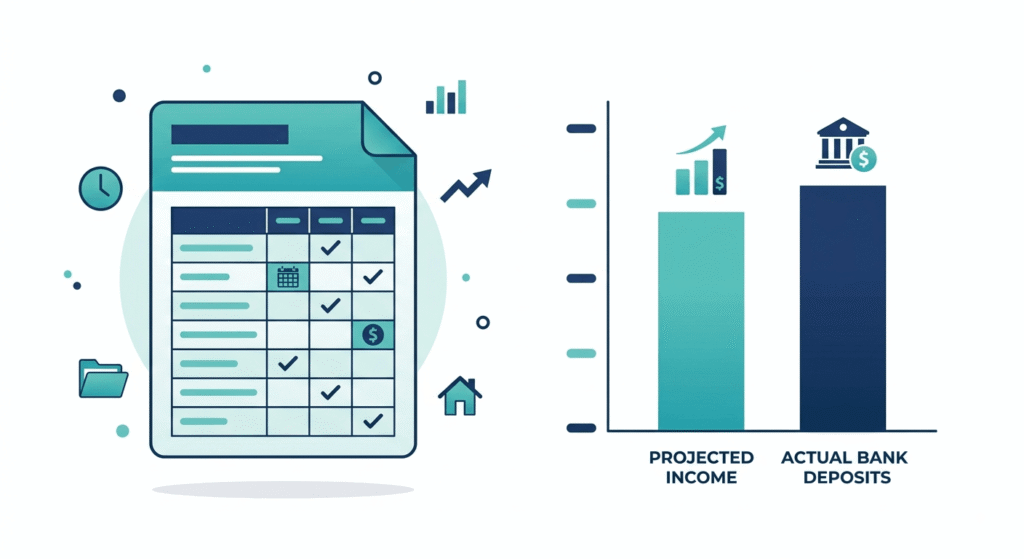
Buying a multi-unit building means buying its income statement. Ask for a certified rent roll, then check it against twelve months of bank deposits. The two often disagree. CMHC’s market intelligence in June 2026 found landlord incentives in major markets reaching several months of free rent, alongside move-in credits and free parking. A unit leased at $2,200 with two months free earns about $1,833. Vacancy, bad debt and turnover take another bite.
4. Operating expenses will take 35% to 50% of gross income
Industry benchmarks put the operating expense ratio for multifamily properties between 35% and 50% of gross operating income. That covers municipal taxes, insurance, utilities, repairs, snow removal, advertising and management. Your mortgage isn’t in that number. Neither are capital items: roofs, boilers, windows and parking decks come out of a separate reserve. Deciding early whether you’re renovating or rebuilding tired systems costs less than learning the answer in year two. The CRA splits repairs from improvements too, and its rental income guide sets out which you can deduct now.
5. Property taxes can change when the building is reclassified
The financing line and the tax line don’t sit in the same place. In Ontario, MPAC assesses buildings of six or fewer units as residential, and buildings with seven or more self-contained units as multi-residential, valued by the income approach rather than comparable sales. A six-plex is financed commercially and taxed residentially. Multi-residential is a separate class with its own municipal rate, so pull the real bill for that roll number. Assessments for the 2026 tax year still run on January 1, 2016 values. If adding units is part of the plan, land development and design-build work should be scoped around that threshold.
6. Property management is a real job or a real line item
Percentage-based property management fees in Canada typically run 6% to 12% of gross monthly rent collected, often with a leasing fee on top. Self-managing saves that, right up until a boiler quits at 2 a.m. in February. CMHC’s standard rental housing program expects five years of multi-unit experience from you or your manager, which means the choice can affect whether you qualify for financing at all.
How do you calculate multifamily property ROI before you make an offer?
Multifamily property ROI starts with net operating income: gross rent, minus vacancy, minus operating costs, before the mortgage. Divide NOI by the purchase price and you have the cap rate. Divide annual cash flow after debt by the cash you actually put in and you have cash-on-cash return.
| Market | 2025 apartment vacancy rate | CMHC estimated balanced range |
|---|---|---|
| Vancouver | 3.7% | 2.0% to 3.0% |
| Calgary | 5.0% | 3.0% to 5.5% |
| Toronto | 3.0% | 2.5% to 4.0% |
| Montreal | 2.9% | 2.5% to 4.0% |
| Halifax | 2.7% | 3.0% to 4.5% |
Headline vacancy hides the segment you’re buying into. CMHC’s 2026 mid-year rental update found vacancies concentrated in structures built after 2020 and in units near post-secondary campuses, while older stabilized buildings and family-sized units stayed tight. A 1970s walk-up and a 2023 build carry different lease-up risk on the same street.
Debt cost is the other half. The Bank of Canada held its policy rate at 2.25% on July 15, 2026, a sixth straight hold. Prime Canadian multifamily cap rates have been running in the mid-4% range, well under the 6.61% national all-property average CBRE reported for Q1 2026. That leaves a thin gap between what a building earns and what its debt costs. Stress-test the mortgage at a renewal rate you’d hate, then fold the result into your project planning and financial groundwork.

Frequently Asked Questions
1. Can you buy a multi-unit building with less than 20% down in Canada?
Only through CMHC-insured multi-unit financing. CMHC’s MLI Select premium schedule includes tiers above 90% loan-to-value for qualifying projects of five units or more. Conventional commercial lenders generally finance up to about 75% of appraised value, which puts 25% down on the table instead.
2. Do tenants have to move out when a multi-unit building is sold?
No. The tenancy continues and you become the landlord on closing. In Ontario, under the Residential Tenancies Act:
- fixed-term leases run to their end date at the existing rent
- the last month’s rent deposit transfers to you
- personal-use notice requires 60 days plus one month’s compensation
- notice periods and forms differ in every other province
3. How much rent do you need to cover a commercial mortgage?
Most commercial lenders want a debt service coverage ratio of at least 1.20, meaning net operating income clears the annual mortgage payment by 20%. NOI is rent after vacancy and operating costs, not gross rent. A building collecting $200,000 gross at a 40% expense ratio produces $120,000 in NOI.
4. Are property taxes higher when buying a multi-unit building?
It depends on the class. Ontario municipalities set separate rates for residential and multi-residential property, and MPAC assesses multi-residential buildings of seven units or more using the income approach. Assessments for the 2026 tax year still rely on January 1, 2016 values, so ask the seller for the current bill.
5. Should you hire a property management company after buying a multi-unit building?
Fees typically run 6% to 12% of gross rent collected in Canada. On a six-unit building at $1,800 per unit, that’s roughly $648 to $1,296 a month. CMHC’s standard rental housing program expects five years of multi-unit experience, so hiring a manager can also help your financing qualify.
Conclusion
Buying a multi-unit building rewards people who underwrite the building rather than the listing. Verify the rent roll against deposits. Read every lease. Price the capital reserve honestly, pull the tax bill for that exact roll number, and stress-test the debt. A feasibility review before closing costs far less than the same lesson afterward.