
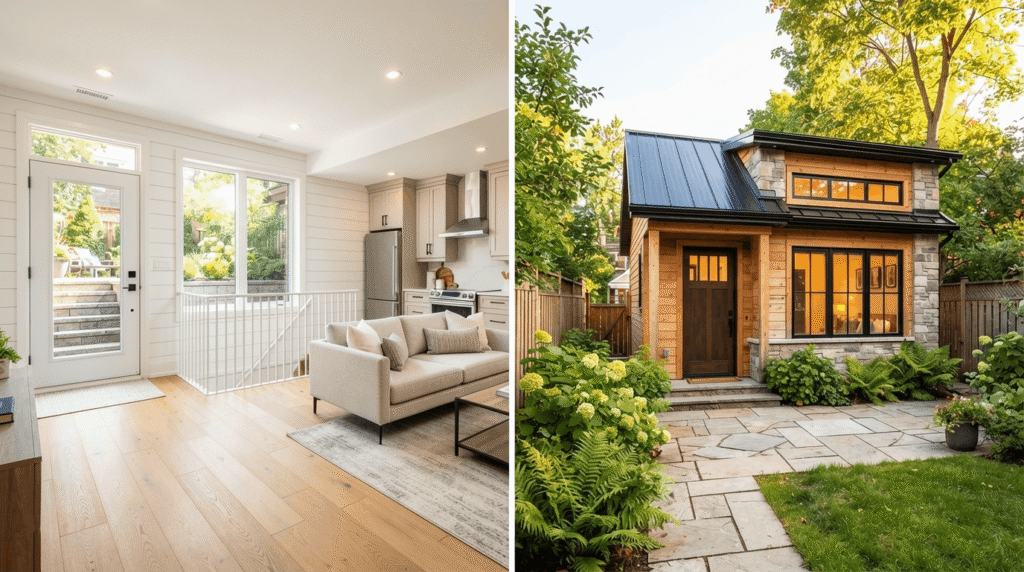
Quick Answer Box: Basement apartment vs garden suite comes down to capital and yield. A basement apartment costs $60,000 to $120,000 to build and grosses back its cost in four to six years. A garden suite costs $200,000 to $400,000, earns $1,000 or more extra per month, and adds greater long-term value.
What Is the Difference Between a Basement Apartment and a Garden Suite?
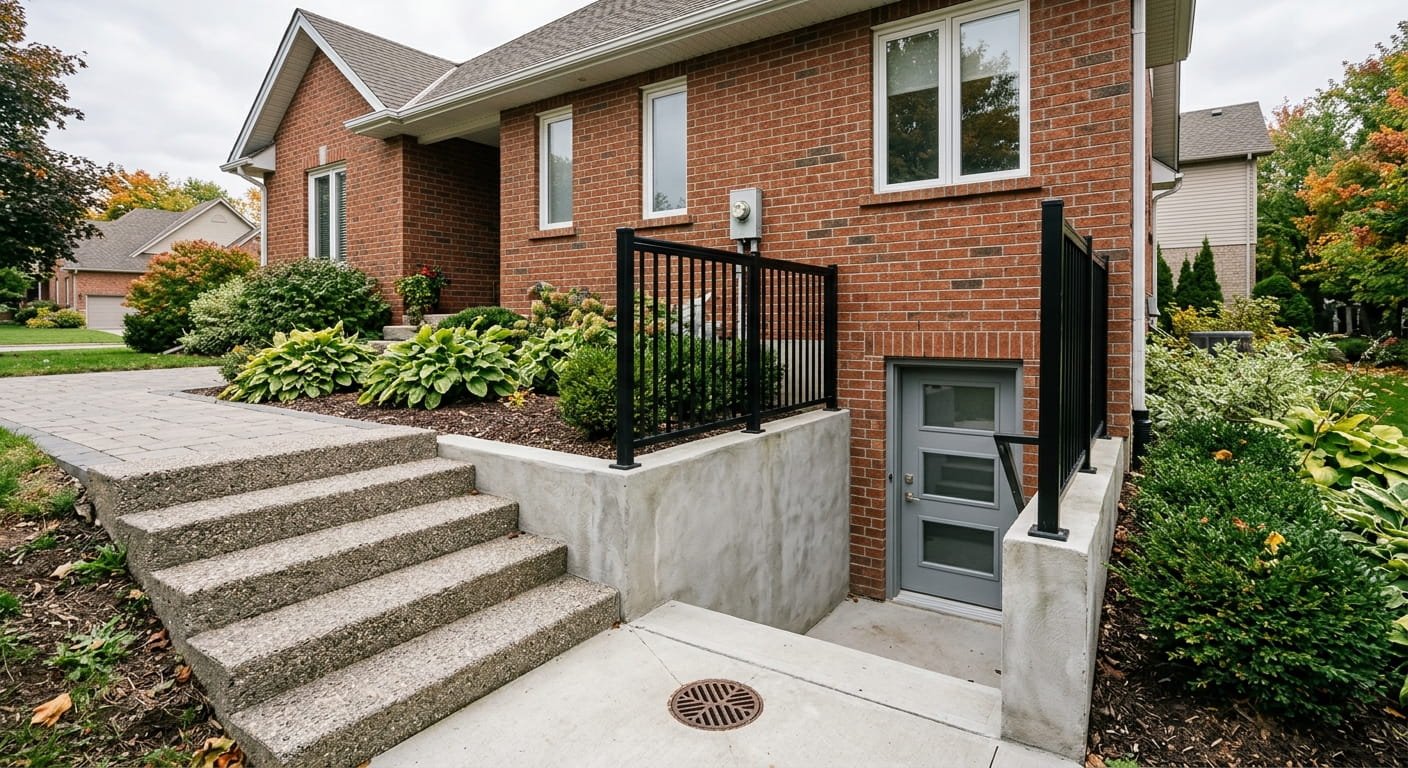
In the basement apartment vs garden suite debate, the core difference is location and capital. A basement apartment is a self-contained rental unit inside your home’s lower level. A garden suite is a detached accessory dwelling unit built in the backyard. Both count as legal secondary units in most Canadian cities.
The regulatory door is wide open. Ontario’s Bill 23 requires municipalities to allow up to three residential units on most urban lots zoned for detached, semi-detached, or townhouse homes, so one property can hold a main house, a basement unit, and a backyard suite. Vancouver, Calgary, Edmonton, and Ottawa run their own ADU frameworks with similar intent.
The money question is harder. If you’re still weighing whether a second unit makes sense at all, our guide to the perks of building an accessory dwelling unit covers the lifestyle case. This article sticks to the numbers.
Which Secondary Suite Costs Less to Build?
A basement apartment costs far less. Legal basement conversions in Canada run $60,000 to $120,000 in 2026 because the structure already exists. A detached garden suite runs $200,000 to $400,000 nationally, and turn-key Toronto builds now land between $310,000 and $470,000 for a typical 60 square metre unit.
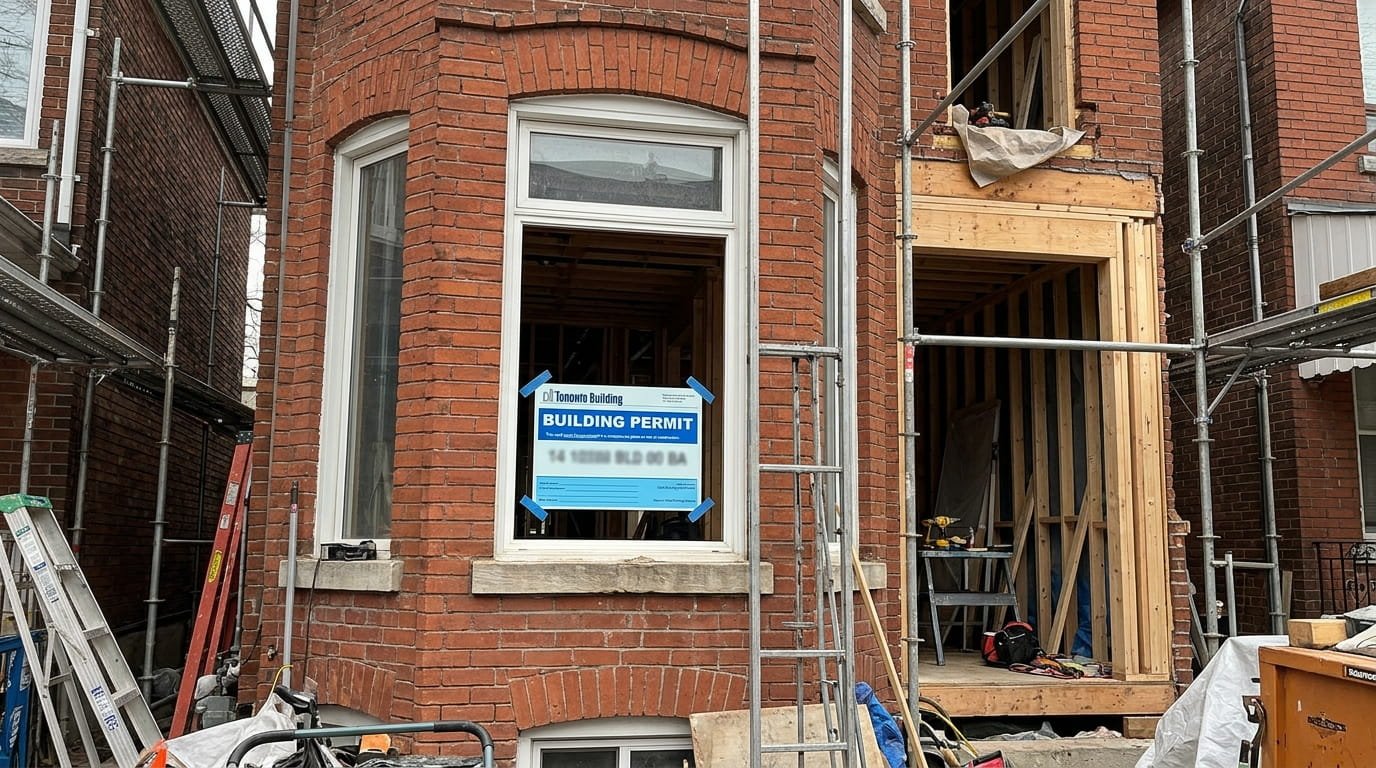
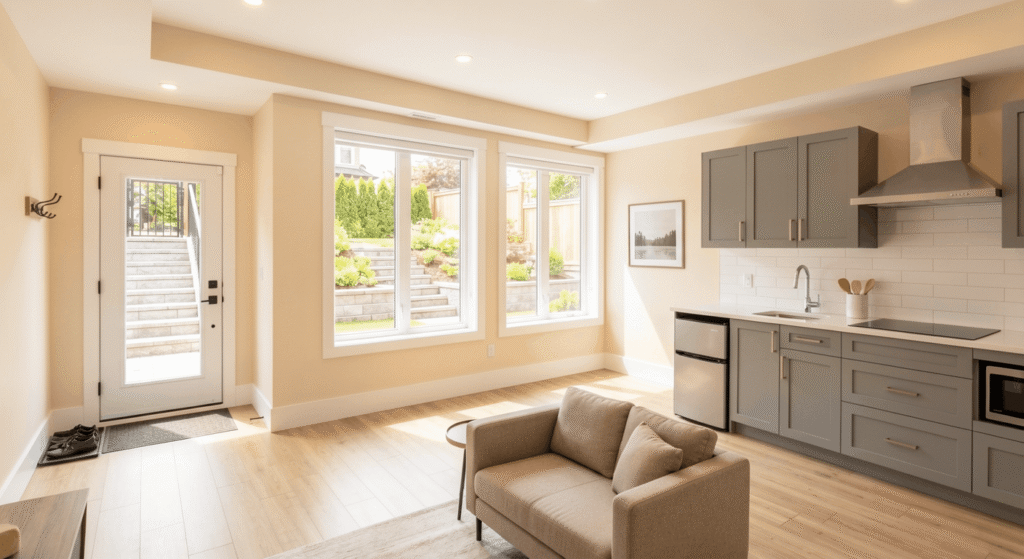
Basement budgets go toward fire-rated separation between units, egress windows, a separate entrance, kitchen and bathroom rough-in, and rental-grade finishes. Watch the ceiling. If yours sits below the Ontario Building Code minimum, underpinning adds $30,000 to $50,000 or more before finishing begins.
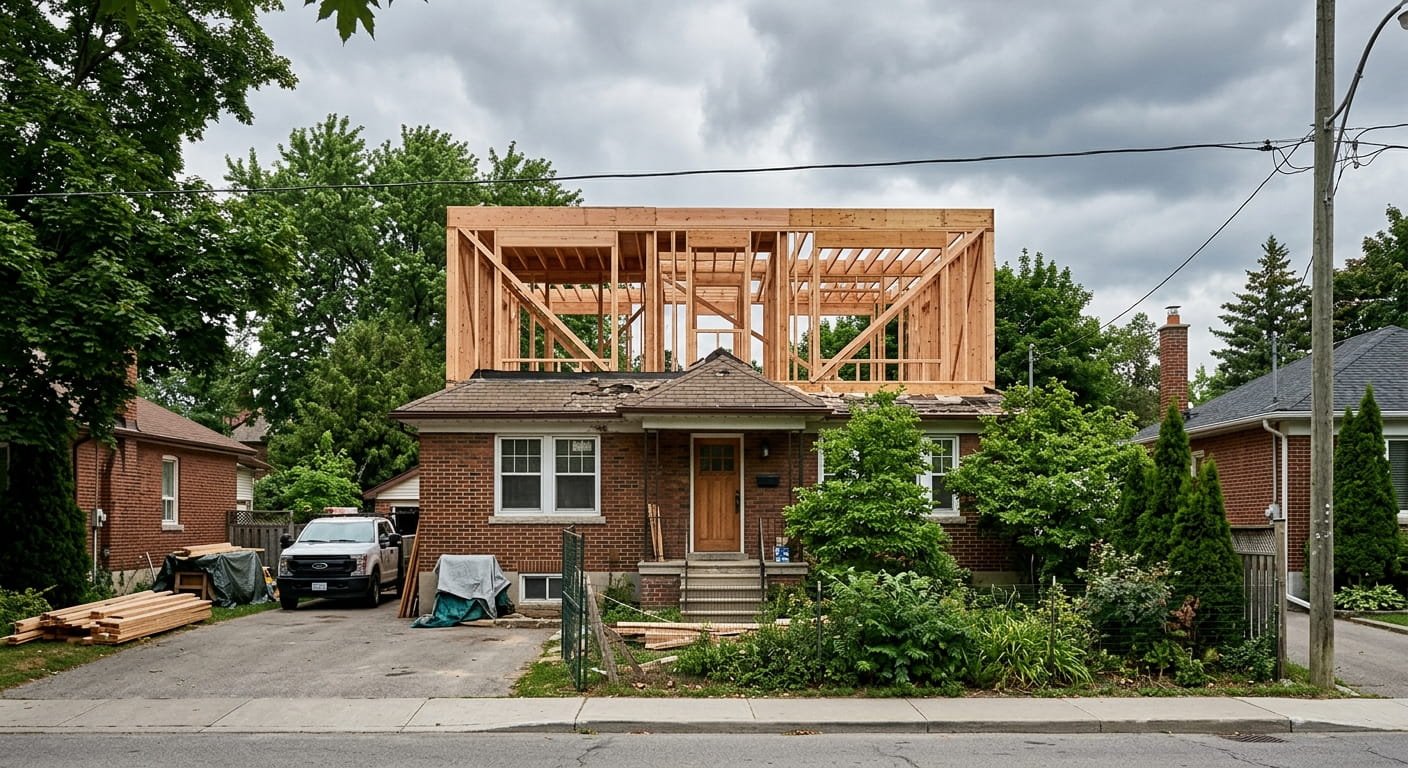
Garden suite budgets behave differently. You’re building a small house from scratch, so foundation type, utility servicing distance, and site access drive the quote. Slab-on-grade construction saves $25,000 to $40,000 compared to a full basement foundation, and most backyard units don’t need one. Even so, a garden suite still costs less per square foot of new space than a conventional home addition in many markets, because it avoids tying into the existing structure.
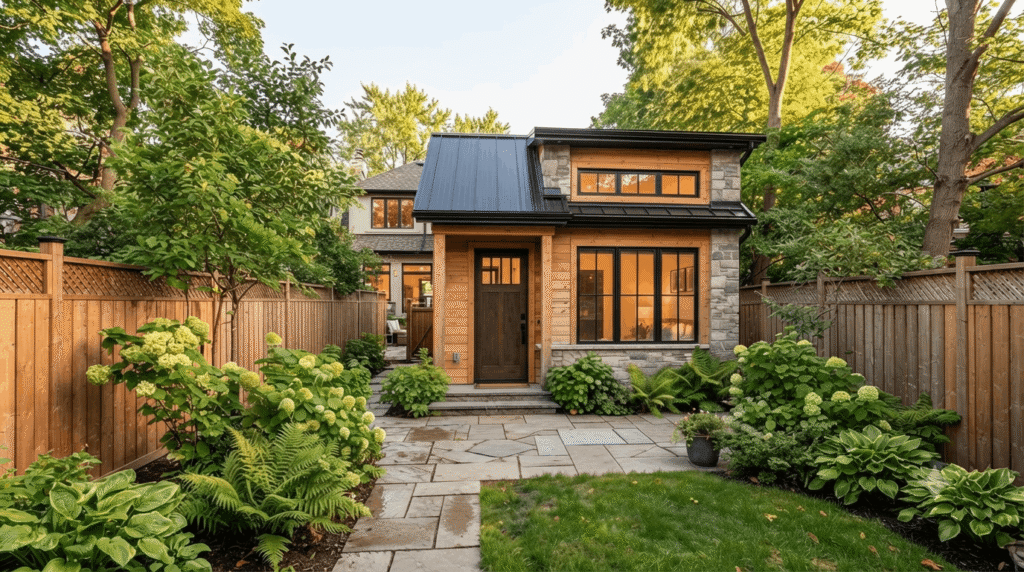
Timelines diverge just as sharply. A basement conversion typically takes 3 to 5 months from design to occupancy. A garden suite takes 6 to 12 months, with 2 to 4 months eaten by design and permits before construction starts.
| Factor | Basement Apartment | Garden Suite |
|---|---|---|
| Typical build cost (2026) | $60,000 to $120,000 | $200,000 to $400,000+ |
| Monthly rent, Toronto | $1,400 to $2,400 | $2,500 to $3,500 |
| Timeline to occupancy | 3 to 5 months | 6 to 12 months |
| Gross payback period | 4 to 6 years | 9 to 14 years |
| Privacy and natural light | Shared walls, limited light | Detached, full daylight |
Which Option Delivers a Better Return on Your Rental Investment?
Basement apartments win on payback speed. Garden suites win on monthly income and total return. An $85,000 basement conversion renting at $1,800 per month grosses back its cost in about four years. A $325,000 garden suite at $2,800 per month needs closer to ten, then out-earns the basement every month afterward.
How Much Rental Income Can You Expect?
A legal one-bedroom basement unit in Toronto commands $1,400 to $2,400 per month in 2026, with location doing most of the work on that spread. Garden suites operate a tier higher. A 500 to 600 square foot one-bedroom earns $2,500 to $3,000 monthly in Toronto, and a two-bedroom layout pushes $3,000 to $3,500. Across the wider GTA and smaller Ontario markets, expect $1,500 to $2,500.
Detached units carry a rent premium of roughly 15 to 25% over comparable basement units, driven by privacy and natural light. After insurance, maintenance, and a vacancy allowance, both options net about 15 to 20% below gross.
One number matters more than any of these: legal status. Permitted suites rent for $200 to $500 more per month than unpermitted ones, stay insurable, and count with lenders. An illegal unit is rental income the city can shut down.
Property Value Increase: Which Adds More?
Both suite types raise resale value, but a garden suite creates stronger differentiation because the buyer sees two buildings, not one house with a finished basement. Appraisers and lenders treat documented rental income from a legal unit as a financeable asset, which widens your buyer pool to investors. For a look at how detached units are reshaping demand, see our analysis of whether backyard homes can ease Toronto’s housing crisis.
One caveat rarely mentioned online: a detached suite rented long-term may trigger GST/HST on first rental and can affect the principal residence exemption on that portion of your property. Talk to an accountant before you build, not after. Treating part of your home as an investment property changes its tax picture.
What Financing and Federal Support Exist in 2026?
Start with a correction, because outdated advice is everywhere. The Canada Secondary Suite Loan Program, announced in late 2024 with promises of $80,000 loans at 2% interest, never launched. Budget 2025 confirmed it will not be implemented. Any article telling you to wait for it is steering you wrong.
Two federal supports are real. Since January 15, 2025, homeowners can refinance with insured mortgages up to 90% of their home’s post-renovation value to fund a secondary suite, on homes valued up to $2 million with 30-year amortization. And if the unit will house a senior or an adult eligible for the disability tax credit, the Multigenerational Home Renovation Tax Credit refunds 15% of up to $50,000 in eligible costs, a maximum of $7,500. A HELOC remains the default route for most owners with 20% or more equity.
Frequently Asked Questions
1. Is a basement apartment or a garden suite a better investment?
A basement apartment is the better rental investment if capital is limited: it costs $60,000 to $120,000 and pays back in four to six years. A garden suite suits owners with $250,000 or more to deploy who want higher monthly income and stronger resale value over 10-plus years.
2. Is the Canada Secondary Suite Loan Program still available?
No. The program promised up to $80,000 at 2% interest but was never launched, and Budget 2025 confirmed it will not proceed. Homeowners in 2026 should look instead at insured mortgage refinancing, a HELOC, or the Multigenerational Home Renovation Tax Credit where a family member qualifies.
3. How much rent can a garden suite earn in Canada?
Garden suites across the Greater Toronto Area earn $1,500 to $2,500 per month, while Toronto proper commands $2,500 to $3,500 depending on size and finishes. A two-bedroom layout near 700 to 800 square feet sits at the top of that range. Smaller Ontario towns typically land between $1,500 and $2,200.
4. Can I have both a basement apartment and a garden suite on one lot?
Yes, in most of urban Ontario. Bill 23 requires municipalities to permit up to three units on typical residential lots, meaning a main house, an internal secondary suite, and one detached backyard unit. Toronto goes further, allowing multiplex configurations plus a garden or laneway suite on qualifying lots.
5. What financing options exist for building a secondary suite in 2026?
Four routes cover most Canadian homeowners:
- HELOC or refinance against existing home equity, the most common path
- Insured mortgage refinancing up to 90% of post-renovation value, in effect since January 2025
- The Multigenerational Home Renovation Tax Credit, worth up to $7,500 for family-occupied units
- Lender programs that count projected rental income toward qualification
Conclusion
There’s no universal winner in the basement apartment vs garden suite decision. Choose the basement if you want the fastest payback, the smallest budget, and a unit generating rental income within a season. Choose the garden suite if you have the capital and backyard space, because it earns more each month, offers tenants real privacy, and delivers a larger value increase at resale. Either way, build legal, price the permits honestly, and run the payback math on your own lot before committing. Leedway Group’s renovation and garden suite team can help you assess which option fits your property.