

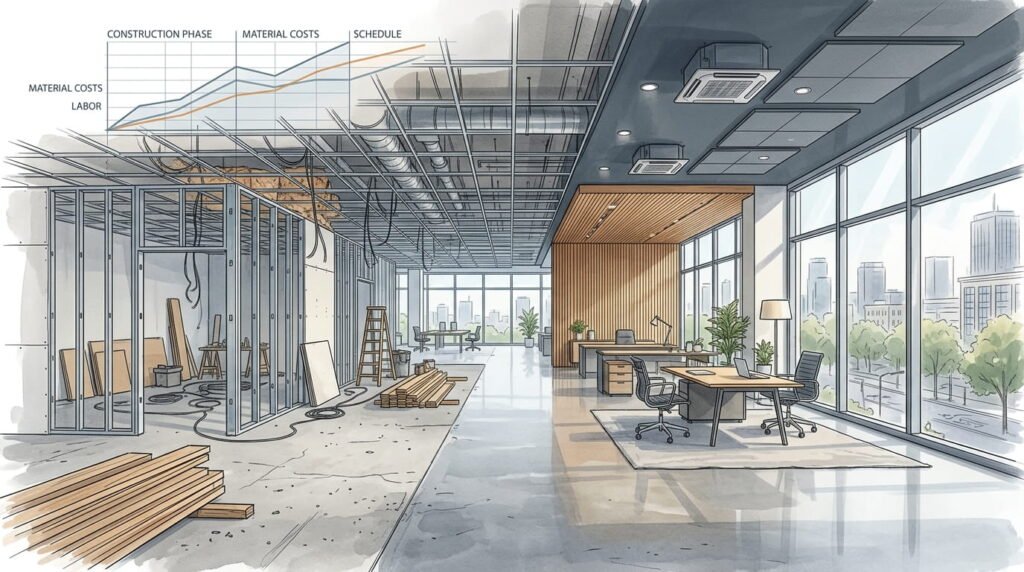
Quick Answer: Commercial renovation cost in Ontario runs roughly $30 to $350 per square foot in 2026. A cosmetic office refresh sits near the bottom of that band, a full office fit-out lands between $60 and $150, and a dental or medical build-out can reach $350. Permits, design fees, HST and contingency sit on top of those hard costs.
What Is a Commercial Renovation Cost in Ontario?
A commercial renovation cost in Ontario is the hard construction spend needed to alter an existing business space, measured per square foot of leased or owned area. It covers demolition, partitions, mechanical and electrical work, and finishes. Design fees, furniture, permits and tax sit outside that figure in most quotes.
Serving business owners across Ontario, from the GTA through Ottawa, London and Kitchener-Waterloo, this guide uses 2026 planning ranges for commercial renovation cost in Ontario rather than a single provincial average. Two units on the same street can price 40% apart, which is why commercial design-build delivery starts with a site review instead of a rate card. What’s behind the drywall usually explains the gap.
Costs are still climbing. Statistics Canada reported that non-residential building construction costs rose 1.4% in the second quarter of 2026, following a 0.9% increase the quarter before, with builders citing skilled labour shortages and tariff pressure on metal products.
How Much Does a Commercial Renovation Cost Per Square Foot in Ontario?
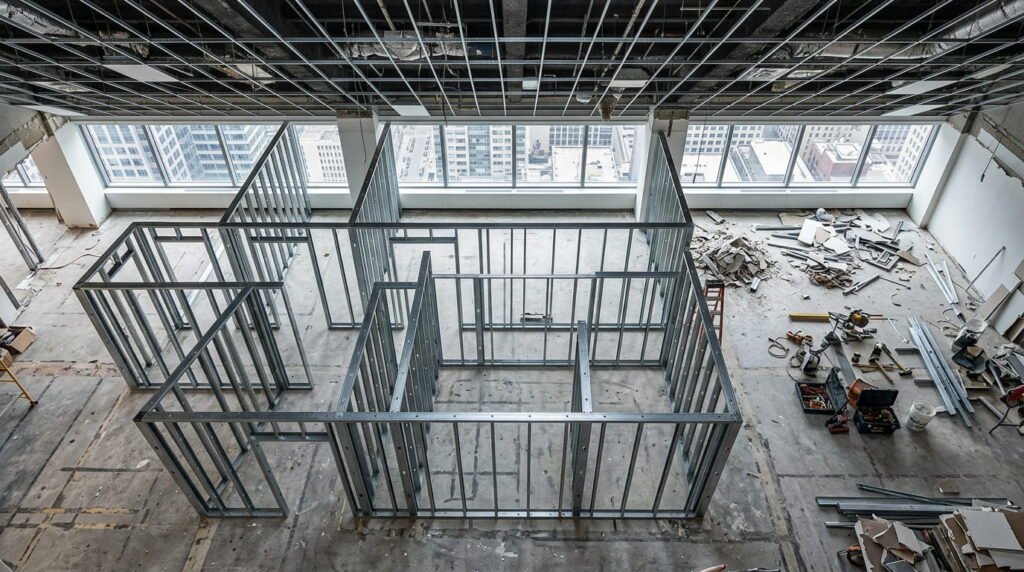
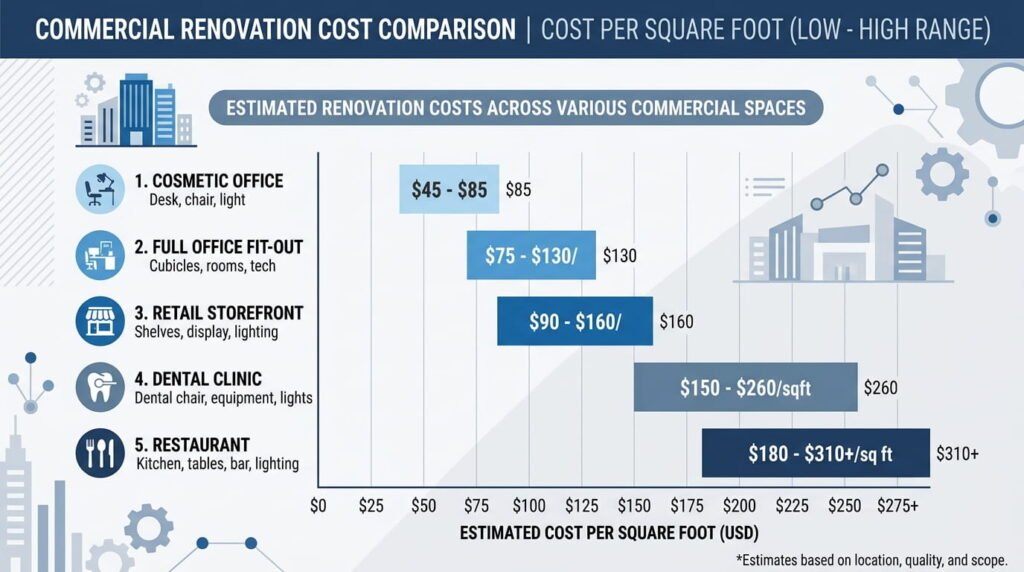
Most commercial renovation projects in Ontario land between $50 and $300 per square foot in 2026, and full fit-outs cluster at $150 to $250. Scope sets that number far more than your contractor does. A paint-and-flooring refresh and a clinic build-out share nothing except a floor plan.
| Space type | 2026 range per sq ft | 3,000 sq ft hard cost | What pushes it higher |
|---|---|---|---|
| Cosmetic office refresh | $30 to $60 | $90,000 to $180,000 | Ceiling grid, lighting, flooring |
| Full office fit-out | $60 to $150 | $180,000 to $450,000 | HVAC rezoning, data cabling |
| Retail storefront | $100 to $250 | $300,000 to $750,000 | Glazing, custom millwork |
| Dental or medical clinic | $150 to $350 | $450,000 to $1,050,000 | Operatory plumbing, imaging rooms |
| Restaurant | $100 to $300 | $300,000 to $900,000 | Hood, make-up air, grease interceptor |
Office Renovation Cost by Scope
Published office renovation cost ranges for Ontario disagree, and the disagreement is worth understanding before you compare bids. Some contractors quote basic work at $75 to $120 per square foot and mid-range upgrades at $120 to $200. Others put a cosmetic refresh at $30 to $60 and a standard renovation at $50 to $110.
Neither is wrong.
The lower figures usually exclude mechanical redistribution, sprinkler relocation, and the electrical service upgrades that the 2026 Ontario Building Code changes can trigger in an older building. Ask each bidder what their number includes before you treat two quotes as comparable.
Dental Office Renovation and Medical Fit-Outs
Dental office renovation carries the highest cost per square foot of any commercial category in the GTA, commonly $150 to $350. Every operatory needs its own plumbing and electrical runs. Add a dedicated vacuum and compressor, imaging room requirements, and mechanical work sized for infection control, and the mechanical trades alone can absorb a large share of the budget.
Retail and Commercial Remodeling Ranges
Retail commercial remodeling typically runs $100 to $250 per square foot once you include storefront glazing, fixtures and lighting design. Second-generation space is the exception. Taking over a unit where the previous tenant left compliant infrastructure in place, a functioning hood or an adequate electrical service, can cut six figures off a fit-out.
What Pushes a Commercial Construction Project Over Budget in Ontario?
Two things blow up commercial construction budgets in Ontario more than anything else: approvals that arrive late, and mechanical scope nobody priced. A third factor, the landlord contribution, is often smaller than the tenant assumed. All of them are knowable before you sign a contract.
Zoning By-Law Review and Building Permits
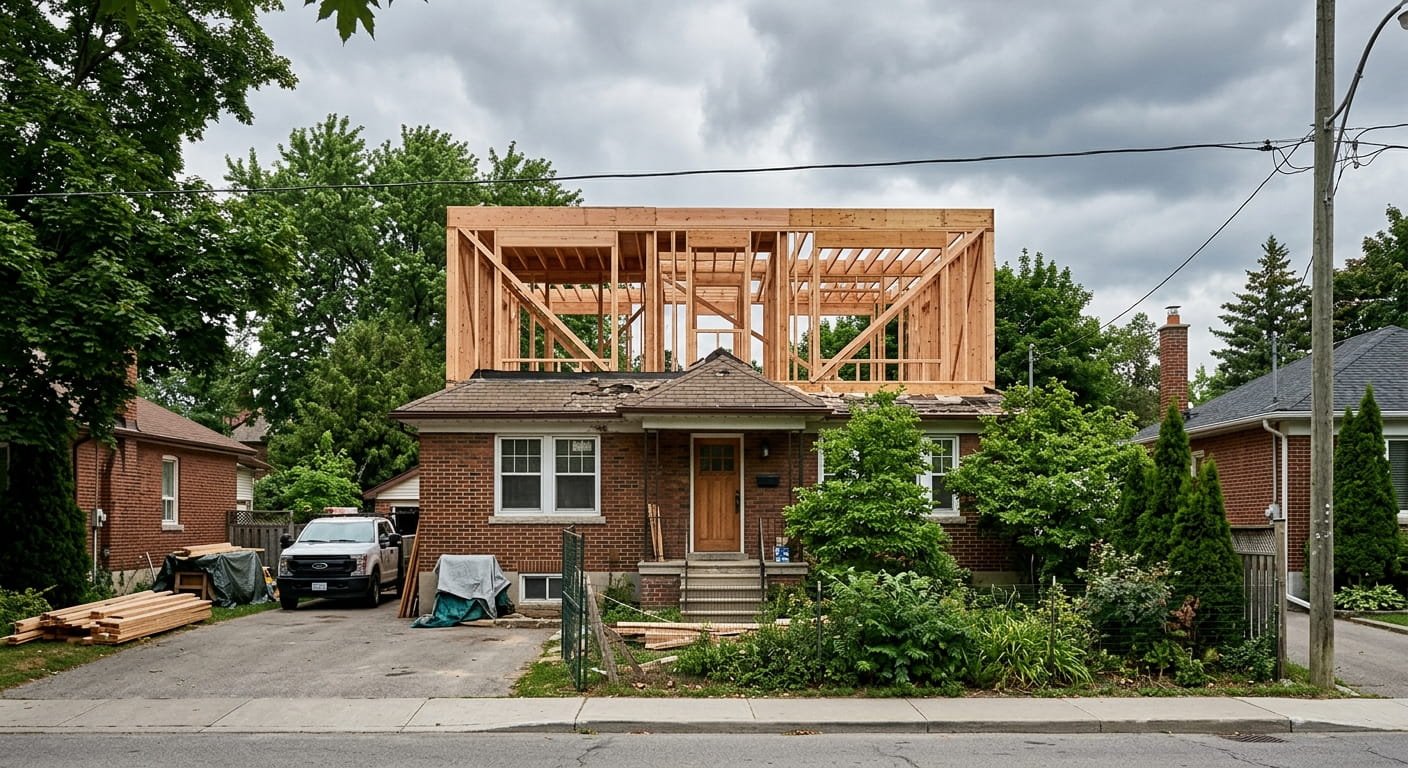
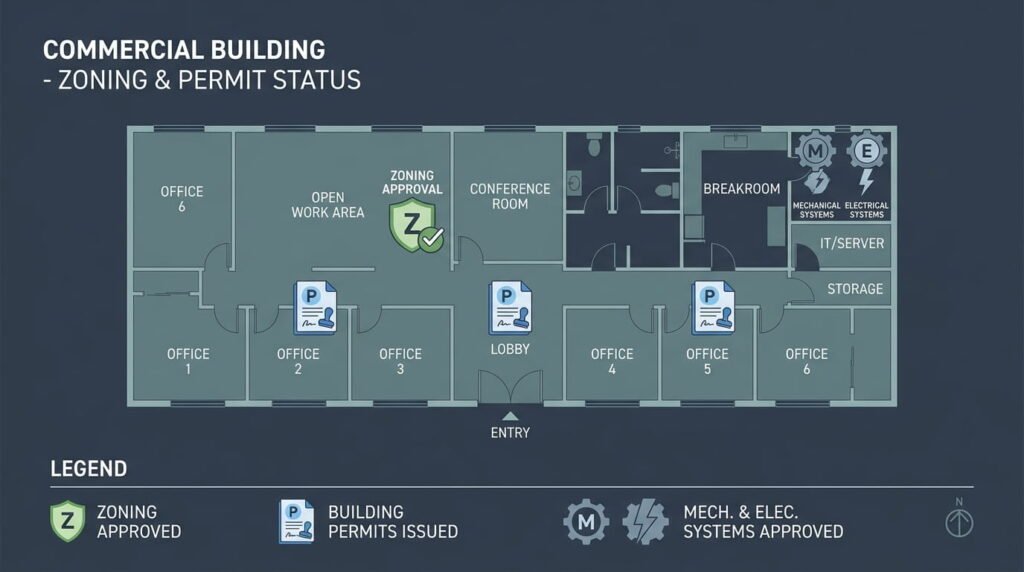
Zoning comes first, and it can stop a project cold. A zoning by-law controls what use is permitted on a property, and Ontario’s zoning bylaw guidance states plainly that development which doesn’t comply will be refused a building permit. Turning a retail bay into a clinic or a restaurant is a change of use, and change of use is where the expensive surprises live. Confirm your zone before you pay for drawings, and read up on how Ontario zoning types shape what you can build.
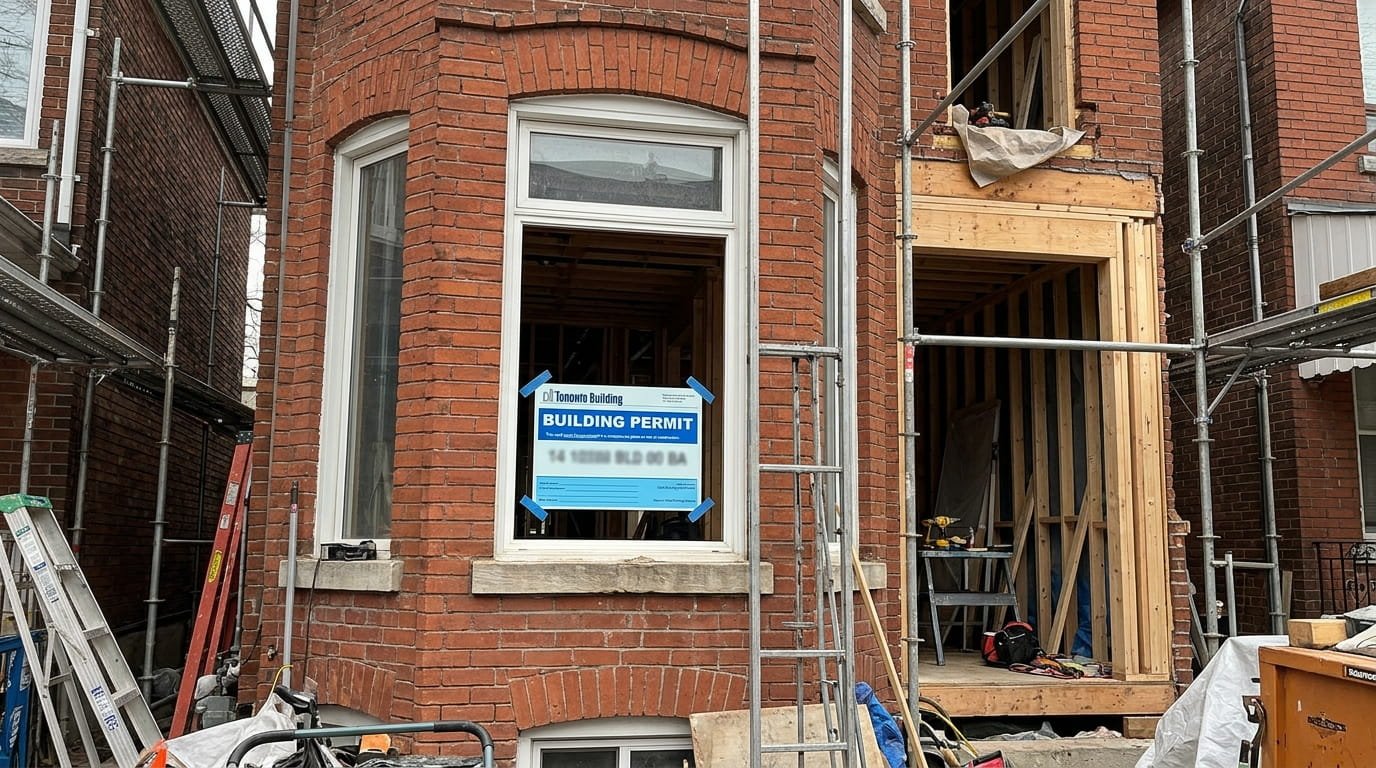
The Ontario Building Code governs how the work gets built, and it also governs barrier-free requirements inside your space. This trips people up constantly. Accessible washrooms, entrances and ramps at the time of a major renovation fall under the Building Code, not the AODA design of public spaces standards, which the province’s accessibility guidance confirms do not apply to the construction of buildings. Budget for both the drawings and the Ontario building permit process and its fees.
Tenant Improvement Allowances
Many Ontario commercial leases include a tenant improvement allowance from the landlord, commonly $30 to $60 per square foot. On a 3,000 square foot office at $100 per square foot, that covers roughly a third of the work. The allowance is negotiable, it’s usually tied to lease term, and it’s typically paid on completion rather than up front. Plan your cash flow around a reimbursement, not a cheque at kickoff.
Contingency, HST and Your Construction Budget
Here’s the line most cost guides get wrong for businesses. Ontario charges 13% HST on renovation labour and materials, and residential guides treat that as a permanent add. Commercial owners often don’t eat it. GST/HST registrants recover tax paid on purchases related to their commercial activities by claiming input tax credits, so for many businesses that 13% is a cash-flow item rather than a real cost.
Two exclusions belong in every construction budget. Furniture, fixtures and equipment usually sit outside the construction contract, and workstations alone run $1,500 to $3,500 per seat installed. Carry a separate contingency on top of the hard cost, because opening walls in an older Ontario building is where the unknowns surface.
Frequently Asked Questions
1. How much does a commercial renovation cost per square foot in Ontario in 2026?
Between $30 and $350 per square foot, depending on space type and scope. Cosmetic refreshes start near $30, standard office fit-outs run $60 to $150, and dental or medical build-outs reach $350. Full-scope commercial fit-outs across the GTA most often land between $150 and $250.
2. Do I need a building permit for a commercial renovation in Ontario?
Almost always. Structural changes, new partitions, mechanical and electrical alterations, and any change of use require a permit from your municipality under the Building Code Act. The work must also comply with the local zoning by-law before that permit is issued. Painting and finish replacement generally do not require one.
3. Can I recover the HST I pay on a commercial renovation in Ontario?
Often, yes. The Canada Revenue Agency allows GST/HST registrants to recover tax paid on purchases and expenses used in their commercial activities through input tax credits. Eligibility depends on registration status and how the space is used, so confirm the treatment with your accountant before budgeting the 13% as a sunk cost.
4. What is a tenant improvement allowance and how much should I expect?
A tenant improvement allowance is money a landlord contributes toward fitting out your leased space. In Ontario commercial leases it commonly runs $30 to $60 per square foot. The amount is negotiable and usually depends on lease length, tenant covenant, and how much of the work holds value for the next occupant.
5. What costs do commercial renovation quotes usually leave out?
Most hard-cost quotes exclude these items:
- Furniture, fixtures and equipment, including workstations at $1,500 to $3,500 per seat
- Architectural, structural and mechanical design fees
- Building permit fees and municipal application costs
- HST on labour and materials
- Lost revenue or temporary relocation during construction
Conclusion
Commercial renovation cost in Ontario is a range, not a number, and it only narrows once someone walks your space. Confirm the zoning, price the mechanical scope properly, find out what your landlord will contribute, and hold a contingency you don’t touch. Those answers move the budget more than any finish selection ever will.