

Quick Answer Box: Multi-plex buildings provide increased rental income by generating multiple revenue streams within a single property. A triplex or quadplex offers more stable cash flow, risk mitigation, and long-term appreciation than single-family homes, making these properties valuable assets for building a strong investment portfolio.
TL;DR
- Multiplex properties like triplexes and quadplexes reduce vacancy risk by offering 2–4 rental units in one building.
- A fully rented quadplex at $2,000/unit generates $8,000 of monthly rental income.
- Investors benefit from tax deductions, higher net operating income (NOI), and efficient property management.
- New Ontario policies have enabled over 700 multiplex conversions in Toronto since 2023 (City of Toronto data).
What is a Multi-Plex Building?
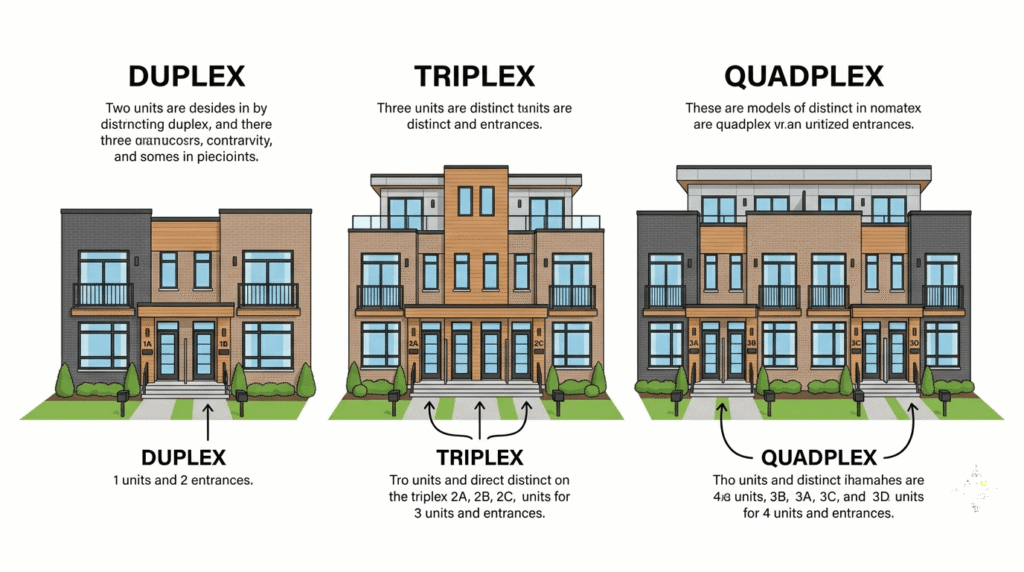
A multi-plex building is a residential structure divided into two or more self-contained units commonly defined as duplexes (2 units), triplexes (3 units), and quadplexes (4 units). These buildings are designed to house multiple families or households under one roof, allowing property owners to collect rental income from several tenants simultaneously, which differentiates them from single-family rental homes.
How Do Multi-Plex Buildings Increase Rental Income?
Multi-plex buildings increase rental income by providing several leaseable units in a single property. Even if one unit stands vacant, the others continue producing cash flow, which stabilizes overall revenue compared to single family rentals. For instance, in a quadplex with four units rented at $2,000 per month, the total monthly rental income reaches $8,000. Losses from vacancy are absorbed more easily, resulting in less volatile income streams and improved ability to meet mortgage or other financial obligations.
Owners benefit further because operating expenses, such as insurance, property taxes, and maintenance, are spread across all units, supporting a resilient net operating income (NOI) even in fluctuating rental markets. This efficiency can greatly enhance the property’s capacity to generate passive income on a sustained basis.
Advantages of Multiple Rental Streams
Multiplex properties diversify rental income by drawing from multiple tenants, which dramatically reduces the risk associated with vacancies. For investors, this means there’s a much lower chance of losing all rent at once due to unit turnover or non-payment. The consistent income facilitates better cash flow management and ease of debt servicing. As a result, multiplex buildings are considered attractive options for investors aiming for reliable, long-term returns and expansion of their investment portfolio.
Reduced Per-Unit Costs
Another key advantage is the reduced per-unit operating cost found in multiplex properties. Expenses for property management, repairs, landscaping, and shared amenities like laundry facilities can be divided among all rental units, driving down individual unit costs. This collective approach not only increases profitability through better cost efficiency, but also allows room for value-add investments such as higher-end appliances or renovations that further raise rental income.
Multiplex, Triplex, and Quadplex: Key Differences
A multiplex is a general term encompassing any residential building with multiple independent housing units. Among small scale investors, the most common types are the triplex and quadplex.
- Duplex: Contains two separate units, arranged either side-by-side or stacked. Ideal for beginner investors seeking a taste of rental property ownership with manageable complexity.
- Triplex: Comprises three distinct rental units. Triplex buildings provide one more revenue stream than duplexes, which increases resilience to lost rental income if a unit is vacant.
- Quadplex (Fourplex): Includes four separate rental units. Quadplexes maximize income opportunities under residential financing rules, while remaining easier to manage than larger apartment complexes.
Investment Characteristics
- Income Potential: Higher unit counts directly correlate with greater total passive income and rental income potential, but tend to require more active management or professional oversight.
- Financing: Properties with up to four units are typically eligible for residential mortgage products, which tend to have more favorable rates and terms than commercial loans.
- Risk Mitigation: The increased number of tenants in a triplex or quadplex dilutes the financial impact of vacancies or missed payments, strengthening overall cash flow.
Understanding these differences is fundamental for choosing the best multiplex property type based on your budget, management bandwidth, and target rental income.
Comparing Multi-Plex vs. Single-Family Rental Property
To evaluate the superiority of multiplex investments for rental income and risk, examine the direct comparison below:
| Feature | Single-Family Rental | Duplex/Triplex/Quadplex |
|---|---|---|
| Rental income sources | 1 tenant | 2–4 tenants |
| Vacancy risk | 100% if vacant | 25–50% if 1 unit is vacant |
| Expense sharing | Less efficient | Shared across all units |
| Management complexity | Simple | Moderate (more tenants) |
| Appreciation potential | Market-based | Both income and market-based |
| Tax deductions | Standard | Higher due to more expenses |
| Lending options | Residential (easy) | Residential (up to 4 units) |
| Suitable for | Passive investors | Active/portfolio investors |
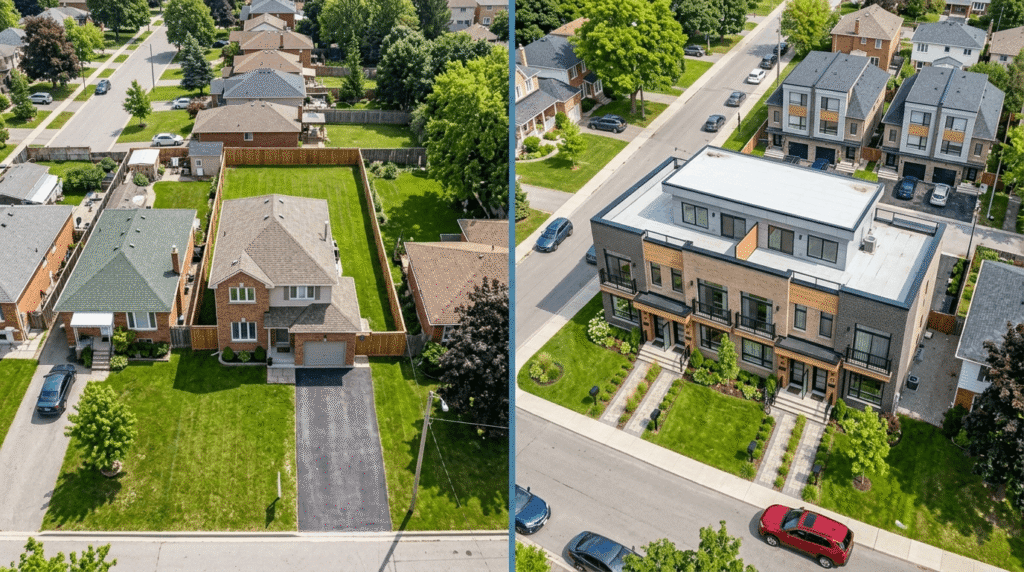
Multiplex buildings clearly outpace single-family homes in generating rental income and controlling risk, offering more income security and tax efficiency in various market cycles.
How to Maximize Rental Income with Multi-Plex Properties
Follow this practical sequence to grow your rental income and minimize risk through effective multiplex investing:
- Market and Property Analysis
Start by researching local rental demand and trends. Identify neighborhoods with rising average rents and strong occupancy rates. Resources such as Ontario.ca and City of Toronto offer valuable market and zoning data. - Financial Planning and Loan Qualification
Evaluate your budget, available capital, and lending options. In Ontario, residential mortgages cover up to four unit multiplexes, and owner-occupants can often negotiate more favorable rates. Consider extra funds for closing, repairs, and initial upgrades, and use cash flow projections to ensure your investment is viable. - Property Selection: Multiplex, Triplex, or Quadplex
Choose a property that fits your investment goals. A triplex may provide a good balance for new landlords, while a quadplex offers higher potential rental income, especially in high-demand locations. Investigate zoning and speak to local experts for guidance on feasible conversions.
Triplex Quadplex Mortgage Canada
If you’re considering a triplex or quadplex, mortgage qualification in Canada depends on building size and use. Properties with up to four units remain under residential financing jurisdiction. For further insights, refer to comprehensive planning and financial guidance.
- Value-Add Strategy & Renovation
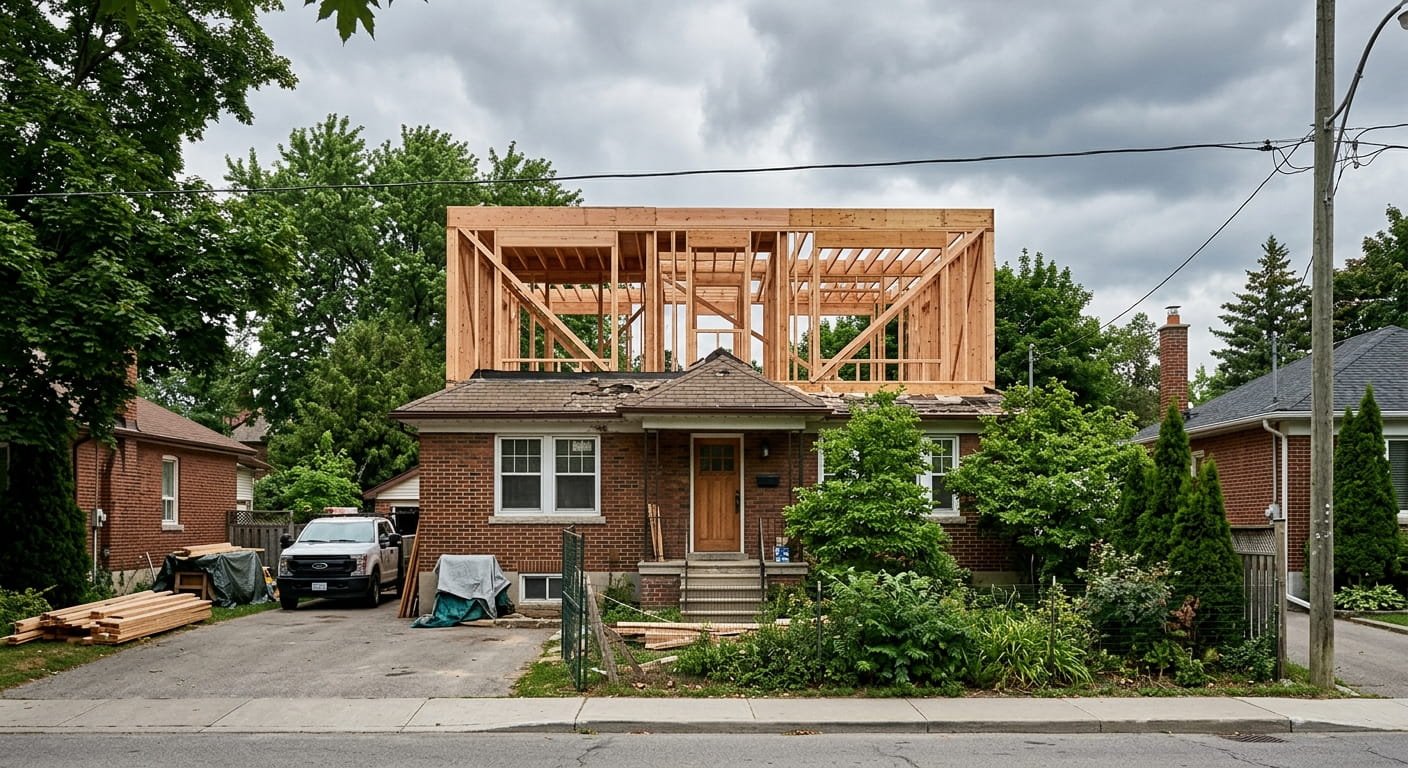
Renovate or convert properties to maximize rental value. Modernizing kitchens, updating bathrooms, and providing amenities like parking or ensuite laundry can raise tenant demand. Ontario’s updated multiplex zoning rules have increased conversion opportunities, making renovation a powerful way to boost rental income.
–Explore Renovation Strategies and Planning & Financial Guidance - Tenant Screening and Leasing
Implement a robust tenant screening process including credit and background checks to protect your investment from non-payment or costly evictions. Stay compliant with Ontario’s rental laws and privacy policies. - Rent Setting and Lease Management
Set competitive rents informed by the local market, and review lease terms regularly to adapt to market changes. Consider multi year forecasting tools to predict future trends in rental income and operating expenses. - Ongoing Management or Outsourcing
Decide whether self management or professional property management best fits your planned scale. For growing portfolios, expert managers can improve occupancy, maintenance, and compliance, while freeing investors’ time.
–Discover Our Approach and Property Management Services - Tax Optimization and Expense Tracking
Track expenses meticulously to ensure maximum deductibility. Stay updated on Ontario’s property tax rules. Consulting an accountant experienced with rental property tax planning can help minimize annual taxes.

Financial Advantages
A major draw of multiplex investment is improved net operating income (NOI) and robust, semi passive cash flow. More rental units mean income won’t collapse with a single vacancy or tenant issue.
- NOI Example: Renting a triplex at $2,000 per unit generates $6,000 monthly. Subtracting operating costs, these investments usually yield a higher NOI versus similarly priced single family rentals.
- Vacancy Resilience: With several units, even temporary vacancies have less impact on total income, maintaining lender and ownership stability.
- Passive Income: Multiplexes are sought after for passive income potential. Over time and with streamlined management, a well-leased property can generate substantial cash flow while requiring less day to day involvement.
Real-World Impact
Recent statistics show that successfully renovated or new fourplexes in Ontario have achieved price premiums of up to 50% compared to local single-family homes. Even during tight markets, average rents climbed by 1.1% in 2025, proving the resilience and growth potential of multiplex rental property.
Appreciation and Investment Portfolio Growth
Beyond regular rental income, multiplex buildings drive investment portfolio growth through property appreciation. Over the past several years, Ontario’s housing market has shown robust value gains for multiplex properties, particularly amid a wave of single-family home conversions and strategic renovations.
- Diversification: Incorporating multiplexes into your investment portfolio adds diverse rental streams, balancing out risk compared to single-family or condo holdings.
- Ontario Trends: With streamlined zoning for multiplexes, the City of Toronto and other municipalities are seeing hundreds of older properties converted into higher-yield multi-unit investments each year.

Equity Growth and Value Add Strategies
By proactively upgrading and repositioning properties, investors can force appreciation, increasing both their immediate rental income and long term capital value. Portfolio managers recommend multiplexes for balancing cash flow against appreciation making them ideal anchors for real estate wealth building.
Tax Considerations and Property Taxes for Multi-Plexes
Multiplex properties offer significant tax advantages for owners looking to grow their rental income and protect their investment portfolio returns.
- Deductible Expenses: Mortgage interest, property taxes, repairs, and utilities are all deductible. Routine maintenance, management fees, and even advertising costs can dramatically reduce taxable rental income.
- Depreciation and Expense Allocation: Beyond standard deductions, investors can depreciate the cost of buildings over time (but not land value), minimizing annual taxable income. Multiplex property owners also allocate expenses like landscaping and shared systems across all units, maximizing each deduction.
- Property Taxes: In Ontario, property taxes are tied to assessed market value and can be allocated across all units, lessening per unit tax burden versus single-family rentals.
Ontario Multiplex Zoning Rules
Understanding Ontario multiplex zoning rules is vital to optimizing tax and property compliance. Investors should consult municipal and provincial websites, such as Ontario.ca, and work with accountants who understand current regulations to minimize risks and increase after-tax rental income.
Tenant Screening and Property Management in Multi-Plex Rentals
Having reliable tenants and robust property management systems are key to sustainable returns from multiplex properties. Tenant screening evaluates each applicant’s financial and rental history for signs of reliability.
Tenant Screening Multi-Unit Ontario
Best practices for tenant screening in multi-unit Ontario properties involve background checks, income and employment verification, and adherence to all provincial privacy and anti-discrimination mandates. Strong screening prevents costly turnovers and maintains high occupancy rates.
Property Management Approaches
Investors can choose to self manage or hire property management professionals. Larger portfolios, or those seeking truly passive income, generally benefit from outsourcing to companies familiar with rental property operations, legal compliance, and maintenance. Well managed maintenance protocols also reduce tenant turnover and bylaw risks.
Always stay updated about changes in Ontario’s Residential Tenancies Act and local licensing, as outlined at Ontario.ca. For more detailed guidance, refer to internal resources such as FAQ and Our Approach.
Common Mistakes When Investing in Multi-Plex Properties
Many new investors make similar mistakes when entering the multiplex rental market. Understanding and avoiding these errors ensures better rental income and property appreciation.
- Underestimating Expenses: Overlooking vacancy allowances, maintenance, and rising property taxes quickly erodes returns. Maintaining emergency reserves is essential.
- Weak Tenant Screening: Filling units with unqualified tenants can lead to non-payment, evictions, and rapid turnover, all of which threaten stable passive income.
- Ignoring Local Laws: Failing to follow licensing, rent control, or tenant rights regulations, especially in Ontario, can result in legal and financial penalties.
- Neglecting Maintenance: Delays in routine repairs can lead to further damage, decreased property value, and tenant dissatisfaction, all raising turnover rates.
- Overleverage: Too much debt, especially without cash reserves to cover unexpected vacancies or repairs, puts investors at significant risk during market downturns.
- Poor Property Management: Self-managing without the right skills or bandwidth leads to burnout and declining NOI. Professional management often pays for itself through higher occupancy and compliance.
Continued education, comprehensive planning, and leveraging professional support are the best hedges against these common pitfalls.
Frequently Asked Questions
1. What types of multiplex buildings qualify for residential financing?
Residential mortgages in Canada typically apply to properties with up to four units such as duplexes, triplexes, and quadplexes. Owner occupiers enjoy maximum flexibility, with reduced down payments and competitive interest rates. Properties with more than four units require commercial financing and have stricter lending criteria.
2. How does a triplex compare to a quadplex for rental income?
A quadplex typically generates higher rental income than a triplex because it features an additional unit. This potential boost can increase total income by up to 33%. While quadplexes involve increased management and operational responsibilities, their income stability makes them highly attractive for investors prioritizing consistent cash flow.
3. What are the major risks of investing in multi-plex buildings?
The primary risks include extended vacancy periods, unexpected maintenance expenses, tenant defaults, and failure to comply with evolving landlord tenant laws. Investors can effectively minimize risk by maintaining cash reserves, conducting detailed tenant screening, keeping up with property maintenance, and following Ontario’s property regulations.
4. How do property taxes impact net rental returns on multiplexes?
Property taxes are a significant expense that directly impacts net rental income and NOI. For multiplex properties in Ontario, taxes are assessed based on current market value but can be divided among several units, lowering individual unit tax burden compared to single family houses. For up to date figures, consult the Ontario property tax website.
5. Can I live in one unit and rent out the rest?
Yes, owner-occupying one unit while renting out the others is a popular strategy, especially for first-time real estate investors. This approach helps offset mortgage and operating expenses while retaining eligibility for residential financing. Owners must remain compliant with landlord-tenant laws and may qualify for additional mortgage and tax benefits.
Conclusion
Multiplex buildings including triplexes and quadplexes offer investors compelling opportunities for increased rental income, greater risk mitigation, and sustainable portfolio growth. By taking advantage of multiple independent rental streams within a single property, investors not only achieve more stable cash flow, but also benefit from operational efficiencies, tax advantages, and enhanced property appreciation potential.
For more guidance on planning, property selection, or turnkey project support, explore Leedway Group’s Services, Planning & Financial Guidance, or connect directly via our Contact page.