

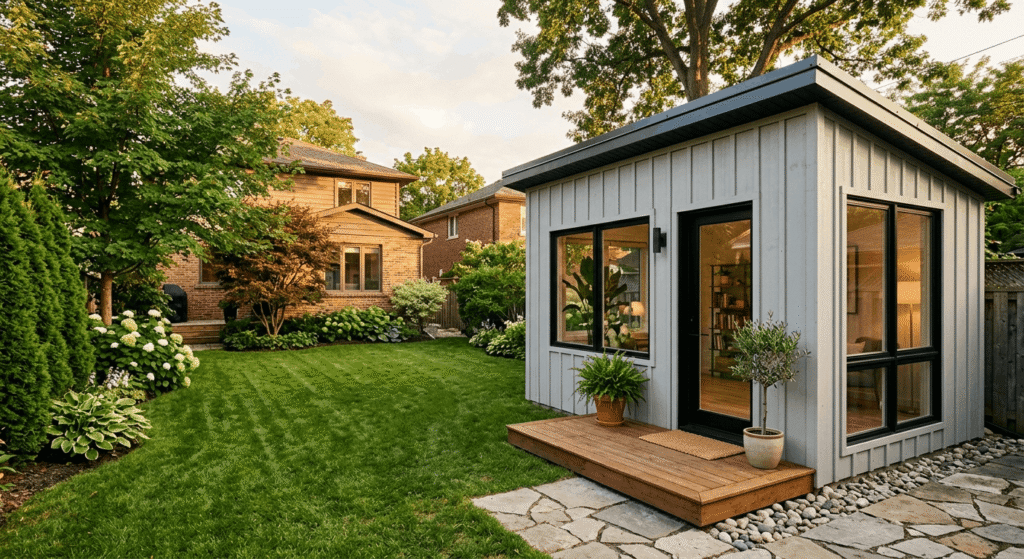
A garden suite is a detached, self-contained home built in the backyard of an existing house, with its own kitchen, bathroom and sleeping area. In Toronto it can be up to 645 sq ft (60 m²) and two storeys, and it needs no parking space. A typical build in the GTA costs $200,000 to $450,000 depending on size, servicing and finishes. Permits usually take 8 to 16 weeks and construction another four to six months.
Thinking about a garden suite? Leedway Group checks your lot, handles permits and builds garden suites and laneway houses in Toronto and Mississauga. See our garden suite service.
What is a garden suite?
A garden suite is a self-contained, detached home on the same lot as a house, usually in the backyard. People also call it a backyard suite, a granny flat or a granny suite. It has its own kitchen, bathroom and sleeping area, and its own entrance from the yard. Unlike a laneway suite, a garden suite doesn’t need a rear lane, so most detached and semi-detached lots in Ontario can take one. Homeowners build them to house relatives, to earn rental income or to get flexible extra space, and the new zoning rules have made them one of the easiest ways to add a second home to a property in Ontario.
Garden suite vs laneway house and other secondary suites
All of these count as secondary suites, which Ontario rules also call additional residential units. The difference is where the unit sits and which zoning rules apply to it.
- A basement apartment is inside the main house. It’s usually cheaper to build, but it shares walls, noise and often a furnace with the family upstairs.
- A laneway house sits at the back of the lot facing a public lane and follows its own zoning standards.
- A garden suite is detached and doesn’t front onto a lane. Firefighters reach it by a path from the street, which is why the access path rule below matters so much.
- Coach houses and carriage houses are older names for backyard buildings that once held staff quarters or vehicles. Many can be converted into a legal suite, though heritage districts may add review steps.
- A modular or prefab unit can be a legal garden suite, but it needs the same building permit, setbacks, height limits and green space as a site-built one.
What people use a garden suite for
Most garden suites end up doing one main job, and that job should shape the design from the first sketch.
Aging parents. A garden suite lets a parent live a few steps away with their own front door, kitchen and routine. Build for it from the start: a step-free entry, a roll-in shower, wider doorways and a main-floor bedroom cost far less now than as a retrofit later. If the parent is 65 or older, or is an adult eligible for the disability tax credit, the federal Multigenerational Home Renovation Tax Credit can apply. For a suite finished in 2026 it’s 14% of up to $50,000 in eligible costs, so a maximum of $7,000, and it’s refundable. A new garden suite on the same property qualifies as long as the related senior or adult with a disability is the one moving in.
Adult children. With GTA rents where they are, a garden suite gives grown kids a place of their own while they save. Years later the arrangement can flip, with the kids taking the house and the parents moving into the suite.
Rental income. A long-term tenant in a garden suite typically pays $1,500 to $3,000 a month, depending on the city, the size of the suite and the finishes. That money can go against the mortgage or pay back the build over time. In Toronto, the Affordable Laneway and Garden Suite Program offers up to $50,000 as a forgivable loan if you agree to keep the rent below the city’s average market rent for 15 years. Check the current terms with the city before you count on it.
Home office or studio. A detached space in the yard puts a door and a lawn between work and home, which helps if you see clients or need real quiet. Build it to full suite standard with a kitchen and bathroom, and it can become a guest suite or rental later.
Downsizing in place. Some owners move into the garden suite themselves and rent out the main house or hand it to family. You stay on your street, near your neighbours, with a lot less house to heat and clean.
Whatever the use, a permitted garden suite adds finished floor area and a second legal unit to the property, and buyers notice both. An unpermitted one does the opposite and can hold up a sale or an insurance claim.
Key regulations for garden suites in Ontario (2026)
Ontario Regulation 462/24, fully in force since November 2024, sets province-wide criteria for garden suites and overrides some older municipal bylaws. The province has a target of 1.5 million new homes by 2031, and backyard suites are one of the ways cities add homes to established neighbourhoods without changing their character. In Toronto, this work runs under the Expanding Housing Options in Neighbourhoods (EHON) initiative.
In Toronto, By-law 89-2022 amended Zoning By-law 569-2013 to allow a garden suite in the R, RD, RS, RT and RM zones, as long as the main house is detached or semi-detached. Garden suites in Toronto have no parking requirement, and provincial direction pushes cities toward faster permitting.
Mississauga and Brampton have also brought their local rules in line with the provincial standards. In Toronto the maximum garden suite size is 645 sq ft (60 m²), the height cap is two storeys or 6 metres, and the suite can cover up to 40% of the rear yard. Every garden suite needs a 1-metre-wide access path from the street to meet emergency access rules.
The More Homes Built Faster Act (Bill 23) streamlined approvals and exempted small suites under 100 m² from development charges. Municipalities can still set their own requirements, such as different setbacks, lot coverage limits or extra steps for heritage and environmentally sensitive properties. For the official criteria, see the City of Toronto Garden Suites Overview.
Toronto zoning bylaw and municipal nuances
Before you design anything, read your local zoning bylaw for setbacks, coverage and parking. Markham may require a separate site plan application. Brampton and Mississauga each have their own maximum sizes and exemptions, so if you’re looking at a garden suite in Brampton or Mississauga, check the current city guide and use the city’s mapping portal to confirm your lot is eligible. Outside the GTA the rules can be tighter. Ottawa, for example, tends to be stricter than Toronto on lot dimensions and suite placement, with larger setbacks.
Garden suite permits and zoning: step-by-step approval process
Every garden suite needs a building permit. Building, living in or renting one without final approval can bring fines and leave you with insurance problems. In most GTA cities the approval process runs like this:
- Confirm the lot qualifies. Check that your property is in an eligible zone (in Toronto, R, RD, RS, RT or RM) and that a backyard suite is allowed. Heritage areas, flood zones and unusual lot shapes have special rules.
- Get a preliminary site review. City planning staff or a designer can flag constraints early. Some cities require site plan approval, which can add six to eight weeks.
- Check trees and neighbours. If there’s a protected tree near the build area, you’ll need an arborist report. Some cities also require neighbour notification before they approve a secondary suite.
- Prepare drawings and documents. Hire an architect or technologist who knows garden suite design and the Ontario Building Code. The package usually includes a survey, plans, elevations and code compliance details. Design fees in Toronto average $8,000 to $15,000.
- Submit the application. Send the complete package, with drawings and permit fees, through the city’s portal. Toronto takes applications through its Building Permit Application Portal.
- Permit review. With complete documents, review usually takes 8 to 16 weeks, which is faster than it used to be under Regulation 462/24. Complex or heritage sites can take longer.
- Construction and city inspections. Once the permit is issued, work can start. The city inspects footings, framing, plumbing, electrical and final finishes before it grants occupancy.
- Register the suite if you’re renting. Some cities require a rental licence or registration for a second unit, so check before a tenant moves in.
City-specific application steps
- Toronto has no parking requirement and a maximum size of 645 sq ft, and you can check status online through the Garden Suite portal.
- Mississauga offers pre-approved garden suite plans and lays out typical timelines and steps in its housing guide.
- Brampton follows Toronto-style zoning with its own setback and coverage rules. Confirm whether you need site plan approval before you submit.
An experienced garden suite builders Toronto team that knows the 2026 rule changes will save you time. Stay in touch with city staff and ask for regular updates, since that cuts the risk of surprise delays.
Garden suite cost breakdown in Ontario (2026)
A garden suite in Ontario typically costs $200,000 to $450,000 or more. Suite size, lot layout, the builder, finishes, permit costs and how far services have to run all move the number.
| Item | Typical cost (2026) |
|---|---|
| Small suite (400–500 sq ft) | $200,000–$275,000 |
| Mid-size suite (500–650 sq ft) | $275,000–$350,000 |
| Large suite (700–1,100 sq ft, where allowed) | $350,000–$450,000+ |
| GTA average per square foot | $250–$350 |
| Professional, design and permit fees | $8,000–$20,000 |
| Utility connections | $10,000–$20,000, and $30,000+ on difficult sites |
On top of the estimate, hold back a contingency of 10 to 20% for things nobody can see until the ground is open.
What drives garden suite cost?
- Size and complexity. More bedrooms and bathrooms, or a high-end design, cost more.
- Servicing. If water, sewer or hydro need upgrading to reach the back of the lot, the fees go up.
- Foundation. Most garden suite plans use slab-on-grade to keep costs down. A basement is rare and adds a lot.
- Finishes. Premium kitchens, custom storage and high-end bathrooms push the budget up.
- Soft costs. Drawings, permits, utility studies and city approvals are easy to forget when you’re pricing the building itself.
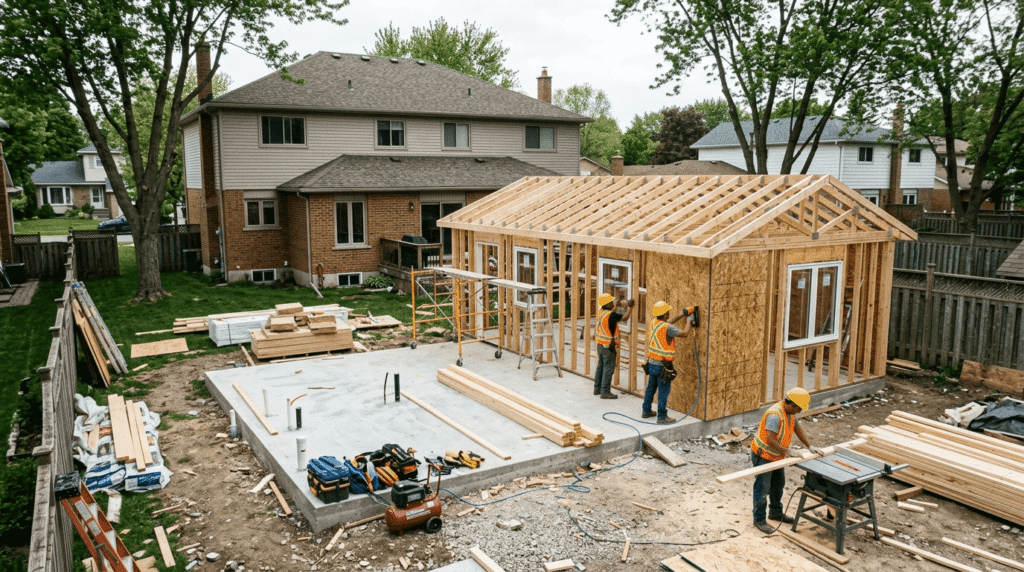
- Site work and access. Narrow lots, mature trees and an old garage or shed that has to come down all add to the site budget.
Backyard suites under 100 m² are now exempt from development charges, which is a real saving, as set out in the City of Toronto’s standards.
For help working out your numbers, see our Planning & Financial Guidance section.
Comparison table: Toronto, Mississauga and Brampton garden suites
| Feature | Toronto | Mississauga | Brampton |
|---|---|---|---|
| Typical Total Cost (2026) | $225,000–$375,000 | $215,000–$350,000 | $210,000–$350,000 |
| Suite Size Limit | 645 sq ft / 60m² max | 600–650 sq ft (by lot) | No cap; lot/coverage rules apply |
| Height/Storeys | Max 2 storeys / 6m | Max 2 storeys | Max 2 storeys |
| Yard Coverage | Up to 40% rear yard | Up to 40% | 30–40% rear yard |
| Parking Req’d | None | 1 space (some exemptions) | 1 space (lot-dependent) |
| Permit Timeline | 8–16 weeks | 8–16 weeks | 8–14 weeks |
| Pre-approved Plans | No (planned for 2026) | Studios/1-bed plans available | Not yet (pending 2026) |
| Utility Hookups | $12,000–$22,000 avg | $10,000–$18,000 | $10,000–$20,000 |
| Development Charges | Exempt if <100m² (2026+) | Exempt if <100m² | Exempt if <100m² |
Rules change often, so check your municipality’s housing portal before you commit to a design.
Garden suite design trends and modern plans
Good garden suite design is about making 400 to 650 sq ft feel like a full home. These are the ideas showing up most in 2026 plans:
- Open-concept layouts. Combining the kitchen, living and dining area gives more light and flexibility.
- Privacy. Place doors, windows and the entrance so they don’t look straight into the main house. If a tenant will live there, insulate walls and floors for sound as well.
- Accessibility. Zero-step thresholds, roll-in showers and wider doorways suit seniors and anyone with mobility needs.
- Smart storage. Built-ins like under-stair cupboards, Murphy beds and integrated cabinetry add usable space to a small footprint.
- Outdoor space. A deck, terrace or small patio extends the living area into the garden.
- Lower running costs. Energy-efficient HVAC, a green roof or permeable landscaping cut utility bills and runoff. Our guide to sustainable construction practices covers the options.
Popular garden suite plans
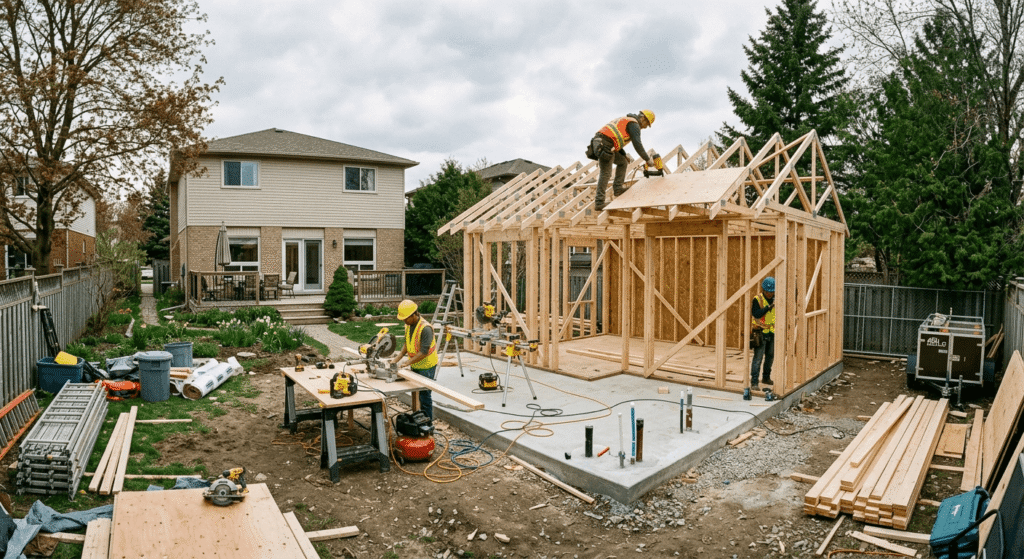
Demand is strong for both custom and pre-approved garden suite plans, especially in Mississauga and Toronto, where a pre-approved plan can save time and money at the permit stage. Studios and one-bedroom layouts are the most common. Two-bedroom garden suite plans suit families and long-term tenants, and within Toronto’s 645 sq ft limit they usually work best over two storeys.
A typical modern garden suite includes:
- A combined kitchen, dining and living area
- A private bedroom (or two in larger plans)
- A full 3-piece bathroom
- A laundry closet
- Direct access to a small deck or yard
Accessibility, low maintenance and rental potential drive most new builds. For real examples, see our Projects and Custom Homes.
How to plan and build a garden suite in your backyard
Here’s the order to work in for a garden suite project in Ontario:
- Check the lot and the bylaw. Use your city’s portal or call planning staff to confirm your address qualifies. Measure the backyard and the side path for size and access.
- Set the budget and line up financing. Use $250 to $350 per sq ft as a starting point, add your contingency, and look at the federal Secondary Suite Loan Program for low-cost construction loans.
- Choose a qualified builder. Hire registered, experienced garden suite builders in Toronto and the GTA who know Ontario’s rules and construction standards. Look through their portfolio and talk to past clients.
- Pick the right plan. Weigh custom against pre-approved garden suite plans, and choose a design that suits your backyard and your city’s approval process.
- Apply for permits and track them. Prepare the drawings and compliance documents, apply through the city’s online portal and check progress often.
- Stay involved during construction. Be around from ground-breaking through inspections and finishing, and coordinate with city inspectors at each stage.
- Close out and move in. Get the final inspection and occupancy sign-off, finish utility set-up and landscaping, and start your tenant search if you’re renting.
For full project management from lot check to move-in, see Leedway Group’s Services.
Selecting the best garden suite builders Toronto
When you hire garden suite builders in Toronto or the GTA, check for Tarion registration, an HCRA licence, insurance and recent experience with Ontario Regulation 462/24 and local codes. A good builder handles the design and the permit process and can tell you up front what’s in the price and what isn’t. Leedway Group is a family-owned, Tarion-registered and HCRA-licensed builder that has worked in the GTA since 2009. Read About Us and Our Approach to see how we run a project.
Common mistakes to avoid with garden suites in Ontario
Most delays and cost overruns come from the same short list of mistakes:
- Incomplete or inaccurate plans. Applications that miss details or ignore city-specific rules, like those in the Toronto zoning bylaw, get sent back for corrections. Work with local professionals who know the rules.
- Too thin a budget. Leaving out site prep, utility upgrades or a contingency can stall a project halfway.
- Ignoring zoning and permit timelines. Not every lot qualifies, and review times vary by city and even by lot.
- Underestimating utilities. Running water, sewer and power to the back of the lot, especially around tree protection zones, adds time and cost.
- Blocking the emergency path. If the 1-metre access route from the street isn’t clear, the permit can be refused or the design sent back for changes.
- Skipping privacy and soundproofing. Windows that face each other and thin walls cause friction between the house and the suite, and with the neighbours.
- Hiring the wrong builder. Not every contractor knows Ontario’s garden suite rules.
- Working from outdated rules. Ontario Regulation 462/24 overrides some older municipal requirements.
- Planning on short-term rentals. Nearly all Ontario cities restrict Airbnb-style rentals in garden suites in 2026.
To protect your project and save time, see our Planning & Financial Guidance and Warranty pages.
FAQ: garden suites Ontario
Are garden suites legal everywhere in Ontario?
In most places, yes. Province-wide rules now require most residential zones in Ontario to permit garden suites. Some heritage-designated sites, floodplains and condominium properties may not be eligible, so check your zoning with the municipality, or its online eligibility map, before you start.
How long does it take to get permits and build a garden suite?
Expect 8 to 16 weeks for permit review if your submission is complete. If your city also needs site plan approval, add another 6 to 8 weeks. Once the permit is issued, construction by a professional builder usually takes four to six months. Ask your builder for updates at every stage.
What is included in the average garden suite cost?
The average garden suite cost in Ontario covers architectural and permit fees, labour and materials, the foundation, the building envelope, HVAC, electrical, utility hookups, interior finishes and landscaping around the new suite. Premium appliances, a major fence replacement or large-scale grading are usually extra. For a detailed estimate, visit our Services.
Can I rent out my garden suite for short-term stays?
Almost never. Nearly all Ontario municipalities prohibit Airbnb-style rentals in garden suites under 2026 zoning, and most require a minimum lease of 28 to 30 days. Long-term rental is allowed in most cities, and a long-term tenant typically pays $1,500 to $3,000 a month. Garden suites are best designed for long-term tenants, family or a caregiver.
Does a garden suite for my parents qualify for a tax credit?
It can. The federal Multigenerational Home Renovation Tax Credit covers a garden suite on the same property if the person moving in is a related senior aged 65 or older, or an adult eligible for the disability tax credit. For a suite finished in 2026, the credit is 14% of up to $50,000 in eligible costs, for a maximum of $7,000, and it’s refundable. Our guide to the multigenerational tax credit explains who qualifies and what costs count.
What design styles are most popular for garden suites in Ontario?
Modern garden suite plans use open-concept living, large windows, few partitions and easy access to an outdoor patio. Step-free entries and roomy bathrooms are common. Contemporary, minimalist and energy-efficient designs lead in 2026, and net-zero-ready packages are gaining ground. Learn more on our Net Zero Energy Homes page.
Where to start with your garden suite
Start with the lot, not the floor plan. Check your zoning on the city’s portal, measure the path from the street to the backyard, and find out where your water, sewer and hydro lines run. Those three things say more about cost and feasibility than any drawing. Then decide who the suite is for, because a suite for a parent, a tenant or a home office gets laid out differently.
Once you have those answers, have a builder walk the site before you pay for drawings. If you’re in Toronto, Mississauga or the surrounding GTA, Leedway Group can check your lot and tell you what fits. See our garden suite service.