

Quick Answer Box: The Ontario Construction Act changed on January 1, 2026, and 2027 is when many owners feel it. Mandatory annual holdback release now applies, with first releases for older contracts starting on their second anniversary after that date. Separately, the 2024 Ontario Building Code governs every building permit application.
What Is the Ontario Construction Act?
The Ontario Construction Act is the provincial law that governs payment, liens, holdback and dispute resolution on construction projects. It replaced the Construction Lien Act on July 1, 2018, and it protects contractors, subcontractors and suppliers while setting clear duties for owners.
People still search for the construction lien act, and the old name sticks for a reason. Liens remain the backbone of the statute. Since 2018, though, the Construction Act has added prompt payment and adjudication on top. Contracts entered into or procured before July 1, 2018 still fall under the former law, per the transition rules in section 87.3. You can read the current Construction Act on Ontario’s e-Laws site.
If you’re budgeting a project, our planning and financial guidance shows where payment rules fit into your costs.
What Changes Under the Ontario Construction Act Hit Owners in 2027?
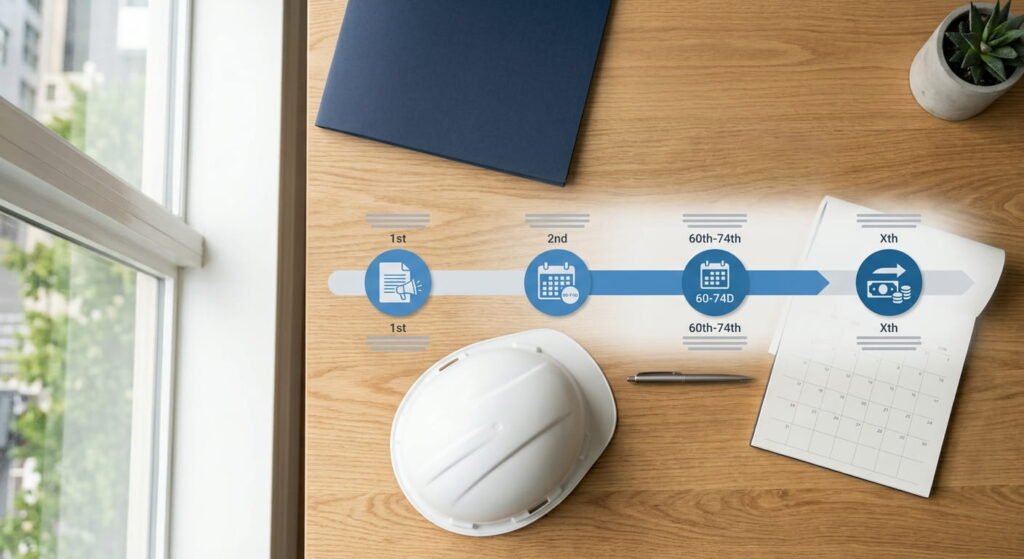
Amendments in force since January 1, 2026 make annual release of holdback mandatory, and 2027 is when many first releases arrive. Owners must publish a notice within 14 days of each contract anniversary, then pay accrued holdback 60 to 74 days after publication, unless a lien has been preserved or perfected.
Construction Lien Act Ontario Rules for Older Contracts
Timing depends on your contract date. Contracts signed on or after January 1, 2026 reach their first release on the first anniversary. Older contracts start later, on the second anniversary that falls after January 1, 2026. A contract dated March 19, 2025 has its first annual release on March 19, 2027.
Contracts that fall under the old Construction Lien Act Ontario regime keep their old rules and don’t join the annual release scheme.
What Else Changed in the Construction Act
The notice of non-payment of holdback is gone, so owners can no longer withhold holdback that way. Proper invoice rules were redefined. Adjudication now allows private adjudicators trained by ODACC alongside the old roster. Contractors have 14 days after receiving holdback to pay their subcontractors.
Owners publish the new Form 6 on a designated construction trade website: Daily Commercial News, Link2Build or Ontario Construction News. Ontario Regulation 304/18 sets out that requirement.
There’s a tradeoff. Yearly payout means an owner holds less cash if a contractor defaults. Long builds feel this most, such as a multiplex and land development project that runs past several anniversaries.
The public sources we reviewed show no new amendments scheduled for 2027. The New Year change is about timing, not new law.
How Do the Ontario Building Code and Building Permit Rules Fit In?
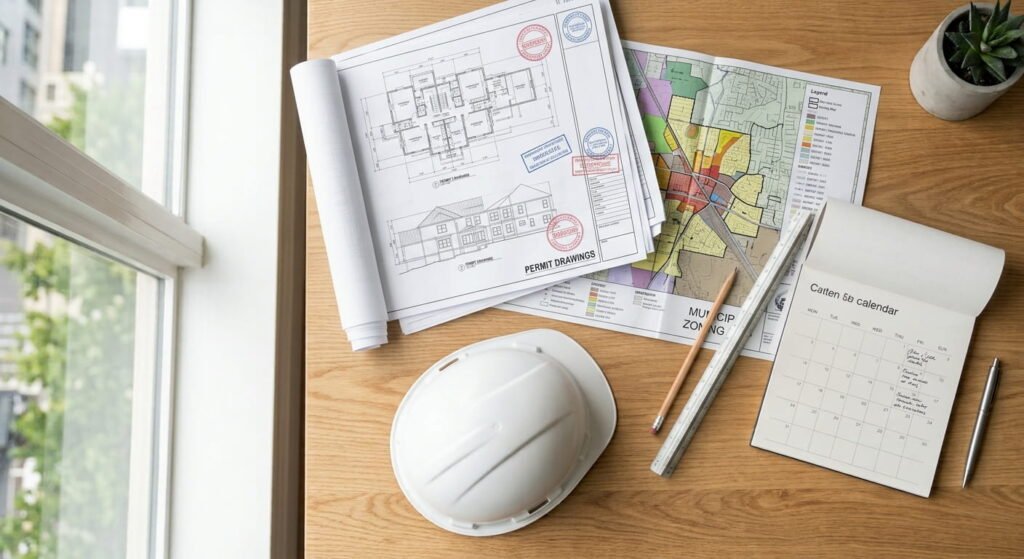
The Ontario Building Code sets technical construction standards, while the Building Code Act gives municipalities power to enforce them through building permits. Since April 1, 2025, every permit application must use the 2024 Building Code. Payment law and building law run in parallel on every project.
Building Code Act and Building Permit Penalties
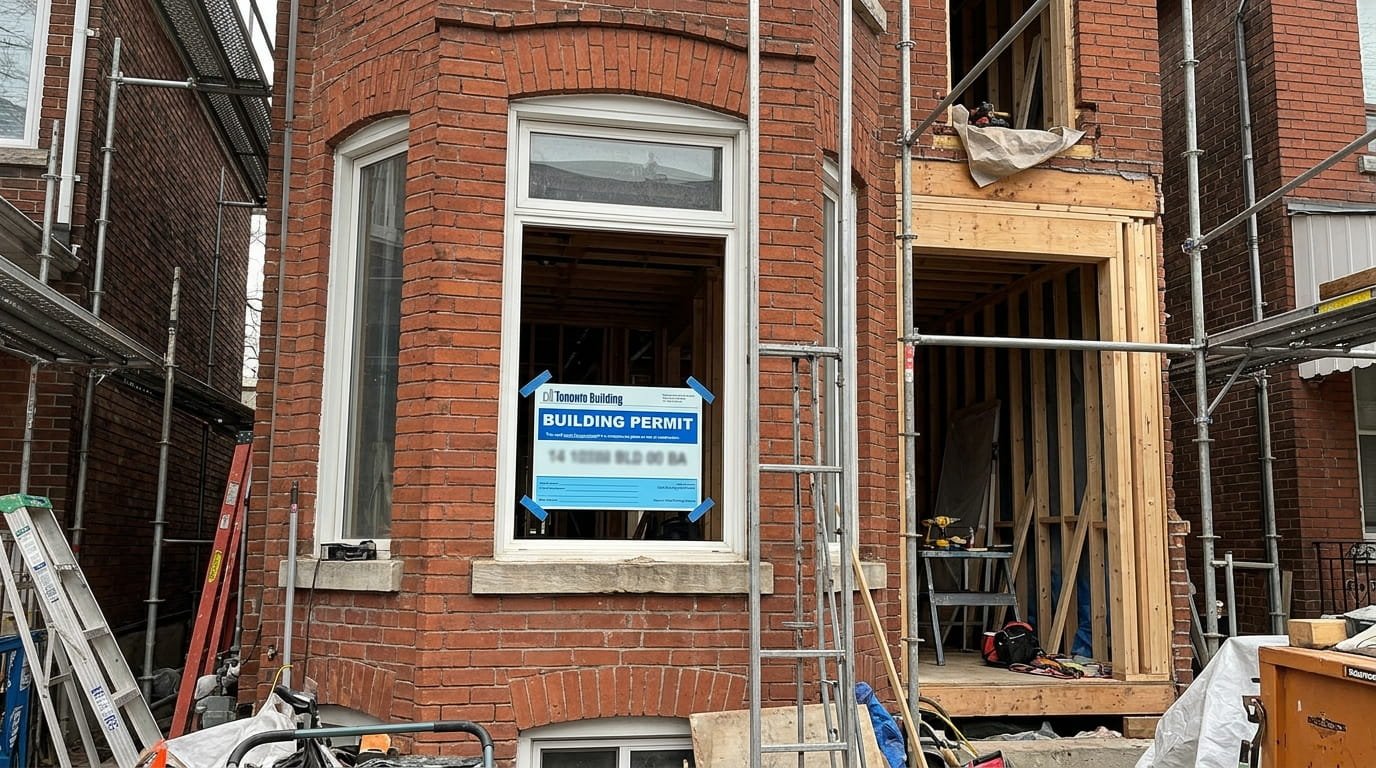
A building permit is required to construct, renovate, demolish or change the use of a building. Building without one is an offence under the Building Code Act, 1992, and Ontario’s building permit guide lists fines of up to $50,000 for a first offence and $100,000 for later ones.
The 2024 Ontario Building Code took effect January 1, 2025. It adopts the 2020 National Building Code, with Ontario amendments layered on top.
Zoning Bylaw Checks Come First
A permit can’t be issued unless the project complies with applicable laws, and your municipal zoning bylaw is one of them. Some projects need planning approvals before a permit application can move forward. Work small enough to skip a permit still has to meet the zoning bylaw.
That’s why our garden suite and home addition projects start with a zoning review, and a Committee of Adjustment application where the build needs one.
Frequently Asked Questions
1. When does annual holdback release begin under the Ontario Construction Act?
For contracts entered into on or after January 1, 2026, it starts on the first contract anniversary. For older contracts, it starts on the second anniversary that falls after January 1, 2026. A contract dated March 19, 2025 therefore reaches its first annual release on March 19, 2027.
2. Is the Construction Lien Act still the law in Ontario?
Mostly no. The Construction Lien Act became the Construction Act on July 1, 2018. The older statute still applies only to contracts entered into, or procurement begun, on or before June 30, 2018, under section 87.3. Every newer project falls under the current Act.
3. Which projects need a building permit in Ontario?
Building departments generally require a permit when you:
- construct a new building over 10 square metres
- renovate, repair or add to an existing building
- change a building’s use
- excavate or construct a foundation
Thresholds vary by municipality, so confirm with your local building department.
4. What happens if you build without a building permit under the Building Code Act?
An individual found guilty can be fined up to $50,000 for a first offence and up to $100,000 for later ones. Ignoring an order from the municipal building department is also an offence. Enforcement action and orders can stall a build quickly.
5. Does zoning bylaw approval replace a building permit?
No. They’re separate checks. A zoning bylaw controls use, size and setbacks, while the Ontario Building Code controls construction safety and quality. Permit reviewers look at both, and zoning compliance still applies when a project is small enough to skip the permit.
Conclusion
The Ontario Construction Act didn’t get a rewrite for 2027, but its January 2026 changes land on real calendars next year. Check your contract date, mark the anniversary and confirm who publishes Form 6. Then pair that with the 2024 Building Code, a valid building permit and an early zoning bylaw review.
This article is general information, not legal advice. For contract questions, speak with a construction lawyer.
Ready to discuss your project?
Book a free consultation with Leedway Group to discuss your property and project.