

Quick Answer Box: The rezoning process in Ontario is how you ask your municipality to change what the rules allow on your land. You file a complete application and attend at least one public meeting. Council then votes, and a 20-day appeal window follows. Toronto’s 2026 rezoning base fee is $63,679.83; Mississauga’s is $38,712.
What Is the Rezoning Process in Ontario?
The rezoning process in Ontario is the legal route for changing the permitted uses or development standards on a property. Its formal name is a Zoning By-law Amendment (ZBA), made under section 34 of the Planning Act. Council can only consider one if the new use is allowed by the municipality’s official plan.
At Leedway Group, we file rezoning and site plan applications across the GTA and the Greater Golden Horseshoe, including the rezoning we secured for a 70-unit, 8-storey condominium in Niagara Falls.
Ask a planner to define zoning and the answer usually covers how land may be used, where buildings sit, how tall and dense they get, and how much parking they need. Your municipality writes those rules into its zoning bylaw and refuses permits for plans that break them.
Toronto Zoning By-law 569-2013
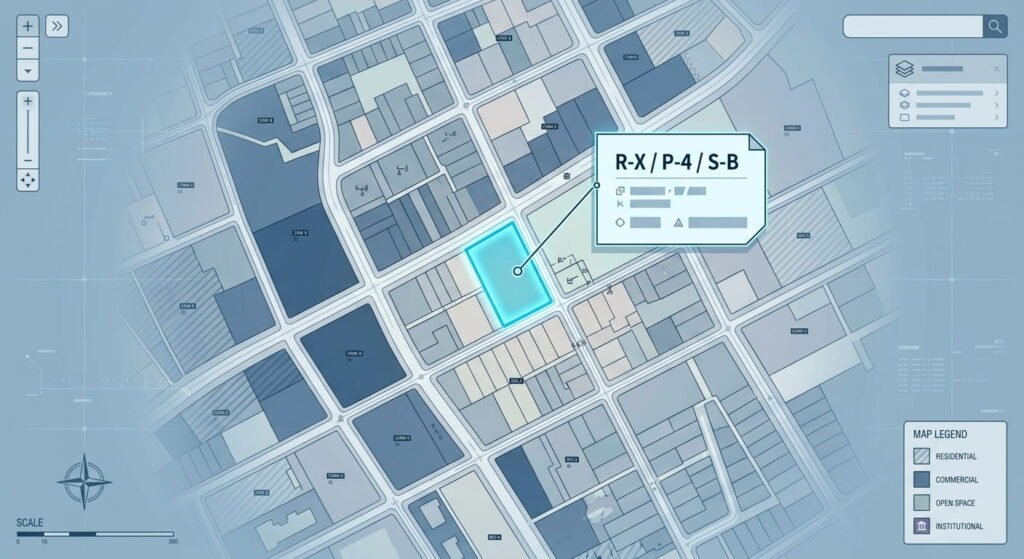
Most properties in the city fall under Toronto Zoning By-law 569-2013. The City of Toronto’s 569-2013 page links an interactive map where a lot shaded grey still follows a former municipal bylaw. Check Chapter 900, because site-specific exceptions can override the base zone regulations. A Zoning Applicable Law Certificate (ZAP) review flags whatever doesn’t comply.
What Are the Steps in Ontario’s Rezoning Process?
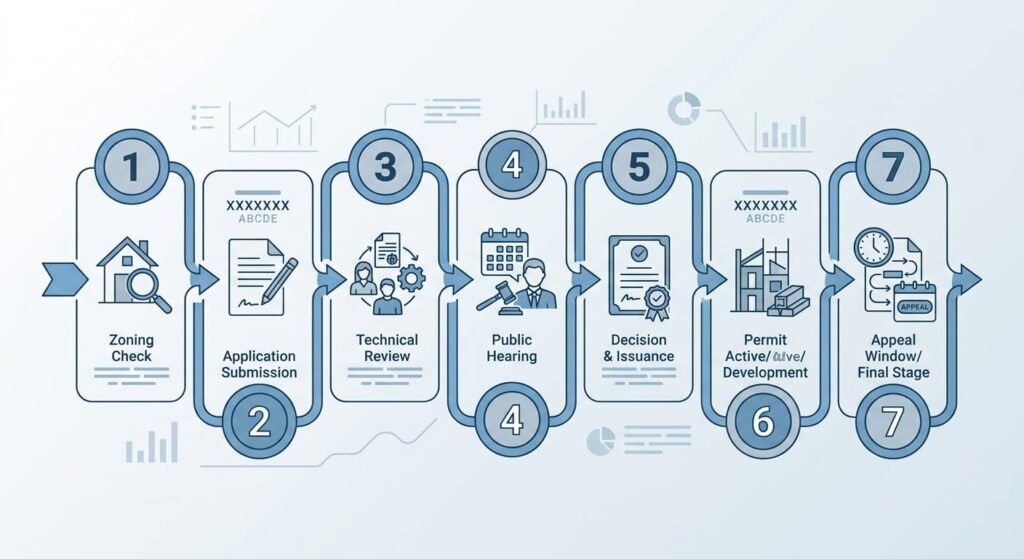
Most files in Ontario’s rezoning process pass through seven stages, from a zoning check to the end of the appeal window. The Planning Act fixes four deadlines: at least 20 days’ notice of the public meeting, 90 days for council to decide, notice of passing within 15 days and a 20-day appeal period.
- Check your current zone on the municipal map against what you want to build.
- Request a pre-application meeting. Bill 185 made it voluntary in 2024, but Toronto only issues a site-specific checklist after one, and Mississauga credits its $9,699 meeting fee toward your application.
- Commission the studies on your checklist and submit the package with the fee. Since July 1, 2024, Mississauga decides rezonings without Peel Region.
- Post the notice sign. Toronto wants it up within 14 days of submission and rules on completeness within 30 days.
- Revise your plans after city divisions and outside agencies comment.
- Present at the statutory public meeting. Mississauga aims to hold it about 90 days into a rezoning-only file.
- After council decides, wait out the appeal period; if nobody appeals within 20 days of the notice of passing, the new zoning stands.
What Your Application Must Include
Minimum contents come from the Planning Act, and your official plan can add more. Expect to supply:
- The completed municipal application form and the fee.
- A current survey and concept drawings of the proposal.
- A planning report showing how the proposal fits the official plan and the Provincial Planning Statement.
- Any studies named on your checklist, such as an environmental impact statement or a parking utilization study.
Our land development team has taken projects from raw parcel to approved site plan.
Public Consultation and Appeal Rights
Public consultation is written into the Planning Act: Ontario’s land use planning guide confirms council must hold at least one public meeting, and anyone who attends can speak. Toronto also runs a community consultation meeting on nearly every rezoning, though the Act doesn’t require one.
Neighbours’ appeal rights shrank under Bill 185, but yours didn’t. If council refuses your application or doesn’t decide within 90 days (120 with an official plan amendment), you can appeal to the Ontario Land Tribunal for a $1,100 filing fee.
How Much Does the Rezoning Process in Ontario Cost?
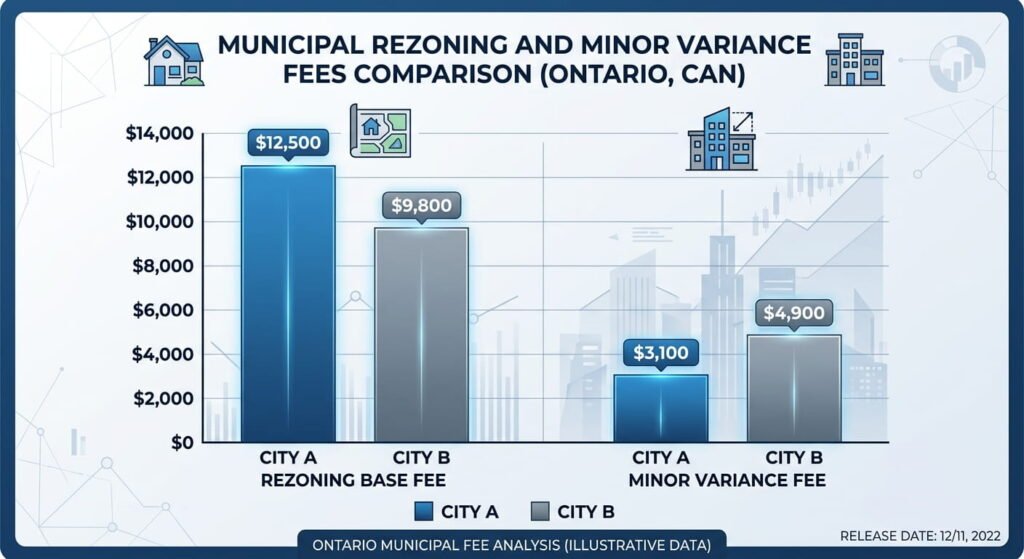
A rezoning starts at a $38,712 base fee in Mississauga under its 2026 planning fee schedule and $63,679.83 in Toronto, before per-unit or floor-area charges. Consultant reports and review surcharges come on top, and every municipality sets its own fees by bylaw.
| 2026 fee | Toronto | Mississauga |
|---|---|---|
| Rezoning base fee | $63,679.83 | $38,712 |
| Added charge | $6.23 per square metre of floor area | $1,424 per unit (first 25 units) |
| Small residential variance | $2,228.98 (addition to a house) | $1,361 (low and medium density) |
The base fee is rarely the whole bill. Mississauga adds $4,805 to review a parking utilization study, and Toronto’s 2026 user fee schedule bills $1.86 for every statutory notice mailed. Buildings of five-plus storeys with 10-plus units may also owe a community benefits charge of up to 4% of land value.
Withdraw before the first Application Status Report and Mississauga refunds 90% of the fee; that drops to 50% and then 10% as the file advances, with no refund after an appeal to the Tribunal. Since Bill 185, cities also don’t owe refunds for missed decision deadlines.
When a Minor Variance Is the Cheaper Route
A minor variance handles small departures, such as a setback or parking shortfall, without changing the bylaw. The Committee of Adjustment asks four questions: is it minor, does it keep the intent of the official plan, does it keep the intent of the zoning bylaw, and is it desirable for the land?
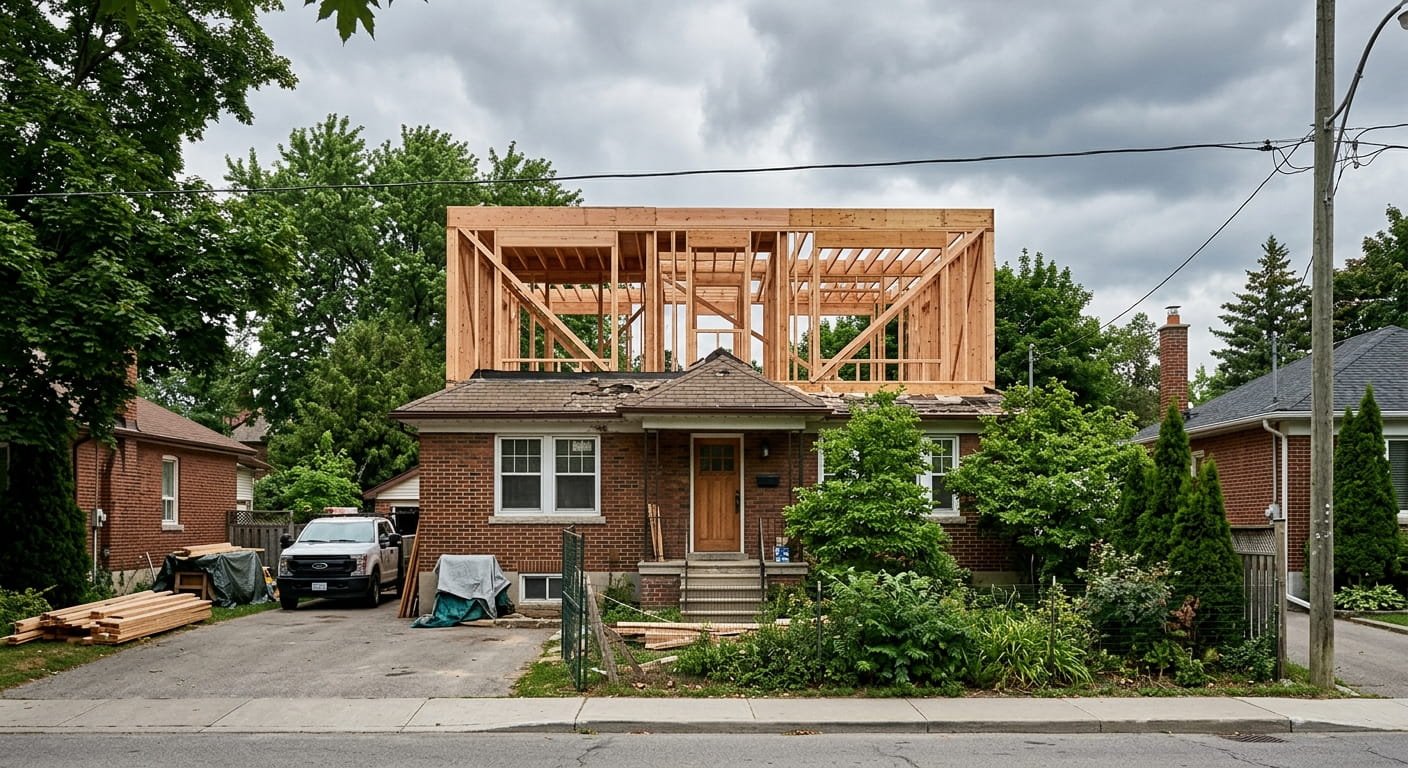
Check one more rule first. A November 2025 amendment to Ontario Regulation 545/06 lets buildings on urban residential land outside the Greenbelt sit up to 10% inside the required setback without a variance, so a 5-metre front yard effectively becomes 4.5 metres. Hazard lands and sites near shorelines or railways are excluded.
We handle Committee of Adjustment applications for additions and garden suites.
From Rezoning Approval to Building Permit
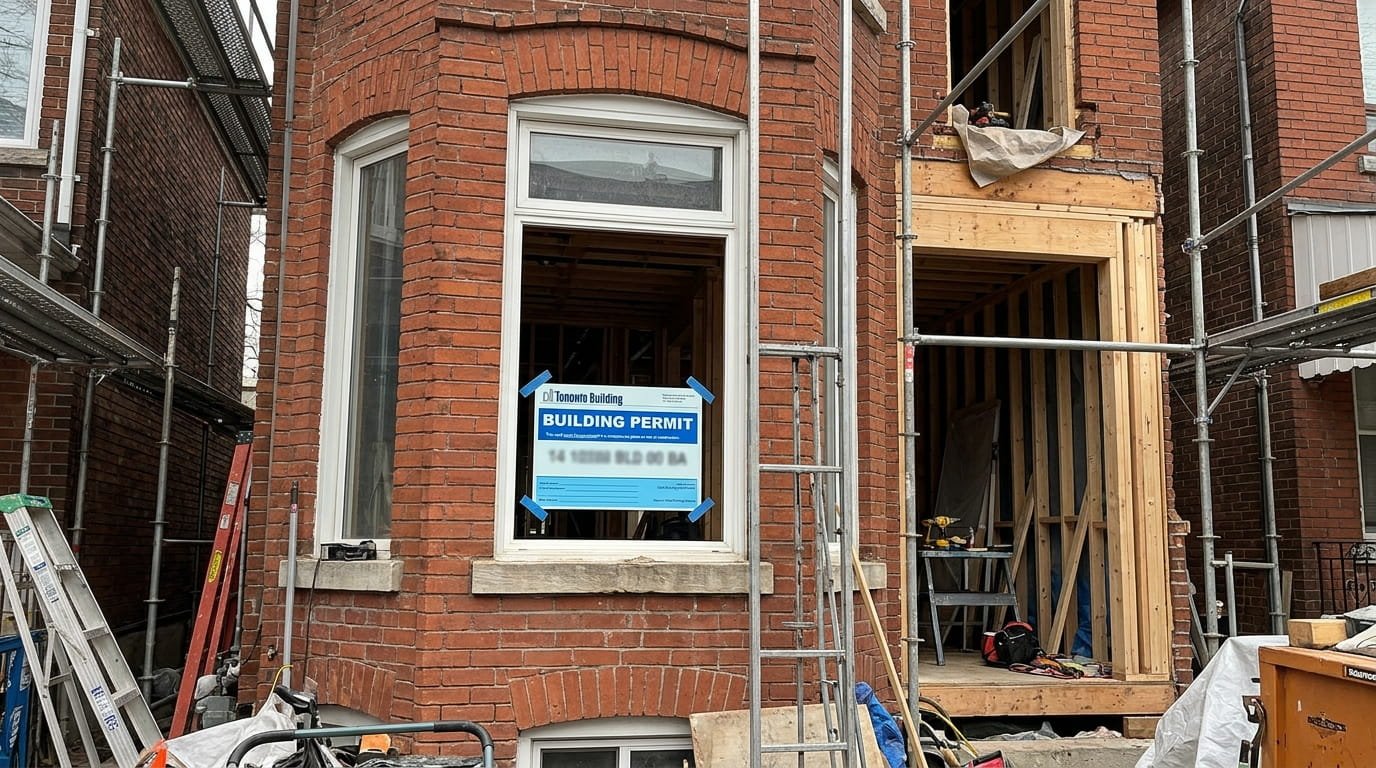
A rezoning doesn’t let you break ground. You still need a building permit, which the city won’t issue until the new zoning is in force and any site plan approval is done. For a house, the Building Code gives the municipality 10 days to decide a complete application. Our Ontario building permit guide covers that stretch.
Frequently Asked Questions
1. How long does the rezoning process in Ontario take?
The Planning Act gives council 90 days after a complete application to decide a rezoning, or 120 days if an official plan amendment is filed the same day. Notice of the decision follows within 15 days, then a 20-day appeal period. Revision rounds and community opposition often stretch files well past those statutory windows.
2. Can neighbours appeal a rezoning decision to the Ontario Land Tribunal?
Mostly not: since Bill 185 took effect in June 2024, appeals of zoning bylaw decisions are limited to the applicant, the province, public bodies, owners of the rezoned land and specified persons such as utilities. Neighbours can still shape the outcome by speaking at the public meeting or writing to council before the vote.
3. What is the difference between a minor variance and a rezoning?
The Committee of Adjustment decides a variance, which excuses one small departure from existing rules, such as a reduced setback. A rezoning rewrites the rules for the site and needs a council vote after a public meeting. In Toronto, a 2026 variance for a home addition costs $2,228.98, against a $63,679.83 rezoning base fee.
4. Does a garden suite or basement unit need a rezoning in Ontario?
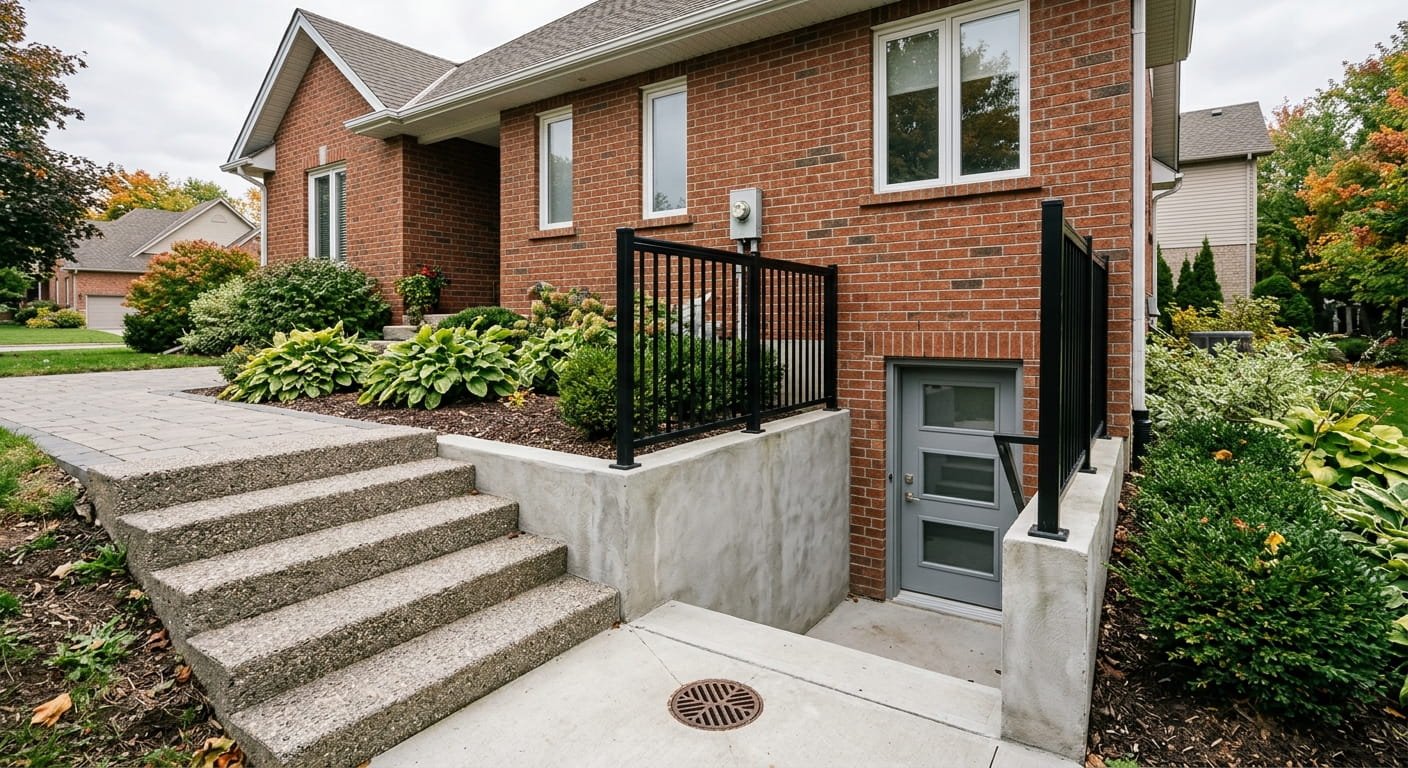
Usually not. Ontario’s Additional Residential Units framework allows up to 3 units as of right on most urban residential lots. That means 3 in the main house, or 2 in the house and 1 in an ancillary building such as a garage. A setback or height problem may still need a variance or amendment.
5. How do you check whether your property needs rezoning in Ontario?
Before paying for an application:
- Find your zone on the municipality’s online map and read its permitted uses.
- Compare your plans with the zone regulations for height, setbacks, coverage and parking.
- Test whether the three-unit ARU rule or the 10% setback allowance already covers you.
- Ask planning staff to confirm, or in Toronto, order a ZAP zoning review.
Conclusion
The rezoning process in Ontario rewards homework done before any fee is paid. Confirm what your zone allows and whether the 10% setback rule or three-unit ARU permission already covers you. If not, book a pre-application meeting and budget beyond the base fee. Leedway Group’s feasibility stage starts with exactly that zoning review.