

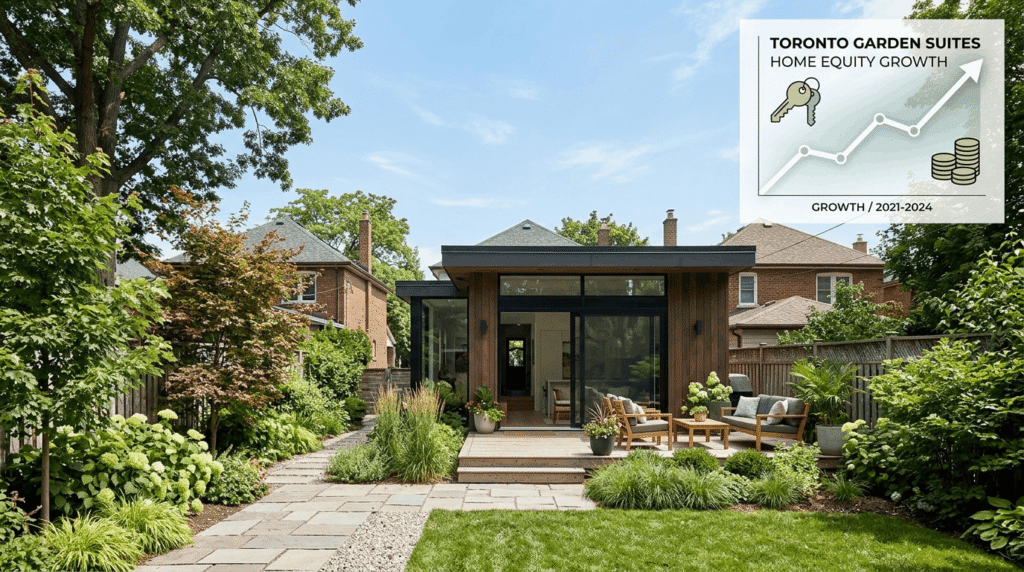
Quick Answer Box: Garden suite ROI in the GTA comes from three sources: monthly rental income, equity added the day the unit is finished, and long-term property appreciation. A typical build runs near $350,000, rents for $2,500 to $3,500 in 2026, and can lift property value by 80 to 90 percent of construction cost in strong Toronto neighbourhoods.
What is garden suite ROI in the GTA?
Garden suite ROI in the GTA measures the return on building a detached backyard home, an accessory dwelling unit (ADU), on a lot you already own. Return comes from rent collected, equity created at completion, and property appreciation over time, all weighed against build cost, financing, and operating expenses. These figures cover the City of Toronto and the wider Greater Toronto Area, where rules and rents shift from Old Toronto to Scarborough.
How much rental income can a garden suite generate in the GTA?
A garden suite in the GTA typically rents for $2,500 to $3,500 a month in 2026, depending on size, finish, and location. A two-bedroom unit near the bylaw maximum in a strong Toronto neighbourhood can clear $3,000, while a smaller backyard home in a starter pocket sits closer to $2,500. That rent lands on land you already hold, which is what makes the yield work.
Here’s an edge older rental stock doesn’t have. Because your suite is a brand-new unit, it’s exempt from Ontario’s annual rent-increase guideline, which caps increases at 2.1 percent in 2026 for units first occupied on or before November 15, 2018. As the Government of Ontario confirms, new units in existing houses fall outside that cap. You can move rent toward market on renewal, with 12-month spacing and 90 days’ written notice.
Demand is more nuanced than most builder brochures admit. CMHC’s 2025 Rental Market Report put the purpose-built vacancy rate across the Greater Toronto Area at 3.0 percent, up from a record-low 1.5 percent two years earlier, and turnover rents slipped that year as landlords trimmed asking prices. The condo rental side told a different story, staying close to 1 percent. Ground-level family rentals like garden suites compete less directly with glass towers, which keeps rental demand for backyard units firmer than the citywide number suggests. For a sense of scale, CMHC’s average Toronto one-bedroom turnover rent was $2,073, and a larger suite commands more. If you’re still at the planning stage for permits and design, map your target rent before you finalize the layout.
How much equity and property appreciation does a garden suite add?
A finished garden suite usually adds equity worth 80 to 90 percent of its construction cost right away, then appreciates alongside your land. On a $350,000 build, that’s roughly $280,000 to $315,000 in immediate value where the local market has solid comparable sales to support an appraisal.
Location decides how much of that equity you can actually reach. In premium Toronto neighbourhoods with completed, sold comparables, homes with a new suite have appraised $600,000 to $700,000 above a bare lot after a $350,000 build. In starter pockets with thin comparable data, appraisers often value the same suite near build cost. That gap caps how much you can refinance out and stretches your effective return, so the pocket you build in matters as much as the build itself.
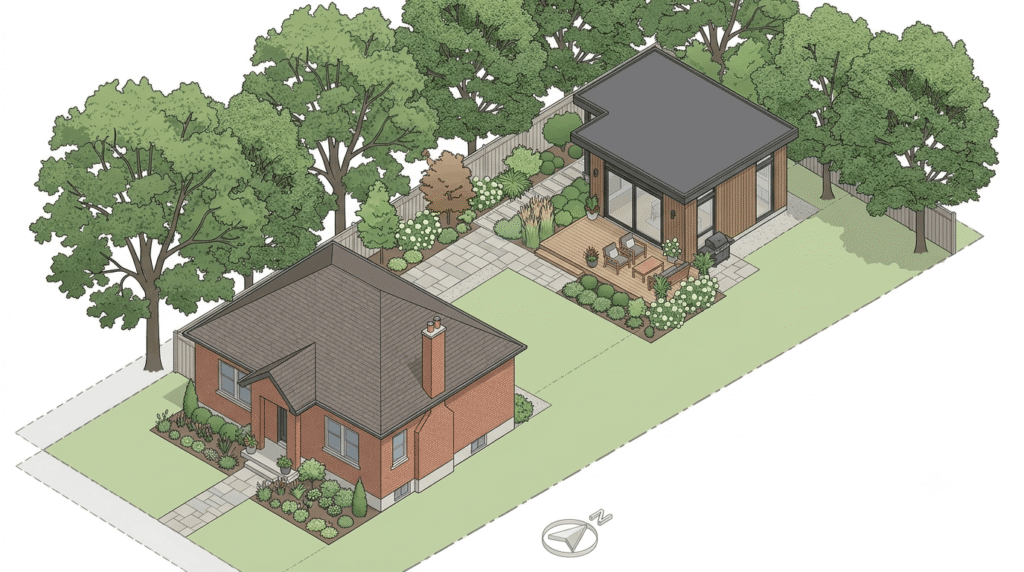
One rule shapes the exit. The City of Toronto doesn’t permit severing a garden suite onto its own lot, so you can’t sell the backyard home on its own. Value shows up as a higher whole-property price and as land appreciation over the years you hold, not a separate sale. For families weighing this, designing an accessible, multigenerational suite can add lived-in value on top of the numbers.
What is the payback timeline on a garden suite in the GTA?
Payback on a GTA garden suite runs about 9 to 14 years on rent alone, and far faster once you count the equity added at completion. Divide your all-in cost by yearly rent for the simple figure, then treat the day-one value lift as capital you recover on paper the moment the suite is finished and appraised. In a premium pocket where the suite appraises well above cost, much of your money is back in the property’s value immediately, ready to refinance.
The two paths below show how neighbourhood changes the picture on the same $350,000 build:
| Metric | Starter GTA pocket | Premium Toronto neighbourhood |
|---|---|---|
| All-in build cost | ~$350,000 | ~$350,000 |
| Typical monthly rent | $2,500 | $3,200 |
| Gross annual rent | $30,000 | $38,400 |
| Appraised suite value at completion | ~$350,000 (near cost) | $600,000 to $700,000 |
| Simple payback on gross rent | ~12 years | ~9 years |
Budget beyond the sticker. The City permit is about $644 in 2026, but arborist reports, engineering drawings, and utility connections add $25,000 to $70,000 before framing starts, and a 10 to 15 percent contingency is wise on rear-yard builds where the ground hasn’t been touched in decades. Financing then shortens the wait. The federal Canada Secondary Suite Loan Program lends up to $80,000 at a fixed 2 percent over 15 years, and CMHC’s refinance rules let eligible owners borrow up to 90 percent of the post-construction value on homes worth under $2 million, amortized up to 30 years.
Two local breaks help the math. Toronto waives development charges for garden suites and requires no parking space, both trimming the all-in cost your payback divides into. Those breaks apply within the City of Toronto, so confirm your own numbers against a full garden suite cost breakdown; Mississauga and Brampton still ask for at least one parking space, which adds cost and stretches payback.
Frequently Asked Questions
1. Is a garden suite a good investment in the GTA?
A garden suite in the GTA can return strong long-term value, but results vary by lot and pocket. In premium Toronto areas with sold comparables, a $350,000 build has appraised $600,000 to $700,000 higher while renting for over $3,000 a month. In starter areas, expect the suite to appraise closer to cost. This is general information, not personalized financial advice.
2. How much rent can I charge for a garden suite in Toronto?
Most garden suites in Toronto rent for $2,500 to $3,500 a month in 2026. Rent depends on:
- Size and bedroom count, with two-bedroom units near the bylaw maximum earning the most
- Finish quality and whether utilities are separately metered
- Neighbourhood, since premium areas clear $3,000-plus while starter pockets sit near $2,500
- Long-term versus short-term terms, since short-term rentals lose access to federal financing
3. Does a garden suite increase property value?
Yes. A completed garden suite typically adds equity worth 80 to 90 percent of construction cost, plus ongoing property appreciation as land values rise. The gain is largest in neighbourhoods with comparable suite sales, where appraisers have real data. Toronto bars severing the suite onto its own lot, so the value appears as higher combined-property worth.
4. Can I finance the cost of building a garden suite?
Yes. The federal Canada Secondary Suite Loan Program offers up to $80,000 at 2 percent fixed over 15 years, and CMHC refinancing lets qualified owners access up to 90 percent of post-construction value on homes under $2 million. Many owners combine a program loan with home equity or a construction loan to cover a $350,000 build.
5. Can I sell a garden suite separately from my main house?
No. Under City of Toronto rules, a garden suite cannot be severed onto its own lot or sold on its own. It stays part of the primary property and functions as a rental unit. Your return is realized through rental income and the higher value of the combined property, not a standalone sale.
Conclusion
Garden suite ROI in the GTA is real, but it rewards patience and location over hype. Build cost lands near $350,000, rent runs $2,500 to $3,500, and the equity added at completion often recovers most of your capital on paper in a strong Toronto neighbourhood. Rent-only payback sits around 9 to 14 years, shortened by low-rate federal financing and waived development charges. Check your lot against the City of Toronto bylaw, run conservative numbers for your specific area, and treat the softer 2025 rental market as a reason to underwrite carefully rather than a reason to walk away.