

Quick Answer: Home remodeling in Ontario runs roughly $15,000 for a cosmetic refresh to $120,000 or more for a full gut in 2026. Most single-room projects land between $12,000 and $60,000. Add 13% HST, a 10% to 15% contingency, and permit fees before you compare any two quotes.
What is budget home remodeling in Ontario?
Budget home remodeling in Ontario means renovating to a fixed spending ceiling by controlling scope. You pick the rooms that change how the house lives or sells, keep plumbing and load-bearing walls where they sit, and put the savings into finishes people actually touch every day.
Leedway Group works across the Greater Golden Horseshoe, from Toronto and Mississauga out to Oakville, Milton and Hamilton. The numbers below reflect that market.
How much does home remodeling cost in Ontario in 2026?
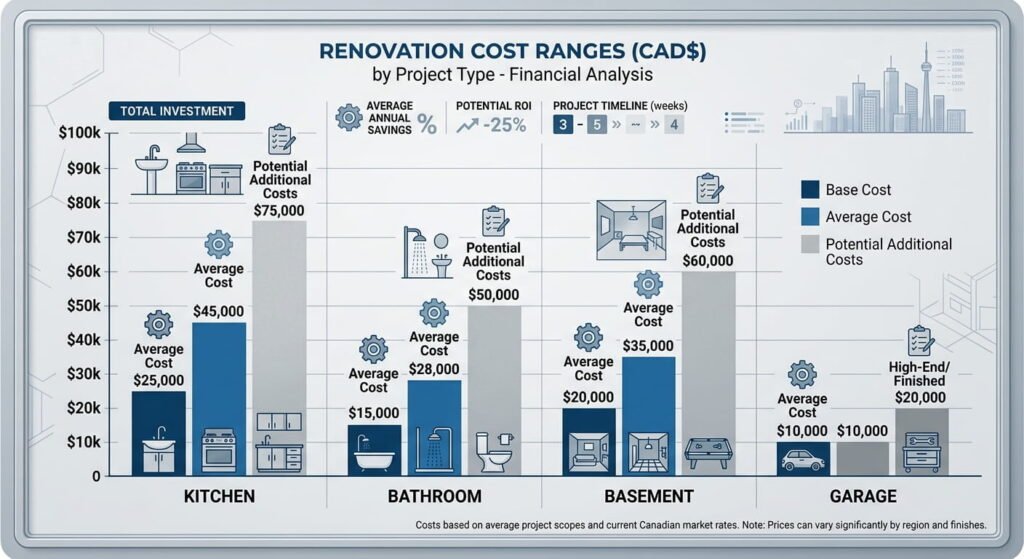
Expect $150 to $350 per square foot for a substantial 2026 renovation, and $200 to $600 for a full gut with structural work. Room by room is easier to budget: a bathroom starts near $12,000, a kitchen near $25,000, a finished basement near $35,000. All figures exclude HST.
| Project | Typical Ontario range, 2026 | Biggest cost driver |
|---|---|---|
| Interior painting, whole home | $5,500 to $15,000 | Prep hours and ceiling height |
| Guest room refresh | $3,000 to $12,000 | Flooring, closet build-out, new wiring |
| Bathroom | $12,000 to $35,000 | Waterproofing and moving drain lines |
| Kitchen | $25,000 to $65,000 | Cabinetry and appliance relocation |
| Basement finish | $35,000 to $85,000 | Underpinning, egress, bathroom rough-in |
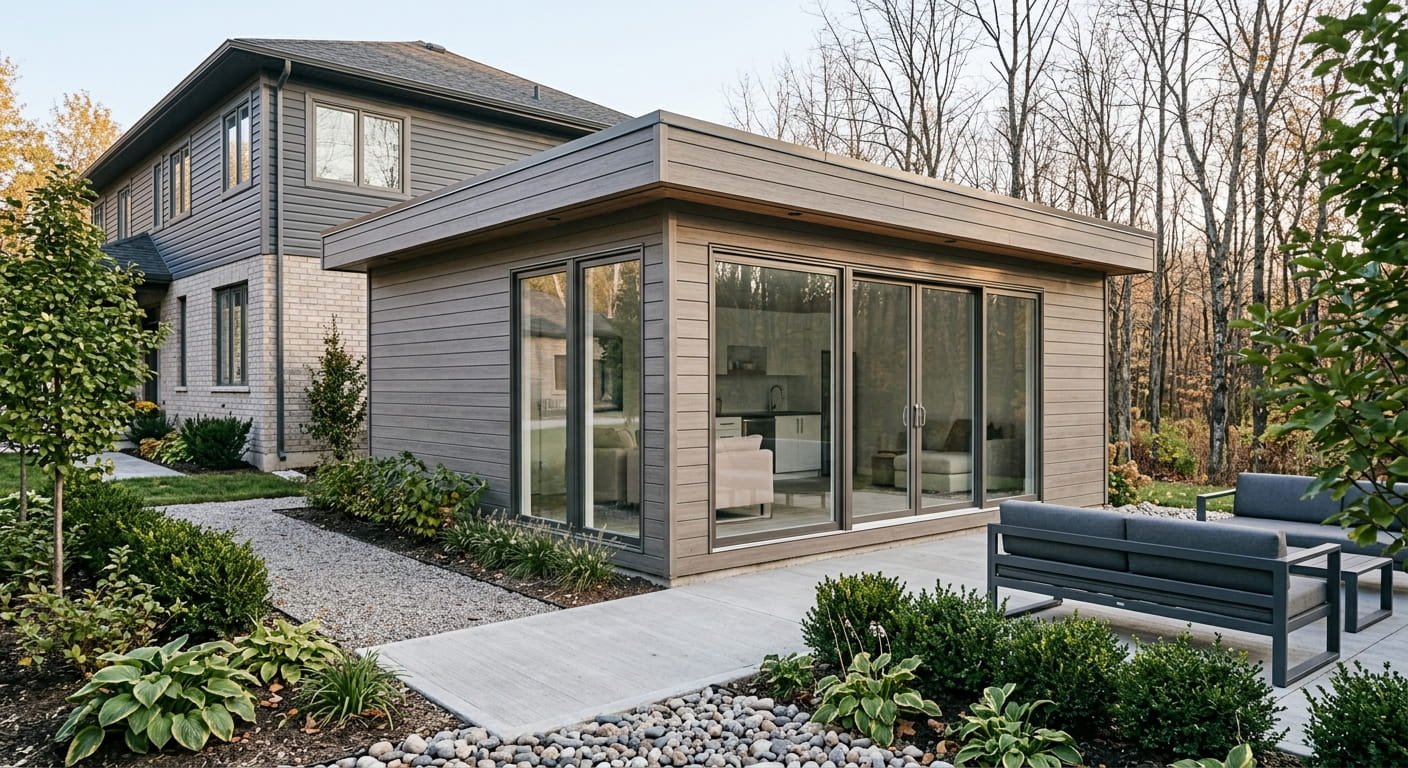
| Garage conversion | $20,000 to $80,000 | Insulation, fire separation, parking bylaw |
A guest room renovation cost sits at the low end of that table for a reason. Paint, flooring, trim and a light fixture rarely need a permit, so you avoid drawings, review time and inspection scheduling entirely. Add a closet, a bedroom window that meets egress, or a new circuit, and you’re into permit territory.
Kitchen renovation: where the money concentrates
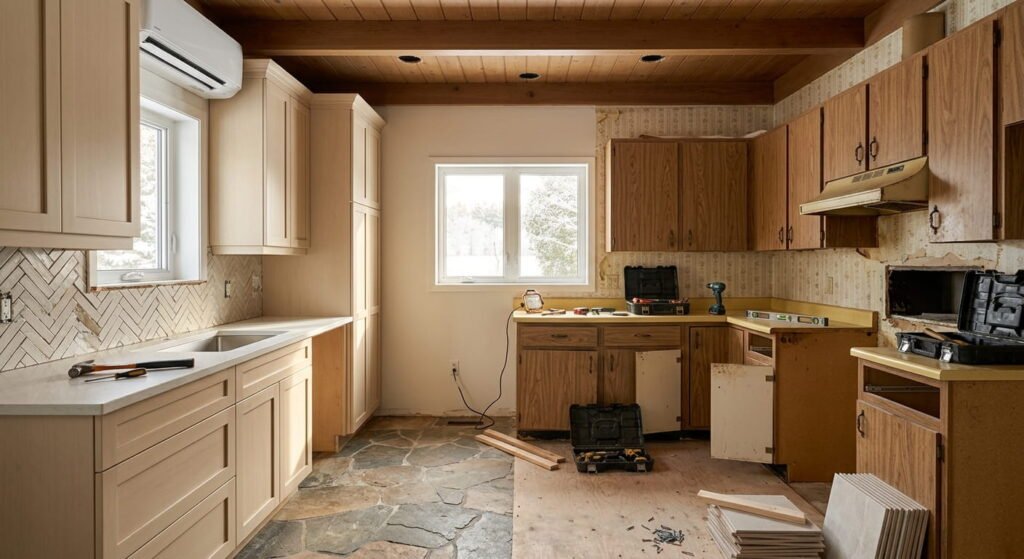
A standard 10 by 10 kitchen averages $19,000 to $30,000. Kitchens over 200 square feet start around $40,000. The single biggest lever is plumbing: keeping the sink, stove and dishwasher in their existing positions typically saves $3,000 to $8,000, because every relocated fixture pulls in more plumber and electrician hours. Our Toronto kitchen renovation budget guide breaks the tiers down further.
Bathroom renovation and the cost behind the tile
Most Ontario bathroom renovation projects land between $12,000 and $35,000. Labour is 40% to 60% of that, with GTA plumbers and electricians billing $100 to $200 an hour. Moving a drain line or shifting the toilet adds $2,000 to $5,000 on its own. Waterproofing is the line item nobody sees and nobody should cut.
Basement renovation gives you the cheapest square footage
Basic basement finishing runs $35 to $55 per square foot. A GTA basement with a bathroom typically lands at $55 to $95 per square foot, or $45,000 to $85,000 for 800 to 1,000 square feet. A fully permitted legal suite climbs to $90 to $150. Budget $1,000 to $1,500 for permit fees and $1,500 to $5,000 for professional drawings before any framing starts, as our basement renovation permit guide explains.
Painting renovation cost and the fastest cosmetic wins
Painting renovation cost in Ontario sits at $2 to $4 per square foot for walls, rising to $3 to $5 once ceilings and trim are included. A standard bedroom is $400 to $900. A whole 2,000 square foot home runs $5,500 to $15,000. Single rooms cost more per square foot than whole-home jobs because setup takes nearly as long either way.
Accent wall renovation cost is smaller than most people expect: $250 to $500 for a wall under about 120 square feet, climbing to $1,200 on 10-foot ceilings or with deep, heavily pigmented colours that need a second coat to sit evenly.
Garage renovation cost depends almost entirely on whether the space stays a garage. An insulated, drywalled garage is roughly $80 to $120 per square foot. A conversion to habitable space with plumbing and heat runs $150 to $200, and most Ontario projects finish between $40,000 and $90,000 once fire separation and code-compliant ceiling height are handled. Losing your only legal parking spot can trigger a minor variance, which adds two to three months. Our garage conversion cost and permit guide covers that process.
Planning a full home renovation instead of one room at a time? Sequencing everything under one permit and one contractor cuts mobilization costs and rework risk. See the whole-home renovation cost breakdown for Ontario for how the trades stack up.
Where can Ontario homeowners actually save in 2026?
Ontario’s Home Renovation Savings Program pays up to $12,000 on a ground-source heat pump and up to $7,700 on insulation. The federal secondary-suite credit returns 14.5% of qualifying costs, capped at $7,250. Timing matters as much as the amounts: start work too early and you forfeit both.
Rebates and credits that still exist
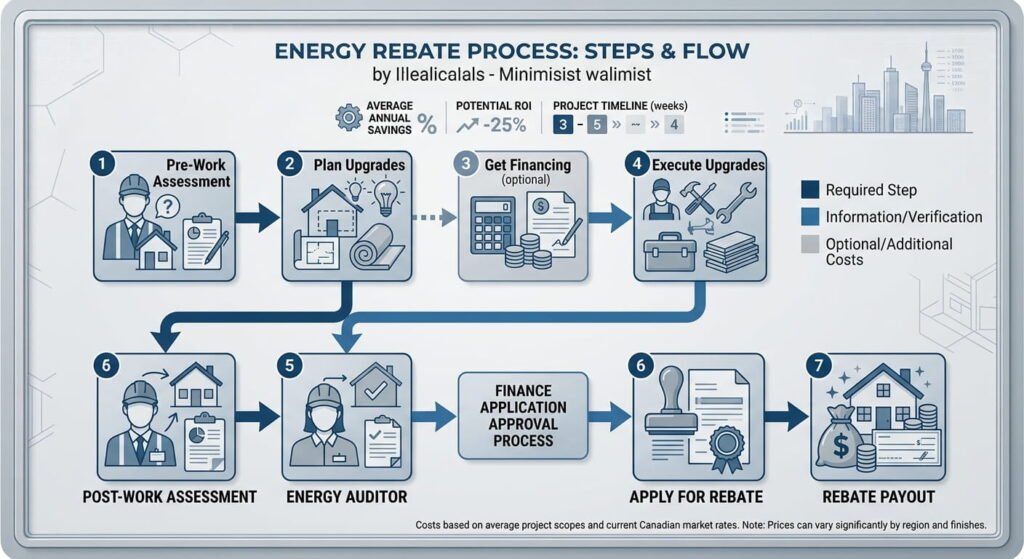
The Home Renovation Savings Program launched on January 28, 2025, replacing the older HER+ program. It’s delivered by Enbridge Gas and Save on Energy with support from the Government of Ontario, and it runs two streams. Single upgrades need no energy assessment but carry lower caps. The bundled stream pays $600 for the pre- and post-work assessments, up to $7,700 for insulation, $100 per qualifying window or door opening, up to $250 for air sealing, $500 for a heat pump water heater and up to $10,000 for solar with battery storage.
Here’s the part that costs people money: on the bundled path, the pre-retrofit assessment must happen before any work begins. Swap the windows first and the rebate is gone.
The Multigenerational Home Renovation Tax Credit is refundable and covers up to $50,000 in expenses for creating a self-contained secondary unit for a senior or an adult eligible for the disability tax credit. Plenty of sites still quote a $7,500 maximum. The Canada Revenue Agency updated the rate to 14.5% in January 2026, so the real ceiling is $7,250, and you claim it in the tax year the work finishes.
If you’ve been waiting on the $80,000 Canada Secondary Suite Loan Program at 2% interest, stop waiting. It was announced in Budget 2024, expanded in December 2024, and never became operational. Budget 2025 confirmed it won’t proceed because it duplicated a mortgage tool already in place. That tool is CMHC Refinance for secondary suites, which lets an owner-occupier borrow against up to 90% of the as-improved property value, under a $2 million lending cap, amortized up to 30 years. Approval has to come before construction starts, and the suite can’t be a short-term rental.
The costs that quietly break a budget
HST is the big one. Ontario charges 13% on renovation labour and materials, so a $40,000 project bills at $45,200. That’s not a surprise expense, but it lands outside most contractor quotes.
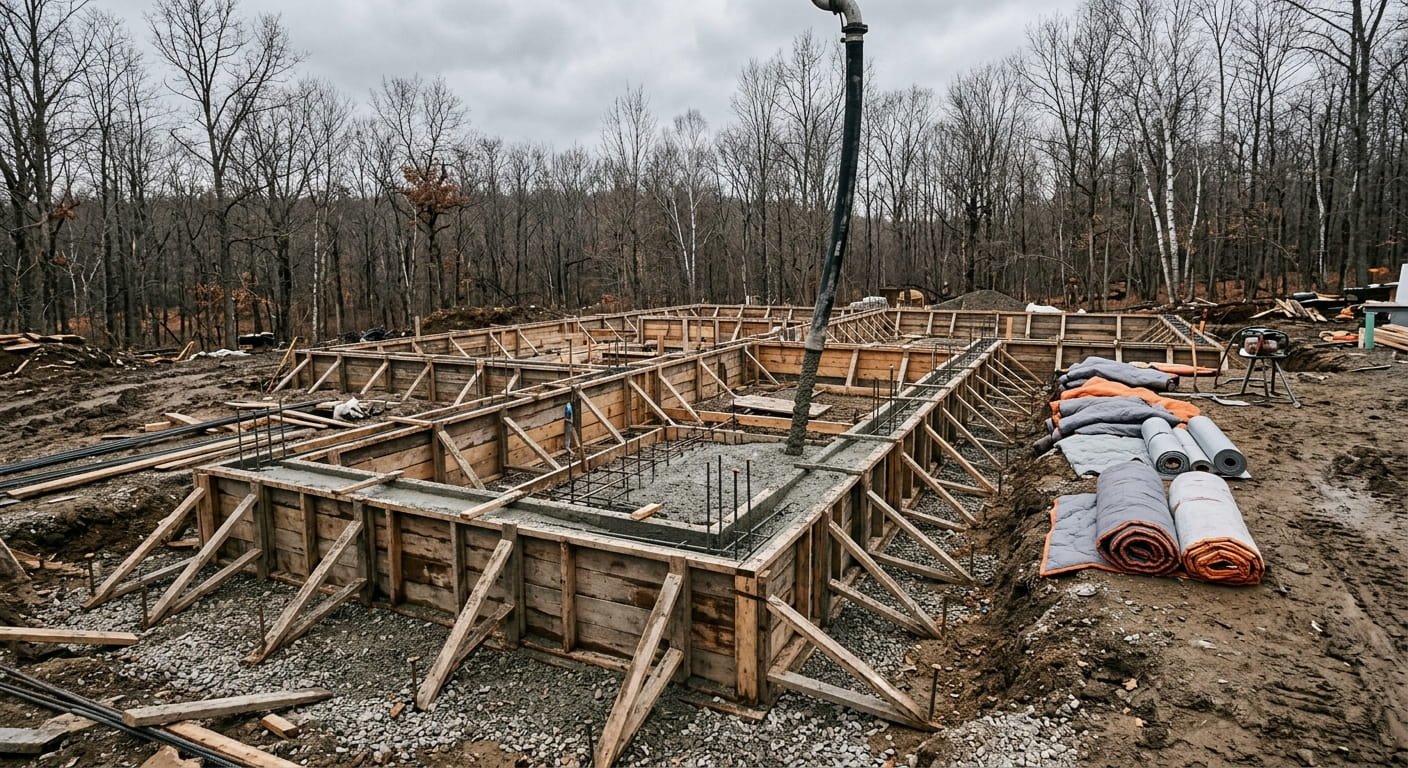
Permits are next. Under Ontario’s Building Code, you need a permit before constructing anything over 10 square metres, making renovations or repairs, changing a building’s use, or excavating a foundation. Applications go to your municipality, not the province.
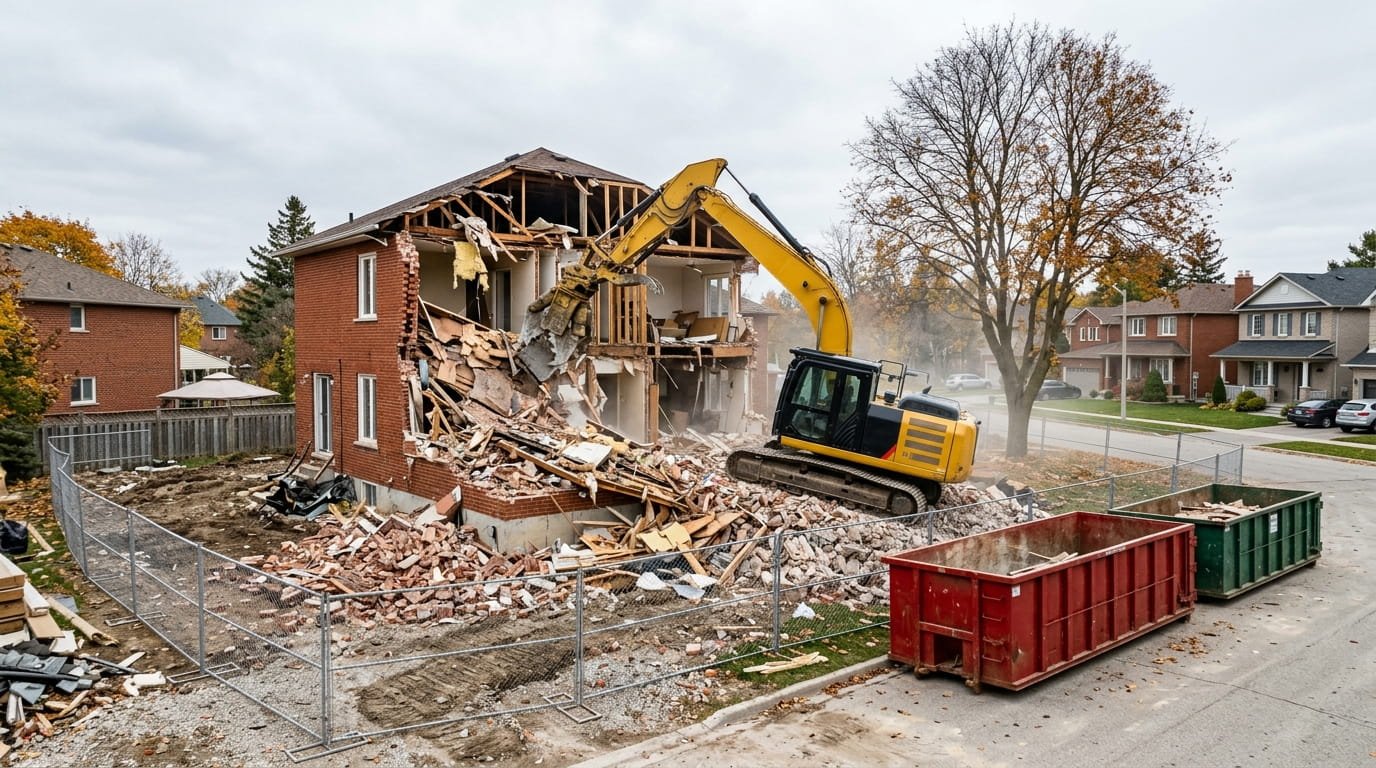
Contractor pricing is still climbing. Statistics Canada’s Residential Renovation Price Index showed roughly 3% year-over-year growth heading into 2026, and the Canadian Home Builders’ Association reports that renovators believe the true increase is higher. Hold back 10% to 15% as contingency, or closer to 20% in homes built before 1980 where demolition tends to surface old wiring, asbestos or moisture damage.
Frequently Asked Questions
1. Do I need a building permit for a home renovation in Ontario?
You need one if the work touches structure, safety systems or the building envelope. Permits are generally required for:
- New construction or additions over 10 square metres
- Framing, electrical, plumbing or HVAC changes
- Finishing a basement or adding a bedroom
- Creating a secondary suite
- Changing a building’s use
2. How much does a full home renovation cost in Ontario?
Between $150 and $350 per square foot for a substantial renovation, and $200 to $600 per square foot for a full gut with structural changes. A 2,000 square foot home typically means $300,000 to $700,000 at gut level. Cosmetic whole-house work can stay closer to $60,000.
3. Is the $80,000 Canada Secondary Suite Loan Program still available?
No. It was announced in Budget 2024 and expanded to $80,000 at 2% interest in December 2024, but it never launched. Budget 2025 confirmed it will not be implemented. CMHC Refinance for secondary suites, effective January 15, 2025, replaced it.
4. Which renovations return the most at resale in Ontario?
Kitchens and bathrooms consistently return the most, and a finished basement suite in the GTA recovers roughly 50% to 75% of its cost in appraised value plus monthly rent. Roofs and wiring rarely earn a premium, but buyers discount hard when they’re overdue.
5. How long does a renovation take once permits are issued?
A cosmetic refresh takes 8 to 16 weeks. A renovation covering kitchen, bathrooms, flooring and mechanicals runs 4 to 6 months. A full gut takes 6 to 12 months. Permit review itself adds 2 to 6 weeks before anything starts.
Conclusion
Budget home remodeling in Ontario works when you decide the ceiling first and let scope follow. Price the room, add 13% HST, hold back a real contingency, and confirm every rebate’s rules before a contractor mobilizes. The projects that go sideways in Ontario usually do it on permits and timing, not on material choices.