
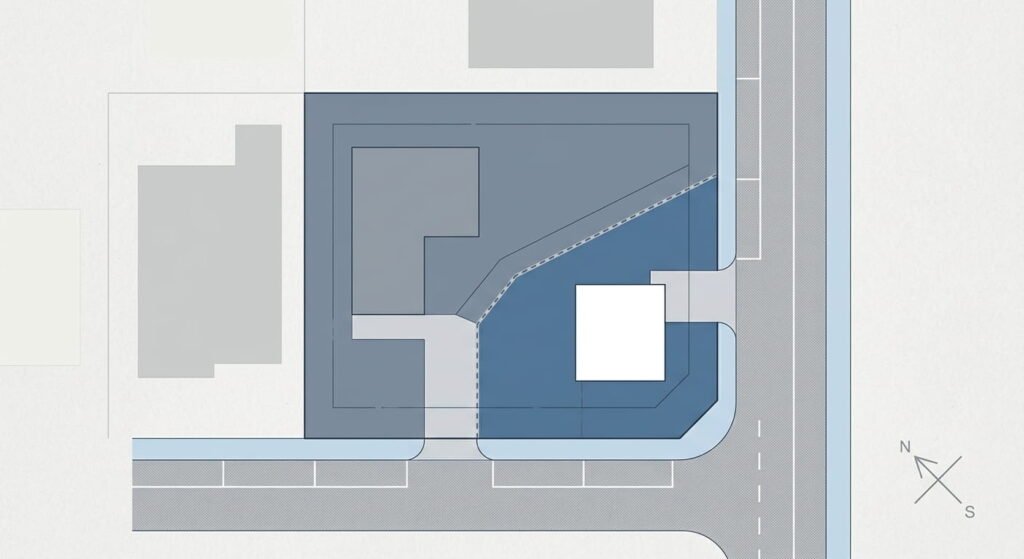
Quick Answer: A land severance in Ontario is a consent under section 53 of the Planning Act that splits one property into separate legal lots. The 2026 municipal fee for one new lot runs from $2,882 in Mississauga to $8,080.65 in Toronto. Once your file is complete, the authority has a 90-day decision window, and conditions must be met within two years.
Developing a property? Leedway Group handles multiplexes, severances, rezoning and small developments across the GTA. See our multiplex and land development service.
What Is a Land Severance in Ontario?
A land severance in Ontario is the approved division of one parcel into two or more legal lots through a process called a consent. You need one to sell, mortgage or charge part of your land, or to sign an agreement for any portion lasting more than 21 years. Easements, rights-of-way and lot-line changes need consent too.
The new parcel is called the severed lot, and what’s left is the retained lot. Leedway Group, a Mississauga design-build firm, prepares applications for the severance of land across the Greater Golden Horseshoe, so the fee examples here come from 2026 schedules in Toronto and Mississauga. If a public road or railway already splits your land, you don’t need consent at all, according to the province’s citizen’s guide to land severances.
Each new lot has to fit its zone, and Leedway’s guide to Ontario zoning laws and what each zone allows is a quick way to check yours. Who approves the split depends on where you live: Toronto and Mississauga use their Committees of Adjustment, while some counties run a land division committee.
How Does the Severance of Land Work in Ontario?
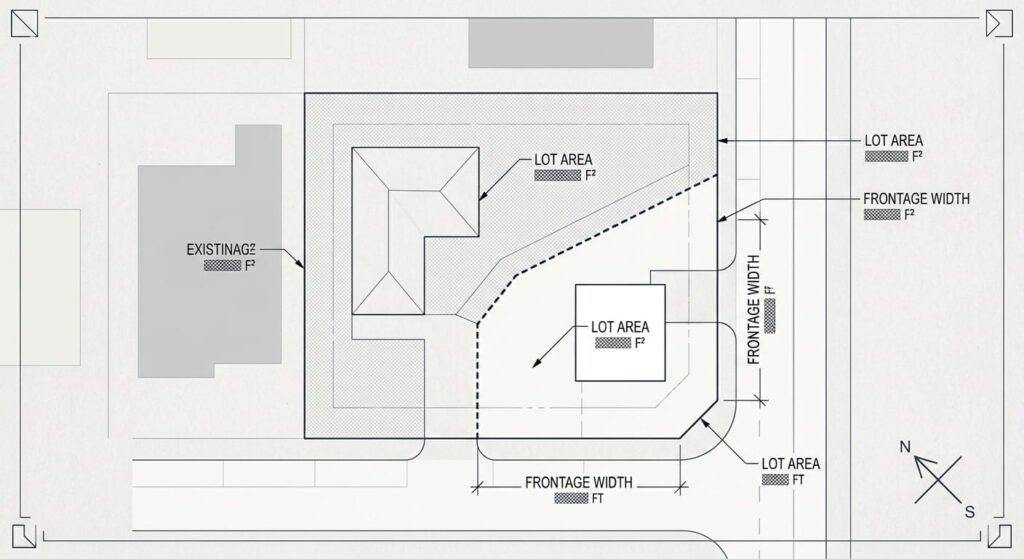
Every land severance in Ontario follows the same sequence under section 53 of the Planning Act: pre-consultation, a complete application, public notice, a decision and a 20-day appeal window. Approved owners then clear conditions and register a certificate on title, and only that registration makes the new lot legal.
What Your Official Plan Requires
Your municipality’s official plan comes first. Most plans contain specific severance policies, and the approval authority must find that your proposal conforms. It also weighs lot size and shape, road access, water, sewage and flood risk, and its decision must be consistent with the Provincial Planning Statement, 2024.
Next, measure each proposed lot against the zoning bylaw. If a lot falls short on frontage or area, the authority can make a rezoning or minor variance a condition of approval. Leedway’s walkthrough of the Committee of Adjustment and minor variance process covers the four tests a variance faces. In Toronto, the new lots also need to match the pattern already on your street.
Filing the Consent Application
Severing a lot usually follows this order:
- Book a pre-consultation. Staff confirm the required plans and any extra permits, such as a septic permit on a rural lot.
- File a complete package. Toronto takes consent files only as emailed PDFs, and its forms and submission guidelines page lists what to include. The 90-day decision clock starts only when the file is complete.
- Post notice. The authority gives notice at least 14 days before deciding, and Toronto also makes you post a sign on the property.
- Attend the hearing, where one is held. The authority then grants provisional consent with conditions, or refuses.
- Wait out appeals. Key participants have 20 days after the notice of decision to appeal to the Ontario Land Tribunal, or in Toronto, the Toronto Local Appeal Body.
- Clear the conditions within two years. Common ones include a deposited reference plan, paid-up property taxes, parkland payment and any required variance.
- Get the certificate and close. The transaction you applied for must close within two years of the certificate, or the consent lapses.
Those are two separate clocks. Miss the first and the consent is deemed refused; miss the second and it lapses.
How Much Does a Land Severance Cost in Ontario?
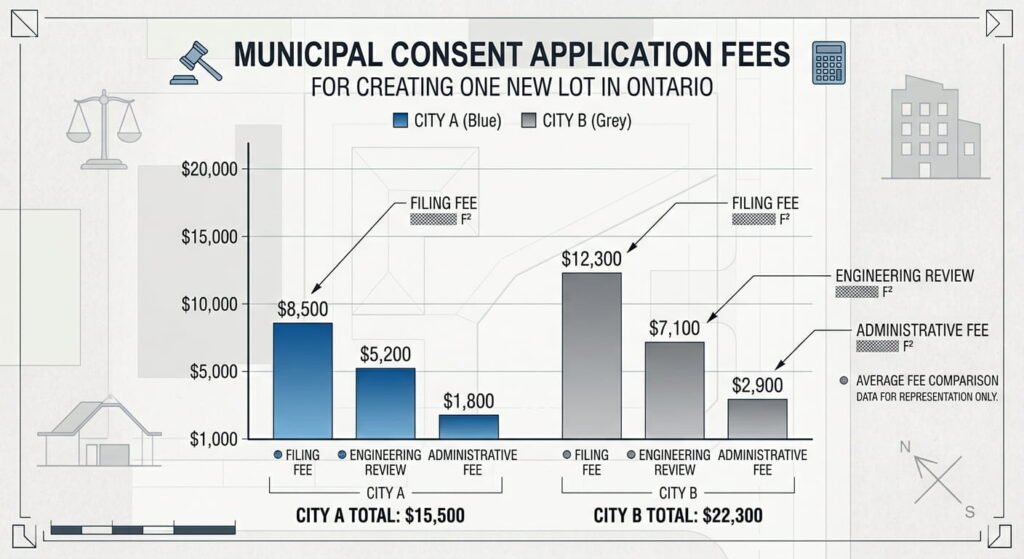
A land severance in Ontario costs $2,882 to $8,080.65 in municipal application fees for one new lot in Mississauga and Toronto, before anything else. Surveys, planning and legal help, parkland charges and development charges sit on top, and an Ontario real estate law firm’s 2025 guide puts typical all-in totals at $10,000 to $50,000.
| Cost item | When you pay it | 2026 figure |
|---|---|---|
| Consent application fee, one new lot | At filing | $2,882 in Mississauga; $8,080.65 in Toronto |
| Parkland dedication or cash-in-lieu | As a consent condition or at permit stage | Up to 5% of residential land, or its cash value, in Toronto |
| Lawyer and planner fees | Before filing and while clearing conditions | $300 to $800 an hour for lawyers; $150 to $500 for planners |
Watch two smaller charges. Toronto adds $6,561.48 for every lot beyond the first, and Mississauga’s 2026 Committee of Adjustment fee schedule bills $573 each time you ask to change a condition. You’ll also pay an Ontario Land Surveyor for the plan of survey and reference plan. The hourly rates above come from the same 2025 law firm guide, so treat them as a market range.
Tax Rules When You Sell Severed Land
Selling severed land can trigger HST. Under CRA guidance on sales of vacant land by individuals, if you’ve never severed the parcel before and split it into only two parts, the sale of either vacant part is exempt. Split it into more than two parts and those sales become taxable at Ontario’s 13% HST, unless a part goes to a relative for personal use. Capital gains are a separate question for your accountant.
Building Permit Costs on the New Lot
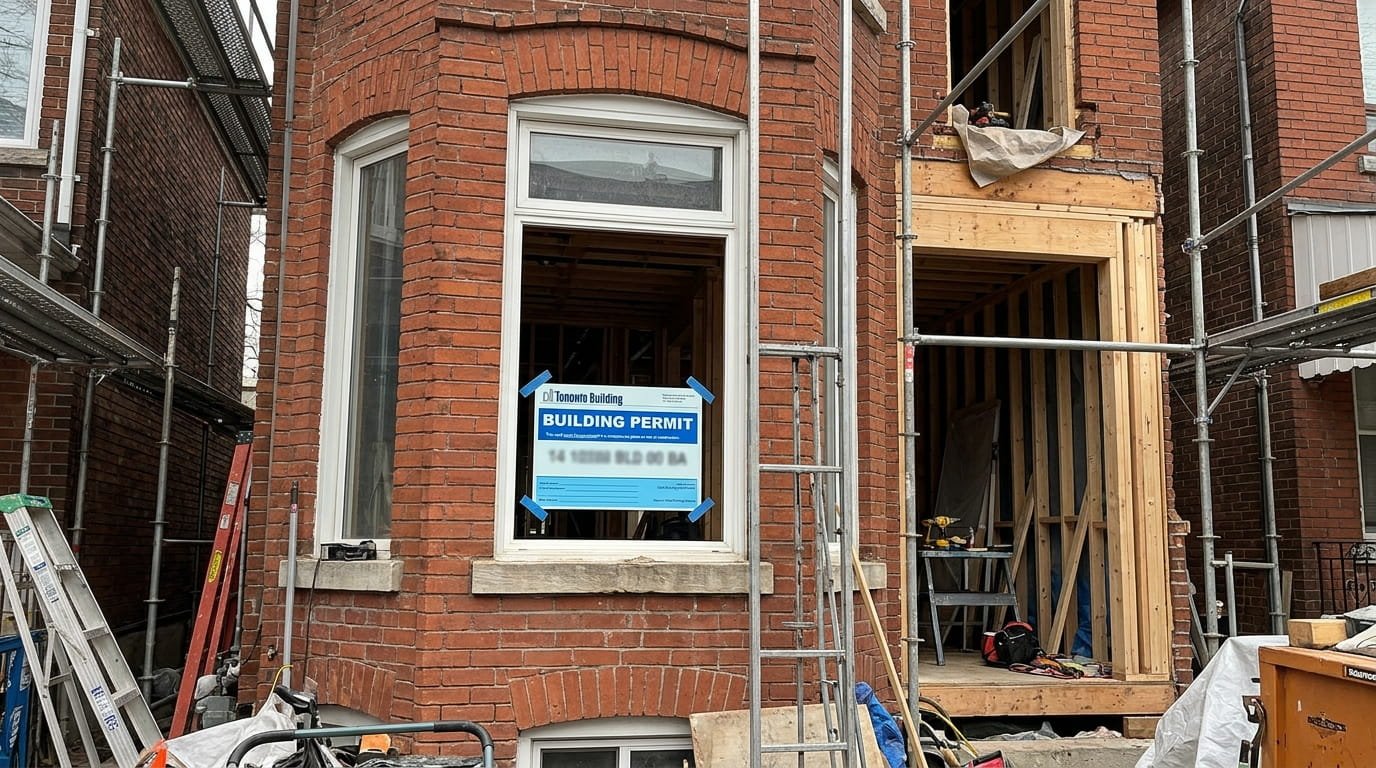
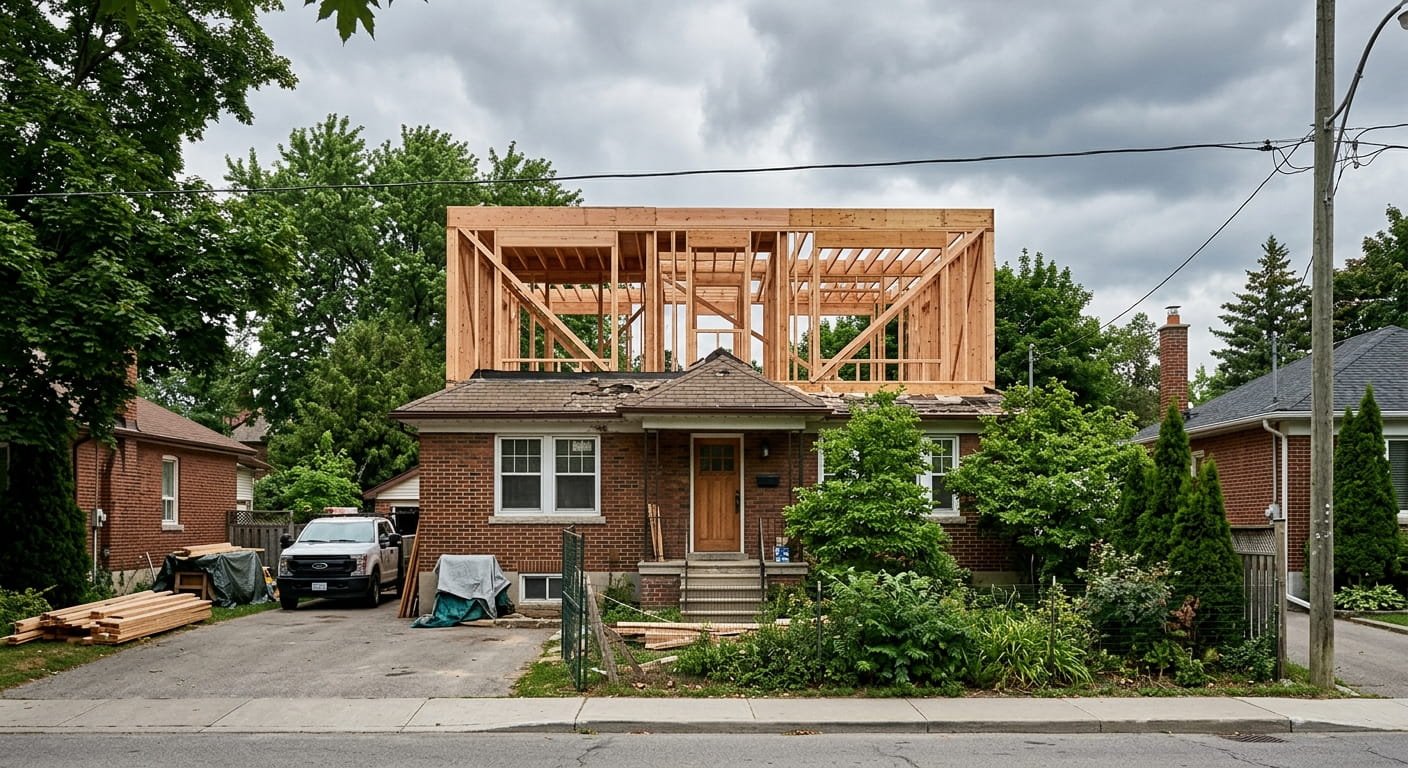
Approval creates a lot, not a house.
You still need a building permit for whatever you build, and Leedway’s guide to the permit application process in Ontario covers drawings and plan review. Budget for development charges as well. On June 23, 2026, the federal and Ontario governments said Toronto’s cuts under the Development Charge Reduction Program could save about $83,000 on a new single or semi-detached home. That figure is only the saving; the full charge is higher.
Frequently Asked Questions
1. How Long Does a Land Severance Take in Ontario?
The approval authority has 90 days to decide once your file is complete, after which you can appeal for non-decision. A 20-day appeal period follows the notice of decision, and conditions must be cleared within two years. In Toronto, plan for roughly three to four months from submission to a Committee of Adjustment decision.
2. Can Neighbours Appeal a Land Severance in Ontario?
No. Bill 23, the More Homes Built Faster Act, 2022, removed third-party appeals of consent decisions. Neighbours can still comment in writing or speak at the hearing. Appeal rights now sit with the applicant, the municipality, the Minister, public bodies and utilities, and the Ontario Land Tribunal fee chart sets a $400 filing fee per consent appeal.
3. What Documents Does a Consent Application Need?
Requirements vary, but Toronto’s 2026 application sets a useful benchmark:
- A plan of survey prepared by an Ontario Land Surveyor
- A draft reference plan showing the severed and retained parts
- Site plan, floor plans and elevations combined in one PDF
- An authorization form signed by every registered owner
- A tree declaration with current site photos
4. Can You Sever Farmland in Ontario?
Rarely for new housing. Policy 4.3.3.1 of the Provincial Planning Statement, 2024 discourages lot creation in prime agricultural areas and permits it mainly for agricultural uses, agriculture-related uses, infrastructure, or a residence surplus to an agricultural operation. When a surplus dwelling is severed, no new homes are allowed on the remaining farm parcel.
5. Can I Get a Refund If I Withdraw a Severance Application?
In Toronto, partly. The city may refund 80% of the fee if you withdraw before internal circulation, and 50% after circulation but before the Notice of Hearing is mailed. Once that notice goes out, nothing comes back. Other municipalities set their own refund rules, so check before filing.
Conclusion
A land severance in Ontario is won or lost before you file. Test the lot against local planning rules first, and budget for conditions as well as the application fee. If you’d like a second opinion on feasibility, Leedway Group’s land development services cover severance and rezoning applications across the Greater Golden Horseshoe. Once a decision arrives, put both two-year deadlines in your calendar.